


The Barn
Where All The Forgotten Things End Up
"In the quiet corners of the world.
In the places where the wind forgets to blow.
Behind the trees that weren’t there yesterday.
It's waiting for you."
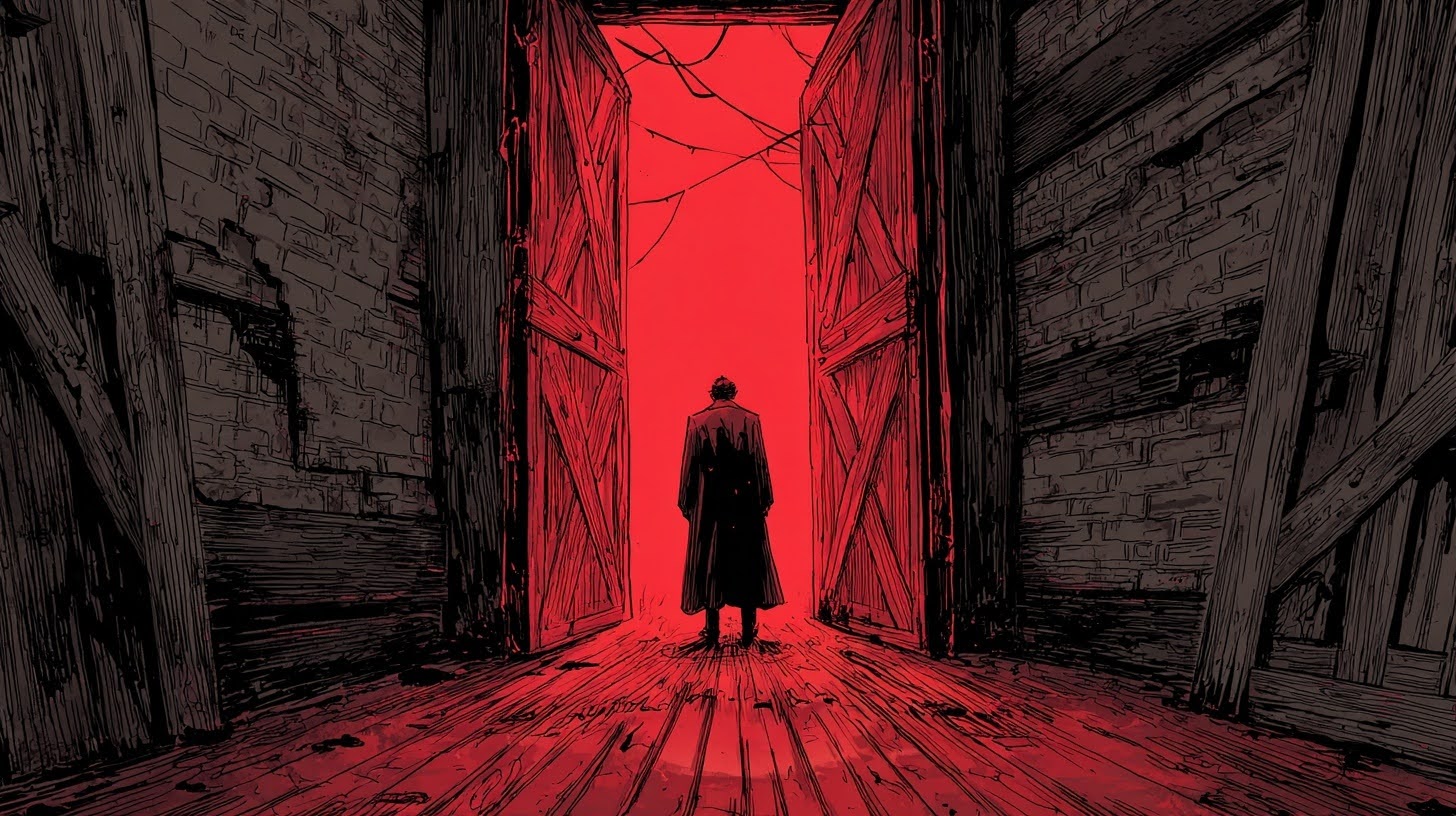
The Barn stands where it should not. It is never found near fields, pastures, or settlements, and no road leads to it. Those who see it often say they have passed the place many times before without ever noticing anything there, and then one day it is simply present, complete and intact, as though it had always been waiting for someone to look up and see it.
It resembles an ordinary farm structure, built of wood darkened by age and weather, with wide doors and a pitched roof. Nothing about its construction appears remarkable. What unsettles those who encounter it is the certainty that it does not belong to the land around it. The ground shows no sign of use. The surrounding area bears no trace of habitation. The Barn exists alone, without context, without explanation, and without invitation.
The doors of the Barn are never locked. They are often found slightly open, though no wind is felt in the surrounding air. Those who approach it rarely do so with intention. They are searching for something else, or walking without attention, or lingering too long over their own thoughts. By the time they recognize the Barn for what it is, they are already close enough that turning away feels less natural than stepping forward.
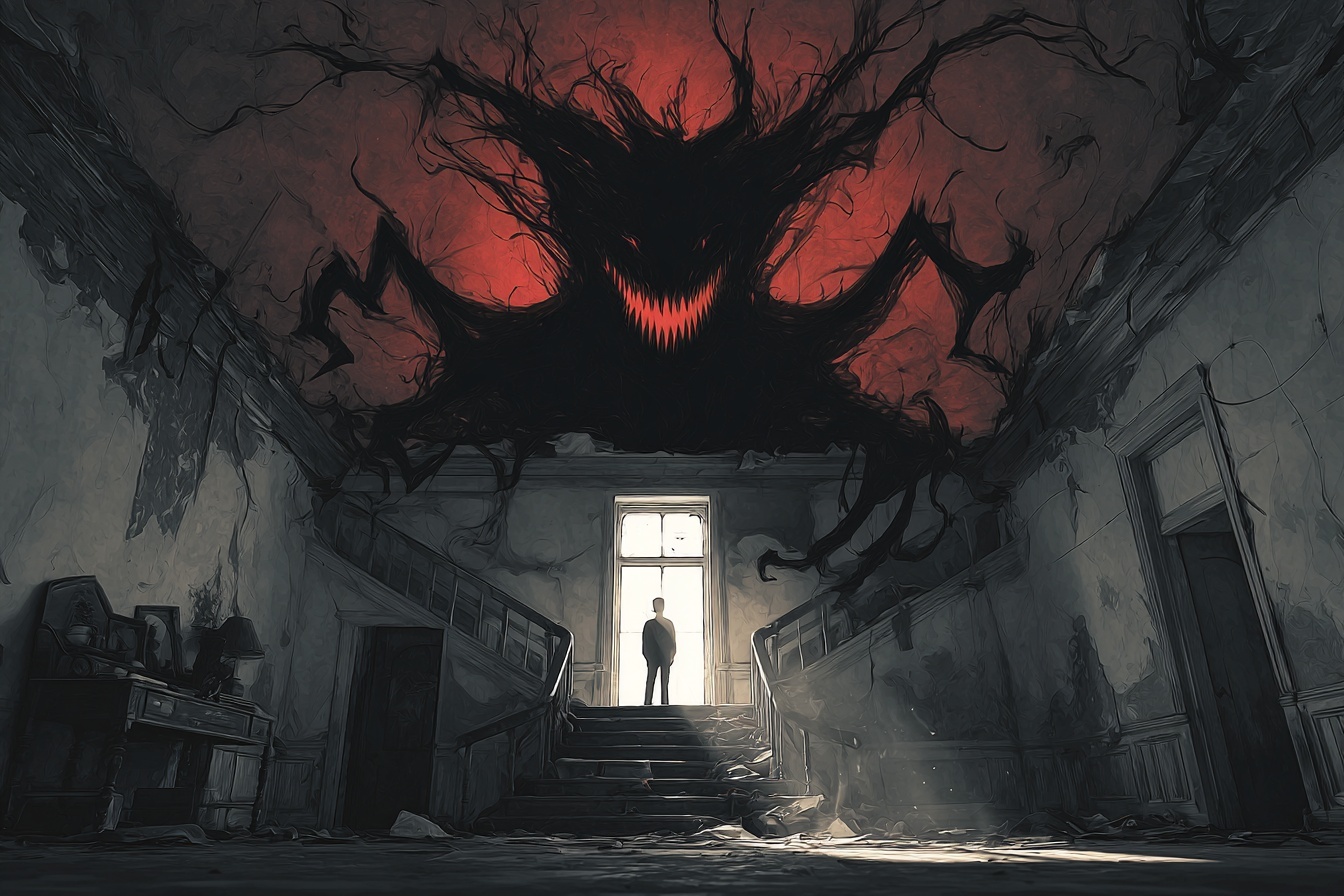
Inside, the Barn does not behave as a place should. Its interior is larger than its exterior allows, though this is not always noticed at first. The light within is dim but steady, coming from no visible source. Sound carries poorly, and voices spoken aloud feel as though they are absorbed rather than echoed. The structure contains stalls, lofts, and passages arranged in ways that resist easy memory. No two descriptions of the interior agree, except in this: what is found inside is familiar.
The Barn does not contain monsters, traps, or trials. It holds moments, objects, and scenes that belong to the person who enters. These are not presented as visions or illusions, but as things that feel preserved rather than created. Choices that were once considered and set aside appear as though they have been kept. Paths not taken seem to continue without end. Words never spoken remain intact and available, unchanged by time.
Those who move through the Barn do not experience urgency in the way they expect. Hunger and exhaustion diminish. The passage of time becomes difficult to judge. Attention narrows, drawn repeatedly toward what feels unresolved. Each space suggests that the next will finally bring clarity or release, and so wandering continues without resistance.
The myth does not describe an exit. It does not claim that leaving is impossible, only that it does not occur. The world outside the Barn ceases to matter in the presence of what is held within. The longer one remains, the less meaningful departure becomes, until the concept of return no longer holds weight.
What becomes of those who enter the Barn is not described. The myth does not say they die, are transformed, or are punished. It states only that they are no longer part of the world as they were before. Their absence is complete, even if their names remain spoken. Searches do not find them. Explanations fail to form. The Barn itself does not remain long enough to be confronted again.
Summary
“At some point, a myth stops being a story people tell and becomes a behavior people share. That is the point at which I am no longer willing to call it harmless.”
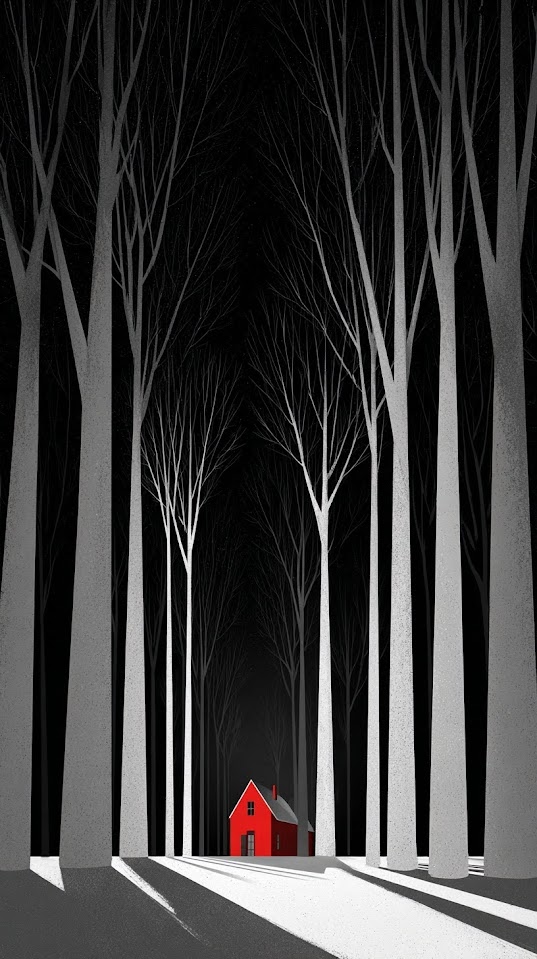
The Barn is a place that appears without cause or warning in locations where no structure should exist. It is not associated with any known culture, deity, or historical event, and it does not remain in one place long enough to be mapped or claimed. The myth does not describe the Barn as malevolent, cursed, or alive in any ordinary sense. Instead, it is understood as a terminal place, encountered only after a person has already become lost in ways that cannot be measured by distance or time.
The legend of the Barn is not concerned with what happens after one enters it. It exists to mark a boundary rather than a sequence of events. To find the Barn is understood to mean that something essential has already failed, and that whatever follows no longer belongs to the ordinary world.
Historical Basis
“There is no first incident I can point to. Only a repeating pattern of records that stop too early, maps that refuse to agree with one another, and witnesses who insist they never saw what they clearly reacted to.”
No confirmed historical event is accepted as the origin of the Barn. Attempts to link the myth to a specific disappearance, settlement collapse, or regional catastrophe have consistently failed, largely because the circumstances associated with the Barn resist documentation. Records that might have served as evidence tend to end abruptly, contradict one another, or refer obliquely to “an absence” without naming a cause.
In several regions, local chronicles contain gaps where land surveys or travel accounts should exist, particularly in wilderness borderlands or abandoned routes. These omissions are sometimes attributed, retrospectively, to encounters with the Barn, though no surviving record ever names it directly at the time. The absence of direct reference is itself considered part of the evidence by later scholars, who note that the Barn does not behave like a historical event but like a recurring failure of recordkeeping.
Because of this, the Barn is often categorized as ahistorical rather than prehistoric. It is not believed to predate civilization, nor to arise from a single moment in the past. Instead, it is understood as something that intrudes upon history without ever becoming part of it, leaving only discontinuities where continuity should exist.
Spread
“I have heard the same warning phrased six different ways in six different provinces. None of the speakers believed they were repeating a myth.”
The myth of the Barn is known across a wide geographic range, though rarely under the same name. References to a solitary structure appearing where it does not belong occur in rural traditions, frontier communities, and regions defined by long travel distances between settlements. Despite this breadth, the myth is never considered common knowledge in the way shared legends usually are.
The Barn is most often spoken of indirectly, referenced through warnings, euphemisms, or unfinished explanations. In many places, it is not taught deliberately but absorbed through implication. People learn what not to do rather than what the Barn is. As a result, awareness of the myth tends to be uneven, with some communities treating it as an obvious truth and others dismissing it as an unspoken superstition.
More detailed tellings are often regarded as apocryphal or suspect. Accounts that claim precise descriptions, named victims, or clear sequences of events are treated with skepticism, on the grounds that the Barn does not permit that level of clarity. In this way, the myth spreads widely but remains shallow, refusing to deepen into doctrine or canon.
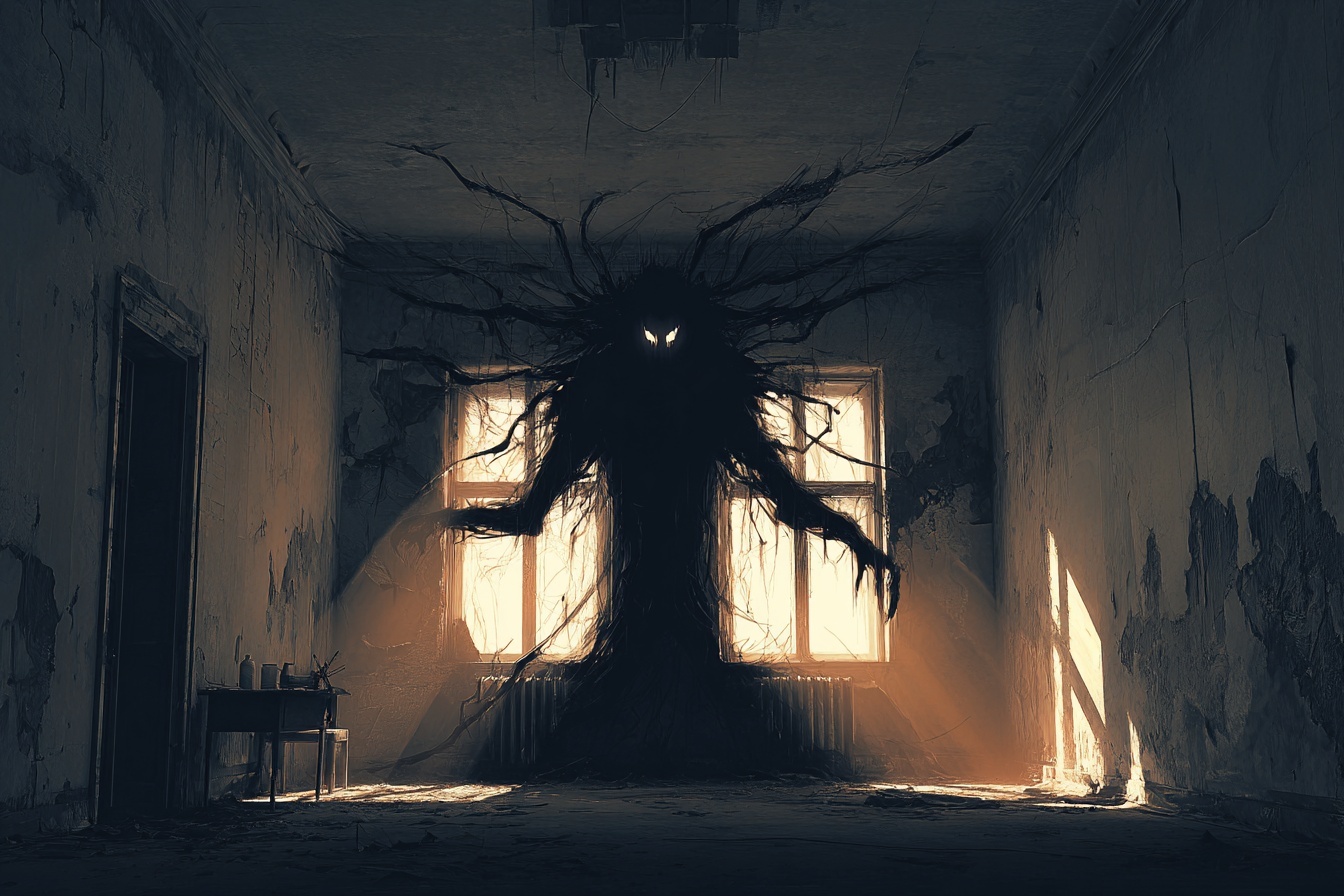
Variations & Mutation
“Every retelling changes the surface details. None of them change the rule that matters: once someone enters, they are no longer accounted for. Anyone who says otherwise is embellishing for comfort.”
While the core elements of the myth remain consistent, variations arise in what cultures emphasize or omit. Some versions focus on the physical structure itself, describing the wood, the doors, and the surrounding land in careful detail. Others barely describe the Barn at all, concentrating instead on the circumstances under which it is encountered.
Certain traditions frame the Barn as a consequence of prolonged isolation or grief, while others associate it with indecision, regret, or obsessive remembrance. These differences do not significantly alter the myth’s function, but they do reflect local values and anxieties. What remains constant is the absence of escape, rescue, or moral resolution.
Importantly, variations that introduce survival, confrontation, or explanation are widely rejected by communities familiar with the myth. Such versions are often attributed to outsiders, dramatists, or scholars attempting to systematize what is not meant to be systematized. In most tellings, mutation is restrained by a shared understanding that elaboration itself is a mistake.
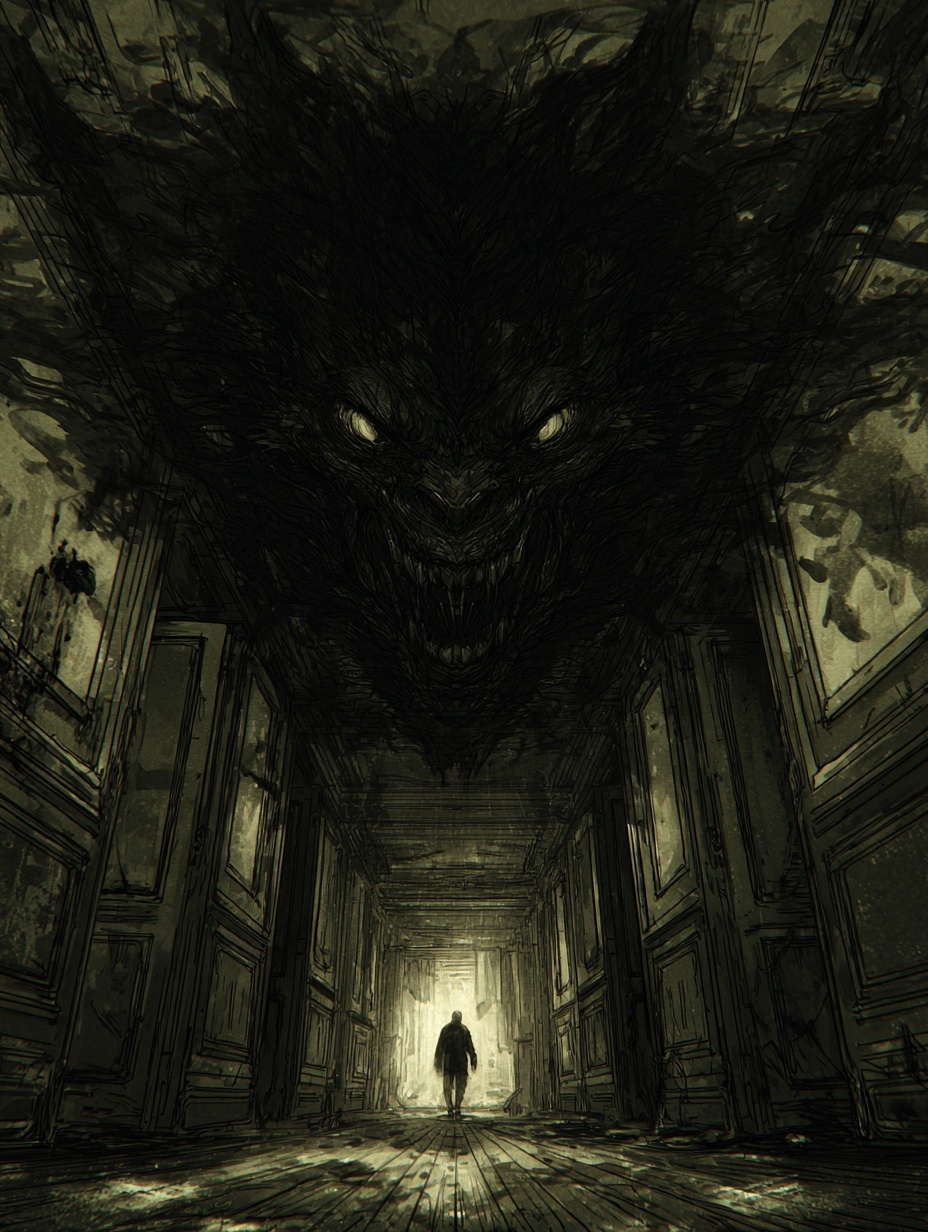
Cultural Reception
“People do not argue about the Barn. They adjust their behavior around it. That is not belief, and it is not fear. It is accommodation, and it is far more troubling.”
The Barn occupies an uncomfortable position within most cultures. It is not revered, worshiped, or openly feared. Instead, it is treated as a limit case, something acknowledged only when necessary. To speak of it too freely is considered inappropriate, not because it invites danger, but because it suggests a failure to keep one’s thoughts properly ordered.
In agrarian societies, the Barn is particularly unsettling due to its resemblance to familiar structures. It undermines the assumption that usefulness and safety are linked, turning an ordinary symbol of storage and shelter into something that represents permanent loss. As a result, abandoned buildings are often treated with caution, and solitary structures are avoided after dark.
In more urban or scholarly cultures, the Barn is often reduced to metaphor in public discourse, while retaining its full weight in private belief. Philosophers may dismiss it as allegory, but the same individuals will still avoid speaking its name during periods of mourning or crisis. Across cultures, the Barn functions less as a story and more as a shared restraint.
In Literature
“Where the Barn appears in writing, it is never the subject. It is the reason a chapter ends early, a journey is abandoned, or a character is simply not mentioned again.”The Barn appears rarely in written works, and when it does, it is almost never described directly. References tend to take the form of missing chapters, interrupted journeys, or unexplained disappearances that are left unresolved. Some manuscripts are noted for ending abruptly after characters encounter an unnamed structure or leave the known road.
Poems and epics generally avoid the Barn entirely, as it resists the narrative arcs such forms require. When poets allude to it, they do so obliquely, through imagery of doors that are never closed, paths that do not return, or buildings that stand without purpose. Explicit treatment is considered artistically suspect and culturally insensitive.
Scholarly works that attempt to catalogue the myth often remark on the difficulty of doing so. Several known treatises end with disclaimers or abandoned arguments, suggesting that even academic engagement with the Barn tends to break down before reaching a conclusion.
In Art
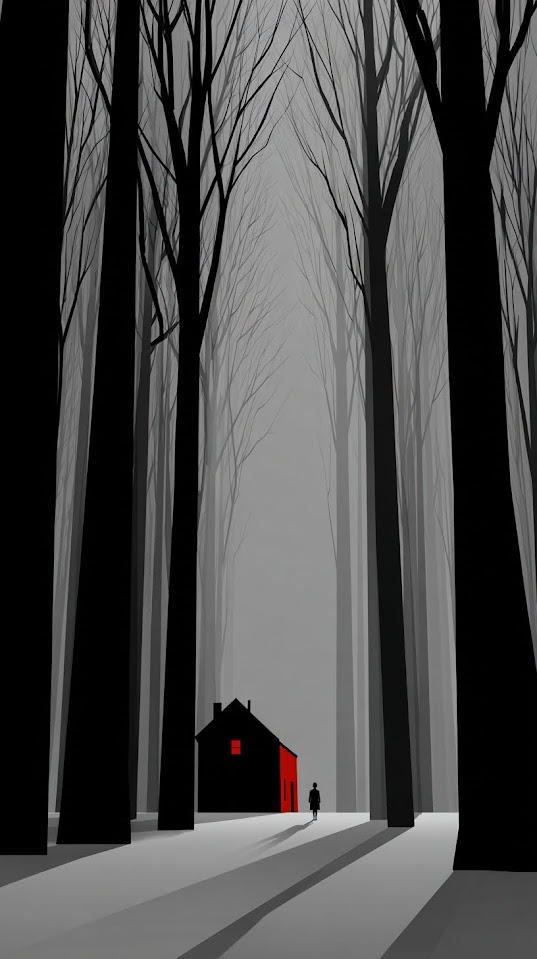
“In Kestenvale, Lyanmar, and Areeott, no one paints barns red. Ask why, and they will laugh, change the subject, or tell you it is ‘just not done.’ None of them will say it is superstition.”
In Kestenvale, Lyanmar, and Areeott, the influence of the Barn is most visible not in what is created, but in what is deliberately avoided. Across all three countries, it is widely noted that barns and other agricultural outbuildings are never painted red. This absence is so consistent that travelers often remark on it without initially understanding why, as the color is otherwise common in tools, trim, banners, and domestic decoration.
The custom is not enforced by law, guild rule, or religious decree. Instead, it persists as a shared restraint passed through practice rather than instruction. In Kestenvale, builders traditionally leave barn wood untreated or stained with dark oils, and it is considered improper to suggest bright pigments for storage structures. In Lyanmar, where painted buildings are otherwise common, red pigments are reserved for civic markings and ritual objects, and their use on barns is regarded as a sign of ignorance or poor upbringing. In Areeott, where agricultural architecture is more utilitarian, the avoidance is so ingrained that many people claim never to have considered the color as an option at all.
When questioned directly, most people do not cite the Barn by name. Instead, they offer brief, noncommittal explanations, such as saying that red is “the wrong color for a place like that” or that it “draws the wrong kind of attention.” Older artisans and painters are more direct, stating simply that a red barn is an invitation best not extended. Attempts to challenge the custom are rare, and those who have done so are remembered less for the buildings themselves than for the unease they caused while they stood.
As a result, the artistic landscape of these regions reflects the legend through uniform absence rather than symbolic representation. Barns blend into their surroundings, taking on the muted tones of wood, earth, and weather. The lack of red painted structures has become so normalized that its origin is seldom discussed, yet the practice remains unchanged. In this way, the myth exerts influence not through imagery or depiction, but through a quiet, shared decision about what should never be made visible.
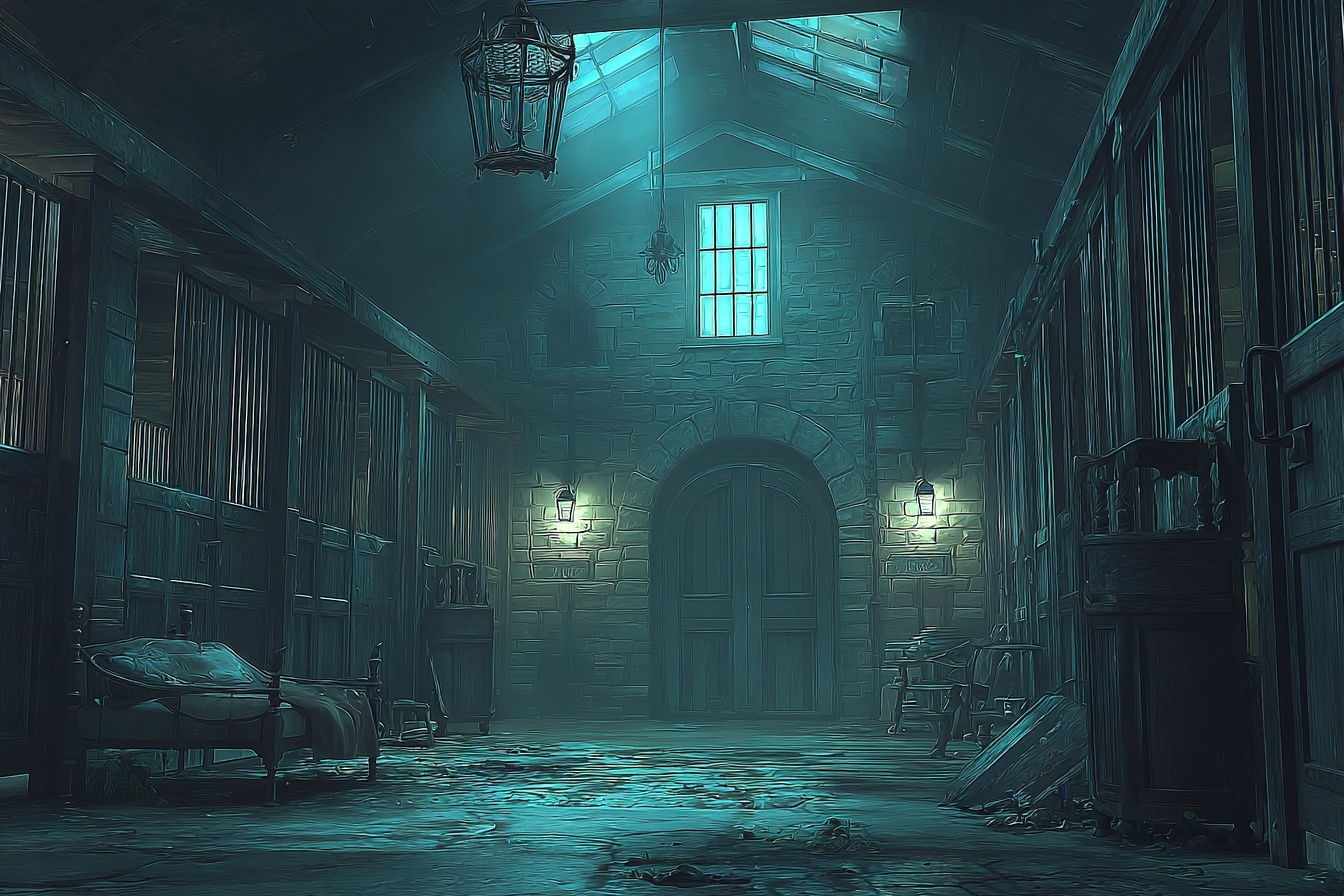
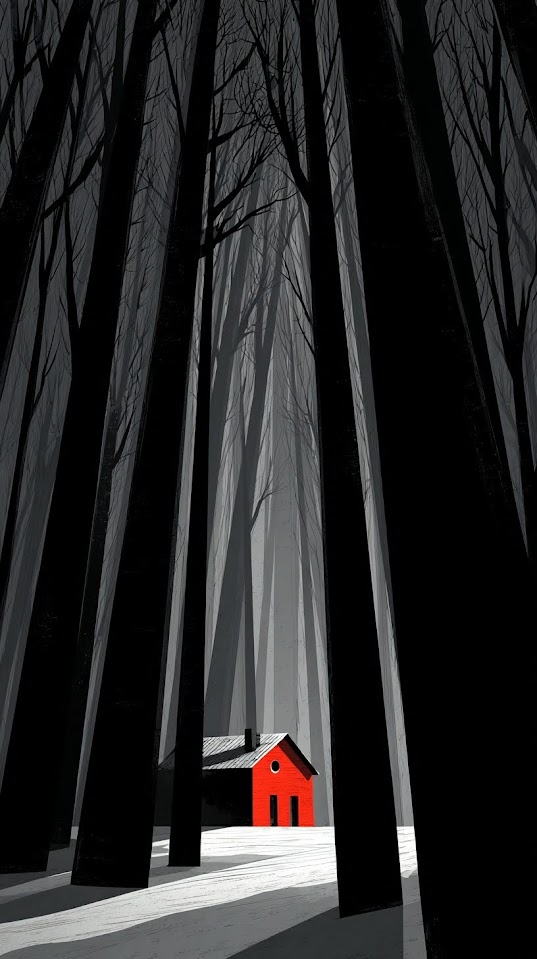
“Most people do not deny the Barn exists. They deny that it's their responsibility to think about it.”
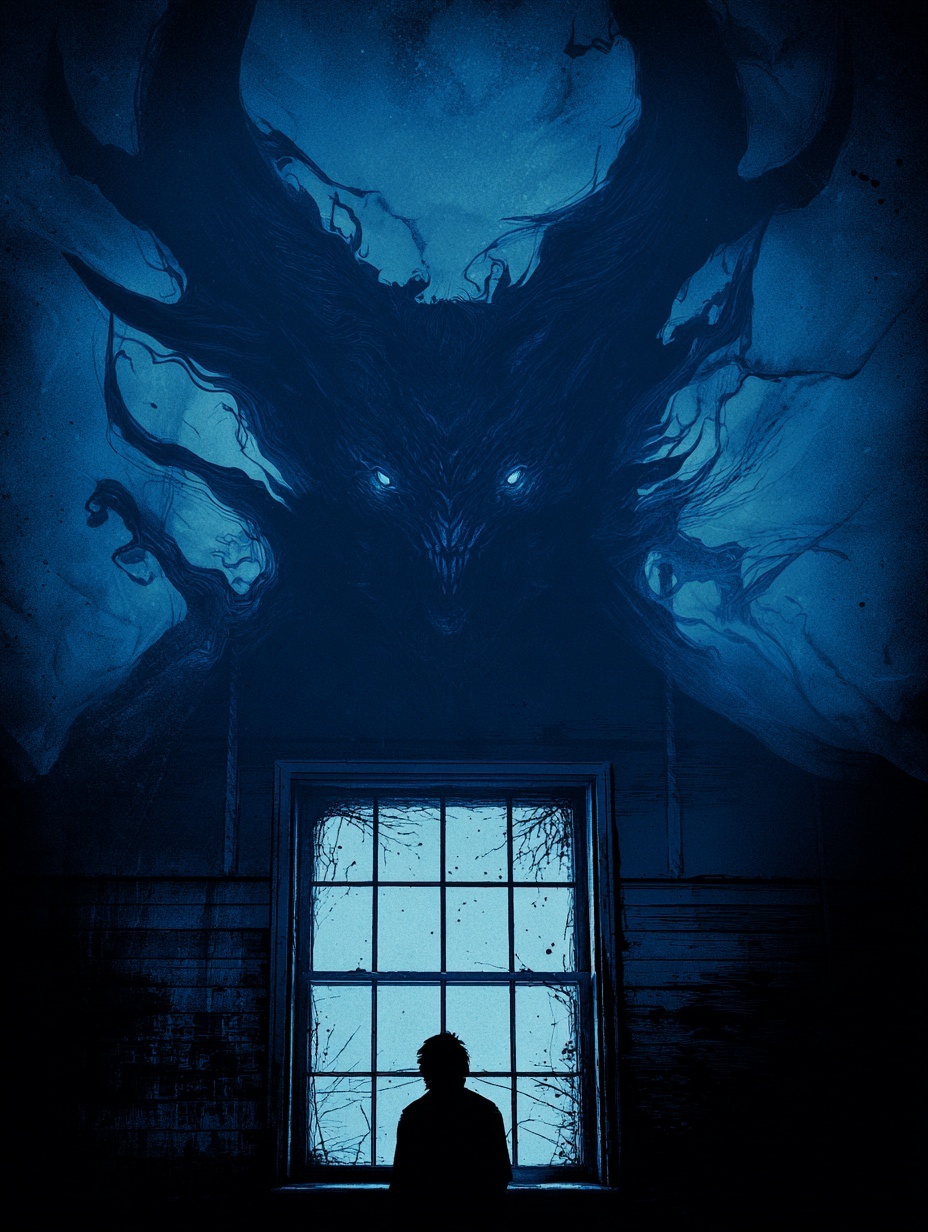
Entry for WorldEmber 2025
Answering: "Myth"


Unless otherwise noted and displayed here here, all "art" is the creation of SolomonJack through Dall-E, Midjourney, Stable Diffusion & LeonardoAI
© Brian Laliberte 1993 - 2026. All rights reserved.
Unknown Shores is an original fantasy setting. Unauthorized reproduction, distribution, or adaptation without permission is prohibited.
This work includes material from the System Reference Document 5.2.1 (“SRD 5.2.1”) by Wizards of the Coast LLC, available at D&D Beyond

Why do you have to keep us up at night? This is absolutely chilling.
If I can't sleep, no one will! Thanks for taking the time to read it! I'm so happy you enjoyed it! :)