


Sunset Cap
Orange Haze
“Never trust a man who says he has never eaten one. Either he is lying or he has not spent enough nights in the woods to learn what grows there.”
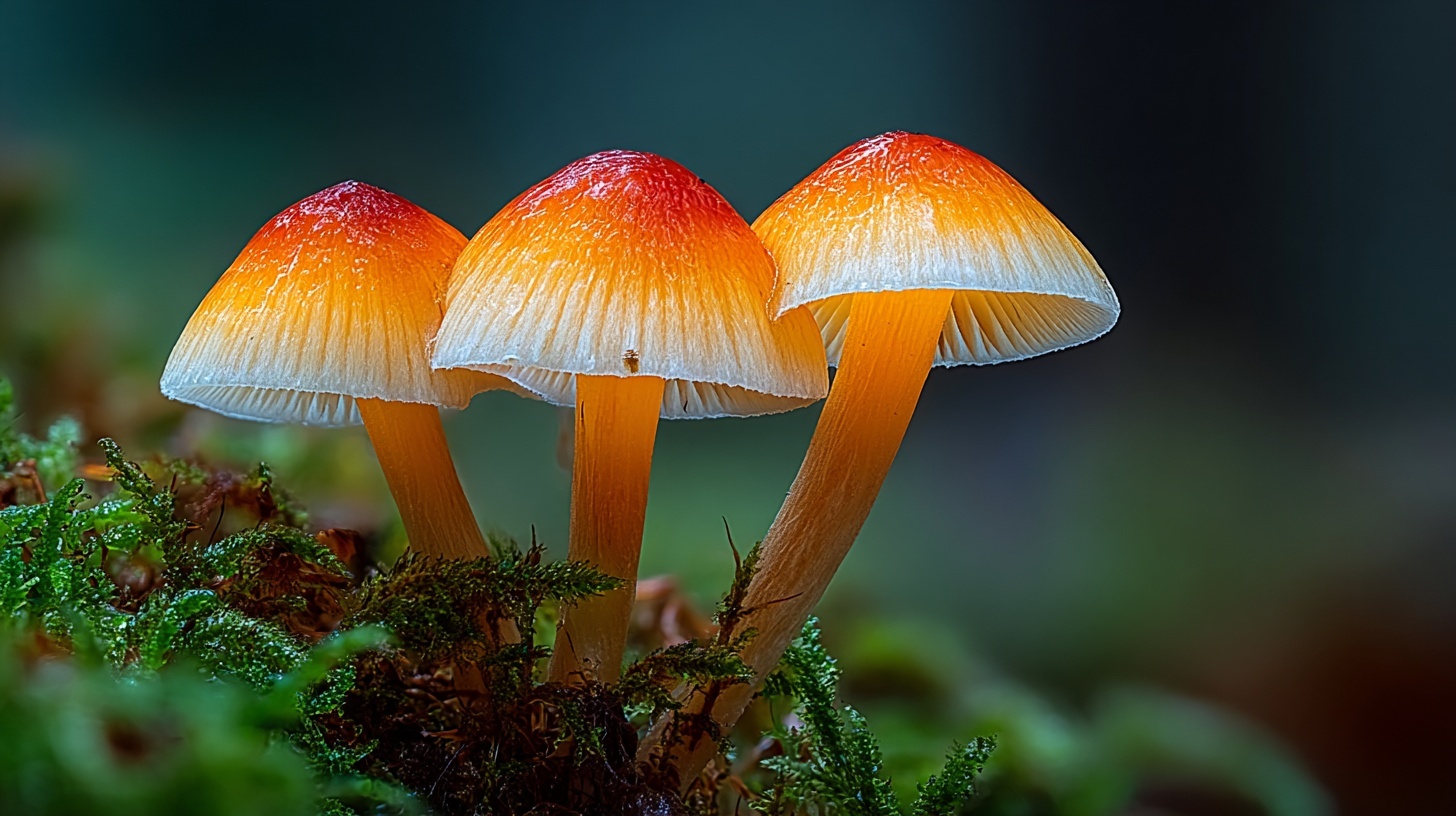
The Sunset Cap is a small woodland fungus recognized immediately by the warm gradient of color across its cap. Pale cream at the outer rim deepens steadily into bright orange and red toward the center, giving the mushroom the unmistakable appearance of a fading sunset. Though physically delicate and short lived, the species has earned an outsized reputation across Aerith because of the powerful psychoactive effects produced when it is consumed.
Despite the notoriety surrounding its effects, the organism itself is simple in form and behavior. The visible mushroom is only the reproductive structure of a far larger mycelial network hidden beneath the forest floor. This underground organism spreads slowly through soil rich with decaying plant matter, feeding on organic debris and storing energy until the conditions are right to produce fruiting bodies.
When environmental signals align, the fungus sends clusters of mushrooms to the surface. These caps appear quickly, mature within days, release their spores, and collapse shortly afterward. The brief lifespan of the fruiting bodies contrasts sharply with the longevity of the underground colony, which may persist quietly in the same patch of soil for years or even decades.
Human attention toward the Sunset Cap has little to do with its ecological role. The species is widely known for the vivid hallucinations it can produce when eaten. These experiences alter perception of color, sound, and time, often creating dreamlike sensations that blur the boundary between imagination and reality. Because of this effect the mushroom is sought after both as a recreational substance and as a tool used in certain controlled spiritual practices.
The potency of the mushroom varies from one colony to another, influenced by soil chemistry, environmental conditions, and genetic variation within the fungal network. Foragers who gather the caps regularly often learn to recognize patches that produce stronger or milder effects. This unpredictability contributes to the species’ reputation as both intriguing and dangerous.
Although some communities tolerate the use of Sunset Caps, others view them with suspicion. Accidents caused by impaired judgment, disorientation, or panic have led many settlements to restrict or discourage their use. Enforcement is often inconsistent, however, because the mushrooms grow naturally across wide areas of woodland and are difficult to regulate.
Outside of their psychoactive properties the mushrooms offer little practical value. They are not considered a food source, and their fragile tissues provide no useful fibers or materials. Their primary significance lies entirely in the effects they have on the human mind rather than in any direct economic or agricultural role.
Basic Information
Anatomy
“The forest grows poisons the same way it grows fruit. The only difference is whether you learn which ones listen when you eat them.”
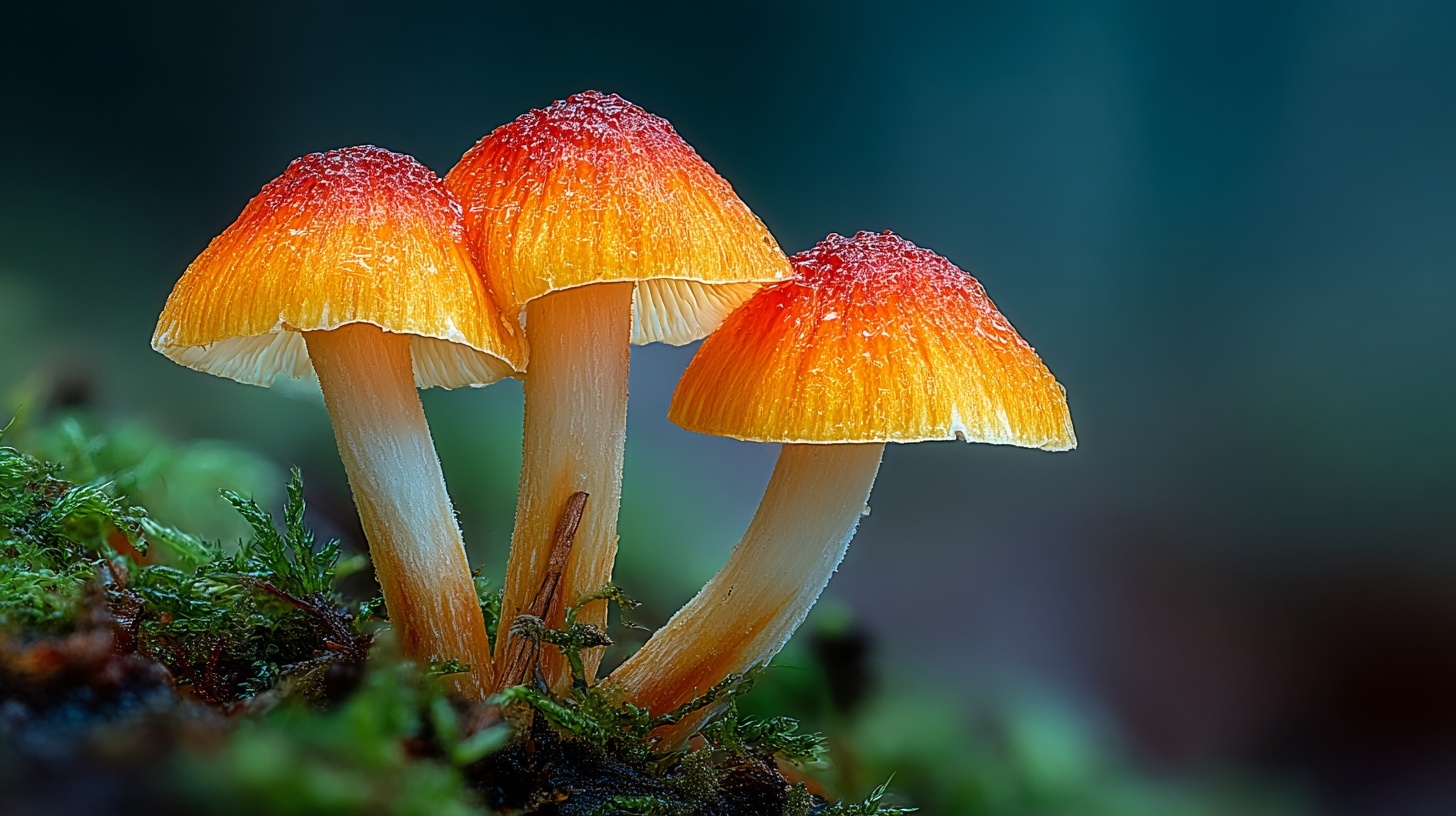
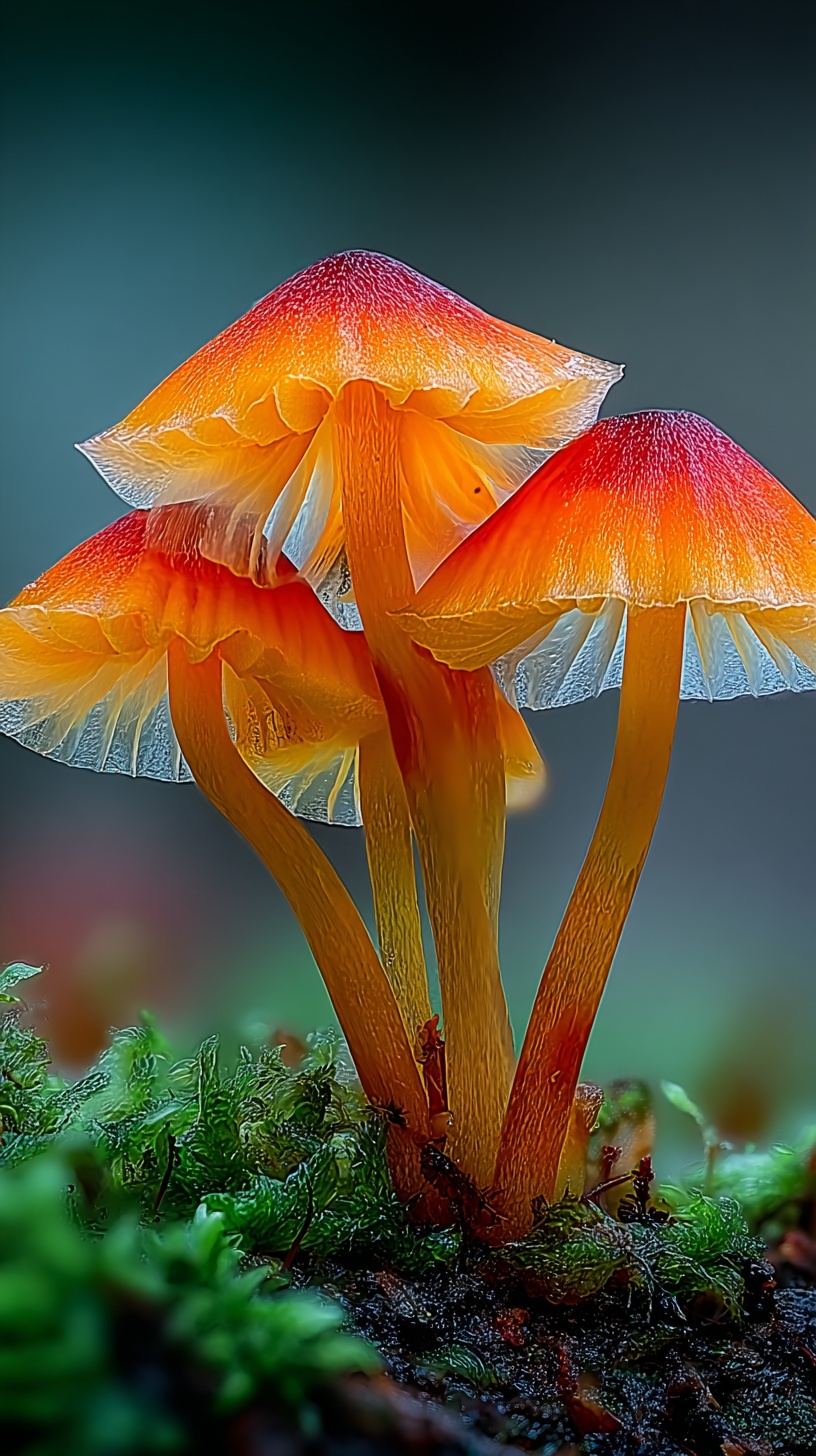
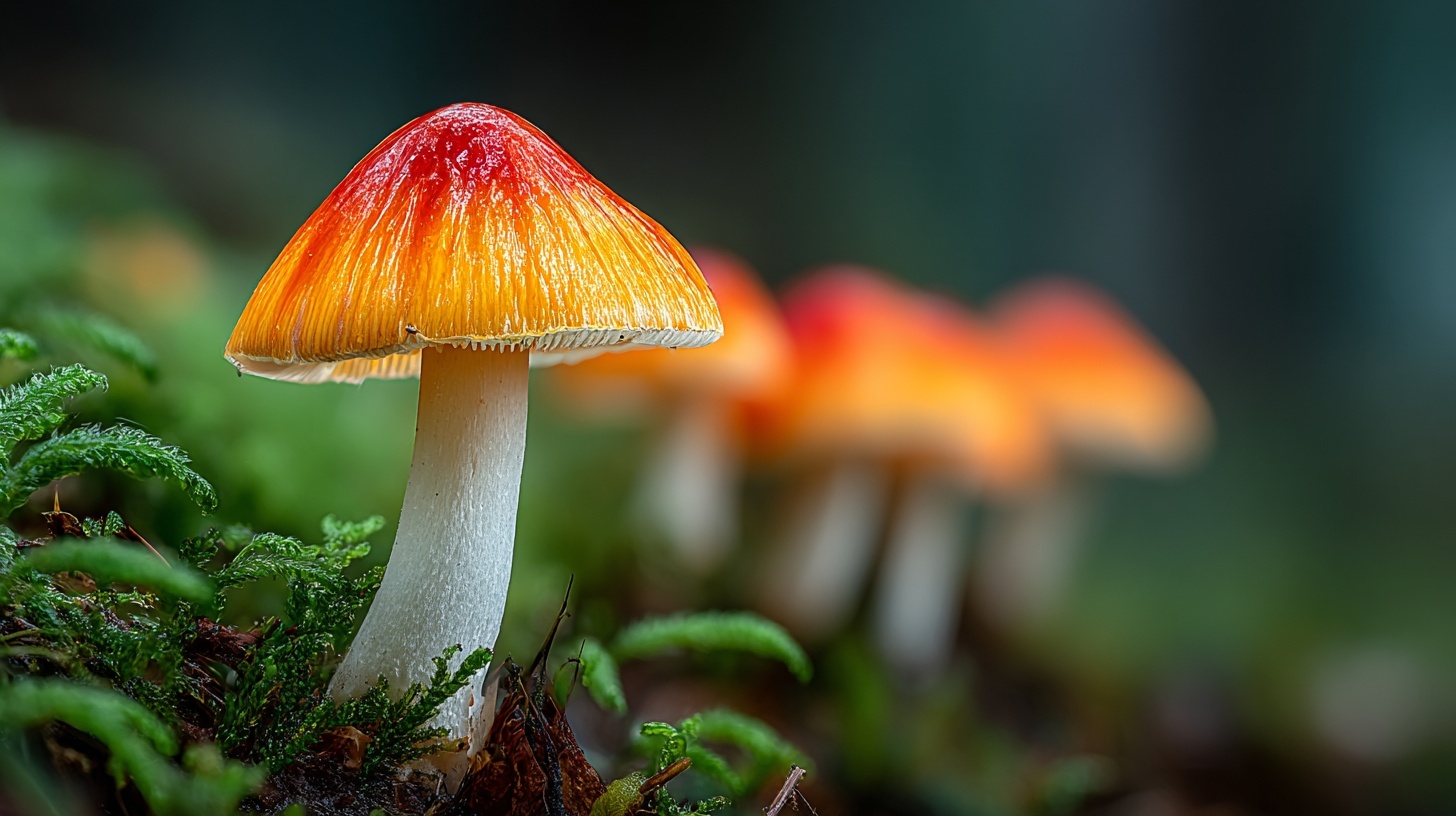
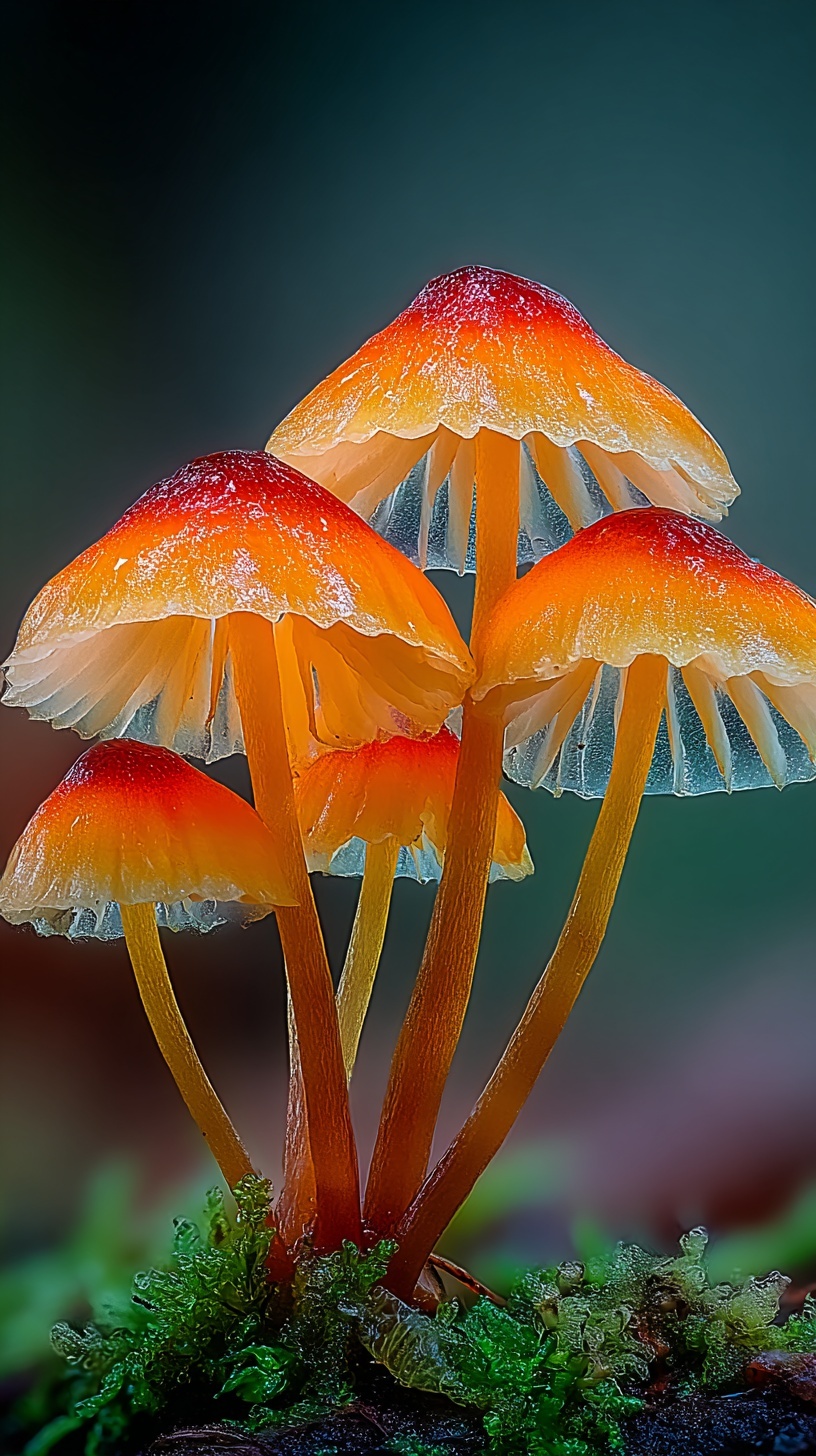
The Sunset Cap is a small woodland mushroom distinguished immediately by the vivid gradient of its cap. The dome rises in a smooth rounded shape, usually no wider than a few centimeters, and displays a striking transition of color from pale cream at the edge to deep orange and red toward the center. In fresh specimens the coloration appears almost luminous in low light, which is where the fungus earns its common name. When clusters appear together on damp forest floors they resemble tiny embers glowing among moss and leaf litter.
The cap surface is thin and slightly translucent, allowing faint striations from the gills beneath to show through the flesh. Moisture gathers easily along the outer edge, giving the mushroom a faint gloss in humid environments. As the fungus matures the cap flattens slightly, but it rarely spreads wide before the organism begins to decay. The tissue remains fragile throughout its life cycle and bruises easily when handled.
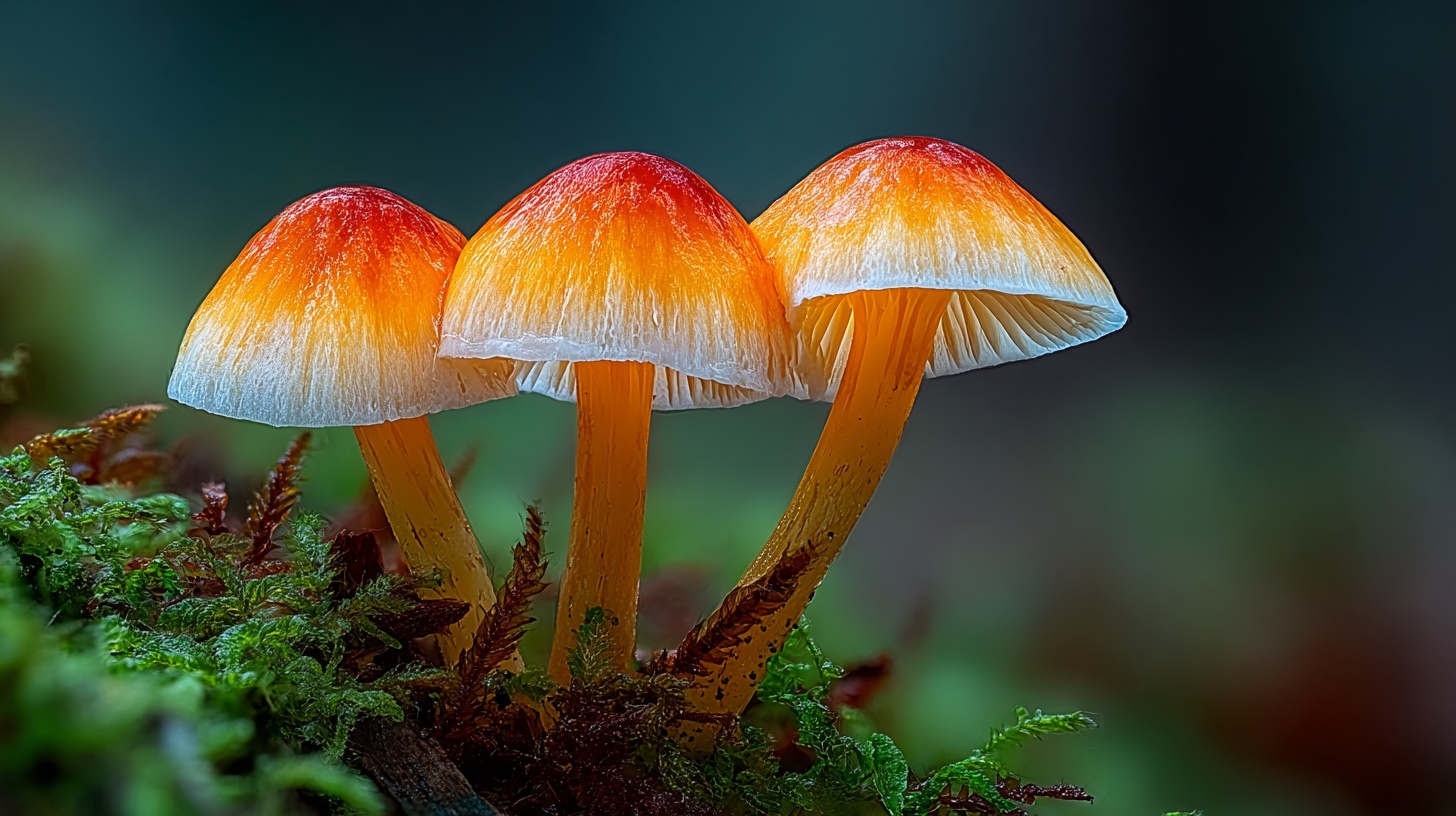
Beneath the cap the gills are tightly packed and pale ivory in color. They radiate cleanly from the central stem and maintain a delicate structure that tears readily when disturbed. These gills serve as the primary spore producing structures of the fungus. When the cap is mature they release a fine dusting of spores that drift easily through still forest air, often settling across nearby moss beds where new colonies may eventually emerge.
The stem of the Sunset Cap is slender and straight, typically a warm amber or honey color that mirrors the tones of the cap above. Its surface carries faint fibrous lines running lengthwise along the stalk. Despite the stem’s delicate appearance it possesses a surprising flexibility, allowing the mushroom to sway rather than snap when disturbed by wind or passing animals.
At the base of the stem a small network of fine white mycelial threads anchors the organism into the surrounding soil or decaying wood. These threads spread outward beneath the surface and connect to the hidden body of the fungus. The visible mushroom is only the reproductive structure of a far larger organism concealed underground.
The internal flesh of the Sunset Cap is thin and pale, almost translucent when cut. The tissue contains the psychoactive compounds responsible for the mushroom’s well known effects. These compounds concentrate primarily within the cap and gill structures rather than the stem, which explains why experienced foragers favor the upper portions of the fungus when preparing it for use.
When freshly broken the mushroom releases a faint earthy scent similar to damp leaves and soft bark. The odor is subtle and rarely strong enough to identify the species on smell alone. The taste is mild and slightly bitter when raw, though the flavor often goes unnoticed once the psychoactive effects begin to take hold.
Sunset Caps most often appear in small clusters rather than as solitary growths. Several stems will emerge from a shared patch of underground mycelium, pushing through moss or decomposing plant matter within a few centimeters of one another. These clusters create the appearance of miniature groves rising from the forest floor.
The life cycle of the visible mushroom is brief. After emerging above the soil the cap reaches maturity within a matter of days. Once spores have been released the tissues soften rapidly and collapse into the surrounding ground, returning their nutrients to the soil and feeding the hidden network below.
Although delicate in structure, the Sunset Cap is remarkably resilient as a species. Its underground mycelium can survive long periods of drought or cold beneath the forest floor, waiting for the right combination of moisture and temperature before sending up another brief bloom of glowing caps among the moss.
Genetics and Reproduction
“Most folk think the mushroom is the plant. It isn’t. That little cap you pluck is just the fruit. The real creature is the web under your boots, and it’s older than most villages.”
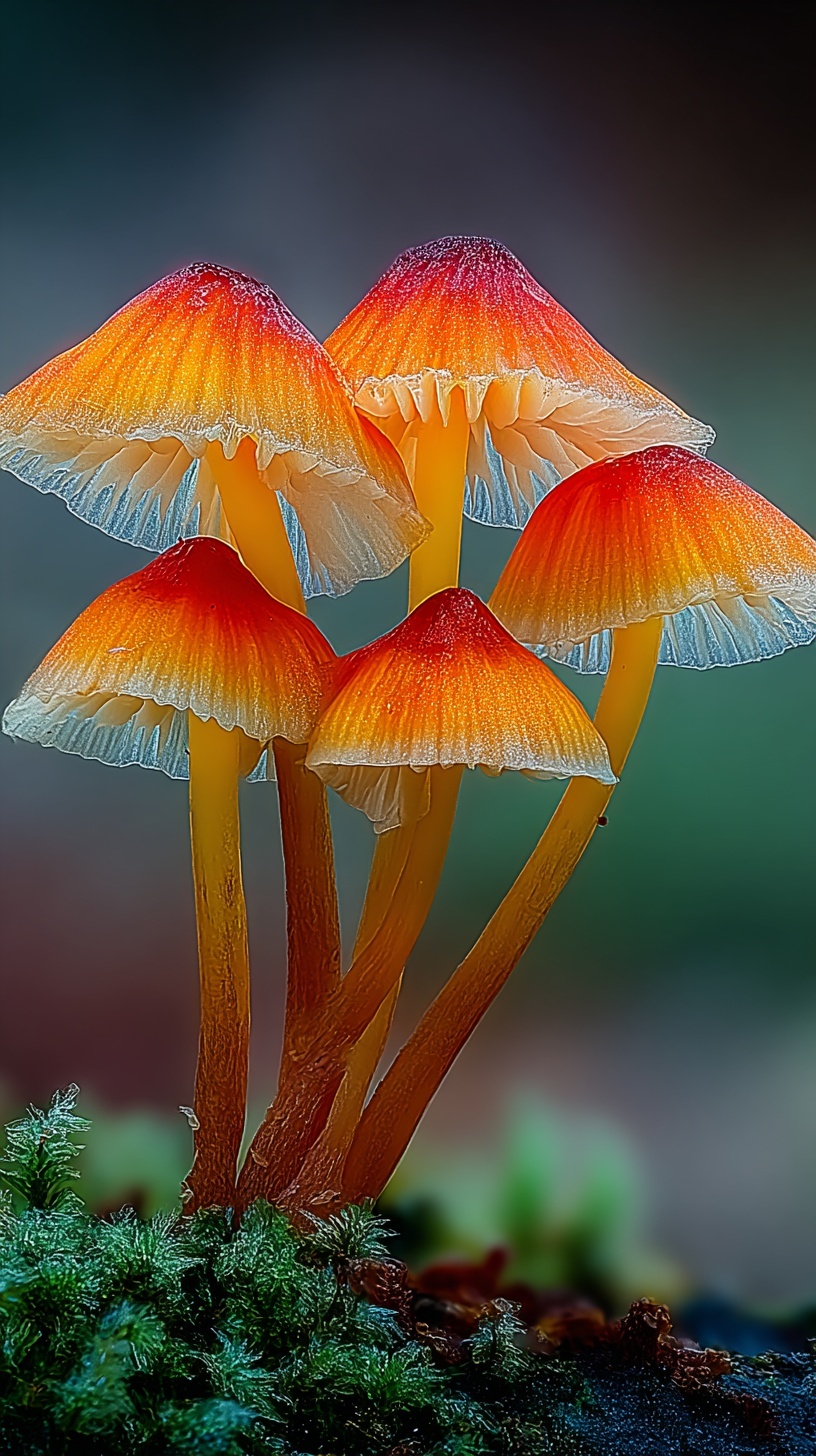
The Sunset Cap reproduces through the release of microscopic spores produced along the gills beneath its cap. When the mushroom reaches maturity, these spores are shed into the air as a fine dust that drifts easily through still forest environments. Wind currents carry them across short distances where they eventually settle onto damp soil, moss, rotting wood, or other organic surfaces capable of supporting fungal growth.
Each spore contains the basic genetic material required to form a new organism. However, like many fungi, a single spore cannot develop into a mature reproductive colony on its own. When two compatible spores germinate near one another, their early filament structures may merge and exchange genetic material. This union creates a stable mycelial network capable of expanding and eventually producing the familiar mushroom structures above ground.
Once established, the underground mycelium spreads through the soil in thin threadlike filaments. These structures branch constantly as they search for nutrients in decaying plant matter, leaf litter, and damp wood. Over time this network may cover a surprisingly large area beneath the forest floor, forming the true body of the organism while the visible mushrooms appear only briefly during favorable conditions.
Genetically, the Sunset Cap maintains a simple but effective system of variation through spore recombination. Each new pairing of germinating spores produces slightly different chemical balances within the resulting colony. This variation is believed to influence the potency of the psychoactive compounds found in the caps, which is why experienced foragers often note that different patches produce noticeably different strengths.
Environmental factors also play a role in shaping these genetic outcomes. Soil chemistry, moisture levels, temperature shifts, and the types of decaying plants available for nutrients all influence how the mycelium develops. Colonies growing in shaded woodland environments tend to produce the most stable fruiting bodies, while those in disturbed soils may remain underground for long periods before emerging.
The mycelial network itself can persist for many years beneath the surface. During dry seasons or harsh winters the organism simply remains dormant within the soil, conserving energy and waiting for suitable environmental signals. When moisture levels rise and temperatures stabilize, the network redirects nutrients toward producing fruiting bodies that break through the soil as small clusters of Sunset Caps.
Fruiting bodies typically emerge in groups because they are produced from a single underground colony. Multiple stems rise from the same connected network of filaments, forming the clusters commonly seen in shaded woodland patches. These clusters maximize the number of spores released into the surrounding environment, improving the chances that new colonies will establish nearby.
The life cycle of the visible mushroom is extremely short compared to the lifespan of the colony beneath it. Within a few days of emerging the cap reaches maturity, releases its spores, and begins to degrade. As the mushroom collapses, its tissues return nutrients to the soil, which are often reabsorbed by the same mycelial network that produced it.
Some colonies develop complex internal branching patterns that allow them to survive partial damage. If a section of the network is destroyed by drought, animals, or soil disturbance, the remaining threads can continue expanding in other directions. This resilience allows the organism to recover and fruit again when conditions improve.
Through this slow but persistent process, Sunset Cap colonies can remain active in the same forest patch for decades. While the mushrooms themselves appear and vanish within days, the hidden organism beneath the soil continues spreading quietly through the forest floor, waiting for the next season when conditions allow the brief flare of orange caps to rise again.
Growth Rate & Stages
“Every fungus keeps its own clock. The trick is learning when the forest decides to ring the bell.” — Feryn The Thrice Rooted, Druid of the Western Vale
The growth cycle of the Sunset Cap begins far beneath the forest floor within an established mycelial network. This underground organism spreads slowly through soil rich with decaying plant matter, drawing nutrients from fallen leaves, moss beds, and rotting wood. For most of its existence the fungus remains completely invisible, expanding quietly beneath the surface while waiting for the environmental signals that trigger reproduction.
The first stage begins when spores germinate in suitable soil. A newly sprouted filament emerges from the microscopic spore and begins extending outward in search of nutrients. These early threads are delicate and short lived unless they encounter another compatible filament nearby. When two compatible structures meet, they fuse and form a stable mycelial network capable of long term growth.
During the second stage the underground mycelium spreads gradually through the surrounding soil. This network grows by extending thin branching filaments that weave through organic debris. The expansion is slow but persistent, sometimes covering several meters of ground over the course of a few seasons. At this stage the organism is focused entirely on gathering nutrients and strengthening its internal structure.
The third stage begins when environmental conditions become favorable for fruiting. Increased soil moisture, moderate temperatures, and stable humidity signal the mycelium that the time for reproduction has arrived. Nutrients stored within the underground network begin concentrating at specific points near the surface where new growth will appear.
The fourth stage produces small rounded nodes beneath the soil known as primordia. These structures resemble tiny pale beads forming along the hidden fungal threads. Though nearly invisible at first, each primordium contains the early structure of a future mushroom. Over the course of several hours they begin pushing upward through the soil.
The fifth stage occurs when the young mushroom finally breaks the surface. At this point the Sunset Cap appears as a small closed dome rising from the forest floor. The cap remains tightly curved over the stem while the internal tissues continue expanding. This stage is often overlooked because the mushrooms are still very small and partially hidden among moss or leaf litter.
In the sixth stage the mushroom begins its rapid expansion. Within a single day the stem lengthens and the cap widens, revealing the distinctive sunset coloration that gives the species its name. The gills beneath the cap develop fully during this period, preparing to release spores into the surrounding air.
The seventh stage marks the peak of maturity. The cap flattens slightly and the gills begin releasing a steady cloud of microscopic spores. During this brief window the mushroom is at its strongest chemical potency, which is why experienced foragers harvest them during this stage rather than earlier or later.
The eighth stage begins shortly after spore release. The tissues of the cap soften as moisture escapes from the delicate structure. The bright colors begin fading and the mushroom loses its firm shape. At this point the organism has already completed its reproductive purpose.
The final stage ends with the collapse and decay of the fruiting body. The stem bends, the cap breaks down, and the remaining tissues dissolve into the surrounding soil within a matter of days. While the visible mushroom disappears quickly, the mycelial network beneath the ground continues living and expanding, preparing for the next cycle of growth when the forest once again provides the right conditions.
Ecology and Habitats
“Look for them where the forest is already busy eating itself. Rot, moss, damp bark. That is where the quiet minds of the woods do their best work.”
The Sunset Cap thrives in cool, damp woodland environments where organic matter is abundant. Forest floors layered with fallen leaves, decaying branches, and moss covered soil provide the nutrients required for the underground mycelial network to grow. These environments allow the fungus to break down plant debris and recycle its nutrients back into the surrounding ecosystem.
Most colonies appear in shaded regions where direct sunlight rarely reaches the ground. Thick tree canopies create stable humidity levels and prevent the soil from drying too quickly. This consistent moisture is critical for the growth of the mycelial network that supports the mushroom’s reproductive structures.
The fungus shows a strong preference for soils rich in decomposing wood. Fallen logs, rotting stumps, and long buried roots provide a reliable food source for the organism. The mycelium spreads through these materials, breaking down cellulose and other plant fibers as it expands through the forest floor.
Moss beds often serve as ideal surface environments for the mushroom to fruit. The dense structure of moss retains moisture and protects the delicate young mushrooms as they push through the soil. Foragers familiar with the species frequently search the edges of moss patches where the conditions remain cool and damp.
Sunset Caps are most commonly found in temperate woodland regions where seasonal rainfall maintains steady ground moisture. Areas with frequent mist, river valleys, and shaded mountain forests tend to support the largest colonies. In these environments the fungus can persist for years beneath the soil before fruiting.
The species rarely appears in open grasslands or heavily exposed terrain. Without the protection of tree cover the soil dries too quickly and the mycelial network struggles to survive. Even when spores settle in these environments, colonies often fail to establish long term growth.
The fungus plays a quiet but important ecological role as a decomposer. By breaking down dead plant matter it helps return nutrients to the soil, supporting the growth of surrounding vegetation. This process contributes to the ongoing cycle of decay and renewal that sustains forest ecosystems.
Many small animals interact with the fungus indirectly. Insects, rodents, and other forest creatures may disturb the soil as they forage or burrow, inadvertently spreading spores to new locations. While few animals intentionally consume the mushroom, their movement helps expand the range of the species over time.
Seasonal conditions strongly influence when the mushrooms appear above ground. Periods of steady rainfall followed by mild temperatures often trigger fruiting events. After several days of suitable weather clusters of Sunset Caps may emerge across a patch of forest floor almost simultaneously.
Although the mushrooms themselves exist for only a brief time, the underground organism remains a constant presence within its habitat. The hidden mycelial network continues spreading quietly through the soil, linking decomposing plant material together and waiting patiently for the next set of conditions that will allow another brief bloom of glowing caps to appear.
Additional Information
Uses, Products & Exploitation
“Every plant in the forest has a purpose. Food, medicine, poison, vision. The Sunset Cap simply happens to be the one that reminds people how thin the line between those things really is.”
The primary use of the Sunset Cap is as a psychoactive substance. When consumed, the mushroom produces powerful alterations in perception that affect sight, sound, and the sense of time. Colors appear brighter and more fluid, ordinary shapes may seem to move or breathe, and thoughts often take on a dreamlike quality. Because of these effects the mushroom is widely known across many cultures as a means of inducing altered states of consciousness.
Recreational use is by far the most common form of exploitation. Travelers, laborers, sailors, and other hard living groups often seek out Sunset Caps for the temporary escape they provide. The mushrooms are typically eaten raw, though some users prefer brewing them into a bitter tea that extracts the active compounds while softening the taste.
In some regions the fungus also plays a role in controlled spiritual practices. Certain druids, mystics, and ritual leaders use the mushroom in carefully measured doses to encourage introspection or visionary experiences. These ceremonies are usually guided by individuals familiar with the substance, since the intensity of the experience can vary widely between individuals.
The caps themselves are the most valued portion of the fungus because they contain the highest concentration of psychoactive compounds. Foragers typically remove the cap while leaving the stem behind. This practice both concentrates the usable material and helps reduce damage to the surrounding mycelium network that produces future growth.
Drying is one of the most common preservation methods. Fresh Sunset Caps decay quickly, often within a few days, so they are frequently laid out in warm dry air until their moisture is removed. Once dried they become far lighter and can be stored for extended periods without losing most of their potency.
Another common method of preparation involves grinding dried caps into powder. This powdered form is easier to transport and conceal, and it allows the user to measure doses more carefully. Some individuals mix the powder into drinks or simple foods to mask the bitter taste of the fungus.
The mushroom has also developed a modest trade among smugglers and illicit merchants. Because it grows naturally in forests and mountain regions, the supply is difficult for authorities to control. Small bundles of dried Sunset Caps often move quietly through black markets alongside other intoxicants.
Beyond its psychoactive properties, the species has little practical use as food or medicine. The flesh is thin and nutritionally insignificant, and its chemical compounds make regular consumption unpleasant for most people. As a result the fungus is rarely harvested for any purpose other than its mind altering effects.
Byproducts from the mushroom are minimal because nearly the entire harvested cap is consumed or processed directly. The remaining stems are usually discarded during preparation. Some herbalists claim that the stems contain faint traces of the active compounds, but they are far weaker and rarely worth the effort of processing.
Despite its limited physical uses, the Sunset Cap has gained a lasting place in many cultures simply because of what it does to the mind. Whether treated as a harmless curiosity, a ritual tool, or an illegal vice, the small glowing mushroom continues to be gathered wherever it appears, quietly linking forests, travelers, and human curiosity through the strange visions it provides.
“Every forest grows a handful of things that change how people see the world. Most of them are dangerous. A few are simply honest.”



Comments