


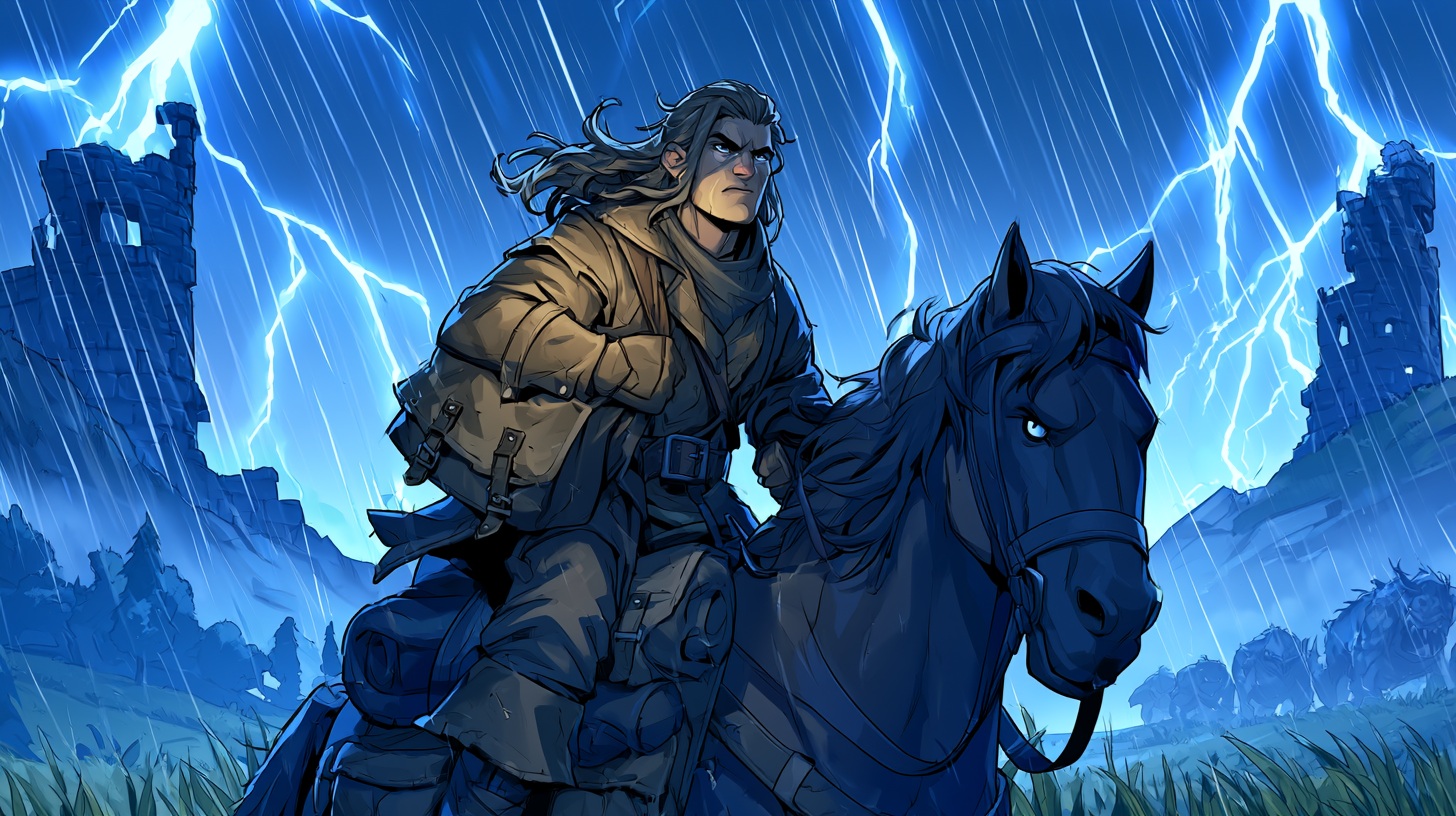
Seasoned Courier
Life, Limb & Road Rash
“Listen, I’m not saying the western road is cursed. I’m just saying every courier who takes it starts drinking heavily and talking to their horse like it owes them money.”
Seasoned Couriers are built by bad roads, worse weather, and the kind of stubbornness that makes sensible people shake their heads.
The work sounds simple to anyone who has never done it. Take the parcel. Follow the route. Reach the destination. Hand it over. Collect the coin. In practice, the road has opinions about every part of that plan.
Bridges wash out. Horses go lame. Bandits get ambitious. Officials invent new checkpoint requirements because someone gave them a stamp and too much confidence. A clear mountain pass becomes a deathtrap by afternoon. A quiet forest road starts feeling watched. The courier adjusts, swears, eats something cold, and keeps moving.
That is the job.
Most Seasoned Couriers are not heroes by temperament. They are practical people who learned that panic weighs more than any satchel. They know how long rations really last when travel turns ugly. They know which inns water the soup and which stable owners lie about fresh horses. They can read road conditions from cart ruts, judge weather by pressure in the air, and tell from a guard’s posture whether a border crossing will require paperwork, coin, charm, or patience.
They survive because they notice small things before those things become large problems.
A missing mile marker. No birdsong along a familiar stretch of road. Wagon tracks turning back suddenly. Fresh ash in an abandoned camp. Locals refusing to say why the eastern trail is faster but never taking it themselves. These details matter. A courier who ignores them may still arrive, but usually not in one piece.
Reliability becomes a kind of reputation among them. Not glamour. Not honor in the storybook sense. Something plainer and harder earned. People trust couriers because messages matter most when roads are unsafe. Medicine delivered too late is just cargo. A treaty delayed by one storm can become a war. A letter never received can ruin a family, a business, or a life.
The best couriers understand this without becoming sentimental about it.
They do not need to know what is sealed inside every packet. In fact, most prefer not to. Curiosity is expensive in their line of work. The less a courier knows, the less they can betray, confess, or regret. Still, everyone has one delivery they remember. The parcel that was too heavy for its size. The letter that smelled faintly of perfume and blood. The locked case that whispered during rain. The order they were paid not to read and have regretted not reading ever since.
Roads make strange people out of those who travel them long enough.
Seasoned Couriers sleep lightly and wake faster than soldiers. They sit facing exits. They dislike unpacking fully. They collect tokens from places they never intend to revisit. A bit of ribbon from a mountain shrine. A ferry coin from a drowned crossing. A carved charm from a village that was gone the next time they passed through. Their lives become stitched together by temporary shelters and half remembered conversations beside fires they did not build.
They complain constantly.
This is not a flaw. It is tradition.
The rain is always worse than promised. The roads are always badly maintained. The mule is always possessed by stupidity. The mapmaker was clearly drunk, blind, or both. Nobody knows how to build a proper bridge anymore. These complaints are the music of the profession, and the oldest couriers complain with the refined precision of masters.
Yet beneath the grumbling is a hard pride. When a courier accepts a job, the delivery becomes real in a way ordinary obligations do not. They may not care about the sender. They may distrust the recipient. They may strongly suspect the entire matter is someone else’s terrible idea. But once accepted, the road between here and there becomes a promise.
And promises weigh more than parcels.
Couriers are often treated as useful neutrals in civilized lands because everyone needs them eventually. Guards tolerate them. Merchants rely on them. Innkeepers know they bring news, coin, and trouble in roughly equal measure. Even in conflict zones, a courier badge or writ can open gates that would remain closed to others, provided no one decides the contents of the satchel matter more than the custom protecting it.
That neutrality is practical, not sacred.
Couriers know better than most that roads connect enemies as easily as friends. They carry love letters and ransom demands, birth notices and death warrants, medicine and poison, contracts and blackmail. The road does not judge. The courier tries not to.
Some fail.
Some failed once, and people died.
That kind of failure follows a courier longer than any pursuer. A missed delivery. A lost package. A shortcut chosen badly. A sealed letter arriving one hour too late. The profession is full of people moving constantly because stopping gives memory too much room to catch up.
Still, they keep going.
Because there is always another destination, another road, another person waiting by a gate, window, sickbed, gallows, or battlefield for something only the courier can bring.
And if the road is cursed, flooded, hunted, haunted, or on fire, well.
That just means the delivery costs extra.
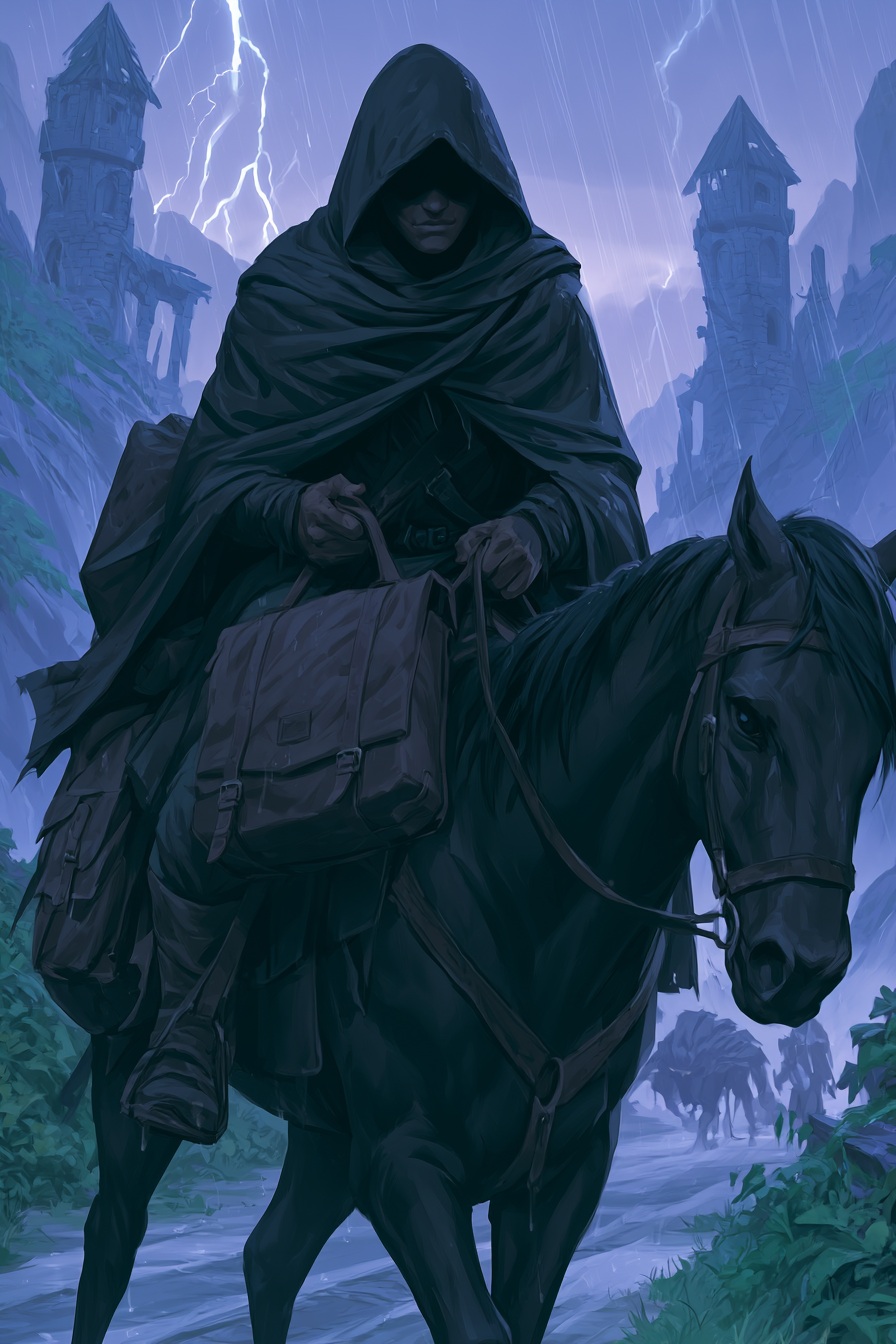
“Never trust a client who says the package is ‘probably harmless.’ Normal people don’t add the word probably to harmless objects.”
Type
Private Services



Comments