



Reveal Interior
Just A Quick Peek
“You can learn a great deal about a person by what they choose to hide, and even more by how carefully they think it is hidden.”
There is a practical problem that emerges the moment a civilization begins rebuilding itself from ruin. Containers exist for a reason. Doors are closed. Chests are locked. Walls are built to separate what is known from what is hidden. In an age shaped by fractured magic and uncertain trust, the question of what lies inside something becomes more than curiosity. It becomes necessity.
Reveal Interior is one of the clearer examples of post Shattering spellcraft being shaped by need rather than ambition. It does not burn, compel, or transform in any dramatic sense. It solves a simple problem with precise intent. It allows a caster to see what is already there without disturbing it.
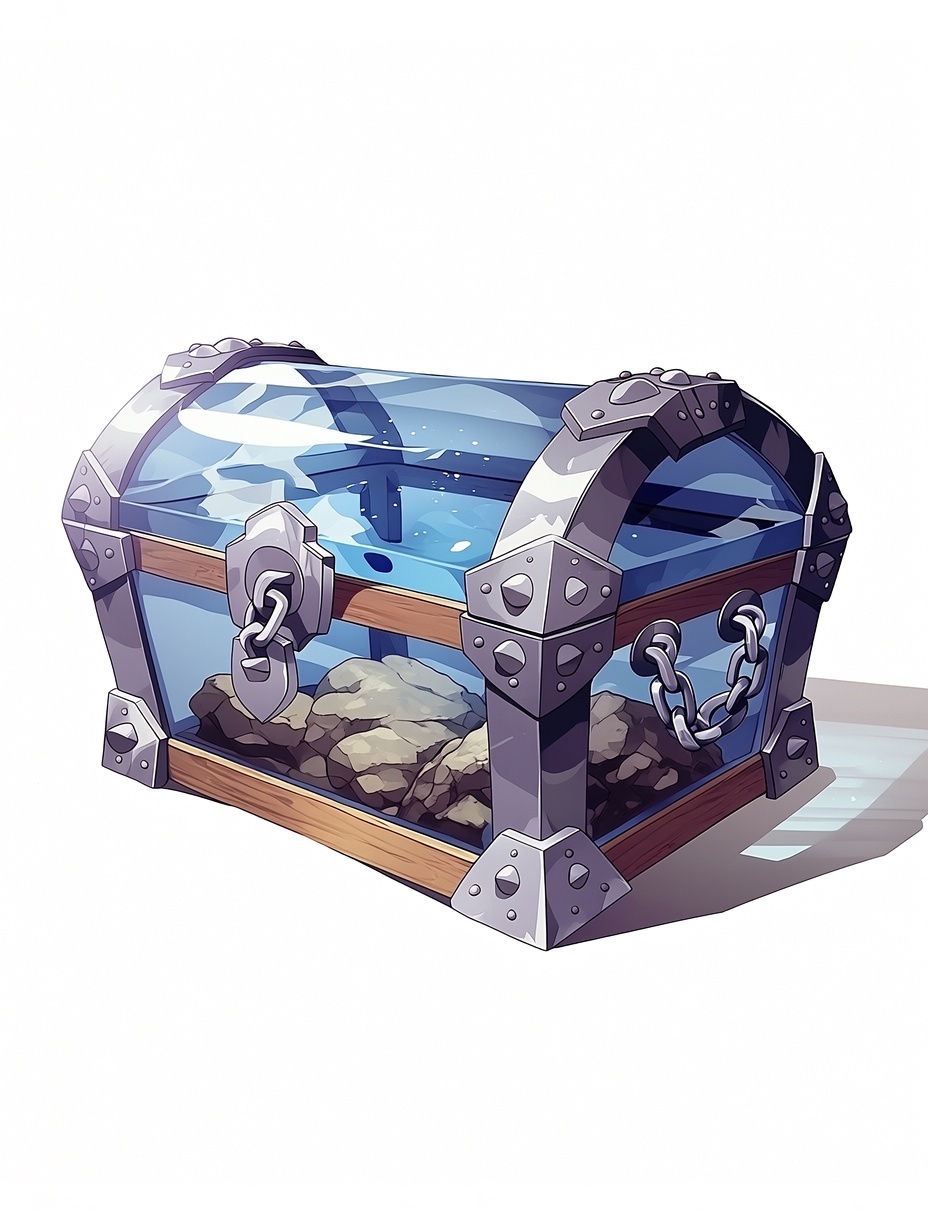
The spell works by altering how light interacts with a surface rather than the material itself. The object is not made intangible, nor is it broken down or reformed. Instead, its exterior ceases to obstruct vision. Light passes through it, carrying an image of what lies within to the observer. The result is imperfect. Edges warp slightly. Dense materials blur. Internal complexity introduces distortion. The spell reveals, but it does not clarify beyond what the structure allows.
Its limitations are deliberate and widely understood among those who rely on it. The spell does not unravel nested spaces. A locked box within a chest remains hidden. A sealed compartment retains its secrecy. This is not a failure of the magic, but a boundary imposed by its design. Reveal Interior does not grant omniscience. It respects the physical divisions that define the object it is cast upon.
Because of this, the spell has found steady use among professionals who require information without destruction. Archaeomancers use it to examine sealed relics before deciding whether they are safe to open, avoiding the catastrophic mistakes that still lurk within ancient ruins . Inspectors and customs officials employ it to verify cargo without breaking seals that carry legal or political weight. Craftsmen use it to study internal flaws in materials that would otherwise remain hidden until failure.
There is also a quieter use that rarely makes it into formal record. In a world where deception is common and concealment is often a matter of survival, the ability to look inside something without altering it carries a certain kind of power. It is not dramatic. It does not announce itself. But it changes how decisions are made.
Reveal Interior reflects a broader shift in how magic is understood in the current age. It is not concerned with dominance or spectacle. It is concerned with certainty. It exists because someone needed to know what was inside something without breaking it open, and because the cost of being wrong was too high to accept.
“The trick is not seeing inside. The trick is knowing when what you are seeing is lying to you.”



Comments