


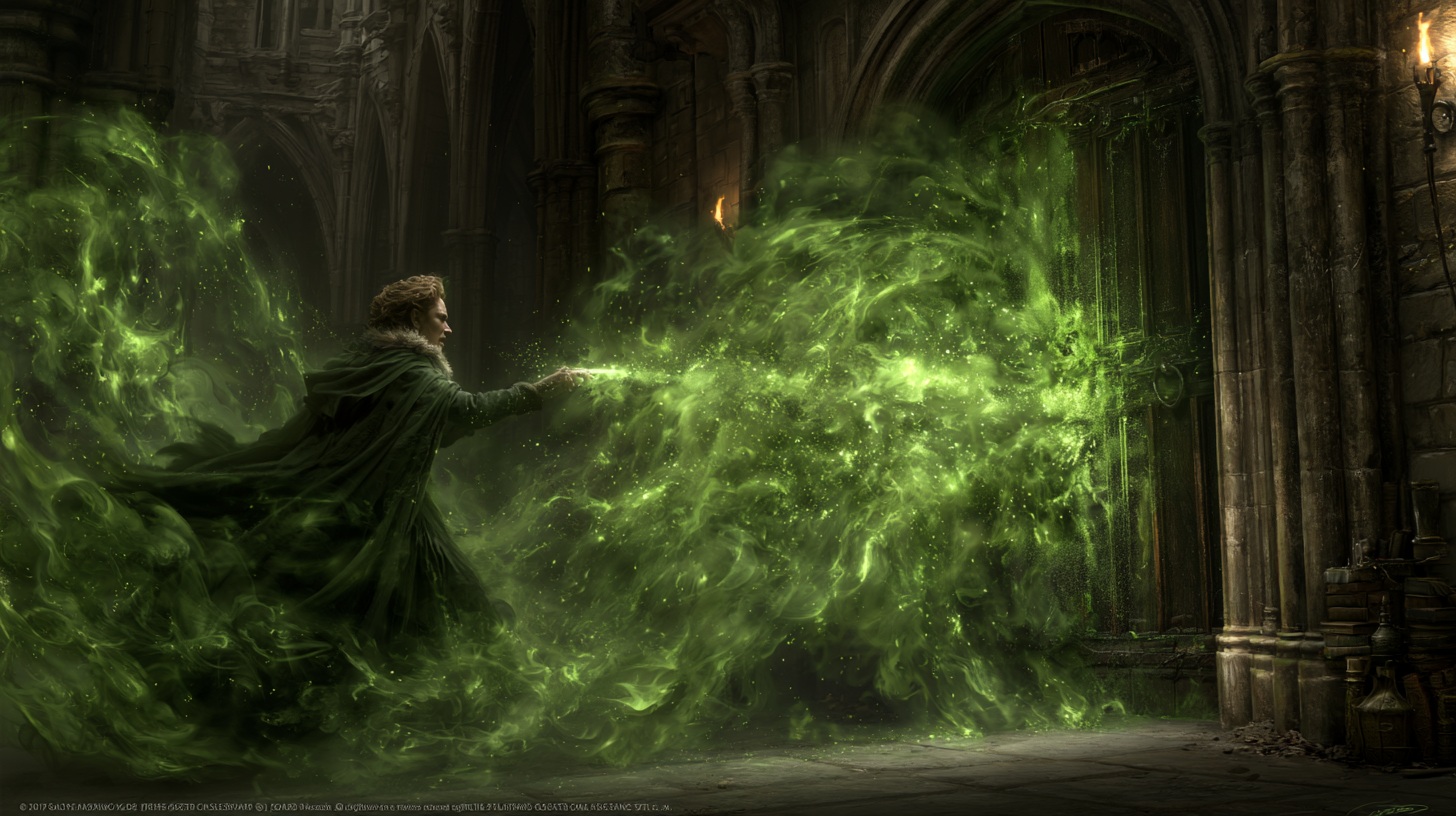
Ram's Charge
Charge!
“I heard one terrible crack from below stairs, and suddenly every servant in the manor understood diplomacy had failed.”
Doors possess a certain arrogance.
Stone gates. Iron barred vaults. Heavy oak entrances swollen shut with age. Locked things are built upon the assumption that time, patience, or proper authority will eventually be required to pass through them.
Ram’s Charge rejects negotiation entirely.
The spell conjures a violent surge of force shaped vaguely like the impact of a charging ram, slamming into a chosen barrier with enough concentrated momentum to shatter locks, splinter hinges, and violently force open structures that would otherwise require prolonged effort to breach.
The effect is immediate and unmistakable.
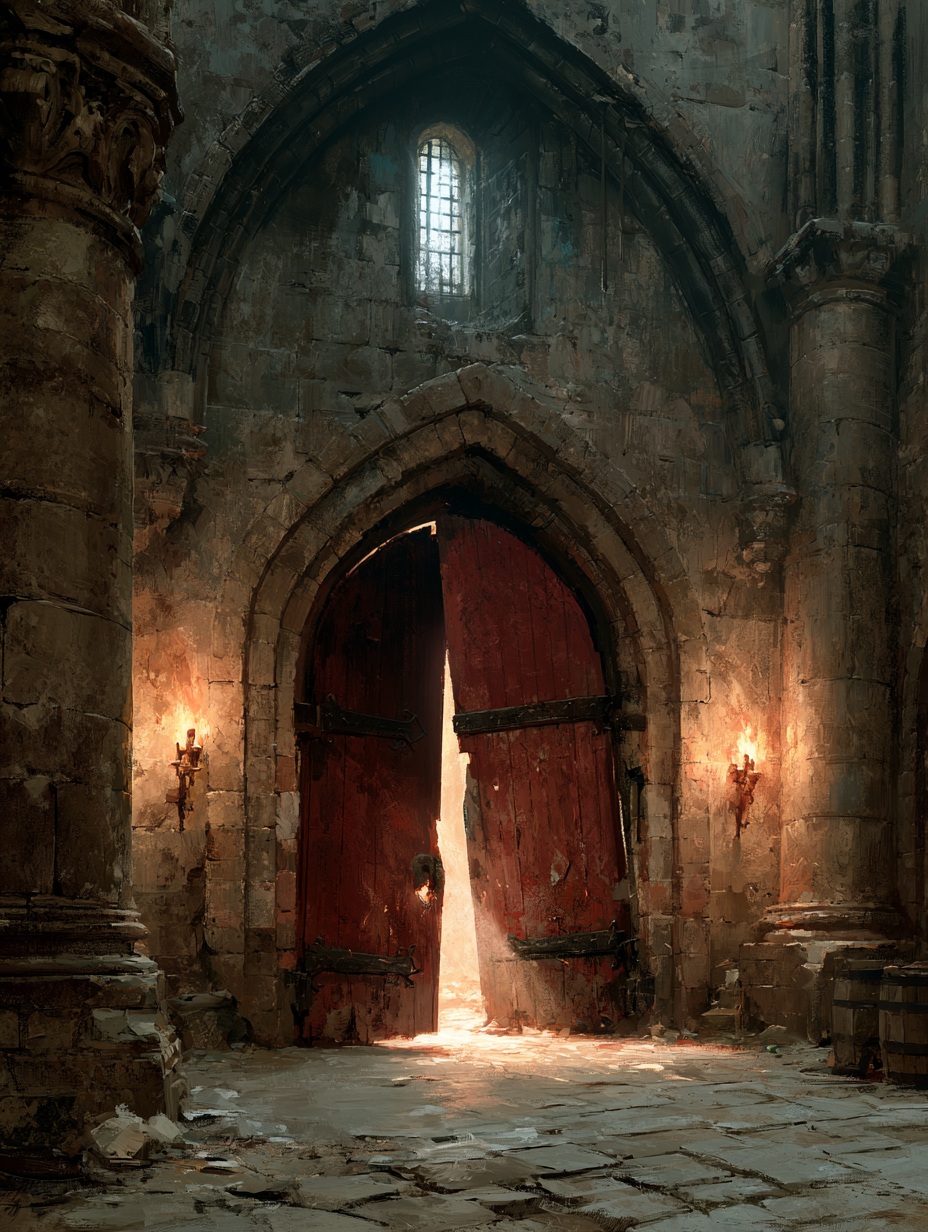
Wood bursts inward explosively. Iron fittings twist loose from masonry. Dust erupts outward in choking clouds as the impact reverberates through nearby walls and floors. Even sturdy reinforced barriers often groan audibly moments before failure, as though the building itself briefly realizes resistance is pointless.
Witnesses usually describe the sound first.
A deep concussive crack somewhere between thunder and collapsing timber.
Then screaming.
Because standing beside the target when the spell strikes is a remarkably unpleasant experience. Splinters, shattered debris, broken stone, bent metal, and displaced fragments burst outward violently enough to injure careless bystanders nearby.
Apprentice mages learn this lesson very quickly.
Military battlemages adopted Ram’s Charge almost immediately after its creation because of its efficiency during sieges and urban combat. Locked gates, barricaded doors, reinforced checkpoints, and trapped interiors suddenly became vulnerable to portable magical breaching without requiring cumbersome siege equipment.
Naturally, thieves and smugglers also developed deep appreciation for the spell.
Most burglaries rely upon silence.
Ram’s Charge relies upon certainty.
The enchantment became especially common among adventuring parties after explorers realized ancient ruins frequently contained doors designed specifically to resist ordinary intrusion. Stone seals untouched for centuries tend not to cooperate politely with lockpicks and crowbars.
Force, however, remains universally understood.
Sorcerers often manifest the spell with visible thematic influence tied to emotional state or magical lineage. Some produce spectral battering rams. Others conjure charging beasts formed from pure force, smoke, flame, or crackling light. Certain bloodlines create impacts accompanied by roaring animal sounds moments before collision.
Wizards generally insist these visual embellishments are unnecessary.
Most still add them anyway.
The spell’s ability to ignore nonmagical structural reinforcement is what truly separates it from simple destructive force. Locks, bars, hinges, and fittings fail first because the magic attacks the object’s function as a barrier rather than merely damaging material randomly.
A heavy door may survive physically while every mechanism keeping it closed detonates apart simultaneously.
This precision makes the spell popular among rescue workers as well. Firefighters, city wardens, and emergency responders frequently employ controlled castings during collapses, riots, or disasters where rapid entry matters more than preserving property.
Though “controlled” remains relative.
Some taverns still display broken doors proudly after famous wizards made dramatic entrances through them. Certain adventuring companies even developed traditions involving intentionally excessive castings whenever subtlety ceased mattering.
One particularly infamous mercenary captain reportedly refused to use handles entirely for nearly six years.
The spell’s loudness became culturally iconic over time. Across many cities, the sound of magically exploded doors carries immediate associations with raids, assassinations, arrests, magical duels, or catastrophically bad decisions unfolding nearby.
Most people hearing it instinctively move away from windows.
Arcane architects eventually adapted by developing reinforced magical seals specifically intended to resist brute force entry. This, naturally, encouraged evokers to cast the spell at increasingly higher levels in response.
Civilization advances through many noble principles.
An arms race between locks and people who hate locks remains one of the oldest.
Among adventurers and city guards alike, one saying survives consistently regarding the spell.
There are elegant ways to enter a room.
And then there is arriving correctly.



Comments