


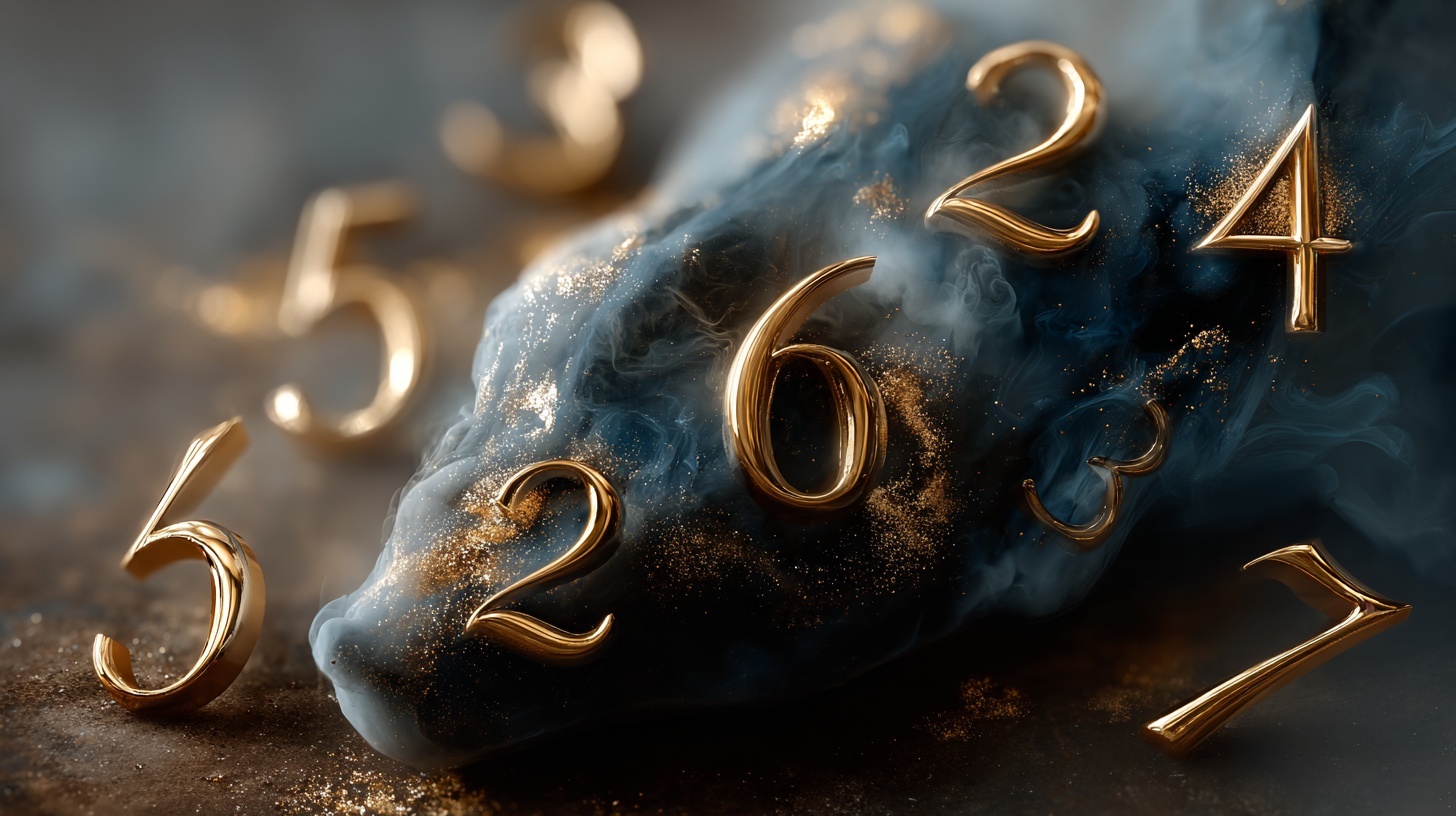
Quick Count
1, 2, 3, 4, 5...
"6, 7, 8, 9, 10..."
There is a particular kind of frustration that comes from knowing something is there and not knowing how much of it there is. A pile of coins spilled across a table. A bundle of arrows hastily gathered before a journey. Crates stacked in a storeroom, each one promising contents that may or may not match what was recorded. Most people solve this the same way they always have, by counting, recounting, and hoping nothing was missed along the way.
Quick Count exists for those who would rather not hope.
The magic does not alter the objects. It does not gather them, sort them, or bring them into clearer focus. It simply observes, with a precision that bypasses the usual limits of perception. In the space of a heartbeat, the question resolves itself into a single, clean answer. A number, exact and immediate, offered without commentary or explanation.
There is no sense of process behind it. No awareness of the counting itself. One moment the objects are many, uncertain and scattered, and the next they are defined. The mind does not follow the path from one to the other. It simply arrives.
This is what gives the spell its quiet utility. It removes doubt without replacing it with anything unnecessary. There is no insight into where each object lies, no sense of distribution or condition. A broken arrow counts the same as a perfect one. A coin half buried beneath another is still part of the total. The spell does not interpret value or usefulness. It does not care what the objects are for. It only answers how many.
The requirement that the objects be visible is not a limitation imposed lightly. It is a boundary that defines the nature of the magic itself. What cannot be seen cannot be counted, not because it is absent, but because the spell does not reach beyond perception. Hidden compartments, concealed caches, anything obscured or blended into a larger whole, all of it remains outside its grasp. The magic does not search. It does not reveal. It accepts the scene as it is presented and measures only what is plainly there.
Those who rely on this spell regularly develop a habit of arranging the world to suit it. Coins spread out rather than left in a heap. Supplies laid bare rather than kept bundled. Visibility becomes part of preparation, a simple adjustment that allows certainty to replace estimation. It is a small discipline, but one that tends to separate those who trust their tools from those who trust their assumptions.
Among artificers and merchants, the spell is valued for its efficiency. Time spent counting is time not spent doing something else, and in trades where precision matters, even small errors can carry consequences. Bards, for their part, find uses that are less practical but no less effective, turning the spell into a quiet demonstration of control or a subtle way to expose exaggeration when numbers are spoken too confidently.
Wizards approach it with the same measured interest they apply to all forms of divination. Not because it reveals anything profound, but because it does exactly what it claims without deviation. There is a kind of reliability in that, a consistency that stands out in a field where uncertainty is often the rule rather than the exception.
What defines Quick Count is not its power, but its restraint. It does not overreach. It does not attempt to solve problems beyond its scope. It answers a single question, cleanly and completely, and then it is done.
In a world where so much remains uncertain, that kind of answer tends to carry more weight than one might expect.




Comments