

Possess Animal
C'mere Little Fella
“I remember thinking I would panic, that I would lose myself in it. But there was no room for that. The world was too immediate, too sharp. Hunger, scent, movement. Everything reduced to what mattered right now. I was still there, somewhere behind it, but quieter than I have ever been.”
There is a moment of hesitation just before the spell takes hold, not in the beast, but in the one reaching for it. A brief awareness that what comes next is not observation, not influence, but occupation. The boundary between self and other does not blur. It is crossed.
The transition is abrupt.
One set of senses falls away, replaced instantly by another that does not belong. The world shifts in scale, in texture, in priority. Smell arrives first, overwhelming and immediate, carrying layers of information that do not sort themselves into words. Sound follows, sharper in some ways, duller in others, shaped by instincts rather than interpretation. Vision narrows or widens depending on the creature, but it never feels entirely familiar. The body that receives these inputs is no longer the one that understands them.
At the same time, the original form is gone.
Not physically, not truly, but functionally. It ceases to matter. Sight, sound, awareness of one’s own body, all of it is cut cleanly away. There is no split attention, no distant tether allowing for divided focus. The world becomes singular, defined entirely by the creature now occupied. Whatever happens to the abandoned body occurs without witness or response.
Control comes next, and with it, a kind of friction.
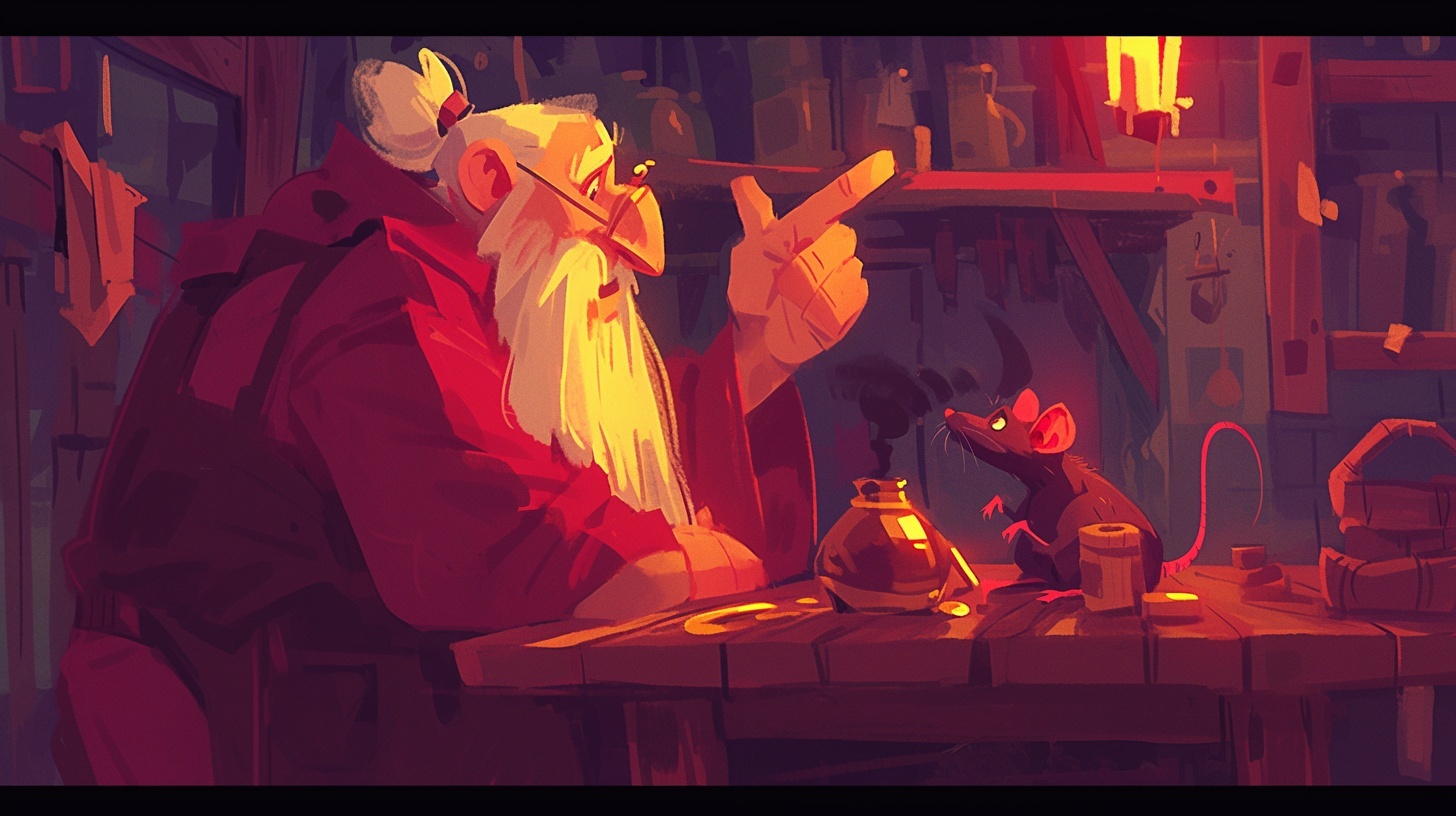
The beast does not think the way a person does. It does not plan or reason or weigh outcomes. It reacts. It moves according to instinct, habit, and immediate need. Imposing direction onto that framework is not seamless. The caster can compel movement, can force the body to act in ways it would not choose, but the underlying nature of the creature does not disappear. It resists in subtle ways, not through defiance, but through mismatch. The path is followed, but not cleanly. The motion is directed, but never fully natural.
There are limits that cannot be ignored.
The creature can be made to run, to slip away from danger, to vanish into cover. It can be pushed to move faster, to reposition, to carry the caster’s awareness into places their own body could not safely reach. But it cannot be turned into something it is not. It will not fight. It will not perform complex tasks. It will not act with intention beyond the simplest forms of movement and survival. The more one tries to force it into a role it cannot fulfill, the more obvious the disconnect becomes.
All the while, the original body remains still.
Unaware. Unresponsive. Present, but effectively absent. There is a vulnerability in that which cannot be dismissed. The spell demands a full exchange. To see through another’s eyes, one must give up their own. To move through another’s body, one must leave their own behind. It is not a shared experience. It is a replacement.
For those who use this magic often, there is a growing familiarity with that dislocation. The shift becomes easier to accept, the foreign nature of the senses less jarring. But it never becomes entirely comfortable. There is always a moment, at the beginning and at the end, where the return to one’s own body feels slightly delayed, as if something needed to be remembered rather than simply resumed.
The spell does not linger beyond its limits. When it ends, the connection breaks cleanly. The beast is released, its awareness snapping back into place without understanding what occurred. The caster returns just as abruptly, their own senses flooding back in, often all at once. Sight, sound, balance, weight, all of it reasserting itself in a way that can feel momentarily disorienting.
What remains afterward is not control, but perspective.
For a brief time, the world was experienced without the structures that define thought. Without language, without abstraction, without the constant layering of meaning that turns sensation into interpretation. It is a simpler way of existing, but not an easier one. It carries its own pressures, its own limitations, its own form of awareness that does not translate cleanly back into human understanding.
And for those who step into it too often, there is a quiet question that begins to surface, one that is not easily answered.
Where, exactly, does the self end, if it can be set aside so completely, even for a moment.
“They told us it would feel like freedom. It wasn’t that. It was clarity. No past to carry, no future to fear, only the next step, the next sound, the next breath. And when it ended, I found I missed it more than I care to admit.”
Related Discipline
Level



Comments