



Playwright

Stage Traffic

“I have spent twenty years writing kings, fools, saints, and monsters. The troubling discovery is that the same person can play all four roles before intermission.”
— Elio Vann, Notes from a Rehearsal
Stories are among the oldest technologies any thinking being possesses.   Before laws, before institutions, before kingdoms and empires, people gathered around fires and explained themselves through stories. They used them to remember victories, justify failures, teach lessons, preserve traditions, and make sense of a world that often seemed indifferent to their hopes.   Most people consume stories.   Playwrights study them.   A playwright spends years observing human behavior and asking questions that others rarely consider. Why does an audience cheer one person and condemn another? Why does a villain believe they are justified? Why does a tragedy move people more deeply than a simple account of misfortune? Why do certain stories survive for generations while others vanish almost immediately?   The answers are rarely simple.   Stories are not merely entertainment. They are frameworks through which people understand themselves. A kingdom tells stories about its founding. A family tells stories about its ancestors. A religion tells stories about faith. A revolutionary tells stories about justice. Even ordinary individuals construct narratives that explain who they are, why they made certain choices, and what their lives are supposed to mean.   The playwright learns to recognize these narratives everywhere.   A merchant explains a questionable decision as necessity. A noble presents ambition as duty. A criminal describes greed as survival. A ruler portrays compromise as wisdom. None of them are necessarily lying. Most genuinely believe the stories they tell.   That is what makes them interesting.   Playwrights quickly discover that people rarely view themselves objectively. Almost everyone imagines they occupy a meaningful role within their own personal narrative. They are the misunderstood hero, the loyal friend, the reluctant leader, the victim of circumstance, the defender of tradition, the champion of progress, or the voice of reason surrounded by fools.   Few people imagine themselves as villains.   Yet villains tell stories too.   One of the most valuable lessons a playwright learns is that opposing sides often understand the same events through entirely different narratives. A rebellion may appear heroic to those seeking freedom and criminal to those fearing chaos. A war may be remembered as liberation by one generation and catastrophe by another. A family dispute may contain half a dozen conflicting versions of the truth.   The facts matter.   The stories people tell about the facts matter just as much.   This perspective makes playwrights unusually observant. They pay attention to how people describe themselves, which details they emphasize, and which details they omit. They notice contradictions between public reputations and private behavior. They recognize when someone is carefully managing an image or attempting to cast themselves in a more favorable role.   Some playwrights become romantics because of these observations. They develop a deep appreciation for human complexity and find endless fascination in the hopes, fears, ambitions, and contradictions that define people's lives.   Others become skeptics.   After all, anyone who spends enough time studying stories eventually notices how easily they can be manipulated. Heroes become villains. Villains become heroes. Failures become triumphs through selective memory. Disasters become victories through careful presentation. Entire generations can come to believe narratives that bear only a passing resemblance to reality.   Yet even the most cynical playwright rarely loses respect for stories themselves.   Stories endure because people need them.   Facts explain what happened.   Stories explain what people believe happened.   The distinction matters.   In lands scarred by the Shattering, stories often preserve knowledge that formal records have lost. Entire communities may remember events through songs, dramas, folktales, and oral traditions long after written histories have disappeared. Traveling performers carry legends across vast distances. Plays preserve cultural memory. Comedies mock powerful figures. Tragedies warn future generations about old mistakes.   Sometimes a story survives longer than the truth that inspired it.   Sometimes the story becomes a kind of truth of its own.   Many playwrights spend their lives collecting observations rather than writing them. Every conversation becomes potential material. Every argument reveals character. Every contradiction exposes something worth examining. The world itself becomes an endless source of inspiration.   Because beneath every law, war, romance, betrayal, ambition, triumph, and failure lies a story someone is trying to tell.   Most people ask what happened.   A playwright asks why people need it to have happened that way.
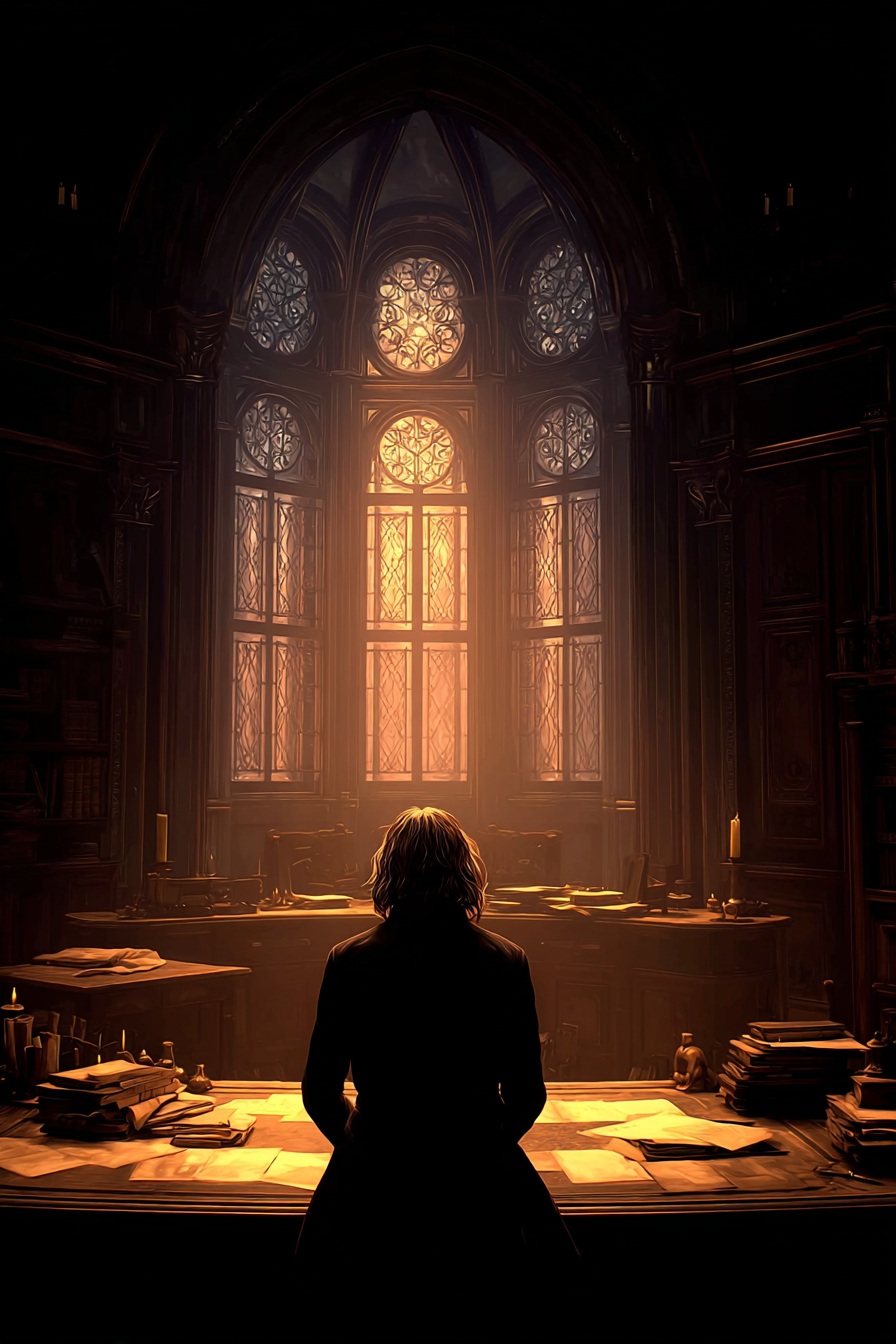
“Every man who entered my study wanted the same thing. The hero wished to be admired, the villain wished to be understood, and neither appreciated discovering they were the same person.”
— Amalia White, Notes from a Rehearsal
Type
Artisan

Playwright

Overview:
Stories are everywhere.   Most people think stories are found in books, on stages, or around campfires. You learned otherwise. Stories live in marketplaces, temples, courtrooms, battlefields, taverns, and family dinner tables. They shape how people understand themselves, justify their actions, and explain the world around them.   As a playwright, dramatist, storyteller, or chronicler of human behavior, you spent years studying what makes people laugh, cry, hope, fear, and believe. You learned how heroes are created, how villains justify themselves, and how ordinary people convince themselves that their choices matter. You learned that every audience wants meaning, even when the truth is far messier than the stories people tell.   Writing taught you something important.   People rarely see themselves clearly.   Most imagine they are protagonists in stories that make sense. They explain failures, justify compromises, elevate allies, and condemn enemies according to narratives they barely realize they are telling. The stories may be true. They may be lies. Most are somewhere in between.   Most people ask what happened.   You find yourself wondering what story people are trying to tell.
Skill Proficiencies: Insight, Performance
Tool Proficiencies: Choose one: Calligrapher's Supplies, Musical Instrument, or Disguise Kit
Languages: One of your choice
Equipment:
A collection of unfinished notes and observations, a manuscript from a completed work, a token gifted by an admirer or critic, a set of fine clothes, and a pouch containing 10 gp.
Features:

Narrative Instinct

Years spent studying stories have taught you to recognize the narratives people construct around themselves and others. In social situations, organizations, communities, and conflicts, you can usually identify the roles people believe they occupy, the stories they tell to justify their actions, and the assumptions that shape how they interpret events. You can often determine which individuals are viewed as heroes, villains, victims, outsiders, visionaries, martyrs, or cautionary examples, as well as where competing versions of the same story may exist. The DM determines what information is available and how it may be discovered.
Suggested Characteristics: Playwrights spend their lives observing human behavior and transforming it into stories. Some become romantics fascinated by the human condition. Others become skeptics who recognize how easily people deceive themselves. Most develop a habit of viewing life through the lens of character, motivation, conflict, and narrative.

What Kind of Story Made You Famous?

d8Story
1A heroic epic that inspired generations.
2A tragedy based on real events that angered powerful people.
3A comedy that revealed uncomfortable truths through humor.
4A romance that became more famous than its  
5A historical drama whose accuracy remains disputed.
6A satire that embarrassed influential figures.
7A work that was banned in several cities.
8A deeply personal story that revealed more about you than intended.

What Have Stories Taught You?

d6Lesson
1People often become the roles they believe they are meant to play.
2Heroes and villains rarely agree on which one they are.
3The story people tell about themselves is rarely the whole truth.
4Fear and hope shape decisions more than logic.
5Every conflict sounds justified to the people involved in it.
6The ending people expect is rarely the one they receive.
Personality Trait:
d8Trait
1I constantly compare people and situations to stories I have read or written.
2I enjoy asking questions that reveal what people truly believe.
3I pay close attention to how people describe themselves.
4I am fascinated by contradictions in human behavior.
5I rarely believe the first version of a story I hear.
6I enjoy watching people interact more than participating myself.
7I instinctively look for motives behind people's actions.
8I believe every person has a story worth telling.
Ideal:
d6Ideal
1Truth. The best stories reveal something genuine about the world. (Good)
2Empathy. Understanding people begins with understanding their stories. (Good)
3Expression. Every person deserves the freedom to tell their own story. (Chaotic)
4Perspective. Every story sounds different depending on who is telling it. (Neutral)
5Meaning. People need stories to understand their lives. (Any)
6Legacy. Stories outlive those who create them. (Any)
Bond:
d6Bond
1There is one unfinished story I have spent years trying to complete.
2A person I wrote about changed their life because of my work.
3Someone became a villain in the public imagination because of a story I helped create.
4I am searching for a story that deserves to be remembered.
5A mentor taught me that understanding people matters more than entertaining them.
6I know the true story behind a famous legend.
Flaw:
d6Flaw
1I sometimes treat real events as though they were part of a story.
2I am overly curious about other people's private lives.
3I occasionally value a compelling narrative more than inconvenient facts.
4I assume people are more self-aware than they actually are.
5I struggle to resist embellishing a good story.
6I sometimes see meaning and symbolism where none exists.

Comments

Please Login in order to comment!
Powered by World Anvil