



Pilgrim’s Respite
Sanctuary Of The Faithful
"Faith was once a language shared. Now it is a dialect, fractured by time and spoken with different meanings by those who claim the same words. This spell does not guide the faithful. It reminds them that belief alone no longer guarantees understanding."
There was a time, before the Shattering, when faith traveled along clean lines. Temples stood where they had always stood. Names were spoken with certainty. Pilgrims walked roads that had been walked for generations, guided not only by belief, but by a shared understanding that the divine, whatever form it took, had a place in the world that did not shift beneath their feet.
That time did not survive.
When magic failed, it did not do so politely. It did not dim or falter in predictable ways. It collapsed, and in that collapse, it took with it the quiet agreements that had once defined the relationship between mortals and whatever listened beyond them. Some faiths endured unchanged. Others fractured. A few found themselves answering to something that had not worn their name before. And in the centuries that followed, as magic returned in unfamiliar shapes, religion in Aerith became something far more complicated than devotion alone.
Pilgrim’s Respite is a spell shaped by that complication.
It is not a declaration of faith. It is not a plea for intervention or a channel for divine power in the conventional sense. It is, instead, a careful inquiry. A question asked into a world where the answer may not be what the petitioner expects, and where the meaning of that answer must be interpreted with caution.
The casting is simple in motion, but not in implication. A holy symbol is presented, not as a badge of authority, but as a point of reference. The offering, small and appropriate to the faith in question, is consumed as part of the act, not because the gods require it, but because something must be given in order to ask a question that crosses boundaries not meant to be crossed lightly. Words are spoken. Gestures are made. The ritual, if taken, extends this process into something more deliberate, more considered, as though time itself must be convinced to listen.
What follows is not a voice, nor a vision in the dramatic sense. There is no figure that appears to guide the caster, no whisper that names the answer outright. The spell communicates through direction and impression, through the quiet certainty that settles into the caster’s awareness when the question has been acknowledged.
The nearest place of worship reveals itself first as a pull, a subtle alignment of perception that points the caster toward its location. Distance follows, not as a measured number, but as an understood span, near enough to reach, far enough to require effort, or somewhere between. Within a settlement, where faiths cluster and compete, the range of this awareness extends further, as though the density of belief sharpens the signal rather than obscures it.
Then comes the identity.
The caster knows which deity or deities claim the space, though the knowledge arrives without ceremony. A name settles into place, or several names if the site is shared, each carrying with it the weight of recognition. This alone would be sufficient in simpler times, when naming a god was enough to understand what awaited within their walls.
It is not sufficient here.
If the site belongs to the same faith as the caster, the spell offers more. The name of the primary caretaker emerges, accompanied by a sense of their standing within the structure of the faith. Acolyte. Priest. High priest. These are not titles spoken aloud, but understood in the same way one recognizes authority in a voice without needing it to be declared. The size of the congregation follows, not as an exact number, but as a presence. Sparse. Modest. Crowded. Alive.
This information carries a comfort that is difficult to dismiss. It suggests familiarity. Continuity. A place where the world might still behave as expected.
The spell does not allow that comfort to remain unchallenged.
The final impression it grants is the most subtle, and the most dangerous to misinterpret. It reveals the relationship between the faith of the caster and the faith that holds the nearest sanctuary. Not as doctrine. Not as history. As disposition. Welcoming. Wary. Indifferent. Hostile. These are not judgments rendered by the caster’s own bias. They are reflections of something broader, a convergence of divine inclination and mortal practice that has settled into a shared attitude.
It is here that Pilgrim’s Respite reveals its true purpose.
Faith in Aerith is no longer a matter of simple alignment. Two deities may share symbols, language, even origin, and yet their followers may treat one another with suspicion sharpened by generations of divergence. A temple may stand in open invitation while harboring a doctrine that places outsiders at a distance. A shrine may appear humble and unguarded, yet carry a hostility that is not expressed in words, but in the quiet certainty that those who do not belong should not linger.
The spell does not explain these dynamics. It does not provide reasons or histories. It gives the caster only the surface truth of the present moment, and expects them to decide what that truth means.
There are those who treat Pilgrim’s Respite as a convenience, a way to locate shelter, allies, or resources in unfamiliar territory. In many cases, it serves that purpose well. A weary traveler finds a temple whose doors are open. A cleric locates a shrine devoted to their own deity and gains not only refuge, but guidance from one who shares their path. A paladin identifies a hostile sanctuary and chooses to approach it with caution rather than assumption.
But there is another way to understand the spell, one less comfortable and more aligned with the world that produced it.
It is a measure of distance, not just in space, but in belief.
When the spell reaches outward, it is not merely locating a structure of stone and devotion. It is tracing the lines along which faith has fractured, shifted, and reformed in the wake of catastrophe. It is acknowledging that the divine, whatever its true nature, does not present itself uniformly across the world, and that those who serve it do so in ways shaped as much by history and survival as by doctrine.
There are recorded instances, rarely discussed in formal circles, where the spell returned impressions that did not align with expectation. A temple dedicated to a known deity registers as wary or hostile to one who serves that same name. A shrine thought abandoned still responds as though its congregation remains intact, though no one stands within its walls. In some cases, the spell reveals nothing at all, not because no site exists within range, but because what lies nearby no longer qualifies as a place of worship in any sense the spell recognizes.
These anomalies are often dismissed, explained away as errors in casting, interference from local conditions, or simple misunderstanding. Yet they persist in quiet records and personal accounts, forming a pattern that suggests something more unsettling.
Faith, like magic, did not return unchanged.
Pilgrim’s Respite does not resolve that truth. It does not attempt to reconcile contradictions or restore lost certainty. It provides direction, identity, and disposition, and leaves the rest to the one who asked the question.
There is a particular moment, known to those who have relied on the spell more than once, when the final impression settles into place. The caster stands still, aware of where they must go, who waits there, and how they will likely be received. It is a moment of clarity that feels almost like safety.
And yet, beneath that clarity, there is always the quiet understanding that what waits at the end of that direction is not just a place of worship, but a reflection of a world where belief itself has become something that must be navigated with care.
The spell does not judge that world.
It simply points toward it and waits to see what the caster will do next.
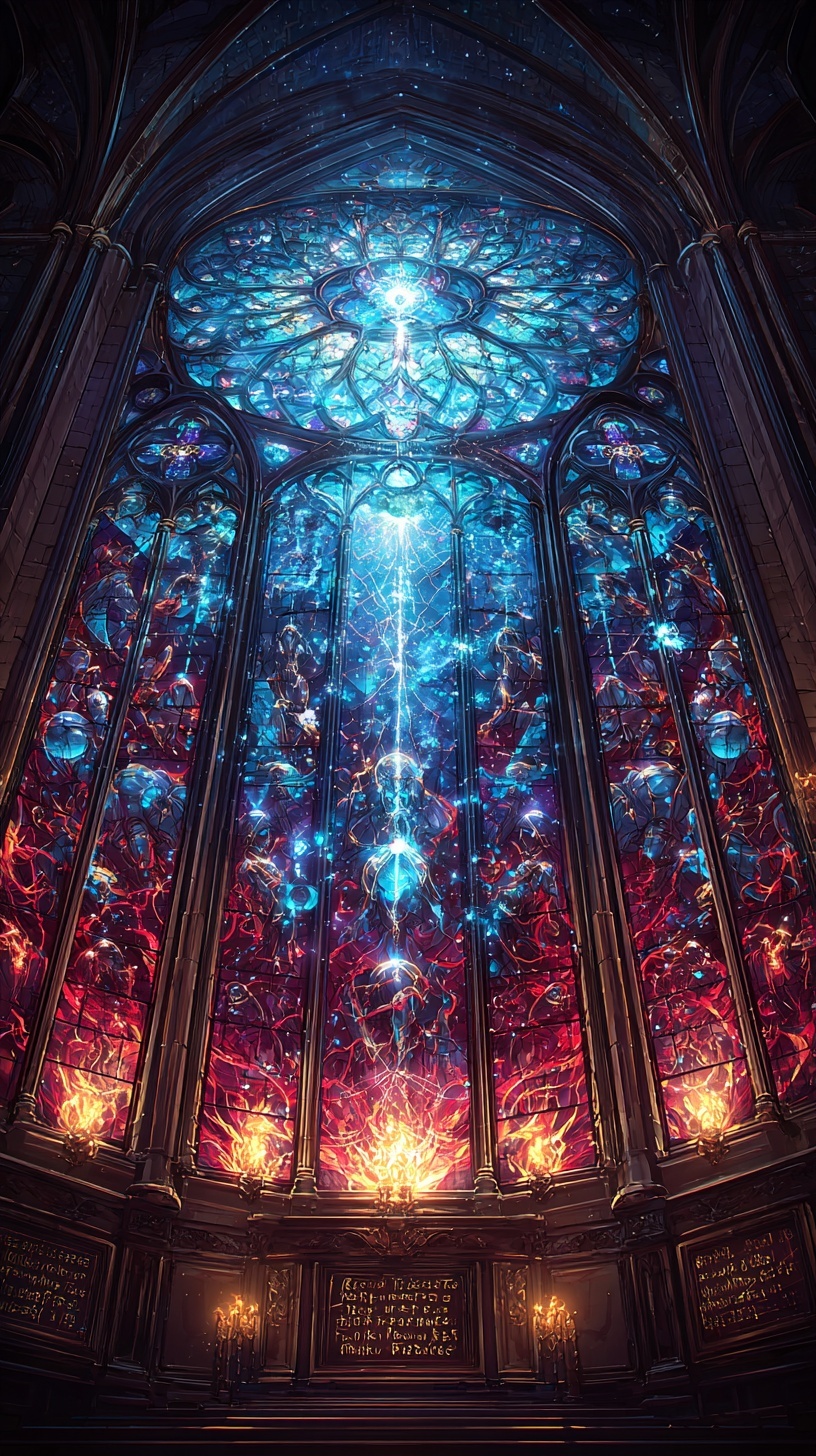
"I only wanted a place to rest and give thanks. The prayer showed me the way, clear as sunrise. But when I felt what waited there, I understood something I had not before. Not every door opened in a god’s name is meant for you to walk through."



Comments