


Omen from the Departed
You May Yet Escape My Fate
“There are voices that do not belong to the living, and there are warnings that do not belong to the present. When the two meet, the wise listen carefully and the unlucky hear only what they fear.”
There are spells that reveal hidden things, and there are spells that reach beyond what should be revealed at all.
Omen from the Departed does not seek knowledge in the usual sense. It does not read the stars, interpret signs, or consult the quiet patterns of fate as they unfold. Instead, it takes something far more direct, and far more dangerous. It forces a moment that was never meant to occur, a conversation between the living and the dead that exists only because it has been made to exist.
The result is not guidance.
It is a warning.
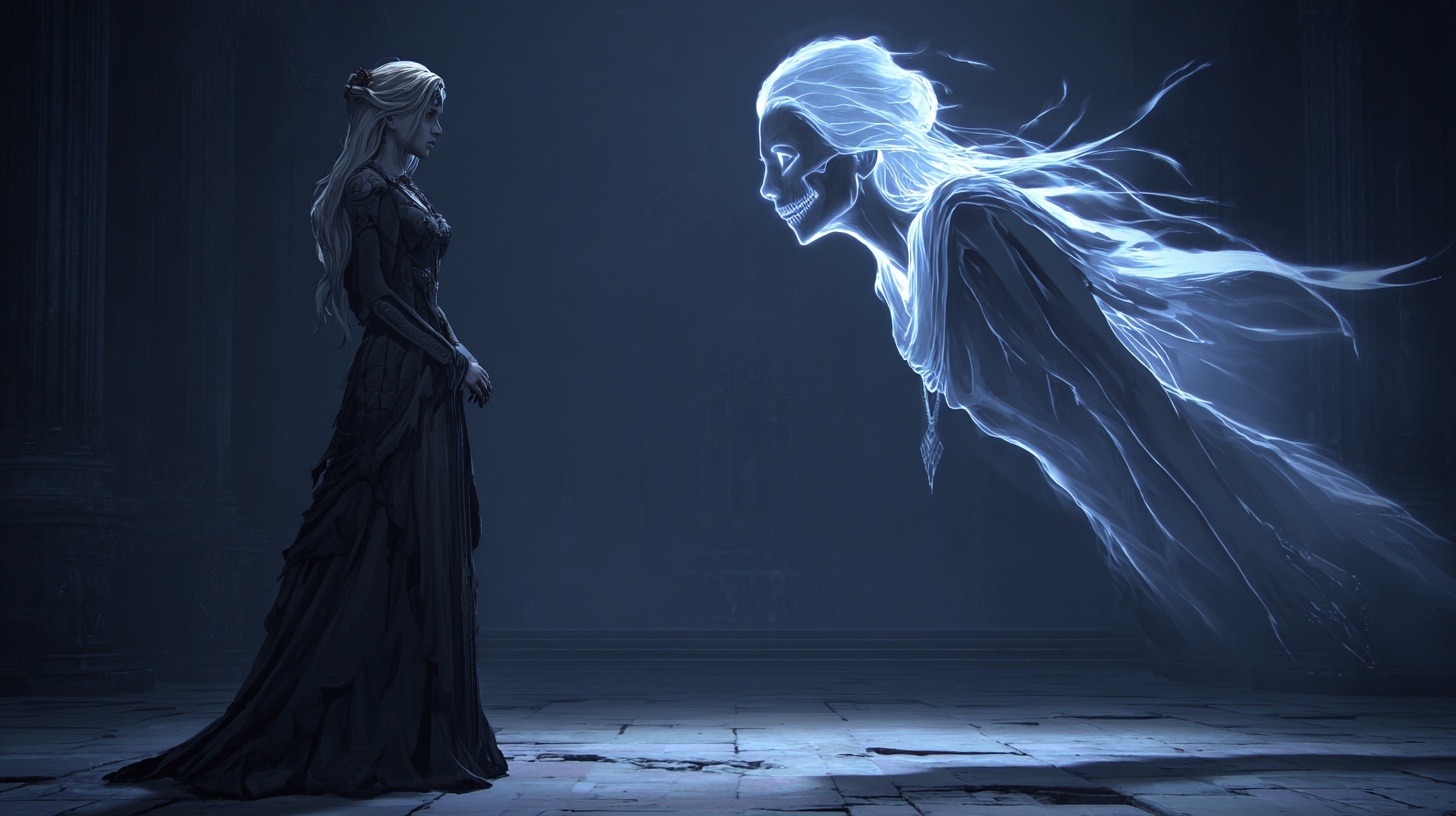
When the spell is cast, the boundary between memory and death is disturbed just enough to allow something through. The apparition that appears is never random. It takes the shape of someone who mattered, someone whose presence carries weight that cannot be dismissed. A lost companion, a parent, a rival, a victim. The form is precise, because it must be.
The dead do not come as strangers.
They come as reminders.
To anyone else, nothing happens. There is no flash, no sound, no sign that anything has changed. But for the one targeted, the world narrows. The apparition stands where it should not, speaks in a voice that should no longer exist, and delivers a message that does not belong to the present moment.
The warning is never simple.
It does not describe events in clear terms or offer instructions that can be followed without thought. It hints, suggests, and implies. It points toward something that has not yet occurred, something that may still be avoided, but only if understood correctly. This is where the danger lies.
Because understanding is not guaranteed.
Those who withstand the experience often describe a moment of clarity that feels unnatural in its precision. The message resolves into something usable, a piece of knowledge that can be acted upon when the moment arrives. When the danger comes, they find themselves ready in a way they cannot fully explain, as though the future has already brushed against them once and left its mark.
Others are not so fortunate.
For them, the vision fractures. The message breaks apart into images, emotions, and fragments that do not align. The presence of the dead does not guide. It overwhelms. The mind struggles to reconcile what it is seeing with what it knows to be possible, and the result is not clarity, but strain.
The damage is immediate.
Not physical, but internal, as though something has pressed too hard against the limits of perception. The warning remains, but it is distorted, tangled in fear and uncertainty. When the moment it foretold finally arrives, hesitation replaces instinct. The future has been seen, but not understood, and that makes it more dangerous, not less.
There is a final cruelty to this magic that is not often spoken aloud.
The apparition is not truly the dead.
It carries their face, their voice, and enough of their presence to make the encounter real, but it is shaped by something else. Fate, memory, or whatever lies at the edge of death where meaning begins to break apart. Whether the dead would choose to give such warnings, or whether they are being used as instruments for something beyond them, is a question the spell does not answer.
Those who have experienced it rarely agree on what they witnessed.
Some insist it was a final act of care, a warning given because it was the only way left to reach them. Others describe something colder, something that knew exactly what form would be most effective and chose it without hesitation. Both accounts share one detail.
The feeling that the message was meant to be heard.
Not requested. Not welcomed.
Delivered.
And once delivered, impossible to ignore, even as its meaning slips just out of reach, waiting for the moment when it matters most and certainty is no longer an option.
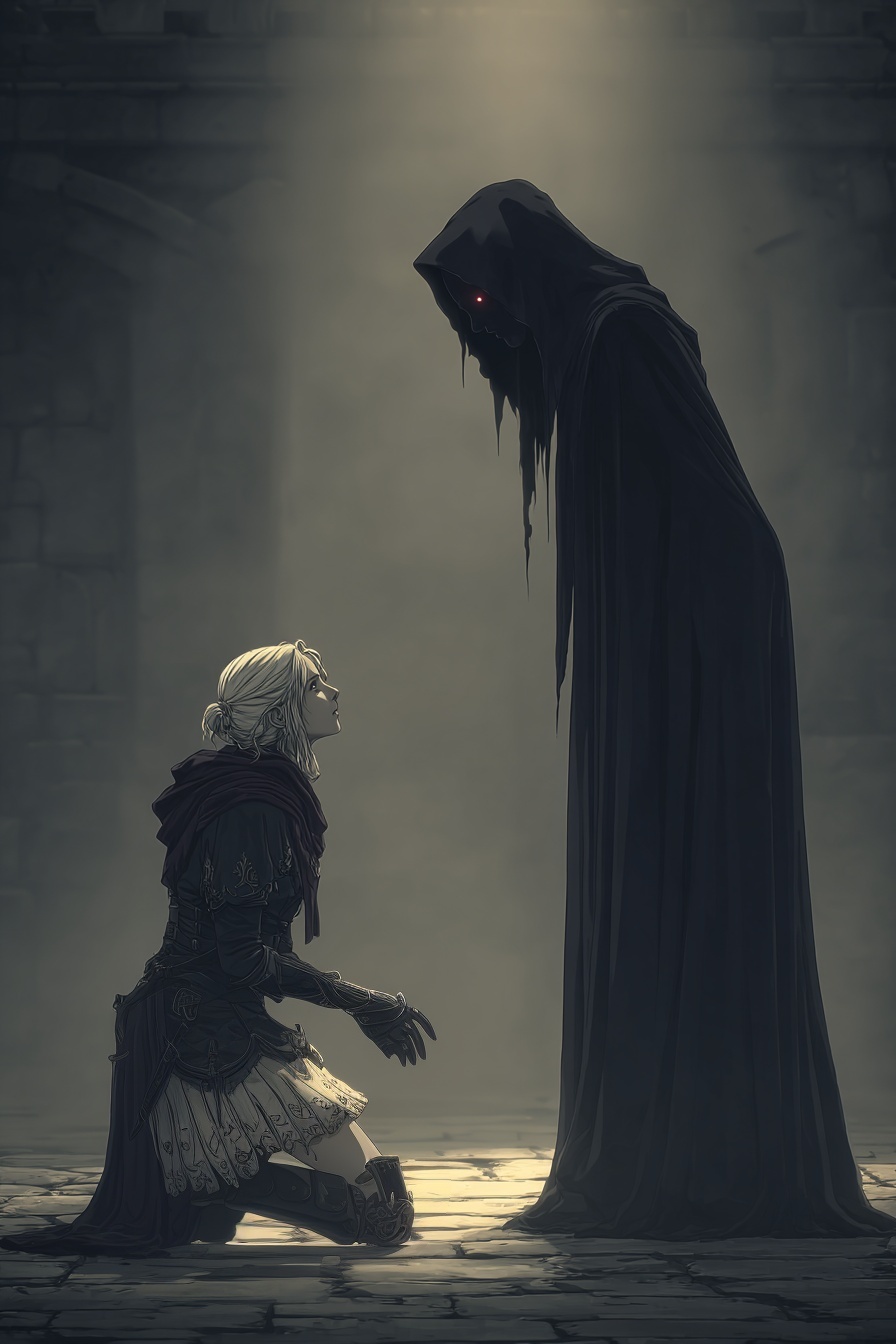
“The dead don't return to speak. Something else learns their voice, and that is what you should be afraid of.”
Related Discipline
Level



Comments