


Necrotic Graft
Is It Supposed To Be That Color?
“They stitched it to him as one might mend a tear in silk, but the seam did not rest. It twitched. It remembered. And when the lantern dimmed, I could not tell whether it moved at his will or something else’s.”
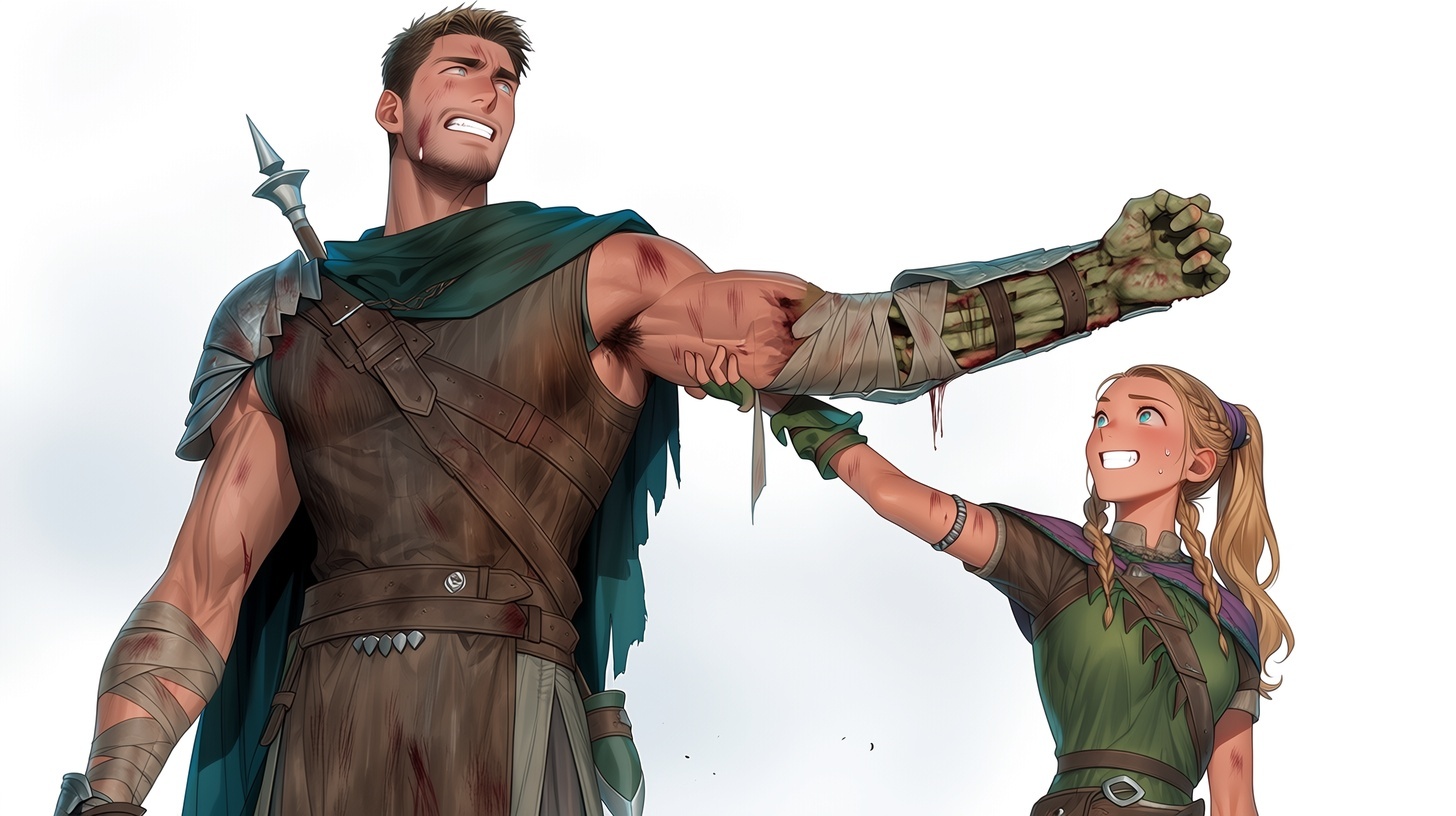
Necrotic Graft is a practical and unsettling application of necromancy, developed in response to a problem most arcane traditions prefer to ignore. Limbs are lost. Bodies are broken. In the immediate aftermath of violence, survival often depends on restoring function quickly rather than cleanly. This spell does not heal. It does not regenerate. It replaces absence with something that works well enough to keep a creature moving.
The process is direct and unrefined. A severed body part is pressed into place and bound through necromantic energy, forcing dead tissue to answer the needs of the living body it is attached to. There is no illusion involved. The graft does not blend seamlessly with the host. Skin tones rarely match. Texture, temperature, and subtle movement often betray the truth at a glance. The result is functional, but never natural.
Despite its crude nature, the spell achieves a specific and valuable outcome. The grafted limb responds to intent, allowing the creature to walk, grasp, and perform basic physical actions without penalty. This restoration of capability can mean the difference between survival and helplessness in dangerous conditions. A soldier can stand again. A laborer can work. An injured traveler can continue moving rather than be left behind. In this sense, Necrotic Graft is less about restoring what was lost and more about preventing further loss.
The spell’s limitations are deliberate and significant. The graft does not carry over any traits, strength, or abilities from its original owner. A stronger arm does not grant greater force. A claw does not become a weapon. The body part is treated as a tool shaped like a limb, not a source of new capability. This prevents the spell from becoming a method of enhancement and reinforces its intended role as a temporary solution.
The necromantic nature of the graft introduces complications that cannot be ignored. The attached limb is, by all meaningful measures, undead. It does not live, it does not heal, and it does not integrate with the body in a biological sense. This distinction matters in both practical and social contexts. Effects that target undead recognize the graft as such, sometimes with consequences the host did not anticipate. In environments where necromancy is feared or restricted, the presence of such a graft can provoke immediate hostility or suspicion.
Over time, the strain of maintaining this unnatural union begins to show. The body resists what has been forced upon it, and the effort required to sustain the graft manifests as physical exhaustion. Each day, the host must endure the tension between living tissue and dead matter compelled into cooperation. Some manage this without issue. Others deteriorate quickly, their bodies rejecting the graft through fatigue and weakness rather than direct failure. The spell does not conceal this cost. It imposes it as part of the exchange.
The temporary nature of the graft defines its place within necromantic practice. It is not a permanent solution, nor is it intended to be one. When the spell ends, the binding fails and the graft detaches, returning to its inert state. The host is left once again without the replaced part, though often in a better position than before. The spell creates a window of function, a limited period during which the creature can act, move, and adapt before a more permanent solution must be found.
In the field, Necrotic Graft is most often used under pressure. Battlefield medics, expedition leaders, and survivalists turn to it when conventional healing is unavailable or insufficient. It is a spell of immediacy, chosen not because it is ideal, but because it works. The alternative is often immobility, vulnerability, or death. In these moments, the discomfort and risk associated with the graft are secondary concerns.
Culturally, reactions to the spell vary sharply. In some regions, it is viewed as a grim but necessary tool, accepted as part of the reality of injury and survival. In others, it is regarded as a violation of natural order, an act that crosses boundaries better left intact. The sight of a mismatched limb moving with borrowed purpose unsettles even those familiar with magic. It challenges the expectation that the body should be whole, coherent, and alive in all its parts.
Among necromancers, the spell is often treated with a mixture of practicality and restraint. It demonstrates a form of control over death that stops short of animation or full reanimation. The graft does not think, act independently, or persist beyond the spell’s duration. It is held in a narrow state between usefulness and decay, bound only as long as the caster maintains the effect. This controlled application is what allows the spell to exist within broader practice without being conflated with more extreme forms of necromancy.
Necrotic Graft does not pretend to restore what was lost. It does not erase injury or undo harm. It offers function where there would otherwise be none, at a cost that is visible, tangible, and unavoidable. For those who rely on it, that is enough. In the moments where survival depends on action, the difference between a missing limb and a working one, however unnatural, is not a matter of comfort. It is a matter of whether the story continues at all.
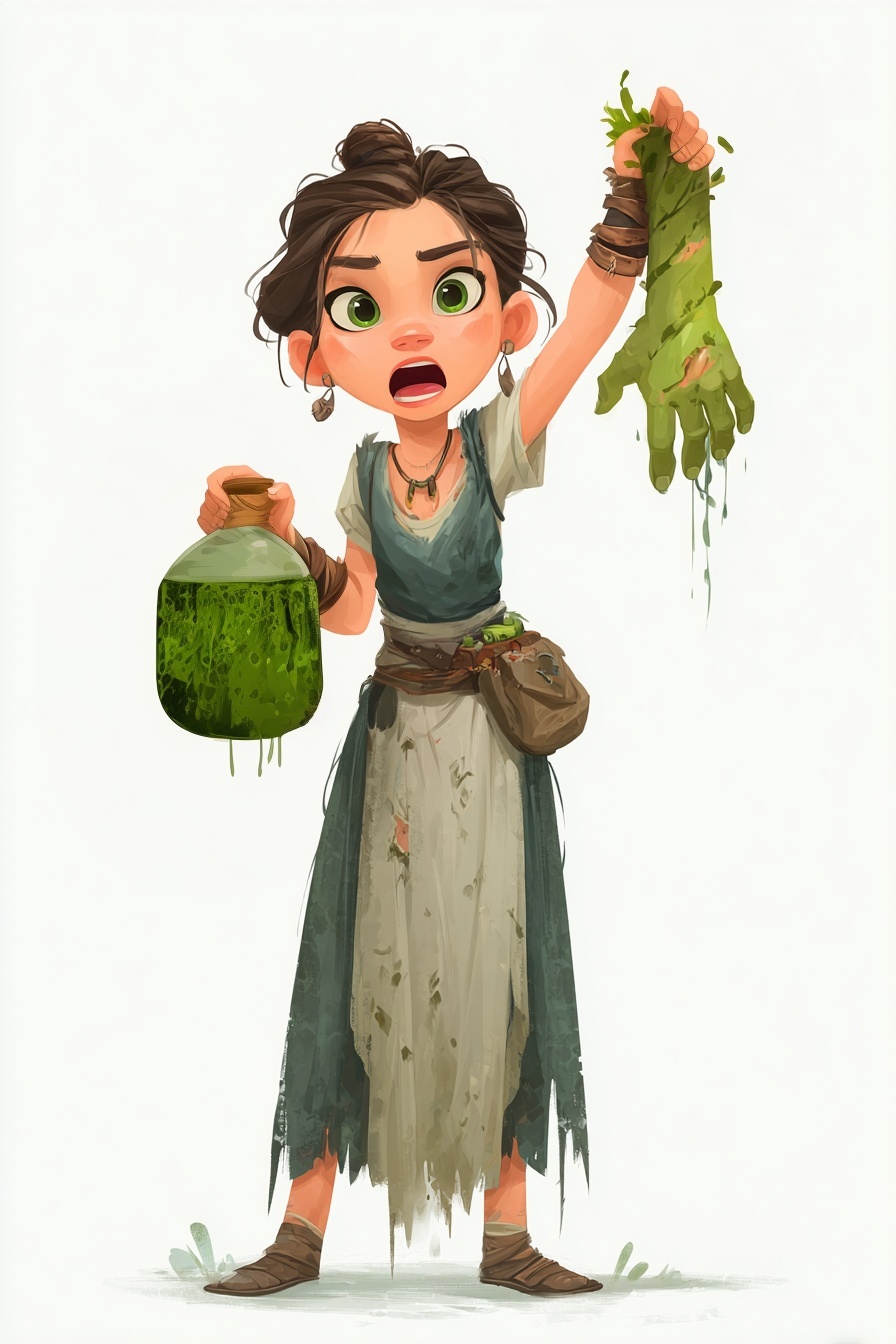
“It works, I’ll give it that. But if that hand tries to scratch its own itch again, I’m cutting it off and throwing it in the river. I don’t care whose it used to be.”



Comments