



Necrosense
Presence Of The Reaper
“You keep speaking as if the room is empty, but listen closely. There is a pause between every word, a space that does not belong to us. Something stands in it, quiet and uninvited, waiting for its turn to be heard.”
There are those who move through the world looking for signs of life. Footprints in soft ground. Warmth in the air. The sound of breath where there should be silence. Necrosense belongs to a different way of seeing. It does not seek what is thriving. It listens for what has already ended, and for what is about to.
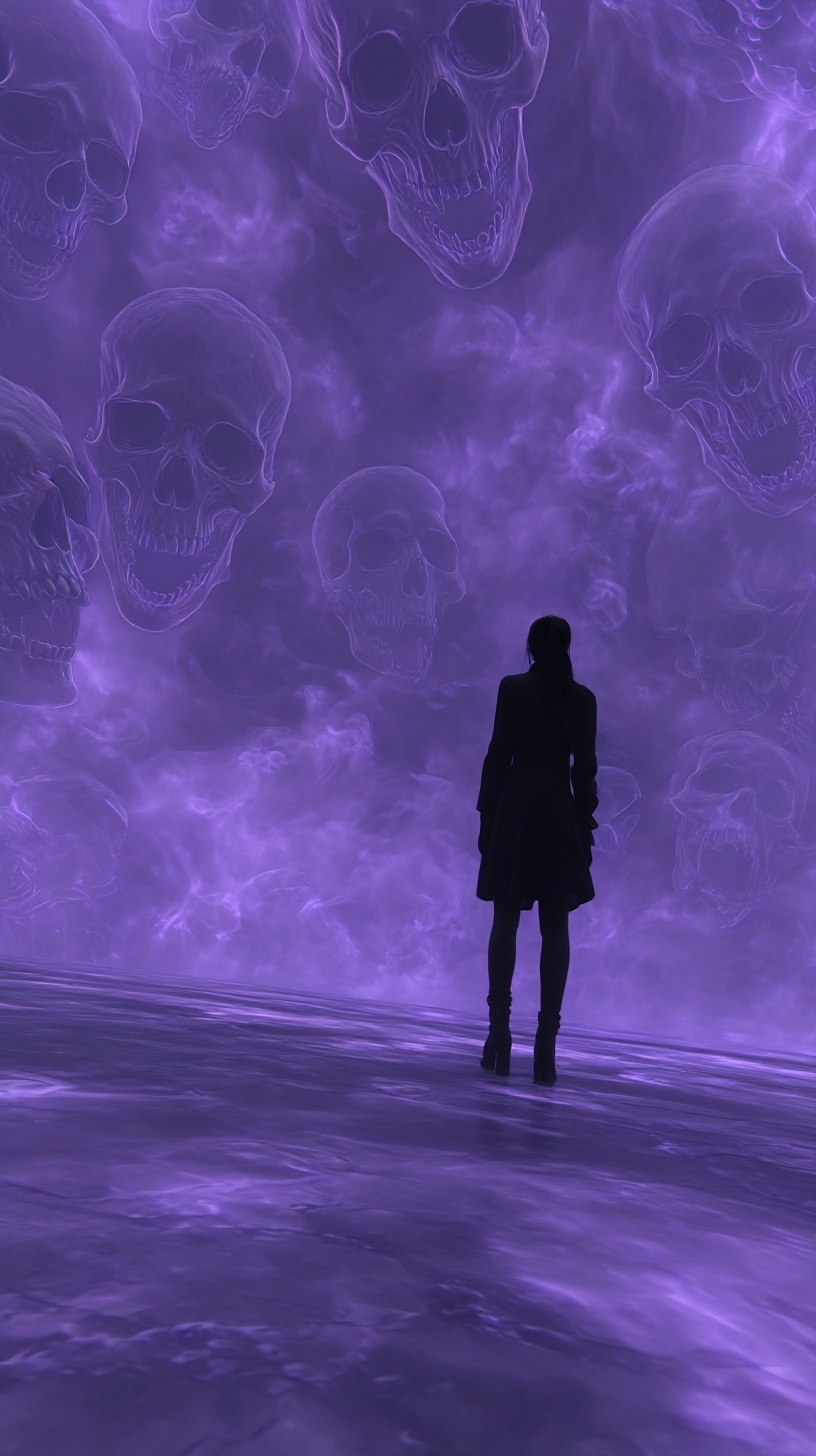
When the spell takes hold, the change is not visible to others, but it is immediate to the one who bears it. The world does not darken or distort. It sharpens in a quieter way. The mind begins to register absence as presence, to notice where something has stopped rather than where something continues. It is not sight, not hearing, but a pressure against awareness, like standing in a room where something has just happened and knowing it before anyone speaks.
The dead announce themselves first. Not with voices or images, but with certainty. Each one is a point of finality, a place where a story has ended and left something behind. The caster does not see the body. They do not know where it lies in any precise sense. What they know is that it is there, that it was once someone, and that it has not been gone long enough to fade into the background of the world.
There is a difference between old death and recent death, and this spell is concerned only with the latter. Fresh loss carries a kind of weight that has not yet settled. It lingers, unresolved, still part of the present rather than the past. Necrosense draws that distinction clearly. It tells the caster how many such endings lie nearby, and it offers small, clinical truths about them. What they were. Whether their end came quietly or was forced upon them.
These details do not come with context. They do not explain why a life ended, or who was responsible, or whether justice has been done. They are fragments, and it falls to the one who bears the spell to decide what to do with them. In practiced hands, this information can guide an investigation, confirm a suspicion, or reveal a danger that has not yet made itself obvious. In less disciplined minds, it can become something else entirely.
Because the spell does not stop with the dead.
There is another current beneath it, quieter and more unsettling. It reaches toward the living, but only those who stand close to the edge. Those whose bodies are failing, whose strength is nearly spent, whose place among the living is no longer certain. They do not register as individuals. They are not recognized or named. They are simply there, faint but undeniable, like candles burning low in a draft.
To perceive both at once is to understand something most people spend their lives avoiding. The line between living and dying is not as solid as it appears. It shifts. It thins. It can be crossed without warning. Necrosense does not dramatize this truth. It presents it plainly, without judgment or comfort.
This is why the spell is respected among those who use it regularly. Clerics tasked with tending to the dying rely on it to find those who cannot call for help. Rangers moving through dangerous terrain use it to determine whether a threat has already passed or still lingers nearby. Druids, who understand the cycles of life and decay more intimately than most, treat it as a tool for maintaining balance rather than disrupting it. Wizards, as ever, study it for what it reveals about the structure of life itself, though not all of them walk away unchanged.
There is a practical limit to what the spell can do. Solid barriers can muffle its reach. Thick stone, dense metal, and certain materials disrupt the subtle currents it depends on. It cannot see through everything, and it cannot replace careful observation. It is a sense, not an answer.
Even so, those who have used it for any length of time tend to carry something of it with them after the magic fades. Not the sensation itself, but the understanding it leaves behind. Once you have felt the quiet presence of the recently dead, once you have noticed how close some of the living are to joining them, it becomes difficult to return to a simpler view of the world.
Most people go through their lives assuming that what they see is all there is. That the absence of evidence is the absence of consequence. Necrosense does not argue with that belief. It does not need to. It simply offers a different perspective for a brief time, and then it leaves.
What remains is the awareness that the world is never as empty as it seems. That every place carries echoes of what has just occurred. That somewhere nearby, something has ended, and something else is about to.
And for those who learn to listen, that silence is never quite silent again.
“It is not a shadow cast by the light. It is the absence the light cannot reach. You do not notice it at first. Then one day, you realize it has been standing beside you through every choice you ever made.”
Related School



Comments