


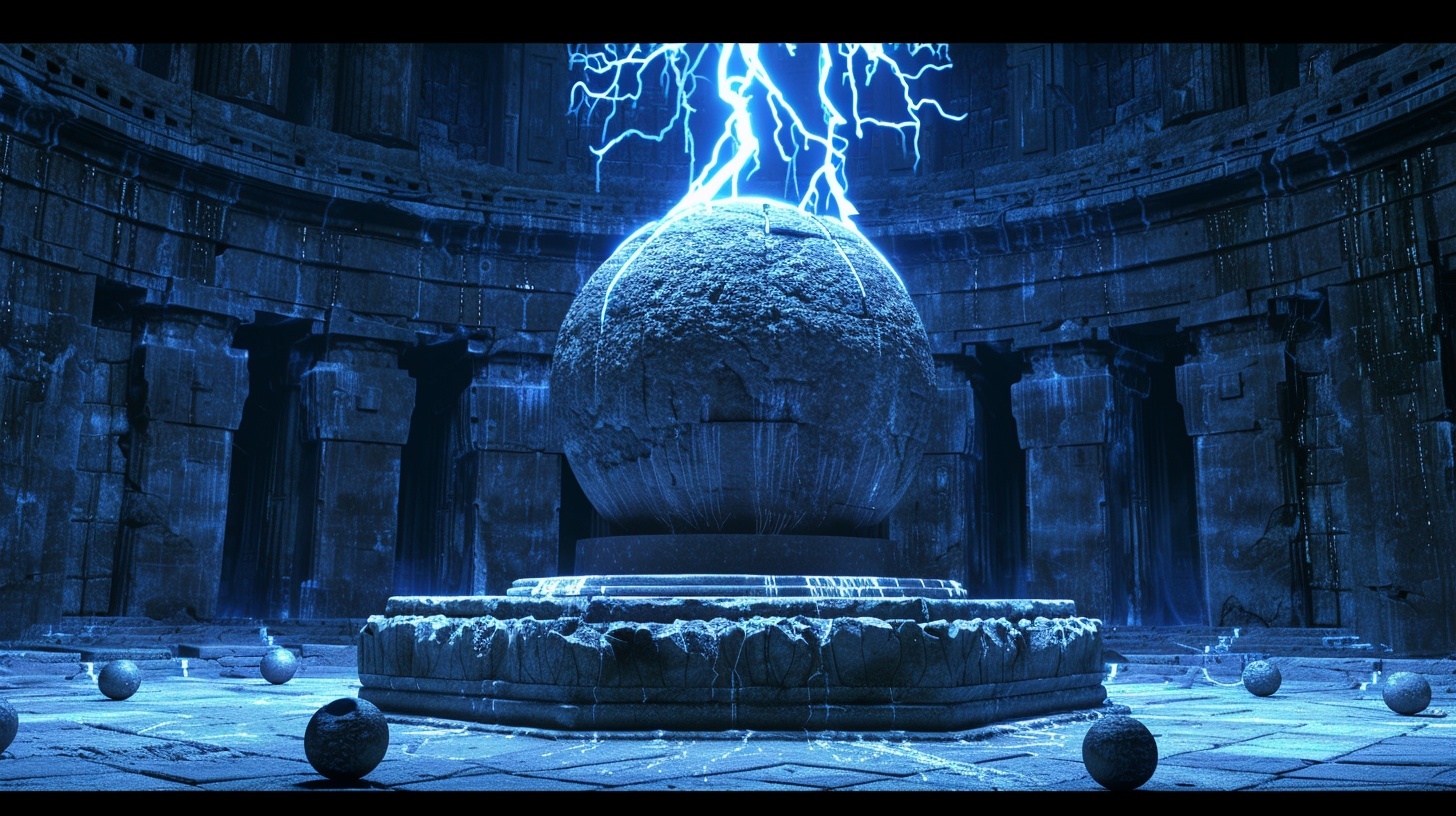
Magnetize
Weirdly Attractive
“The principle is simple. You are not moving the metal. You are convincing it that it already belongs somewhere else. Once it accepts that, the rest takes care of itself.”
Magnetize is a straightforward but deceptively versatile transmutation that imposes a temporary magnetic polarity onto an otherwise inert object. Rather than creating force from nothing or reshaping matter into a new form, the spell alters how an object interacts with a specific category of material. Metal becomes responsive, drawn or driven away according to the caster’s intent, while everything else remains unchanged. The result is a controlled manipulation of movement that feels natural within the world, even as it produces outcomes that would otherwise be impossible.
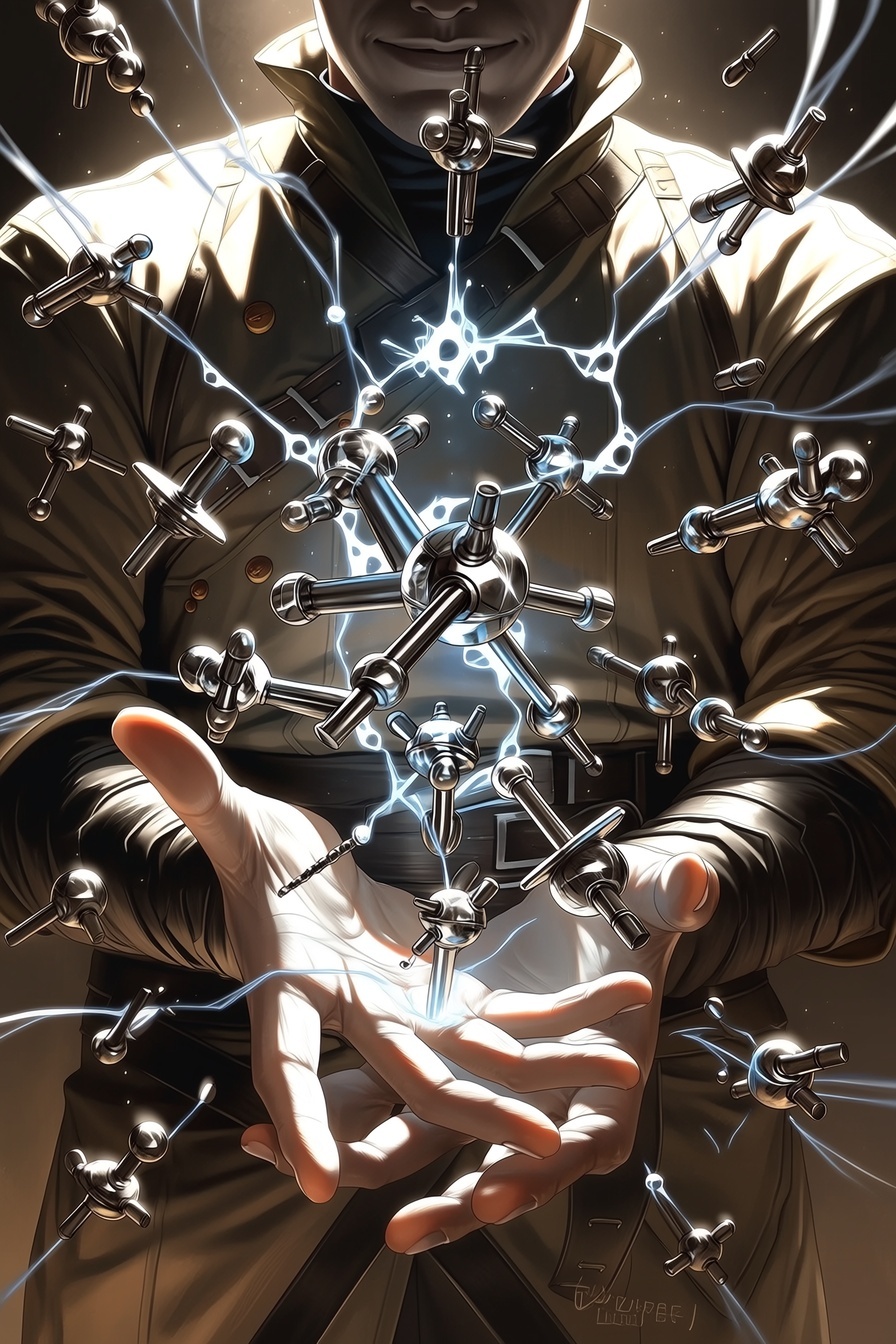
The transformation itself is subtle. The chosen object does not visibly change in composition or structure, but its presence begins to influence nearby metal in a measurable way. Loose tools, discarded weapons, and unattended fragments of metal respond first, shifting as the spell’s influence asserts itself. The effect is not violent unless directed to be so. At rest, the magnetized object creates a tension in the space around it, a readiness that becomes motion only when the caster chooses to act.
This deliberate control is central to the spell’s function. Once the object has been magnetized, the caster can direct its influence in brief, controlled impulses. These moments of attraction or repulsion allow for precise adjustments rather than continuous force. A metal object can be pulled closer, nudged aside, or driven away in short bursts, each movement shaped by intention rather than sustained pressure. This gives the spell a rhythm that rewards awareness and timing, as each use must be considered in relation to position and opportunity.
In practical terms, Magnetize is often employed as a tool for manipulation rather than destruction. It allows a caster to interact with the environment at a distance, shifting objects that would otherwise require direct contact. A dropped key can be drawn across a room. A loose blade can be pushed out of reach. A scattered set of tools can be gathered or dispersed without crossing dangerous ground. These applications make the spell particularly useful in confined or hazardous environments where direct interaction carries risk.
The spell’s capacity for force, while limited, should not be overlooked. When directed with intent, the movement it produces can result in impact. A metal object propelled into a creature carries enough force to cause harm, though not with the same lethality as a weapon wielded by hand. This is not a spell designed for direct offense, but it provides a means of applying pressure, disrupting positioning, or forcing a reaction. Its effectiveness depends less on raw damage and more on how it is used within the broader flow of a situation.
The restriction against affecting worn or carried objects defines the boundaries of the spell’s influence. It cannot be used to disarm opponents or interfere directly with equipment under a creature’s control. This limitation preserves the distinction between environmental manipulation and direct interference with another being. It ensures that the spell remains a tool for shaping circumstances rather than overriding agency.
From a theoretical standpoint, Magnetize reflects a class of transmutation that focuses on relational properties rather than physical alteration. The object itself is unchanged in any meaningful structural sense. What changes is how it interacts with a specific subset of the world. This approach allows for effects that feel consistent and grounded, as the spell builds on existing principles rather than introducing entirely new ones. The object does not gain power in isolation. It gains influence through connection.
This makes the spell particularly appealing to practitioners who favor practical applications of magic over overt displays of force. It rewards creativity and situational awareness, allowing a caster to solve problems through positioning and timing rather than direct confrontation. In environments rich with metal objects, its utility increases significantly, turning otherwise ordinary surroundings into a field of potential movement and interaction.
Culturally, Magnetize is often associated with trades and professions that value precision and control. Artisans, engineers, and mechanics incorporate it into their work as a means of handling materials efficiently and safely. In these contexts, the spell is less a weapon and more an extension of skilled labor, allowing for adjustments and manipulations that would otherwise require additional hands or tools. Its presence in such settings reinforces its identity as a practical solution rather than a purely combative technique.
In more volatile situations, the spell’s value lies in its ability to alter momentum. A well timed push can redirect an incoming object. A controlled pull can bring something into reach at the exact moment it is needed. These small changes accumulate, influencing outcomes in ways that are not immediately obvious but often decisive. The spell does not dominate a situation on its own. It shifts it, creating openings where none existed before.
The limitations on weight and range ensure that Magnetize remains grounded in scale. It cannot move large structures or exert influence over heavy machinery. Its strength lies in handling objects of manageable size, where its precision can be fully realized. Attempting to exceed these limits results in failure, reinforcing the importance of understanding what the spell can and cannot do.
Magnetize stands as a clear example of how modest transmutation can produce meaningful results. It does not rely on overwhelming force or dramatic transformation. Instead, it offers controlled influence over a specific interaction, allowing the caster to shape their environment in subtle but effective ways. In capable hands, that influence becomes a reliable tool, one that turns ordinary objects into instruments of movement, disruption, and opportunity.
“I swear on my tools, that pick just slid across the stone like it had a mind of its own. Didn’t roll, didn’t fall. Just… went. If that’s magic, I don’t like it. Rocks are supposed to stay where you leave them.”



Comments