


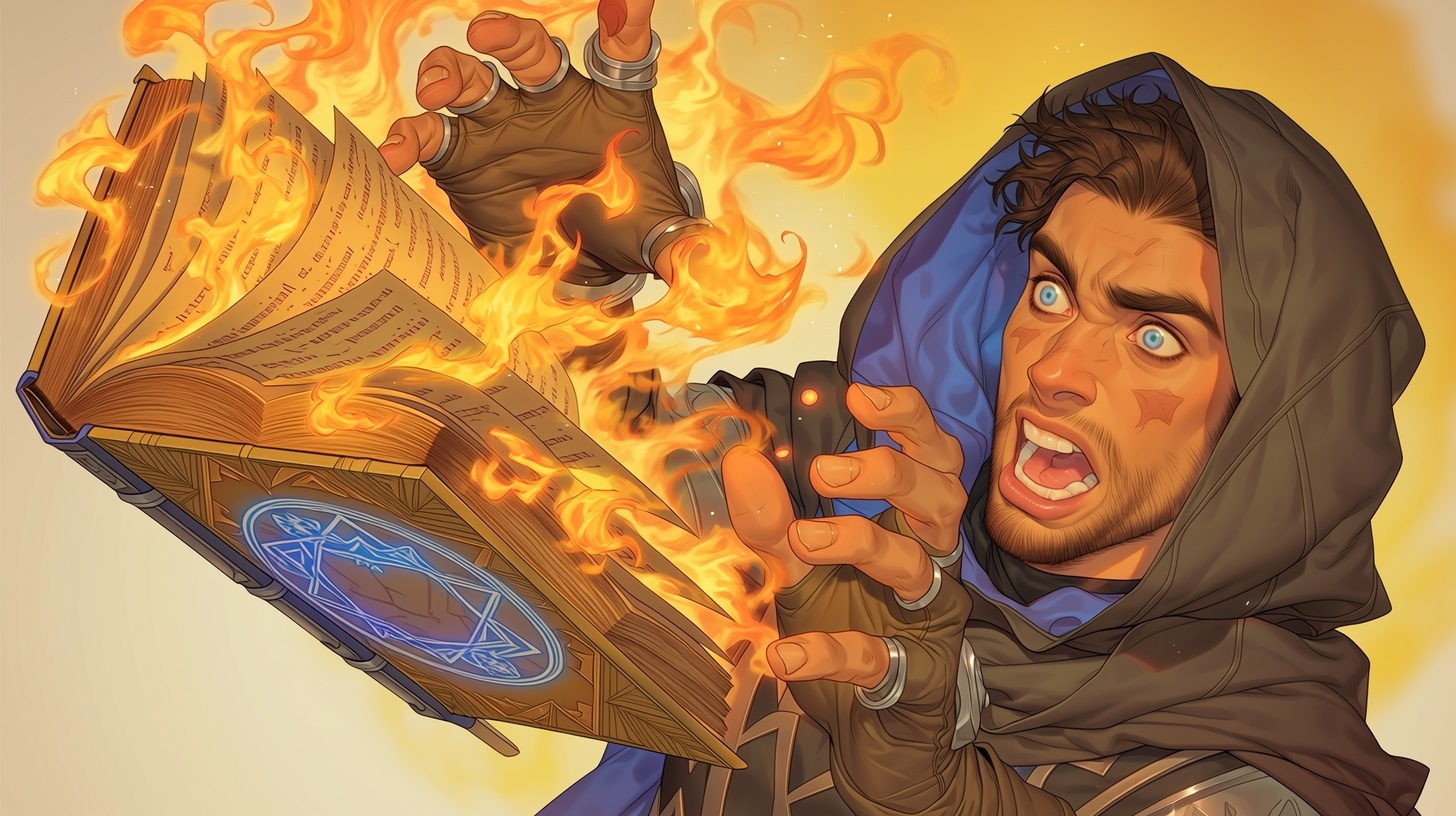
Kindling
Fire It Up!
"A spark, you say? Nay, I saw no spark. It took as though the wood had long desired the flame and found at last the courage to admit it."
Fire begins with conditions, not intent. It requires material, oxygen, and heat applied at the right moment. Kindling is a transmutation that supplies that moment by forcing a flammable object to ignite without the need for spark or preparation. It does not create fire from nothing and it does not alter the nature of the material. It triggers a process that the material was already capable of sustaining.
The spell affects only nonmagical objects that are naturally flammable. This limitation is deliberate and consistent. Materials that would not burn under normal circumstances remain unaffected. Stone, metal, and treated surfaces that resist ignition do not respond to the spell. The magic does not change composition or grant new properties. It simply initiates combustion where combustion is already possible.
When the spell takes hold, ignition is immediate. Smaller objects are engulfed entirely, while larger ones ignite within a defined section that serves as the starting point for further spread. The fire behaves exactly as expected based on the material involved. Dry wood catches quickly and burns outward. Fabric ignites across its surface. Denser materials may burn more slowly, but the process follows natural rules rather than magical ones.
Once the fire begins, the spell’s influence ends. There is no ongoing control, shaping, or reinforcement of the flames. The fire produces heat, light, and smoke, and it spreads or dies according to available fuel and environmental conditions. Wind, moisture, and material density all determine how the fire develops. The spell guarantees ignition, not outcome.
The restriction against targeting worn or carried objects defines how the spell is used in practice. It cannot be applied directly to a creature’s equipment while in use, which prevents it from functioning as a simple method of setting individuals on fire. Instead, it must be applied to the environment or unattended materials, allowing the consequences to arise from positioning and circumstance.
Creatures in contact with the object at the moment of ignition are exposed to immediate danger. The sudden onset of flame can cause harm if they fail to react quickly. Even after the initial moment, the burning area remains hazardous. Any creature that enters or remains within the flames is subject to ongoing harm, reflecting the persistent nature of fire rather than a single burst of magical damage.
In controlled settings, Kindling is used as a dependable method of starting fires. It removes the need for tools, dry conditions, or preparation, making it useful in environments where traditional methods are unreliable. Camps, hearths, and workspaces can be lit quickly and consistently, which has made the spell a practical choice for travelers and laborers.
In less controlled situations, the spell becomes a tool for disruption. Flammable structures, supplies, or terrain features can be ignited to create immediate hazards. A single point of fire can force movement, divide attention, or deny access to a space. The spell does not guarantee destruction, but it creates a problem that must be addressed or allowed to spread.
The spread of fire is not governed by the spell, which introduces an element of risk. A carefully placed ignition may remain contained, or it may extend beyond the intended area depending on conditions. This makes the spell effective but not precise in its long term consequences. Those who rely on it must account for how fire behaves once it is no longer under magical influence.
Among transmutation practices, Kindling is considered a basic but essential technique. It demonstrates controlled initiation rather than sustained manipulation. The caster does not maintain the effect or guide its development. The spell sets a process in motion and leaves the environment to determine the result.
Its simplicity is what makes it reliable. Its reliance on natural behavior is what makes it dangerous.
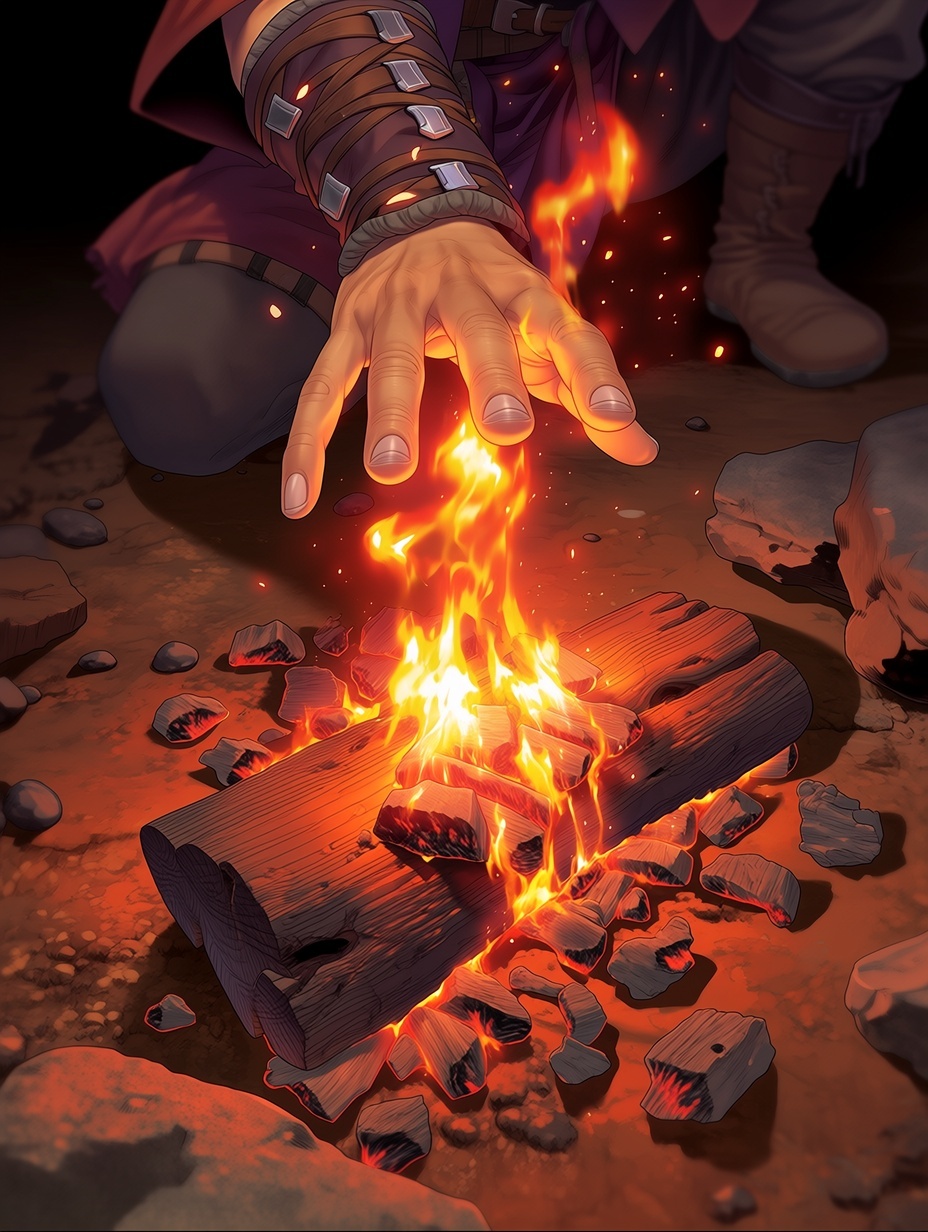
"Stand back, you fool. Fire asks no leave once given breath. What was but timber now makes bold to be its own undoing."



Comments