



Identify Taxonomy
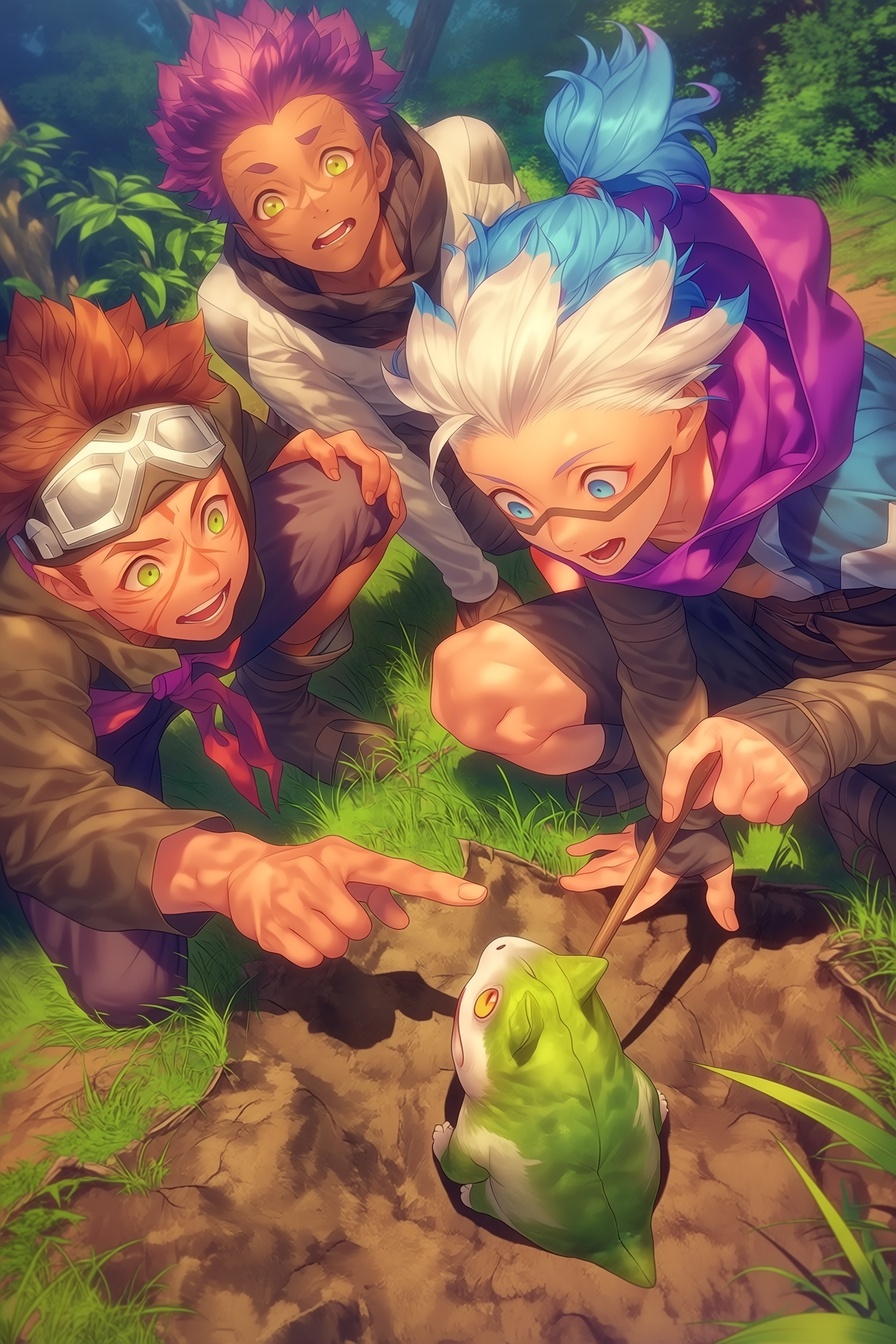
What The Hell Is THAT?!
“We argued for half an hour whether it was a boar, a demon, or some miserable cross between the two. In the end we agreed on one thing. If it tried to eat us, we weren’t going to eat it first.”
Not every creature announces what it is. Some wear their nature plainly, their form and behavior offering clear signs to anyone with experience. Others blur those lines, appearing familiar at a glance while concealing traits that only reveal themselves too late. Identify Taxonomy was devised as a way to close that gap, not by exposing every detail, but by providing just enough clarity to make informed decisions.
The spell does not dissect a creature or reveal its inner workings. It places the target within a broader understanding of the world. Name, type, and pattern. These are the foundations upon which all further knowledge rests, and without them, even the most careful observer can misjudge what they are facing.
When the magic takes hold, the creature’s place becomes clear in an immediate and practical sense. Its commonly recognized name surfaces first, followed by the classification that defines its nature. More importantly, the caster gains a sense of how the creature fits into its environment. Whether it hunts or grazes, whether it travels alone or in groups, whether it avoids danger or presses into it. These impressions are not exhaustive, but they are reliable. From there, the spell offers a single point of deeper insight.
That insight is not chosen freely. It is drawn from what is broadly known, observed, or recorded about the creature. A hardened hide, a tendency toward ambush, a resistance to certain elements, or a clear imbalance between physical and mental capability. The magic does not uncover secrets. It reveals what the world already knows, presented with clarity that removes doubt. This limitation is what keeps the spell useful without making it definitive.
A creature encountered in the wild is rarely identical to the examples that define its kind. Age, experience, environment, and individual variation all shape behavior and capability. Identify Taxonomy does not account for these differences. It provides a baseline, not a guarantee. Those who rely on it without caution often find themselves surprised by what falls outside expectation.
The spell has found steady use among hunters, naturalists, and explorers who must make quick assessments in unfamiliar territory. It is equally valued by scholars cataloging new regions, where even a small amount of reliable classification can anchor further study. In both cases, the magic serves as a starting point rather than a conclusion. There is also a subtle discipline in its use.
To know what something is called and how it is understood by others is not the same as truly understanding it. The spell encourages categorization, and categorization can lead to assumption. Experienced practitioners learn to treat its results as guidance rather than truth, using it to frame their thinking without allowing it to define their conclusions. In this way, Identify Taxonomy reflects a broader principle of knowledge. Understanding begins with naming, but it does not end there.
“If you cannot name it, you cannot place it. And if you cannot place it, you have no idea what it will do next.”



Comments