


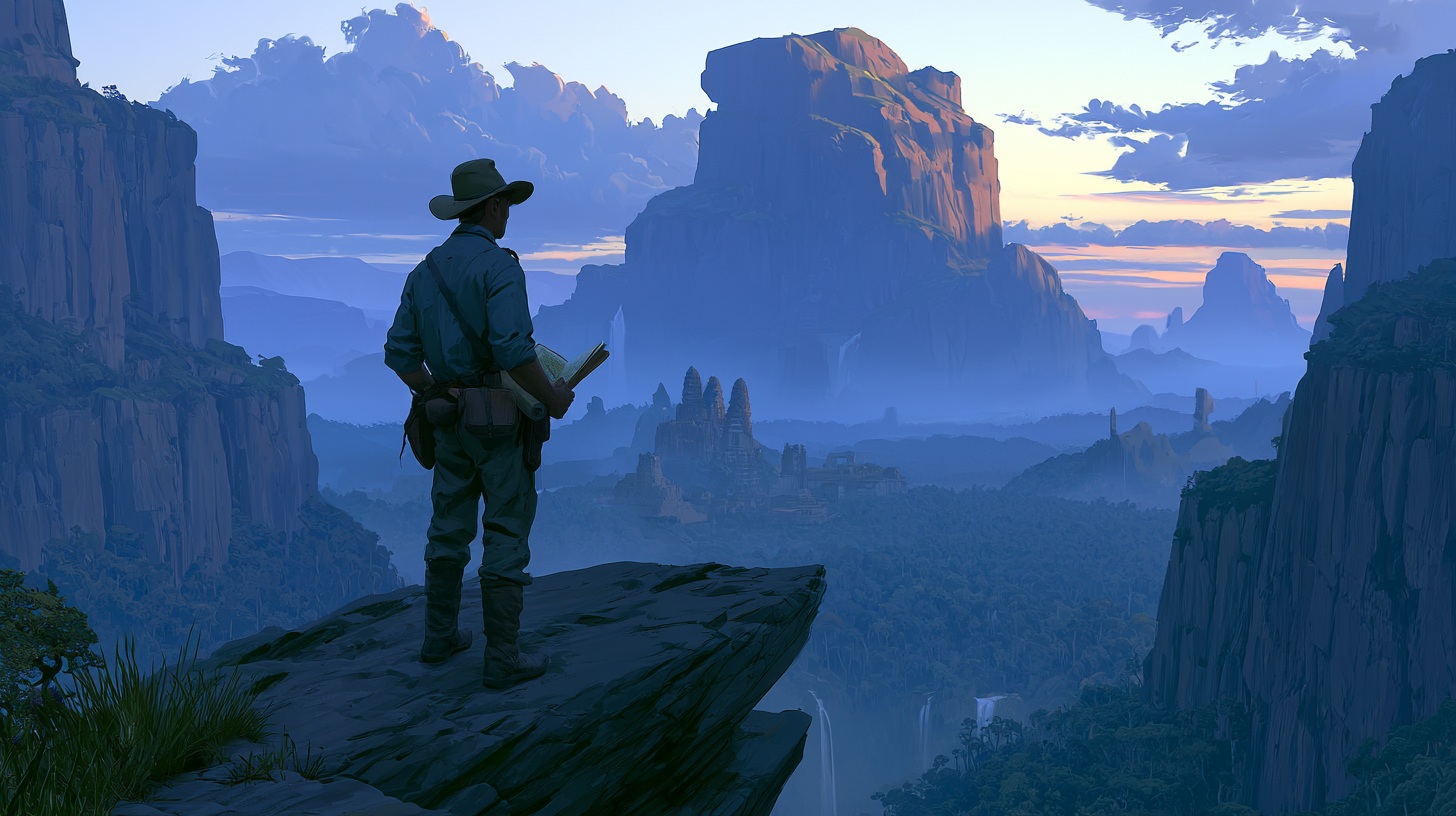
Explorer
We're Off the Map
"I've crossed deserts, mountains, and oceans. The only thing that still frightens me is finding a place exactly as described in an old legend."
Most people think exploration is about discovery.
Explorers know it is really about contradiction.
The world is filled with places that do not quite match the stories told about them. Roads appear where no road should exist. Ruins stand where history insists nothing was ever built. Settlements vanish from maps despite thriving for generations. Entire regions seem to slip through the cracks of memory, existing plainly enough for those who stand within them yet leaving surprisingly little evidence behind.
Most people never notice.
Explorers do.
That is what separates them from ordinary travelers.
A traveler seeks a destination. A merchant follows a route. A pilgrim pursues a purpose. An explorer moves toward uncertainty itself. They are drawn not to what is known, but to what remains unanswered. Every blank space on a map represents a possibility. Every contradiction is an invitation.
Some become explorers through scholarship. Others through curiosity, ambition, wanderlust, or simple stubbornness. Many begin with a single question they cannot abandon. A forgotten road. A lost city. An impossible landmark. A rumor recorded in three separate journals despite none of the authors having met one another.
Whatever first draws them forward, few remain unchanged by the experience.
The world revealed through exploration is often stranger than expected.
The average citizen lives within a relatively stable reality. Their village remains where it was yesterday. The roads lead where they always have. The landmarks match the maps. The stories passed down by previous generations generally correspond to the world outside their door.
Explorers spend enough time beyond the familiar to discover that such certainty is not universal.
This is especially true in the centuries following the Shattering.
Though kingdoms recovered, trade resumed, and civilization rebuilt itself, scars remain. Some are obvious. Ruined cities, broken landscapes, and ancient battlefields still mark the world. Others are more subtle. They reveal themselves only to those willing to spend months crossing forgotten regions where few others travel.
An explorer might discover a fortress absent from every surviving record. They might encounter roads that continue appearing on maps despite leading nowhere. They may find evidence that an abandoned settlement was occupied far more recently than local histories claim.
Individually, such discoveries are easy to dismiss.
Collectively, they become difficult to ignore.
Most explorers eventually develop a private collection of stories they rarely share outside their profession. Not because the stories are secret, but because they sound absurd.
A valley appears on maps drawn centuries apart despite no expedition successfully locating it.
A lighthouse is recorded by sailors from six nations despite standing on an island that should not exist.
An abandoned village contains generations of repairs despite every nearby settlement insisting nobody has lived there for decades.
The explorer learns an uncomfortable lesson.
The world is not merely unknown.
Parts of it appear determined to remain that way.
This realization rarely discourages them.
If anything, it deepens the obsession.
The possibility that another mystery waits beyond the next ridge, beyond the next coastline, beyond the next stretch of wilderness becomes impossible to resist. Curiosity transforms into something stronger. A need to know. A need to see. A need to stand in places where certainty ends and possibility begins.
Such pursuits demand sacrifice.
Exploration is far less glamorous than popular stories suggest. Long expeditions involve hunger, exhaustion, dangerous weather, unreliable information, and long periods of disappointment. Months of effort may produce nothing more than a corrected map and a handful of observations. Some spend years pursuing locations that turn out to be misunderstandings, hoaxes, or legends born from mistranslation.
Yet explorers continue searching.
Because every so often, the stories prove true.
A forgotten ruin emerges from the forest exactly where an ancient journal claimed it would be.
A mountain pass opens into a valley untouched by modern civilization.
A coastline reveals evidence that the world was once very different than scholars believed.
Moments like these justify years of failure.
Many explorers never become famous. Their names fade. Their discoveries are absorbed into newer maps, newer histories, and newer expeditions. Future generations travel roads they charted and visit places they documented without ever knowing who first found them.
Most are content with this.
Recognition was never the goal.
The answer was.
Or perhaps more accurately, the next question.
Because every explorer eventually discovers the same truth.
The edge of the map does not really exist.
Every mystery reveals another mystery beyond it. Every discovery opens the door to further uncertainty. The horizon retreats with every step taken toward it.
Most people find comfort in the known.
Explorers find wonder in the possibility that the known is only a small part of the story.
And somewhere beyond the next hill, the next sea, or the next forgotten road, the world is still keeping secrets.
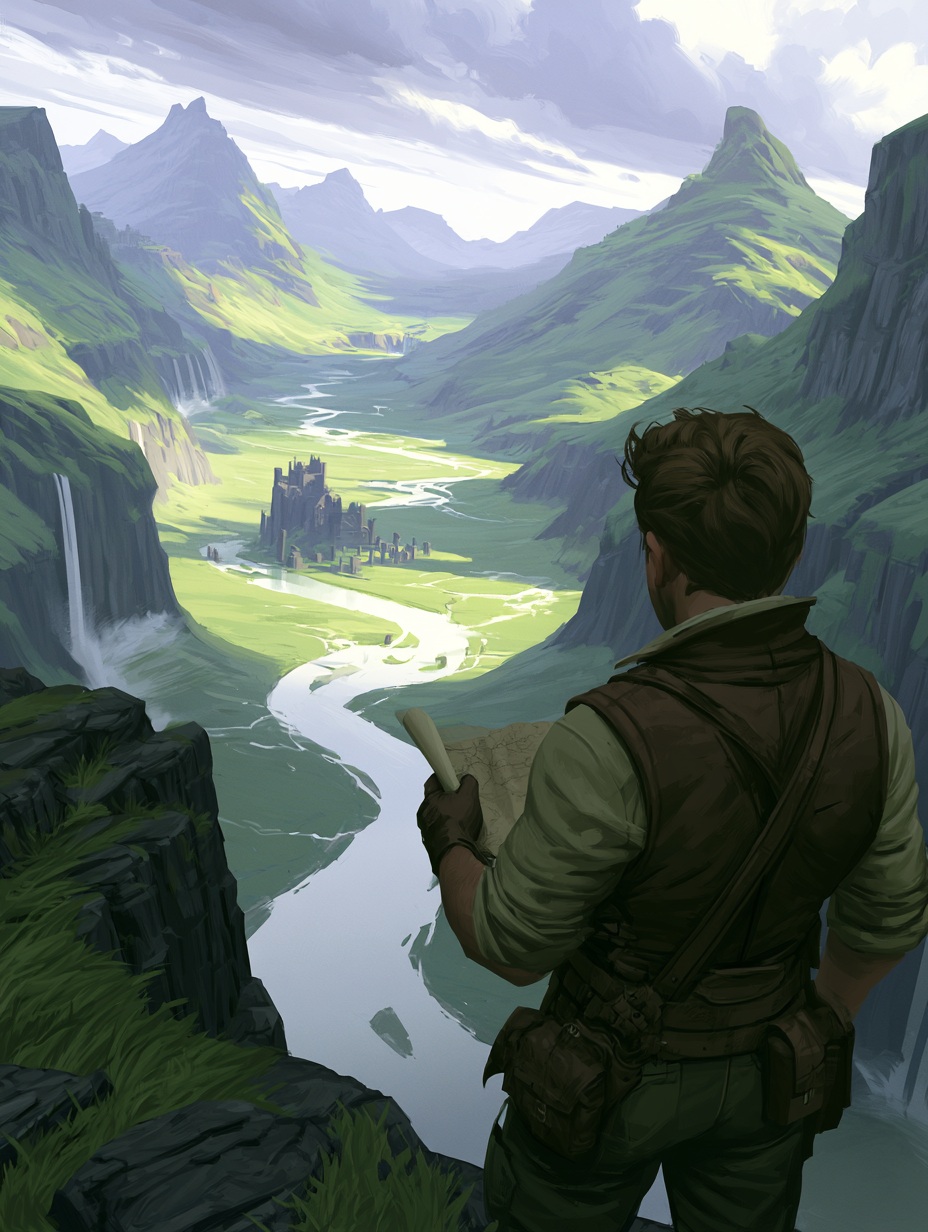
"Most roads lead somewhere. The interesting ones lead to places that aren't supposed to exist."
Type
Research / Scientific



Oh I love that there is this inherent instability in the world. That leaves so much room to stick anything in anywhere that the story demands. Love it. It is whimsical and mysterious. Love that there is no explanation for why it is like this. And of course there are people that want to find those anomalies.