


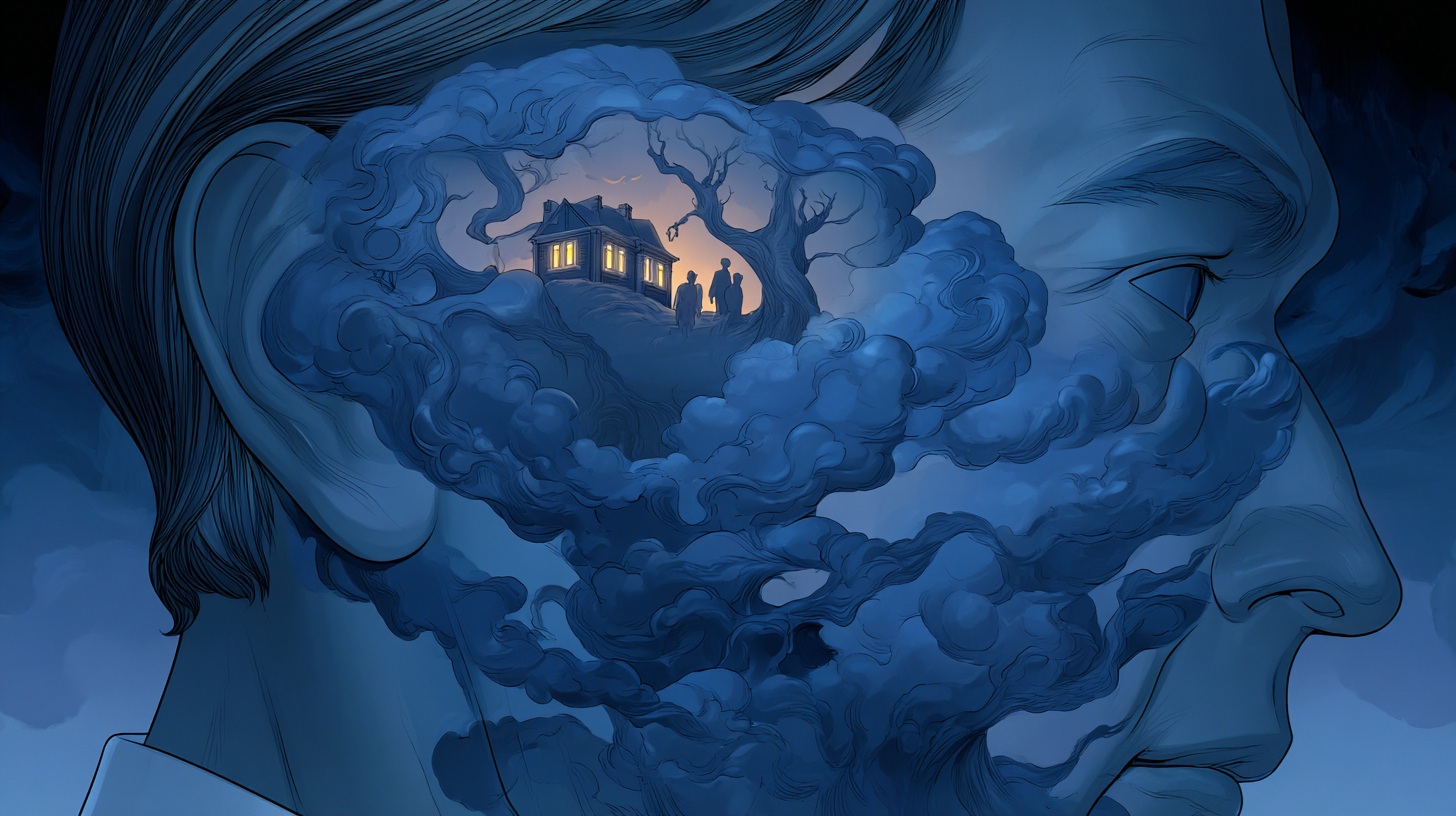
Eidetic Memory
Forget Me Not
“Most people remember what interested them. I remember everything. Trust me, they're not the same thing.”
Most people trust memory far more than memory deserves.
Witnesses contradict one another. Stories change with repetition. Details fade. Faces blur. Entire conversations become distorted by time, emotion, assumption, and wishful thinking. Even the most honest person eventually discovers that remembering something and remembering it correctly are not always the same thing.
Those gifted with Eidetic Memory exist as rare exceptions.
Their minds preserve information with unusual clarity. A page read years ago may remain accessible almost word for word. A face glimpsed briefly in a crowded street can be recalled decades later. A map examined once may be reproduced from memory with astonishing precision. Such individuals do not remember everything, but they remember far more than most people consider possible.
This talent often reveals itself early in life.
Teachers notice students capable of reciting entire passages after a single reading. Apprentices surprise masters by recalling instructions given months earlier. Children correct adults regarding conversations everyone else has forgotten. At first these incidents are dismissed as signs of intelligence, diligence, or luck. Eventually a pattern emerges. The individual is not simply paying attention.
They are retaining information at an extraordinary level.
To outsiders, such a gift appears universally beneficial. Reality is more complicated.
Most people forget countless details every day. This is often useful. Embarrassing moments fade. Grief softens. Painful memories lose sharpness. Trivial information disappears to make room for more important concerns. Individuals blessed with exceptional memory sometimes discover that forgetting serves a purpose. A cutting insult remains vivid decades later. A tragedy can feel disturbingly immediate. A face associated with loss may never fully fade.
Memory preserves pain as faithfully as it preserves knowledge.
For this reason, many individuals with Eidetic Memory develop unusual relationships with the past. Some become historians, archivists, scholars, investigators, linguists, strategists, or record keepers. Others avoid discussing their memories entirely. A gift that allows one to remember every detail of a conversation is less enjoyable when the conversation ended badly.
The talent naturally attracts those who work with information. Libraries, universities, courts, intelligence services, archives, and research institutions all value people capable of retaining vast quantities of knowledge. Such individuals become living repositories of information. They settle disputes over forgotten details, identify inconsistencies within records, and uncover connections hidden from less disciplined minds.
Investigators prize the gift for obvious reasons.
A witness with ordinary memory might recall a suspect's clothing. Someone with Eidetic Memory may recall the stitching, the missing button, the mud on the boots, and the exact wording of a threat spoken six months earlier. Criminals, politicians, scholars, merchants, and military commanders have all discovered that people become uncomfortable when speaking to someone who forgets very little.
The ability also encourages certain habits. Those gifted with remarkable memory often become meticulous observers because observation feeds recollection. They notice details others overlook. They remember names, dates, symbols, routes, and conversations with unusual ease. Many develop deep curiosity because information accumulates rapidly and naturally. Others become skeptics because they have spent years watching ordinary memory fail.
Not every consequence is positive.
Arguments become difficult when one participant remembers exactly what was said. Forgiveness sometimes requires effort when every mistake remains crystal clear. Nostalgia loses some of its comforting haze when the past remains stubbornly accurate. Many individuals with Eidetic Memory learn that wisdom depends not merely upon remembering, but upon deciding which memories deserve attention.
This distinction becomes increasingly important with age.
The world produces more information than any mind can meaningfully use. The value of exceptional memory lies not in storing every detail forever, but in recognizing which details matter. A forgotten map may reveal a hidden road. An overlooked phrase may expose a lie. A symbol seen years earlier may unlock an ancient mystery. Knowledge gains power through context.
The greatest memory in the world remains useless if the owner cannot understand what they remember.
Yet despite these challenges, those gifted with Eidetic Memory possess something remarkable. While others struggle against fading recollections, they maintain a clearer connection to what was actually seen, heard, and experienced. Their minds become archives, preserving fragments of reality that time would otherwise erase.
Most people spend their lives fighting to remember.
The truly memorable few spend theirs learning how to live with the fact that they already do.

“I read the treaty once when I was twelve. Twenty years later they brought me a copy and asked whether a line had been altered. It had. They were very impressed. I was more concerned that someone thought changing the third paragraph was a good idea.”



Comments