


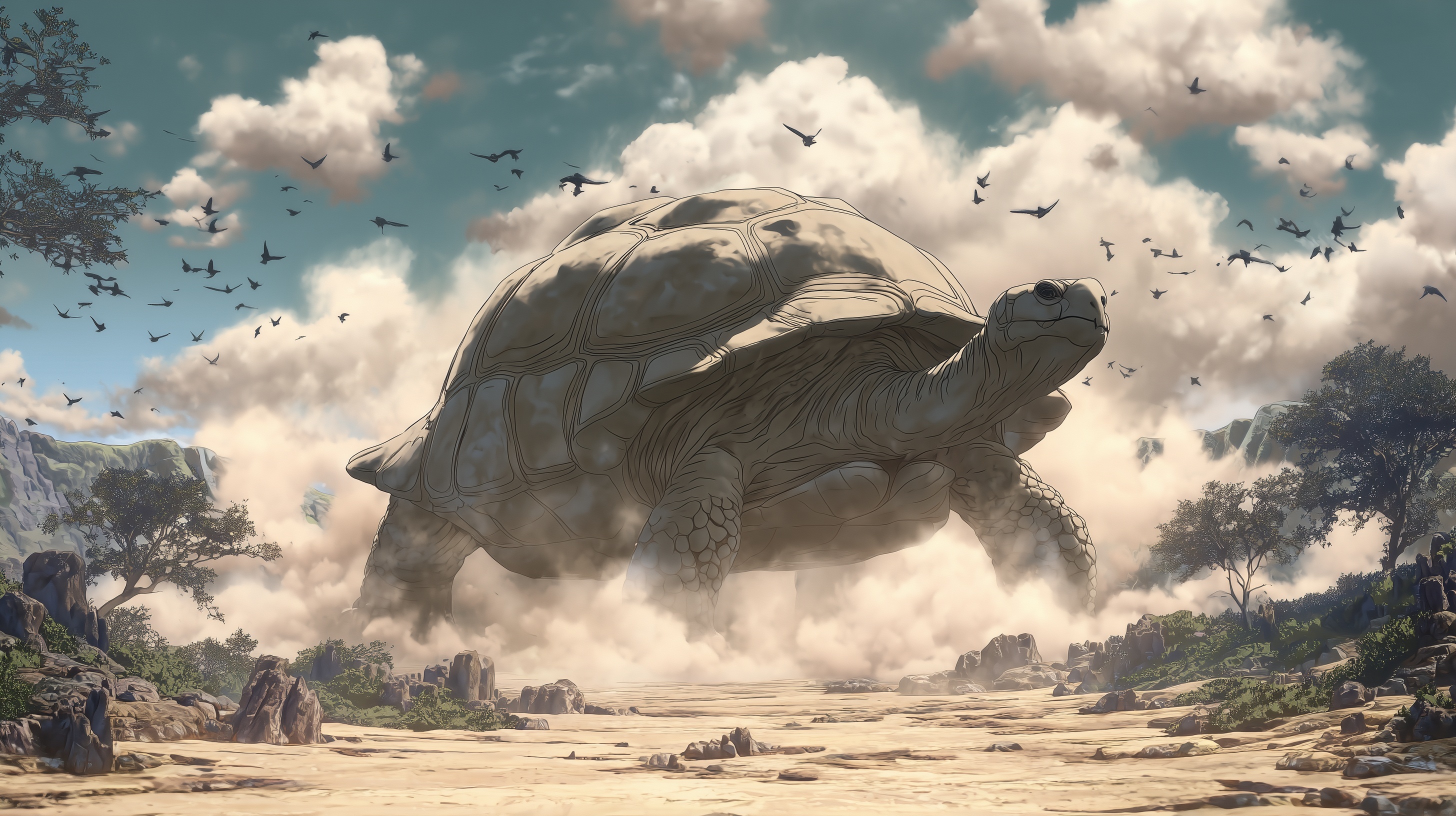
Duneback Tortoise
The Walkers of the World
"There is no road in Kythas that was not first walked by a Duneback. No wellspring found that was not first uncovered by its steps. It does not know us, nor does it care for our survival, yet without it, we would have none. It has shaped this land longer than any king, outlived every empire, and will endure long after we are dust. We do not follow it out of reverence. We follow it because we must."
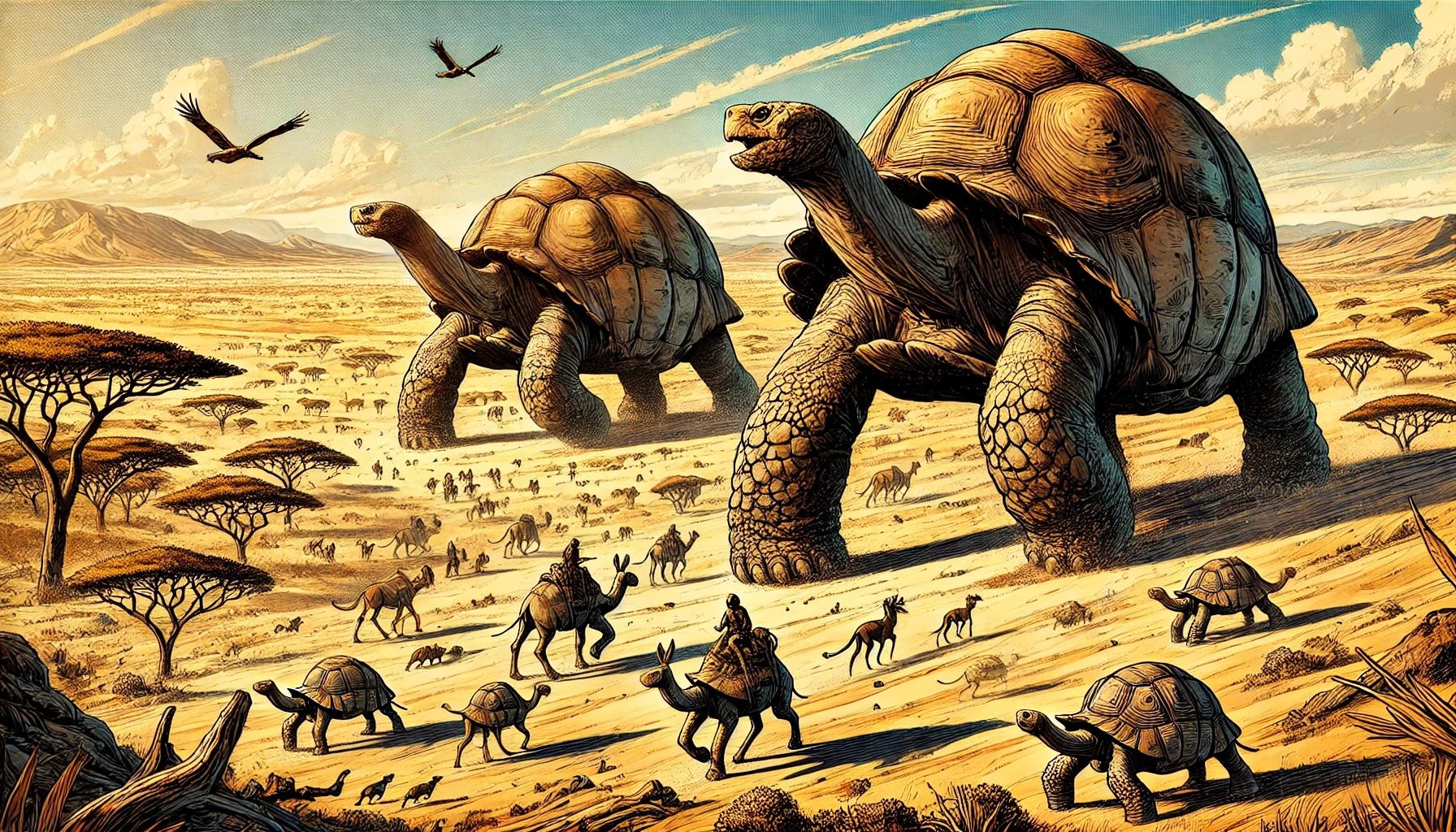
The great Duneback Tortoise is more than a beast. It is a force of nature and a slow moving titan that has shaped the land of Kythas for centuries. To most eyes they are only lumbering giants, their broad shells blending with the dry outback. But to those who know the land, they are living wayfinders, carving trails through the wilderness that always lead to water.
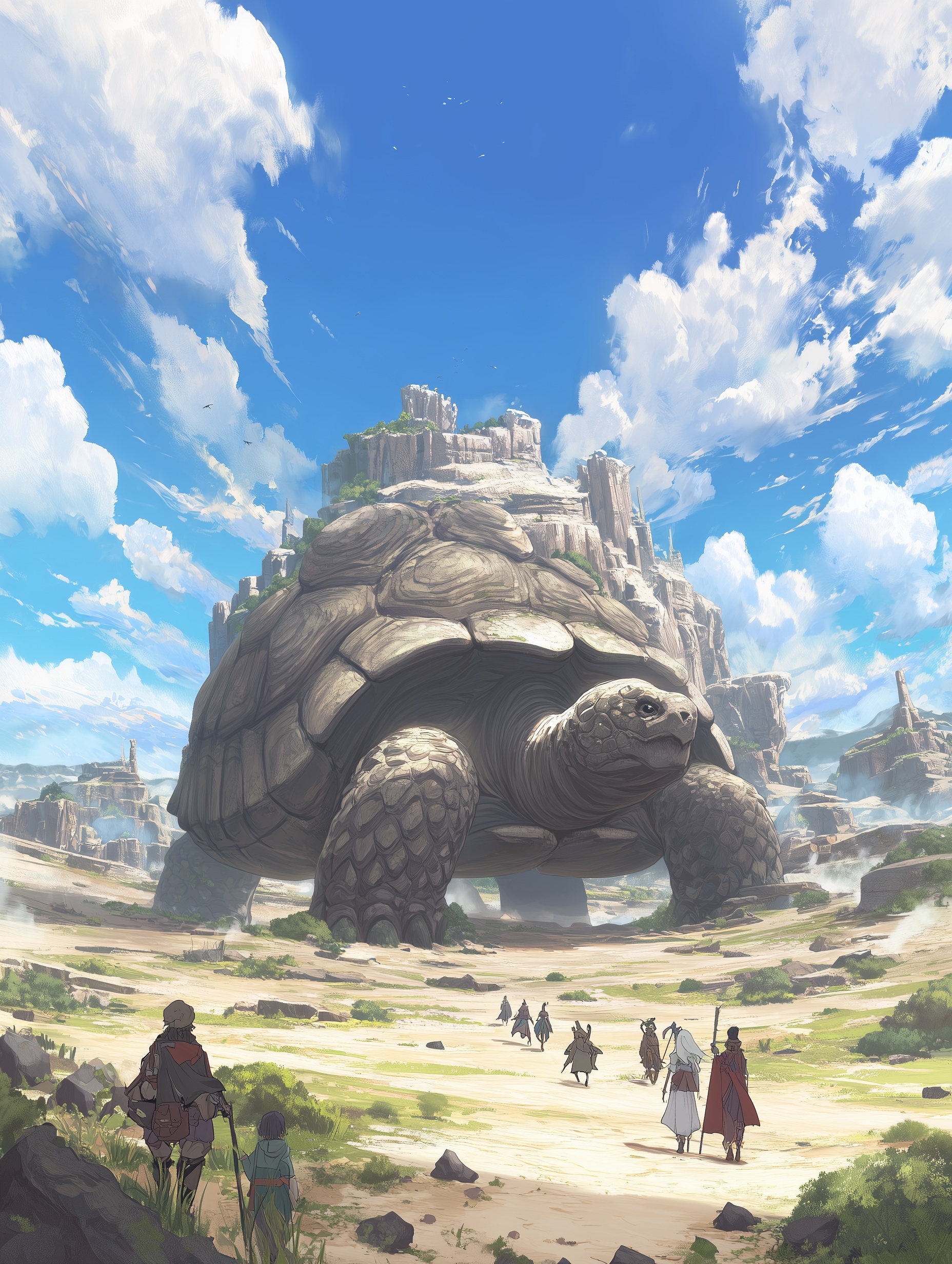
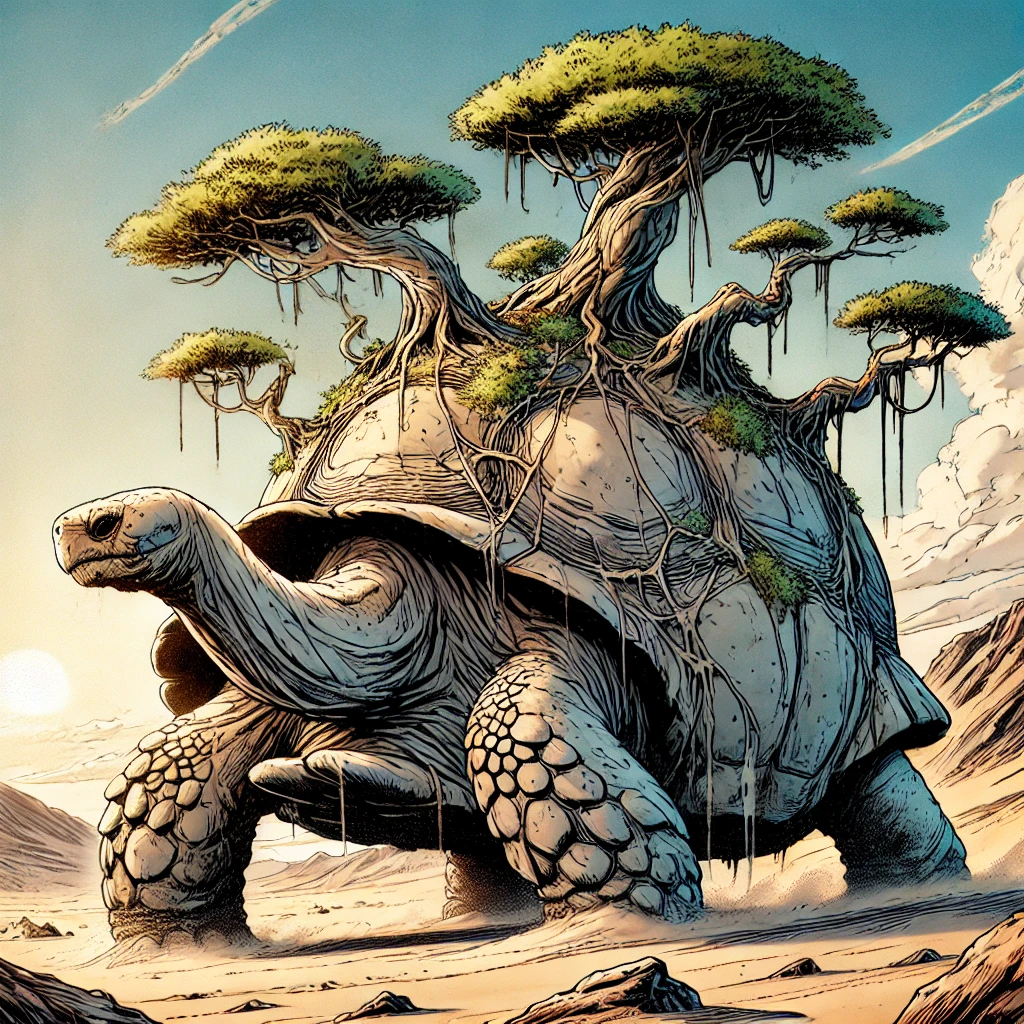
They stand ten feet at the shoulder and more than twenty feet long. Their backs carry whole living worlds. Moss and desert plants grow in the cracks of their shells. Small animals and birds nest there. The Duneback moves with calm purpose. Its slow pace comes not from laziness but from certainty. It never hesitates or falters. It goes where it must for reasons long forgotten.
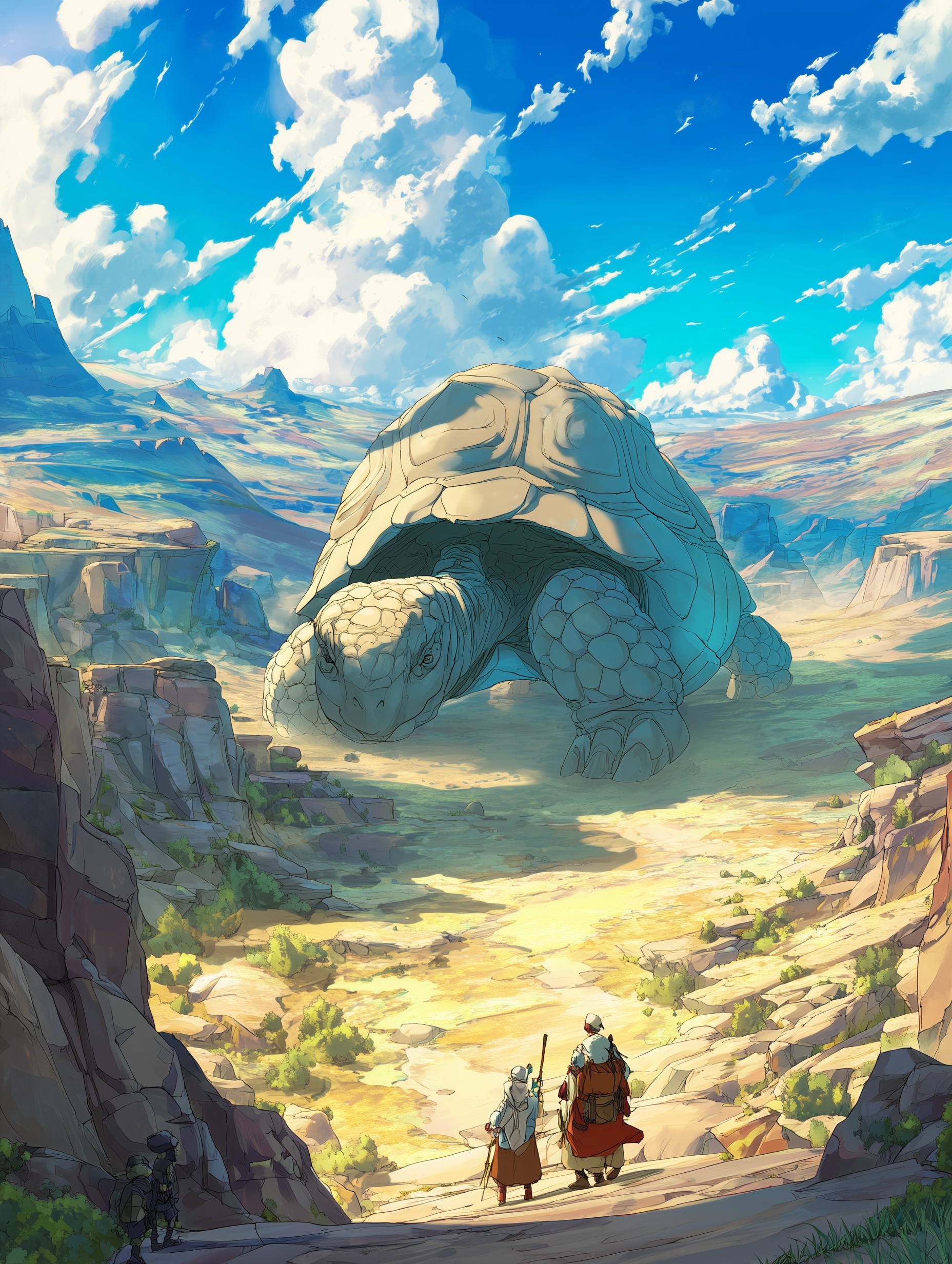
What sets it apart is not only its size or its age. Some have lived for more than a thousand years. The plates on its belly are faintly clear like amber when cleaned. When light shines through them they glow with a soft warmth. The Kamara prize these plates and use them to make sacred windows and ritual tools. They believe the Duneback sees both the world above and the world below and follows a path known only to itself.
The creatures are peaceful but never to be pushed. No one can herd a Duneback or turn it from its road. No wall or plan has ever stopped one from finishing its journey. When a Duneback lies down to die the land shapes itself around its shell. The people then build homes or shrines within the curve of its remains. Old stories tell of Dunebacks so large that whole villages live upon their shells. Some say the oldest of all are mistaken for hills by travelers who do not look closely. The Kamara follow their tracks with care, knowing that where a Duneback walks, life follows.
To kill one is unthinkable. Only those that die naturally are honored. Their shells become halls. Their bones form the frames of temples. Their clear belly plates are passed through families or built into holy places.
A Duneback belongs to no one. It is part of the land itself, a living monument to patience and endurance. Its steps will outlast rulers and empires. When all else is gone, the Duneback will still move across the horizon. They have walked Kythas longer than any record remembers. They came before cities, before banners, before gods had names. Their slow migrations shaped the first roads. Their empty burrows gave shelter before humans ever built walls.
To the Kamara they were not animals but builders of survival. Their paths always found water. Early nomads learned to follow them, trusting their instincts more than maps. Over time the Kamara saw that wherever the Dunebacks stayed, the land grew richer. Their paths molded the dunes and their remains became the ground for towns and tombs.
The oldest tales speak of ones so large that trees grew in their wake. The Kamara still speak of the One That Never Stopped, said to have walked the world in a single endless circle. No one knows if that story is truth or memory. Many have tried to tame them and failed. Kings and warlords tried to use them in war. The creatures ignored every command. They cannot be marked or owned. They move on their own and care nothing for the plans of the smaller intelligent beings around them. Even now they are a sign of endurance and wisdom. Traders still walk their roads. Travelers still rest in their hollows. The eldest among them have seen kingdoms rise and fall, yet they keep walking, shaping Kythas with every slow step.
Basic Information
Anatomy
"Strike it with a blade, and you’ll dull the edge. Fire a spear, and you’ll break the haft. Lay siege to it, and it will not notice. The Duneback is not an animal, it is a walking monument, a thing of stone and time, built not to fight, but to endure."
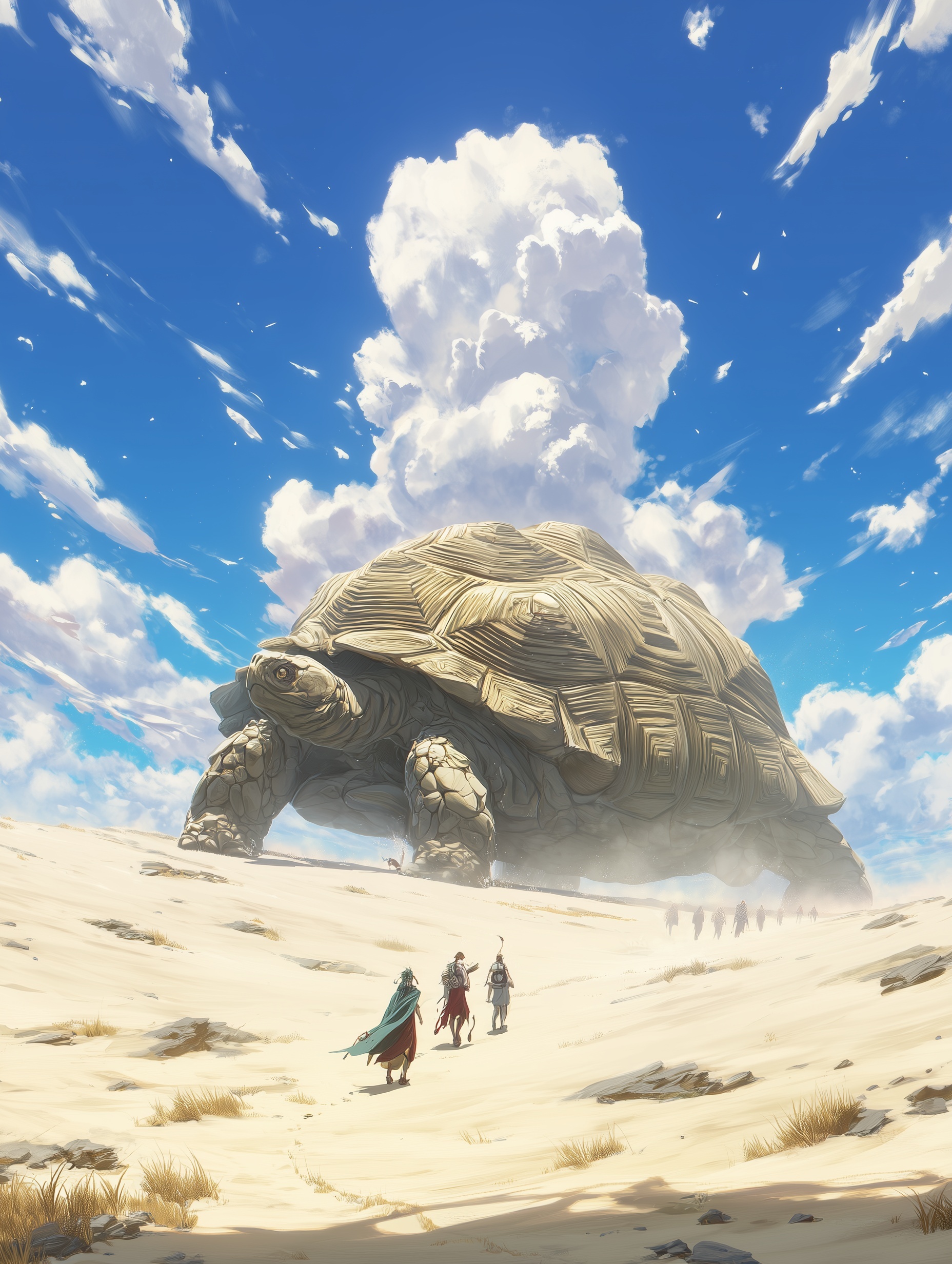
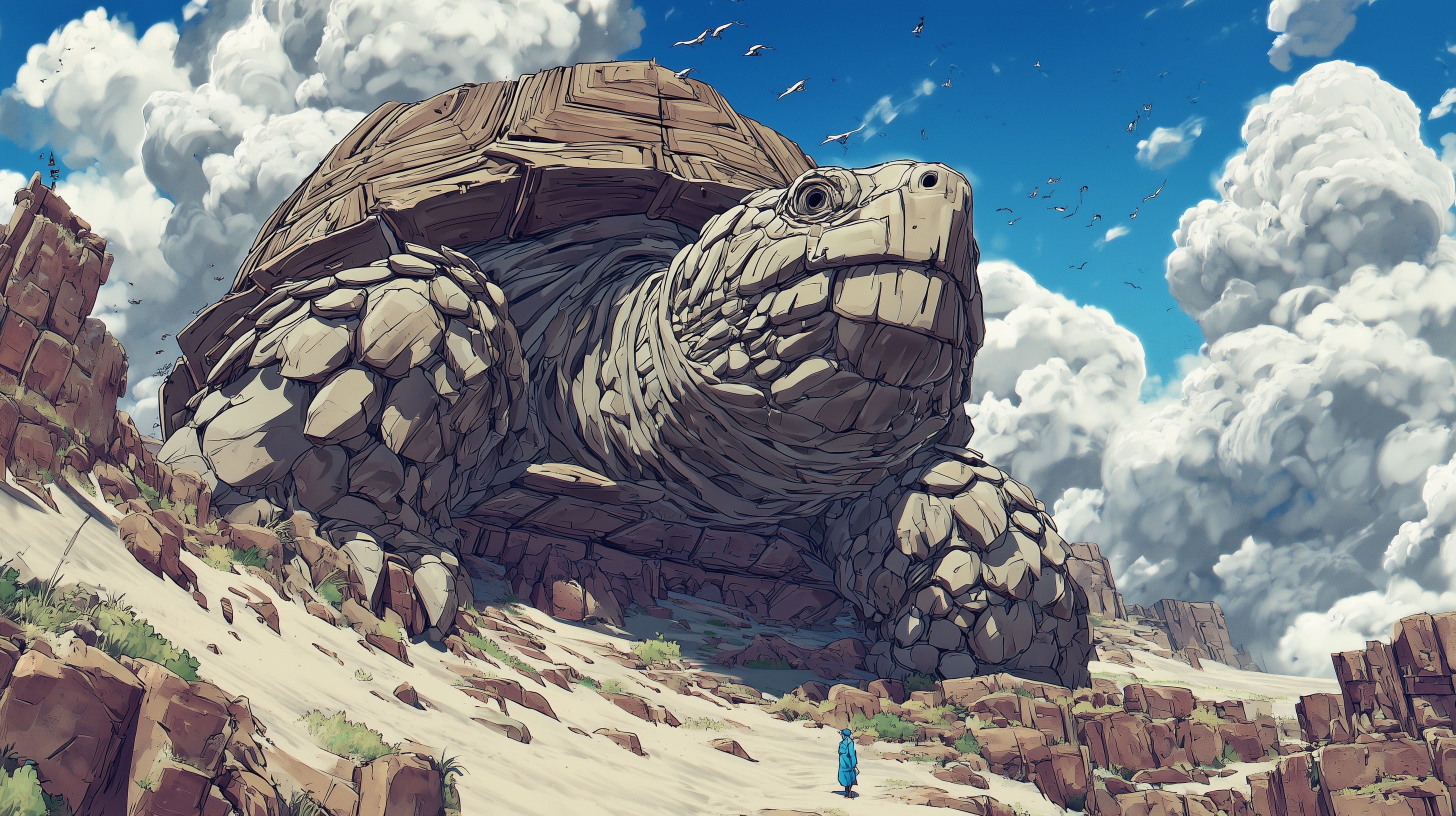
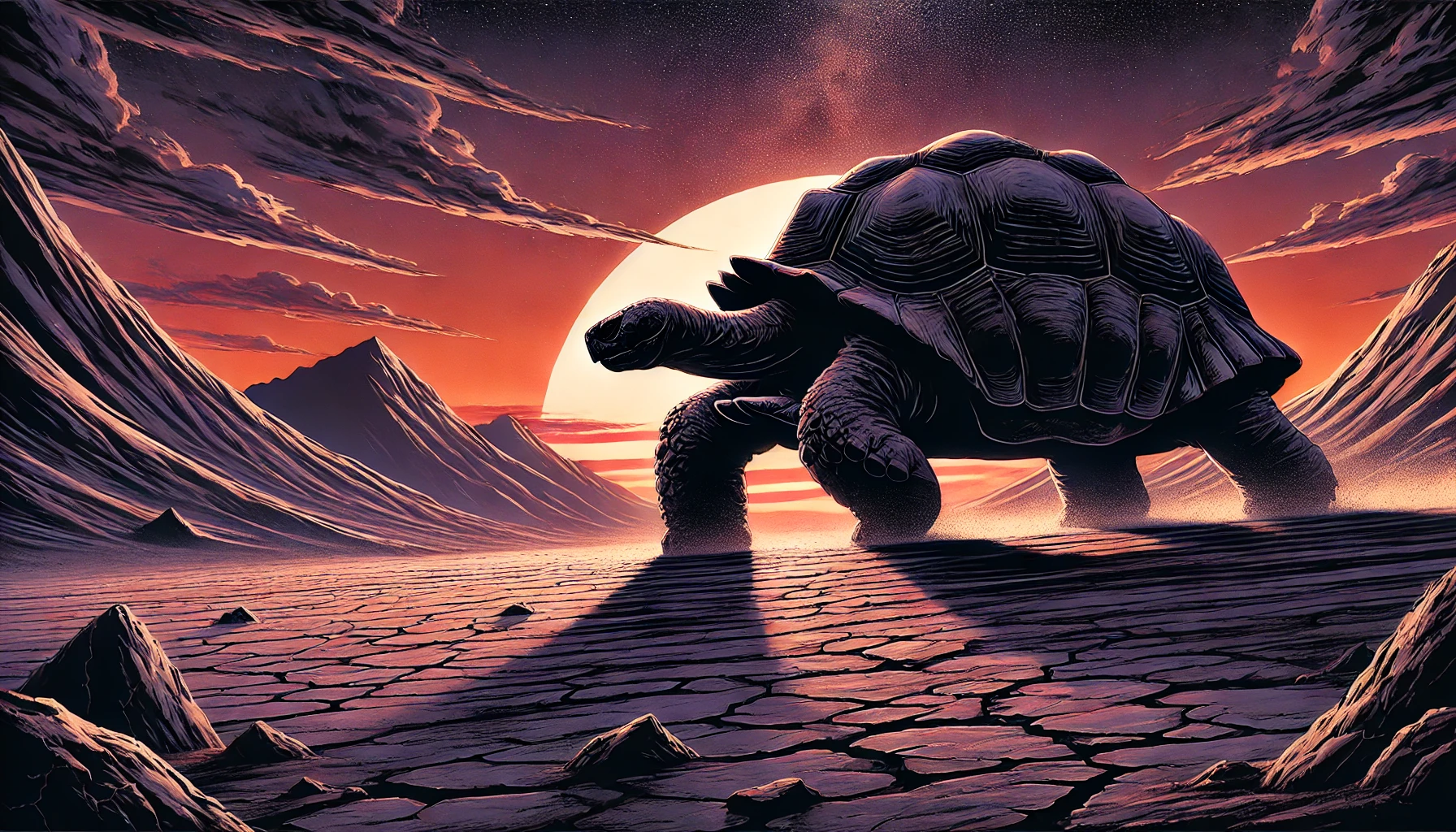
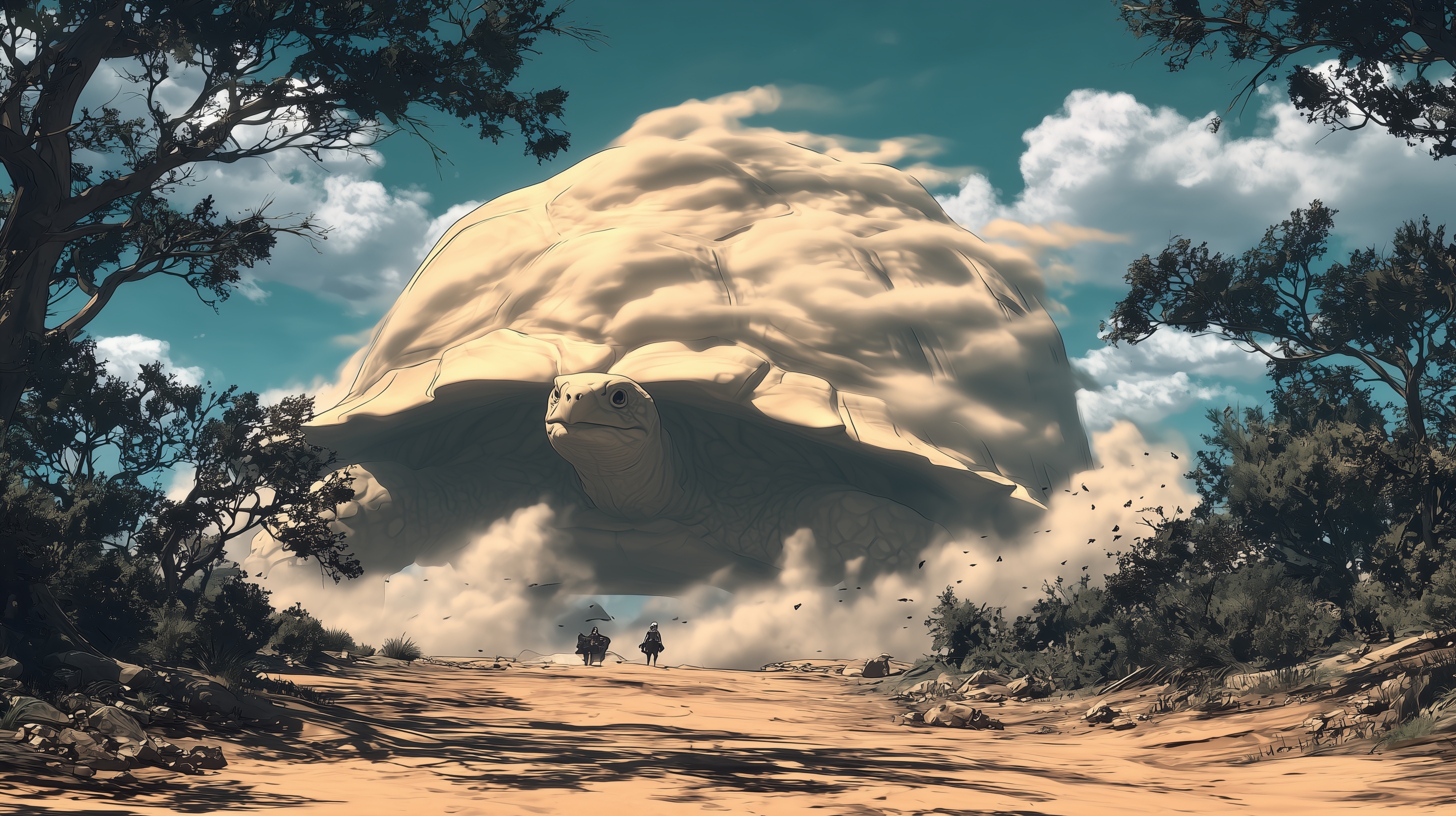
The Duneback Tortoise is a creature of massive presence, ancient and certain. It moves with the patience of mountains and carries the memory of the land itself. To the distant eye it could be mistaken for a mound of stone or a half-buried ruin. Only when it stirs does the illusion fade and the truth appear, that this living monument has shaped Kythas as much as the land has shaped it.
Its body is a structure of power and permanence. Thick limbs like pillars drive its weight into the soil, each slow step pressing deep enough to leave a mark for generations. Nothing about it is wasteful. The frame beneath the shell is reinforced with minerals from centuries of growth, a natural armor that has never failed it. Even when time wears on every other creature, the Duneback endures.
Its skin is heavy and lined, tough as the cracked earth it walks across. The shell rises like a fortress made of keratin and dust, worn smooth where wind has polished it and rough where storms have struck. No weapon has pierced it. No beast has broken it. Even the long storms that scour the desert leave only a thin trace of sand behind.
The Duneback’s eyes are slow to blink but never blind. It sees not in detail but in motion, light, and change. It reads the tilt of the sun and the bend of grass. It knows when the rains will come and when to move before danger. Beneath its feet it feels the world speak, the faint tremor of storms, the crawl of water far below, the tread of distant herds. It moves only when the land tells it to move.
The trails it leaves are not accidents. Over centuries those trails become roads. The weight of its steps presses the ground into lasting paths, and people follow them because the creature never chooses a false way. Wherever it stops, the land steadies, and life gathers there. Villages rise where Dunebacks once rested, as if the earth itself remembers their pause.
When threatened, the Duneback does not fight or flee. It sinks into stillness and waits. Its shell becomes a wall no weapon can crack. Time defeats every attacker long before the creature needs to strike. Only when pressed beyond patience does it bite, and that single act ends the contest completely.
The wars of mortals have never moved it. Armies have tried to harness its strength and kings have tried to brand it as their own. Every attempt has failed. The Duneback obeys no one. It continues its slow, certain walk across ages, untouched by greed or command.
Its shell bears the colors of the desert, browns, grays, and pale stone. Dust and mineral stain its surface, and the oldest carry moss and flowers that root in their cracks. No two are the same. Some are scarred by storms, others smoothed by wind, all of them living fragments of the world’s memory. When cities have fallen and names are lost, the Duneback will still walk, and the land will follow in its wake.
Ecology and Habitats
"We had resigned ourselves to death, the heat flaying our backs, our lips split open from thirst. Then, as if the land itself had mercy, we saw it. A great beast, slow and steady, dragging half the desert on its back. It lowered itself into the earth, and we followed, crawling like animals into the cavern it left behind. Cool air, damp walls, the scent of moisture in a place that should have none. The Duneback had carved a sanctuary from the very bones of Kythas, and in its wake, we lived."
The Duneback Tortoise is not simply an inhabitant of the Kythian Outback. It is one of its oldest architects. The land and the creature exist in a bond that has lasted for centuries, each shaping the other in ways both quiet and vast. The Duneback does not live within its world so much as it builds it.
Kythas is a land of extremes. The sun bakes the earth to stone by day, and the night drops into cold that bites through bone. The Outback punishes the hasty and devours the unwise, a place where life does not flourish but endures. Yet in this harsh wilderness the Duneback thrives.
Built for survival, the Duneback carries its refuge with it. Its layered shell turns aside the heat of the sun. Its hide is thick enough to ignore the teeth of predators. It moves with the calm of an age that wastes nothing. It needs no shade and no shelter. Every protection it requires travels with it.
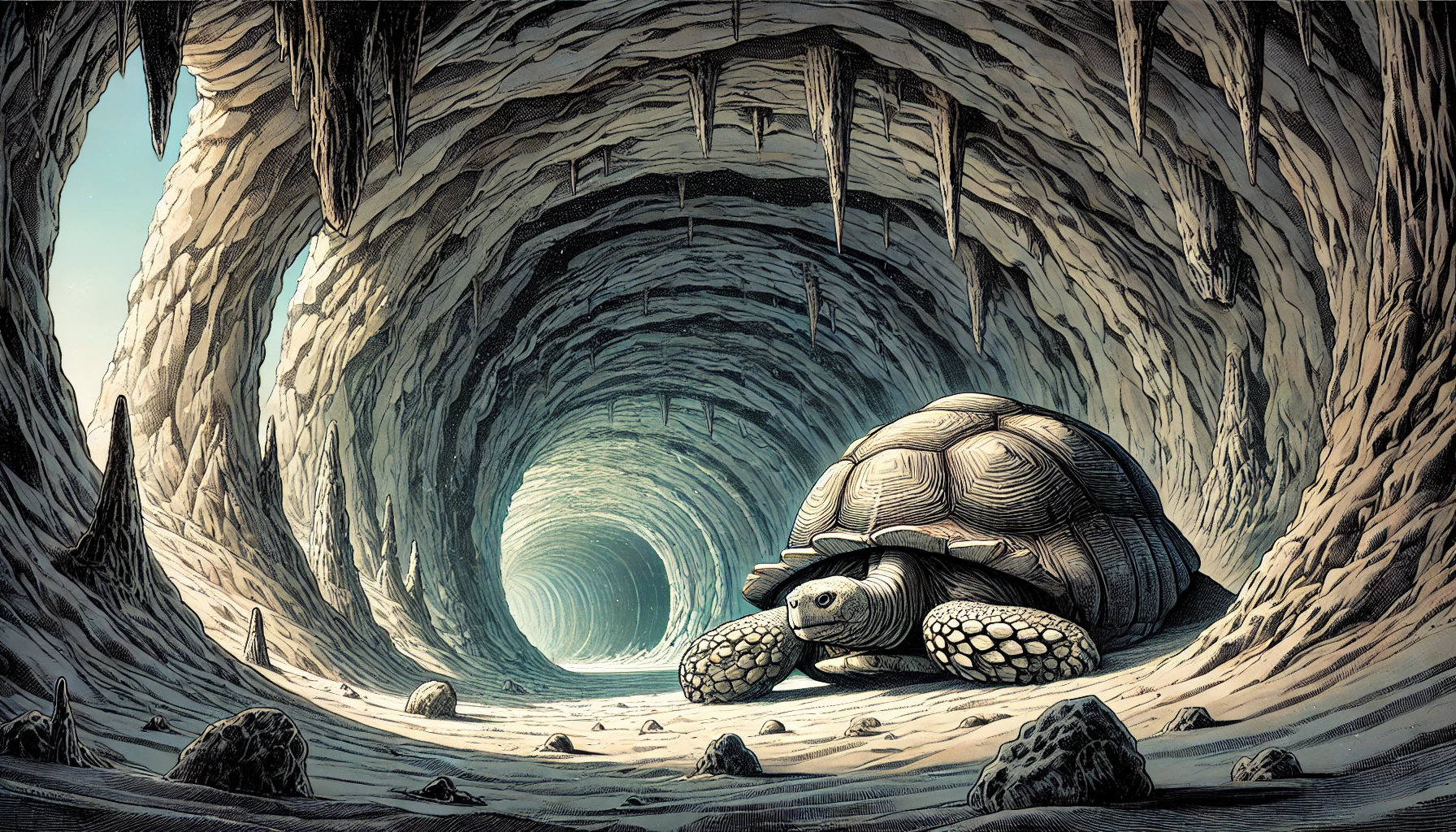
Beneath the surface is where it changes the land. When it rests, it digs. It hollows the ground into vast chambers where heat and cold cannot reach. These burrows remain long after the Duneback has gone, becoming cool sanctuaries within the desert. In time, others claim them, and what was once a den becomes a refuge for many.
The Kamara have long followed the Duneback’s path. They have learned that where the tortoise digs, life follows. Its empty burrows collect moisture and soften the soil. Plants root in the damp walls, insects and small animals make homes there, and larger predators wait near the entrance knowing that water and prey are never far apart. Even people have taken shelter in these tunnels, finding life in the ruins the creature leaves behind.
To the Kamara these places are holy. They tell stories of Dunebacks that walked the same trails for centuries, leaving networks of tunnels that became the hearts of their settlements. Some of the oldest cities in Kythas still stand on the bones of these burrows, their halls shaped first by the tortoise and only later by human hands. The curves and hollows in their walls are reminders that the Duneback carved the foundation long before the first stones were laid.
The nomads of the Outback still say that a home found is better than a home built. They mean that the land’s greatest engineer is not mortal. The Duneback does not gather with its kind or guard territory. It moves in rhythm with water and instinct, never claiming what it shapes. Even in death it serves the world. Its shell becomes stone, its bones settle into the dust, and the ground reshapes itself around what remains.
The Kamara tell of valleys formed from the bodies of these giants. They say the Duneback does not follow rivers but creates them, tracing paths that the waters later claim. Whether legend or truth, the belief endures that the Outback lives because the Duneback walks. Where it travels, water can be found. Where it rests, the lost can find safety. And when one falls at last, the land bends to hold it, as if Kythas itself honors the oldest life it ever knew.
Dietary Needs and Habits
"A Duneback does not hunt, nor does it scavenge. It does not fight for its meals, nor does it hoard for leaner days. It takes only what it needs, grinding the toughest plants to dust with a patience only time itself can match. And when there is nothing left, it moves on, knowing that somewhere ahead, the land will yield again."
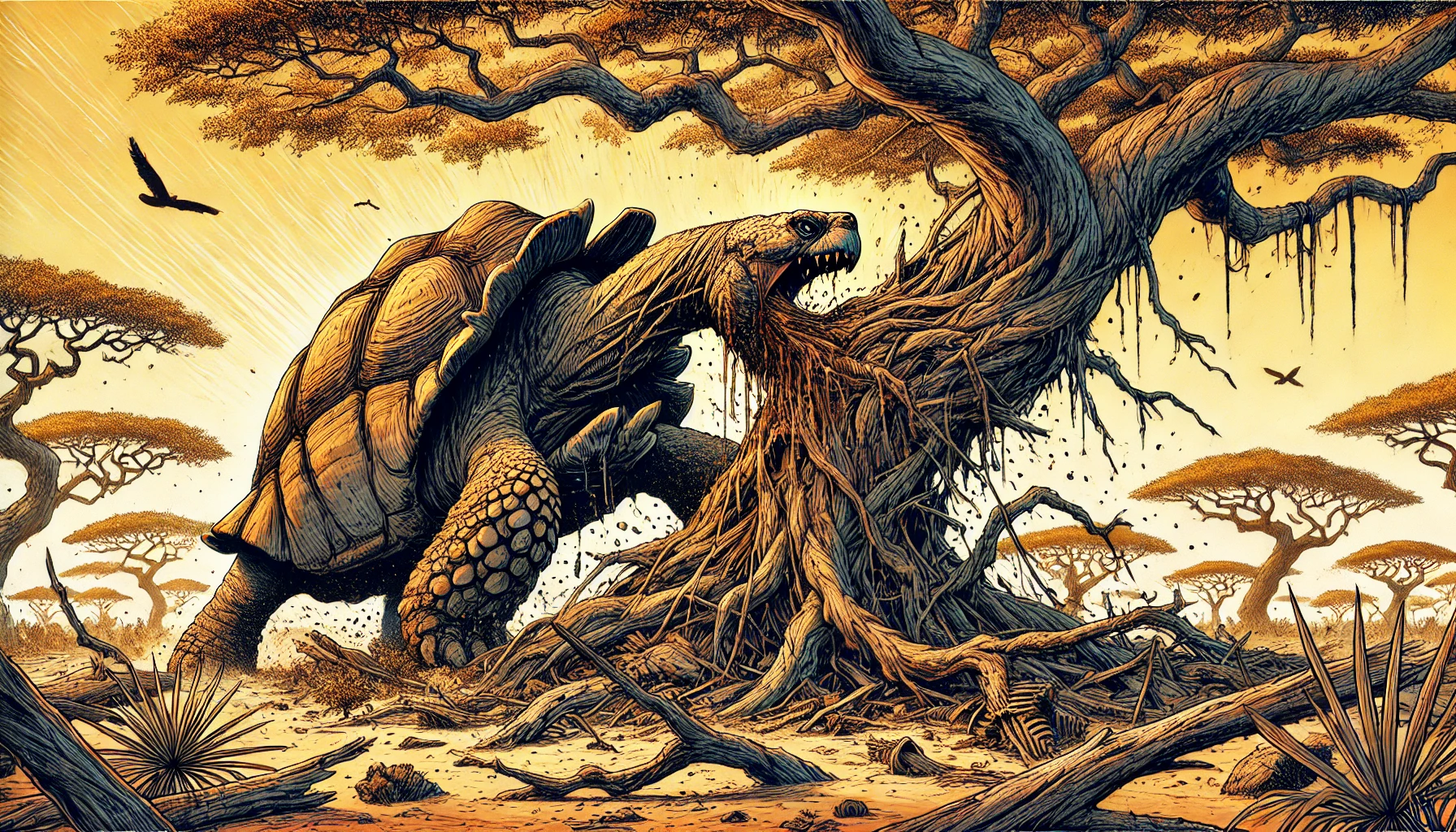
The Duneback Tortoise is a strict herbivore, sustaining itself on the sparse yet hardy vegetation of the Kythian Outback. It feeds primarily on drought resistant flora, consuming tough, fibrous plants that most other creatures cannot digest. Its diet consists of thorny shrubs, desert succulents, hardy grasses, cacti, and deep rooted vegetation, all of which provide the moisture and nutrients necessary for its immense body to function.
Despite its slow pace, the Duneback is an efficient forager, using its massive, crushing jaws to grind down even the toughest plant matter. It does not strip an area bare but feeds in a scattered, methodical manner, ensuring that plant life has time to recover before it passes through again, one of the many reasons the paths it treads remain fertile long after it has moved on.
It does not hunt, nor does it need to protect its food sources. Few creatures dare challenge something so massive, and the Duneback’s natural sheer bulk and armored shell make it impervious to most threats. Its long digestive cycle allows it to go for weeks, even months, without feeding, storing excess nutrients within layers of fatty reserves and specialized water storing tissues, ensuring it can survive even in times of extreme drought.
In particularly dry seasons, it will dig into the earth with its powerful limbs, unearthing deep rooted tubers, buried succulents, or underground water rich vegetation, further proving its uncanny ability to locate hidden resources. When no fresh growth is available, it can digest dry, brittle plant matter, extracting moisture and nutrients from sources that would be of no use to lesser creatures.
But for all that it gives, the Duneback takes nothing more than it needs. It feeds upon the hardiest vegetation, desert shrubs, thick leaved succulents, cacti brimming with hidden moisture. It does not strip the land bare, does not leave ruin in its wake. Its massive form allows seeds to germinate within the soil beneath it, and its droppings, rich with digested plant matter, restore nutrients to the arid earth. Where a Duneback has fed, new growth often follows in its wake.
Behaviour
"The Duneback does not hurry, does not hesitate, does not change its course for king or calamity. It does not rage when struck, nor does it flee from danger. It simply moves, slow as the turning of the world, patient as the stones beneath our feet. It knows only one truth. That everything that stands in its way will fall before it does."
The Duneback Tortoise is a creature of unwavering routine, moving through the world with a measured certainty that has remained unchanged for millennia. Its actions are dictated not by instinctual urgency, but by an innate, slow burning awareness of the land itself. It does not hurry, does not startle, and does not alter its course for anything that does not directly obstruct it.
Dunebacks are fundamentally solitary, though they are not territorial. They do not seek out companionship, nor do they exhibit any form of social bonding beyond what is necessary for reproduction. If two or more Dunebacks cross paths, they may continue alongside one another for days, weeks, or even months before eventually drifting apart without interaction. There is no conflict, no displays of dominance, and no need for hierarchy.
During times of drought or when approaching major water sources, multiple Dunebacks may gather in the same area, their sheer size making them impossible to avoid. Even then, their interactions remain passive, they drink, they rest, and they move on, as if the presence of others is barely acknowledged.
The Duneback has no natural predators in adulthood. Its sheer bulk, armored shell, and thick, leathery hide make it impervious to all but the most catastrophic environmental threats. No carnivore, no matter how powerful, seeks out a Duneback as prey, there is no reward in such an effort, only exhaustion and broken teeth.
If threatened, the Duneback does not react with aggression or fear. Instead, it does nothing at all. It will stop, lower itself to the ground, and retreat into its fortress like shell, where it will remain for as long as necessary. It does not lash out, does not retaliate, and does not acknowledge the presence of the threat beyond removing itself from harm’s reach.
If an attacker persists, whether out of desperation or ignorance, the Duneback remains patient. It can wait longer than any predator can afford to. The creature knows that in the contest of endurance, nothing outlasts a Duneback.
There are rare instances where a Duneback has acted in direct defense, but these moments are nearly mythical. In such cases, the creature’s massive, crushing jaws, used almost exclusively for grinding tough vegetation, have been known to snap through bone, stone, and even iron with a single motion. Few creatures have ever survived a Duneback’s bite. Fewer still have ever provoked one into delivering it.
The Duneback does not acknowledge lesser creatures in any meaningful way. Smaller animals, be they mammals, reptiles, birds, or insects, may climb across its shell, follow in its wake, or scurry beneath its massive limbs without reaction.
If such creatures happen to be in its path, the Duneback will not alter its course. It does not move around obstacles, nor does it slow for anything small enough to be beneath its notice. Whether it be a gathering of scavengers, a den of smaller animals, or even a reckless traveler standing before it, the Duneback continues forward without hesitation.
It does not go out of its way to destroy, but neither does it concern itself with what is caught beneath its step. Its path is inevitable, and the world must adjust to it, not the other way around.
Additional Information
Domestication
"You do not break a Duneback. You do not lead it, harness it, or command it. The greatest warlords have tried, the richest merchants have schemed, the most desperate settlers have prayed, and all have failed. A Duneback walks where it wills, and no force in Kythas has ever made it do otherwise."
Despite its value, every attempt to tame, herd, or direct the Duneback has ended in failure. The creature is neither aggressive nor reactive, it simply does not acknowledge the attempts of others to control it.
Efforts to use it as a beast of burden have proven fruitless, as it does not respond to force, bribes, or even pain. Unlike other large animals, which can be conditioned to follow commands, the Duneback only moves where it intends to go, and no force in Kythas has ever successfully changed its course.
Likewise, attempts to corral or enclose Dunebacks near settlements have only resulted in frustration. The creatures either walk straight through barriers, indifferent to obstacles, or simply stop moving entirely, standing motionless for months at a time until their instincts compel them to move again.
Because of this, no one controls the Duneback. No one owns it. It is a force beyond mortal hands, an animal that chooses its own road and does not stray from it.

Uses, Products & Exploitation
"The Duneback does not rule, but it has shaped every kingdom. It does not command, but its path has guided every traveler. It does not create, yet its footprints have carved the only roads that matter. It is not a god, yet we owe it our survival. Long after our empires are dust, long after our names are forgotten, it will still walk. Slow, patient, and indifferent and never knowing that without it, we would have been nothing at all."
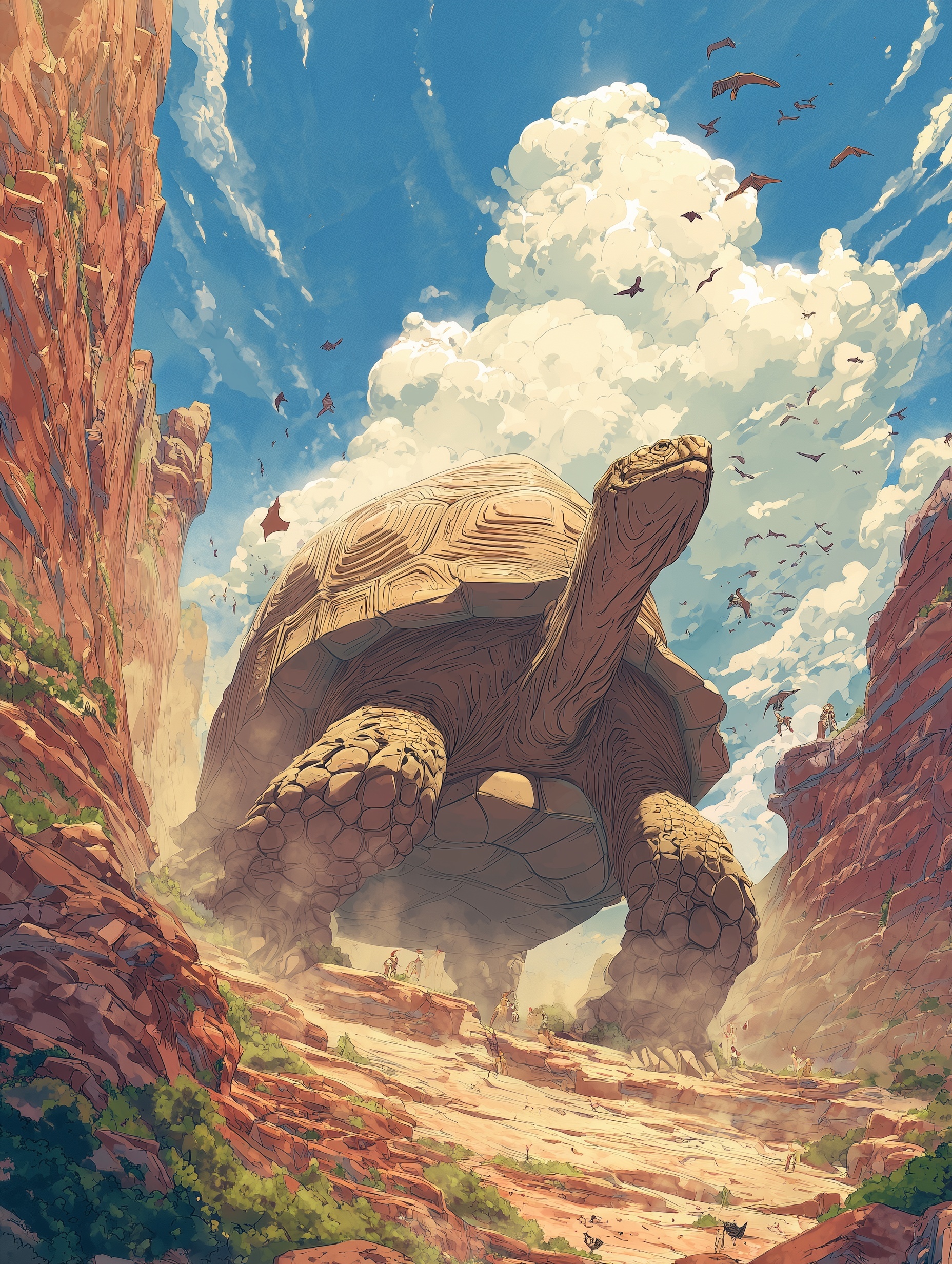
The Duneback Tortoise is the greatest force of civilization on Kythas. Without knowing it or meaning to, it has shaped the land in ways no race, ruler, or engineer ever could. It is not a builder, yet it has made every road. It is not a leader, yet it has guided every traveler. It is not a god, yet it has ensured the survival of those who would have perished in the wastes.
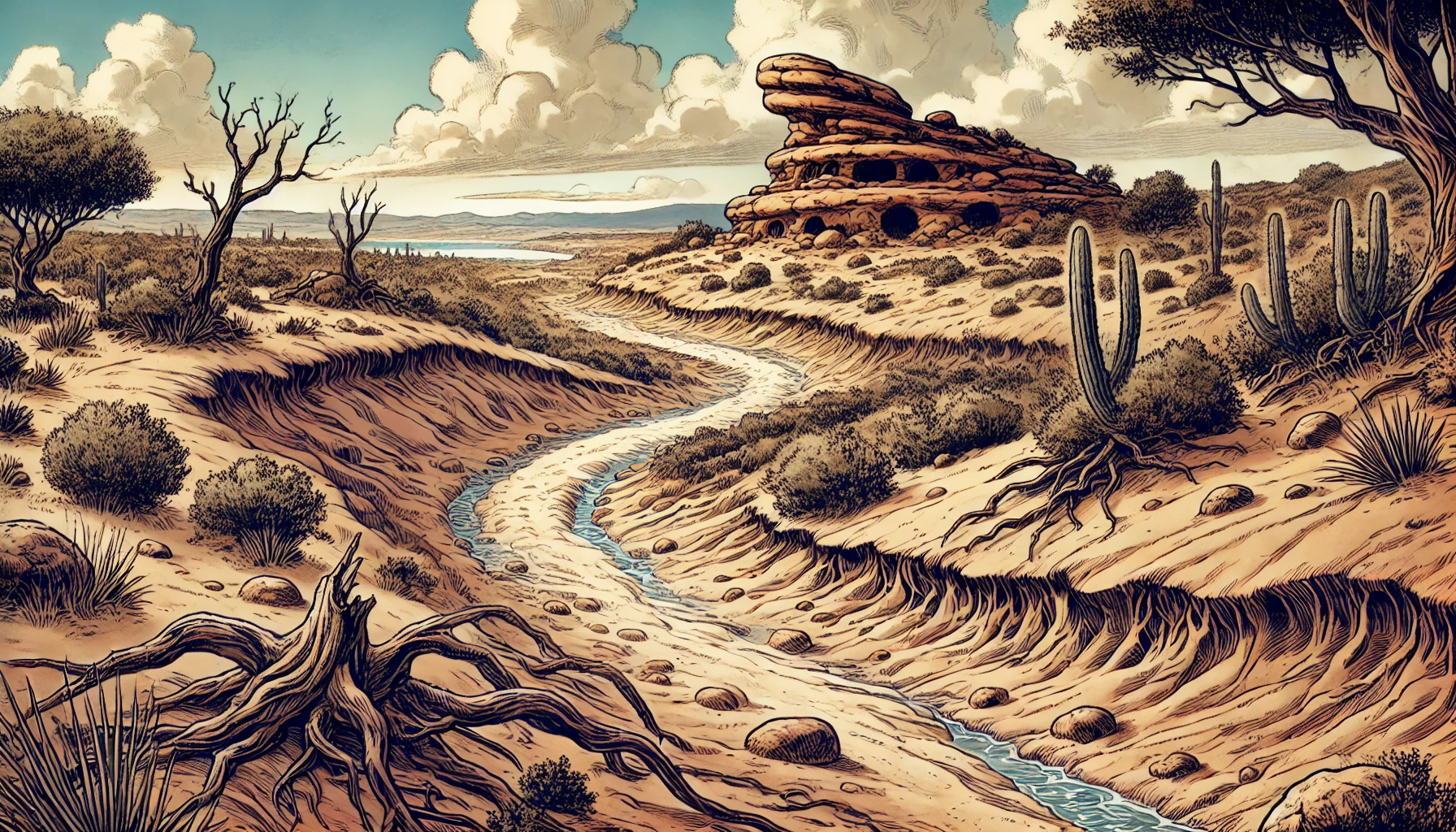
For millions of years its slow, deliberate path has worn deep into the landscape, creating the only true roads across the Outback. These trails shift over centuries, forming the natural arteries of Kythas and connecting one source of water to the next with an instinct that no scholar can explain. Where the Duneback walks, life follows. This is a truth without exception. There are no roads in Kythas without them, and there is no survival without the roads.
Some cultures have tried to map the Duneback’s migrations, hoping to predict when and where they will change. Others have built waystations along their trails, trading posts and caravan stops that exist only because the roads beneath them always lead to water. A few have tried to control the Dunebacks themselves, driving them toward growing cities in the hope that their passing might make the land fertile. All have failed. The Duneback does not care for mortal need. It walks as it always has.
Though it cannot be commanded, it can be followed. Travelers in the Outback look for the signs of its passing, the deep grooves pressed into the earth, the steady vibration of its tread, the gathering of animals that signals water ahead. To find a Duneback is to find safety. Many who would have died in the desert have lived because they trusted the creature to know what they could not.
The Duneback’s presence shapes more than surface trails. Over ages its weight has carved valleys and shifted rivers, altering the courses of entire regions. Some paths have sunk so deep they now lie below the desert floor. Others have become canyons and dry basins that hold the memory of long vanished rains. Even the buried rock has been polished smooth where countless Dunebacks have passed. The oldest of these roads are now indistinguishable from riverbeds.
Its gift to the land is unintentional but complete. It is not revered for its nature but for what it leaves behind. Without it, Kythas would be chaos, its waters scattered and its terrain too harsh to cross. The Duneback has turned wilderness into a map, though it neither knows nor cares what it has done.
For this, it is honored in silence. The people of Kythas build no shrines, offer no prayers, and speak no praise. They simply walk the roads it has made and survive because it chose to pass that way.
Geographic Origin and Distribution
"The Duneback does not roam beyond the walls of Kythas, nor does it need to. It has no desire for distant lands, no curiosity for what lies beyond the palisades of stone that cage this continent. It is as much a part of Kythas as the dust, the heat, and the water it remembers. To speak of where it lives is to speak of where life itself can exist. For where the Duneback does not walk, nothing endures for long."
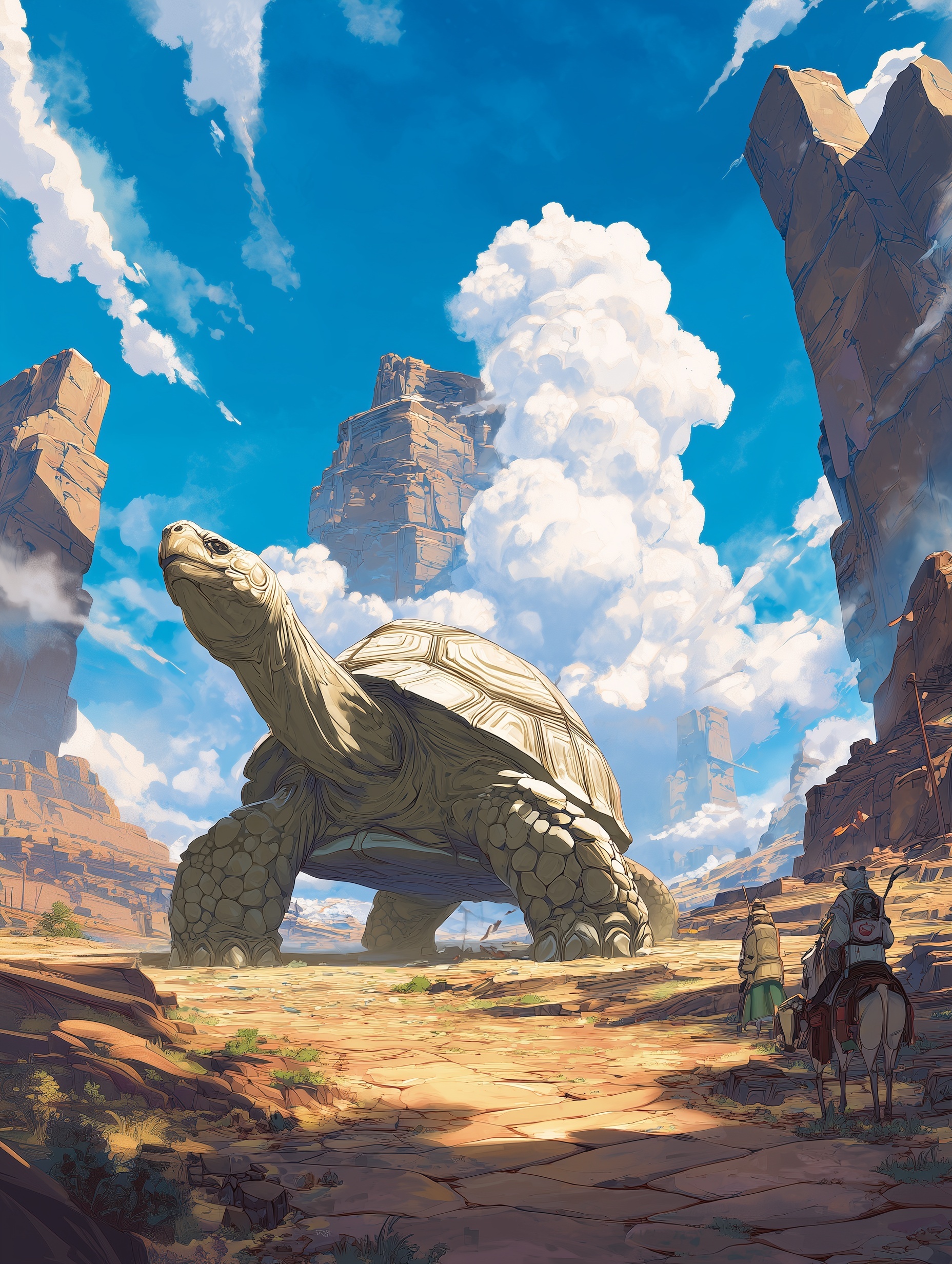
The Duneback Tortoise is as old as the land itself, a living relic shaped by the same violent forces that forged Kythas. It does not leave the continent and it does not wander without purpose. Its range ends where the cliffs rise, the ring of broken stone that seals Kythas from the sea. Whatever created those walls lies beyond memory, older even than the long patience of the Duneback.
Kythas is a continent of conflict. Heat and wind grind the rock by day, and the cold scours it by night. Storms cut the earth to ribbons and rivers vanish before they can find the sea. Life here survives by endurance alone, and the Duneback endures better than any other thing that lives. It was born for this place and has never needed another.
At the center of its world lies the Kythian Outback, a wilderness of red stone and white sand where no tree grows tall. The Duneback crosses it at a pace that ignores the passing of seasons. It fears neither heat nor thirst. Shade and shelter travel with it, carried on its back, and the sun itself cannot touch the life beneath that shell.
Its trails cross the continent like veins. Each path is worn deep by the tread of countless generations. They existed before cities, before roads, before names for the stars. The people of Kythas follow them still. Traders, herders, and wanderers know that a Duneback’s path never leads astray. Every road marked by its feet ends in water or refuge.
When the tortoise rests, it digs. Its massive body hollows the ground, shaping wide caverns that hold cool air and moisture. When it leaves, the chambers remain. Dust settles, plants take root, and small animals make their homes in the shade it has created. Whole communities grow in the places where a Duneback once slept.
Though bound to the Outback, it ranges far within it. The Duneback climbs the outer plateaus where the land splits into cliffs and gorges. It crosses the black plains of cooled lava where ancient fires once rose to the sky. Even among the ruins of stone melted by the earth itself, it finds the hidden veins of life. Nothing in this land is too barren for its step.
No creature commands it and no wall restrains it. The palisades that ring Kythas rise higher than any mountain, yet the Duneback does not test them. It has no wish to leave. The cliffs, the dust, and the endless heat are its home. It belongs to the cratered heart of this world as fully as the rock and sand belong to it.
So it continues, walking the same routes it has walked since time began. Each step shapes the ground a little more. Each turn of its shell changes the wind that moves above it. The Duneback will keep walking long after the memory of empires has vanished, forever bound to the wild heart of Kythas, the only home it has ever known.
Average Intelligence
"It does not think as we do, nor does it need to. It does not question, hesitate, or doubt. The Duneback simply knows where the water hides, where the land will let it pass, where time itself has carved the safest way forward. It has no fear because it has no need for fear. It has no curiosity because it already understands all it must. To call it wise is to mistake patience for thought. The truth is far simpler. The Duneback does not learn, because it has never needed to."
The Duneback Tortoise is not a creature of cunning or problem solving. These animals do not think in the way that sapient races do. However, to call it unintelligent would be a mistake. It possesses an ancient, instinctual wisdom, a deep rooted understanding of the land that no scholar, no mage, no tracker has ever been able to fully explain.
It does not analyze or strategize, yet it never loses its way. It does not seek, yet it always finds water. It does not communicate, yet it moves in harmony with the land, its paths aligning with the natural cycles of Kythas in ways that defy chance.
A Duneback does not learn new tasks, nor does it change its behaviors. It simply knows what it must do and does it without hesitation. Whether this is the product of millions of years of evolution or something more mystical is a subject of debate, but one fact remains: it is never lost, it is never uncertain, and it never doubts the road it walks.
Perception and Sensory Capabilities
"The Duneback does not seek water, it remembers it. Wells long buried, rivers lost to time, springs yet to break the surface. These things are not mysteries to it. The land may forget where it keeps its lifeblood, but the Duneback never does."
The Duneback Tortoise moves with the calm of an endless clock. Every step seems measured by the earth itself. It crosses the wide plains of Kythas with purpose, guided by something unseen. It does not wander. It walks a line that no wind or drought can erase, finding what lies hidden beneath the dry soil. It does not seek water. It already knows where water waits.
Scholars have tried for centuries to explain this gift. Some claim the Duneback can feel the tremor of rivers beneath the crust of stone. Others think it senses the pull of moisture in the air or the faint change in pressure above buried springs. None have proven their theories. The Kamara do not question the mystery. To them the Duneback’s journey is not learned knowledge but ancient memory, carried in the bones of the land.
Its eyes see only what matters. The creature is not built for detail but for distance. It notices the turn of the sun, the drift of shadow, the rise of storm light on the horizon. The world may change around it, yet its path never strays. It moves with the certainty of one who already knows the way.
What guides it lies beneath its feet. The Duneback listens through the ground. The pulse of Kythas moves through its legs and into its body. It feels the faint beat of hidden springs, the slow collapse of ancient riverbeds, the echo of thunder before the sky breaks. It does not reason or plan. It moves in time with what it feels, the rhythm of the earth that never stops speaking.
Even in the dead places it finds life. In wastelands where no blade of grass survives, it will stop and dig. Always there is water waiting. No one knows how. Some believe its skin senses moisture the way others feel heat. Others say its spirit is tied to the old veins of the world. Whatever the truth, the Duneback never fails. It arrives where water sleeps, and its claws wake it.
The Kamara call it the first guide of the desert. They follow its tracks when the wells run dry. Villages have been built where a Duneback once stopped to rest, their wells fed by the spring it revealed. To the people of Kythas, the creature is a promise made by the land itself, that life will return if one has the patience to wait.
Stories spread through the caravans of those saved by its passing. Travelers lost in the dust see its shape rise from the horizon and follow without question. They walk in silence, half dead from thirst, until the Duneback begins to dig. When they find the cool soil beneath the surface, they understand. The water was there all along. They only lacked the faith to keep walking.
When the Duneback moves on, it leaves no sign of pride. It does not stay to be praised or feared. It continues toward another buried spring, another place that waits to breathe again. Whether guided by instinct or something older than thought, the truth remains. As long as the Duneback walks, there will be water in Kythas.




I'm now wondering if the big beastie poops the Spice Melange.
It's spicy, but not the fun trip balls kind.
So don't stand behind it then.....
Hmm. Their dung may serve as a curious yet potent base for a Potion of Waterfinding or a Potion of Desertshield.
Not a bad idea.... huh. Gonna have to work on that.