


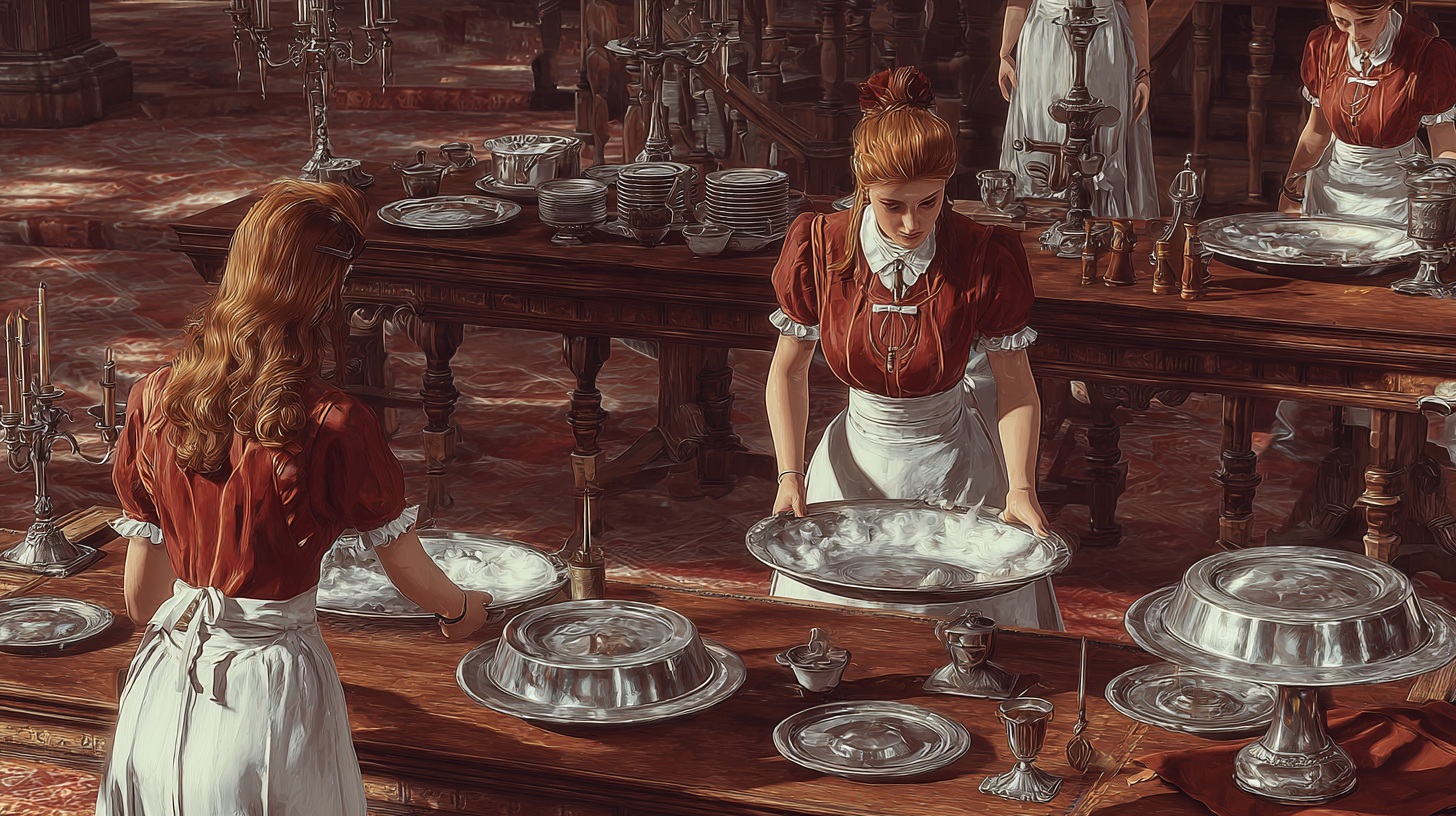
Domestic Servant
You Rang?
“The silver is polished, the floors are swept, and the guests praise the lord's impeccable household. Curious, isn't it, how often excellence is mistaken for magic when the people responsible are expected to remain invisible?”
Power attracts attention.
Service reveals reality.
Most people encounter great households from the outside. They see noble families, wealthy merchants, influential scholars, respected clergy, decorated officers, famous artists, or accomplished officials. They notice titles, accomplishments, ceremonies, and reputations. They see the polished version presented to the world.
Domestic servants see what happens after the guests leave.
A servant occupies a peculiar position within society. They are trusted with intimate responsibilities while often being overlooked entirely. They prepare meals, maintain schedules, organize correspondence, care for children, manage inventories, clean rooms, deliver messages, solve practical problems, and ensure that daily life continues functioning smoothly. Their work places them in the background of countless important moments.
That background offers a remarkable view.
The servant sees arguments that never reach public ears. They witness celebrations hidden from outsiders, private disappointments concealed behind confident smiles, and moments of fear experienced by people whose reputations depend upon appearing fearless. They learn that influence does not eliminate insecurity, wealth does not prevent loneliness, and authority does not guarantee competence.
In time, many domestic servants develop a different understanding of power.
The person receiving attention is not always the person exercising influence. A lord may possess legal authority, but an experienced steward often understands the estate better than its owner. A respected scholar may receive acclaim while depending entirely upon assistants who keep their affairs organized. A wealthy merchant may make important decisions while relying upon clerks, secretaries, servants, and laborers to transform those decisions into reality.
The servant learns to notice these relationships.
Every organization depends upon individuals whose names rarely appear in records. The quartermaster who keeps an army supplied. The clerk who remembers where important documents are stored. The caretaker who understands every corner of a building. The assistant who knows which visitors matter and which can be ignored. Remove such people and entire institutions begin to struggle.
This perspective often produces keen observers.
Domestic servants spend years paying attention to details. They learn routines, habits, preferences, and patterns. They notice when someone deviates from their usual behavior. They remember who visited, who argued, who seemed worried, and who left a room looking relieved. Their duties encourage attentiveness because small details frequently prevent larger problems.
Many servants also become skilled judges of character.
Unlike courtiers, merchants, diplomats, or officials, servants often encounter people during unguarded moments. Exhaustion, frustration, grief, embarrassment, affection, jealousy, and fear appear more honestly when an individual believes nobody important is watching. Over time, a servant learns that a person's treatment of those beneath them often reveals more than their treatment of social equals.
Some emerge from service deeply loyal to former employers. Others become skeptical of the powerful after witnessing too much hypocrisy. Most develop a practical understanding that human beings remain human regardless of rank.
In lands scarred by the Shattering, domestic servants often play even greater roles than people realize. Broken roads, scattered families, and weakened institutions create uncertainty. Under such circumstances, reliable individuals become invaluable. Servants frequently preserve traditions, maintain households during difficult times, protect family histories, and carry knowledge from one generation to the next.
A noble house may survive because of military strength.
It may also survive because a housekeeper remembered where important records were hidden, because a steward managed dwindling resources wisely, or because a nurse ensured that the next generation lived long enough to inherit.
History rarely records such contributions.
That does not make them less important.
Many former servants carry remarkable collections of memories. Letters from grateful employers. Gifts from children they helped raise. Secrets entrusted to them during moments of vulnerability. Observations gathered over years of quiet service. Some possess knowledge capable of reshaping reputations, fortunes, or entire families.
Most never speak of it.
Discretion is often the first lesson service teaches and the last lesson it forgets.
Yet even after leaving a household behind, servants rarely lose the habits their work instilled. They continue noticing details. They continue recognizing who truly keeps an organization functioning. They continue observing the gap between public appearances and private reality.
Because they understand something many people never learn.
Titles matter.
Authority matters.
Reputation matters.
But when something goes wrong, everyone eventually discovers who they truly depend upon.
Most people ask who is in charge.
A domestic servant asks who everyone depends on.

“A duke may own the estate, but try serving dinner without the cook, balancing accounts without the steward, or finding your boots without your valet. Power is a marvelous thing until it must locate its own socks.”
Type
Private Services



Comments