


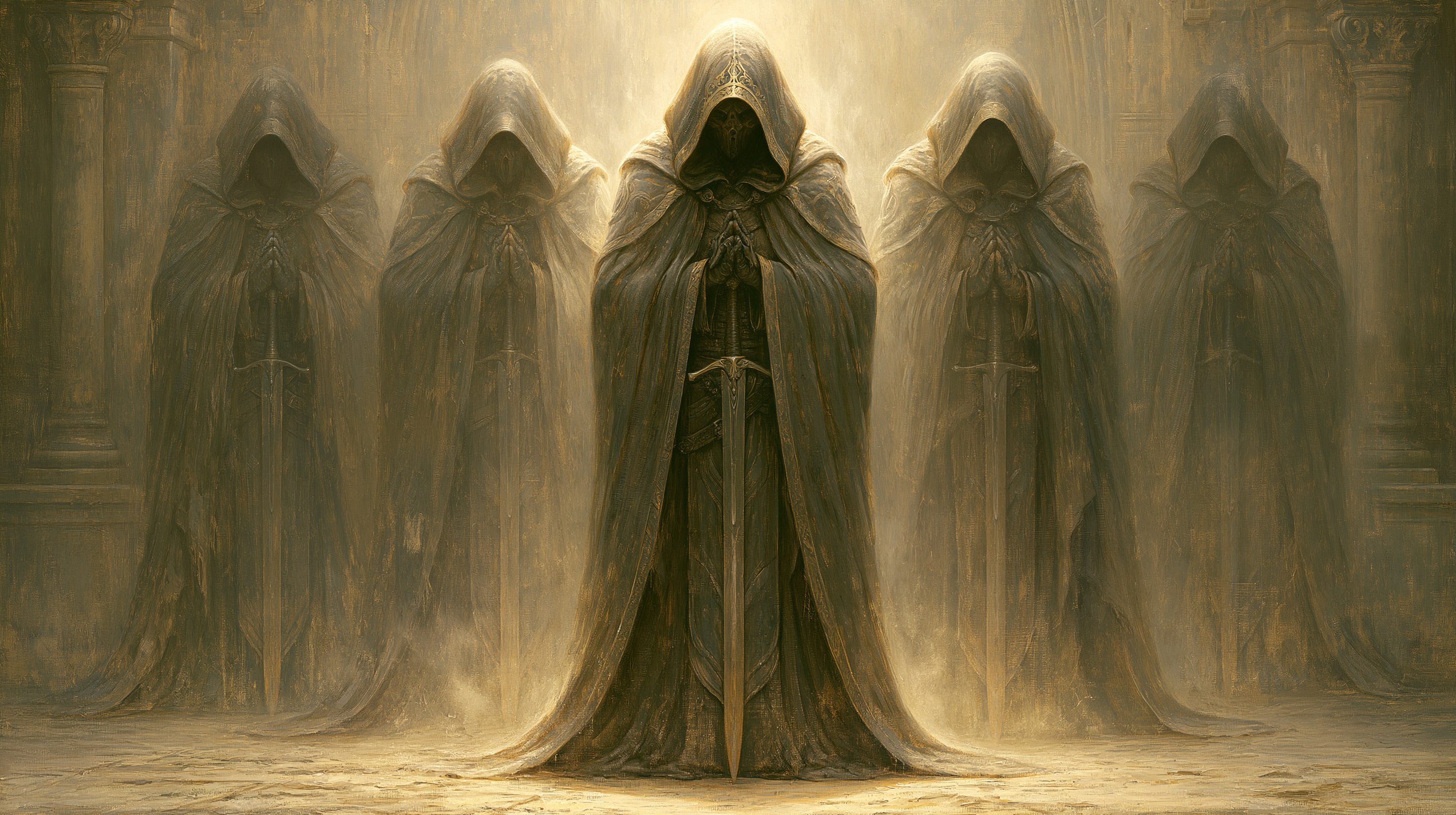
Consecrate Arms
Mass of War
“Bring me the sword after the rite and I will tell you what hunts this valley. Steel remembers the prayers spoken over it, and tonight your blade smells like opened graves.”
There are wars where ordinary steel is enough.
Then there are the other wars.
The ones fought beneath ruined cathedrals where the dead refuse to stay buried. The ones waged against creatures older than kingdoms, horrors born beyond mortal reality, or fiends that wear human skin while whispering through the dark. In those conflicts, soldiers quickly learn that courage alone is not sufficient. Some enemies must be opposed spiritually as well as physically.
Consecrate Arms exists for those wars.
The spell is not merely a blessing placed upon weapons. It is a ritual declaration of purpose. Through sacred oils, incense, prayer, and invocation, the caster transforms instruments of violence into temporary objects of holy intent. The weapons are not awakened into intelligence, nor permanently enchanted. Instead, they become aligned against a specific form of supernatural threat, infused with enough divine resonance to wound creatures that ordinary steel cannot reliably oppose.
The rite itself is deeply ceremonial. The chosen weapons are arranged within a sanctified circle while the caster spends an hour reciting condemnations, prayers, funerary verses, or battle liturgies tied to the enemy being opposed. Different faiths perform the ritual differently. Some chant loudly in unison while hammering weapon pommels against stone floors in rhythmic cadence. Others conduct the rite in absolute silence except for the sound of incense burning and oil dripping onto polished steel.
The atmosphere surrounding the ceremony often feels heavy even to nonbelievers.
Participants commonly describe the sensation that the weapons are being prepared for something inevitable.
The chosen enemy matters enormously. Consecrate Arms is not a general blessing against evil or danger. It is focused hatred shaped into ritual form. A priest preparing weapons against undead speaks differently than one preparing arms against fiends or aberrations. Against undead, the language often centers on rest, sanctity, memory, and violation of the natural order. Against fiends, the tone becomes condemnatory and wrathful. Against aberrations, many rituals become uneasy and fearful, treating the enemy less as creatures and more as intrusions against reality itself.
Veteran clerics sometimes insist the weapons respond differently depending on the sincerity of the ritual.
A blade consecrated by someone who genuinely understands the horror of the enemy often develops a more intense radiance than one blessed mechanically out of obligation.
This belief has led many militant faiths to incorporate survivors into the ceremony itself. A village elder who lost family to vampires may be asked to speak during a tomb purge consecration. A soldier scarred by demonic war may place their hand upon the weapons before battle. Some traditions require the names of the dead to be spoken aloud so the weapons “remember” who they were prepared to avenge.
The effect this has on morale is significant.
Ordinary soldiers standing beside consecrated weapons often become calmer and more resolute. Fear loses some of its grip when steel glows softly in the dark and sacred smoke still clings to the leather wrapping of a sword hilt. Against supernatural enemies especially, this psychological effect may matter just as much as the magic itself.
The spell’s suppression of regenerative abilities is particularly valued by monster hunters and crusading orders. Many supernatural creatures survive not because they are impossible to wound, but because they recover faster than ordinary fighters can kill them. Consecrate Arms disrupts this unnatural persistence temporarily, allowing disciplined warriors to overwhelm creatures that would otherwise rise again moments later.
This practical effectiveness has made the spell widespread among militant religious institutions.
Templar orders often maintain entire sanctuaries dedicated solely to performing large scale consecration rites before military campaigns. Inquisition forces carry portable shrines specifically designed to support the ritual while traveling. Some frontier churches keep emergency stores of silver dust and incense prepared in case reports of undead or fiend activity suddenly emerge nearby.
The spell also possesses symbolic weight far beyond its battlefield utility.
To consecrate a weapon is to acknowledge that the coming conflict is spiritually significant. Kingdoms do not perform such rites before ordinary wars against rival nations. Doing so would imply the enemy itself is fundamentally unnatural or damned. Because of this, the use of Consecrate Arms is often interpreted as a declaration that the threat being faced transcends politics or territorial dispute.
Entire populations have panicked simply from hearing that local churches began consecrating weapons in large numbers.
The visual signs of the enchantment are subtle but unmistakable. Weapons blessed through the ritual emit dim radiance near their chosen foes, often accompanied by faint heat, whispered prayer tones, drifting ash like incense smoke, or pale runic shimmer along the blade’s edge. Ammunition fired from consecrated ranged weapons sometimes leaves brief streaks of silver light through the air before impact.
Against the correct enemy, the effect can be terrifying.
Undead recoil instinctively from weapons prepared specifically for their destruction. Invisible creatures flare visibly for moments after being struck. Fiends describe the sensation as feeling “seen” by the divine force within the weapon. Even creatures incapable of fear often react with sudden aggression or panic once wounded by consecrated steel.
For many adventurers, however, the most memorable part of the spell is not the battle itself.
It is the hour beforehand.
The silence.
The incense.
The rows of weapons waiting beneath candlelight while prayers against ancient darkness echo through stone halls.
And the realization that everyone present fully expects something terrible to be waiting on the other side of dawn.
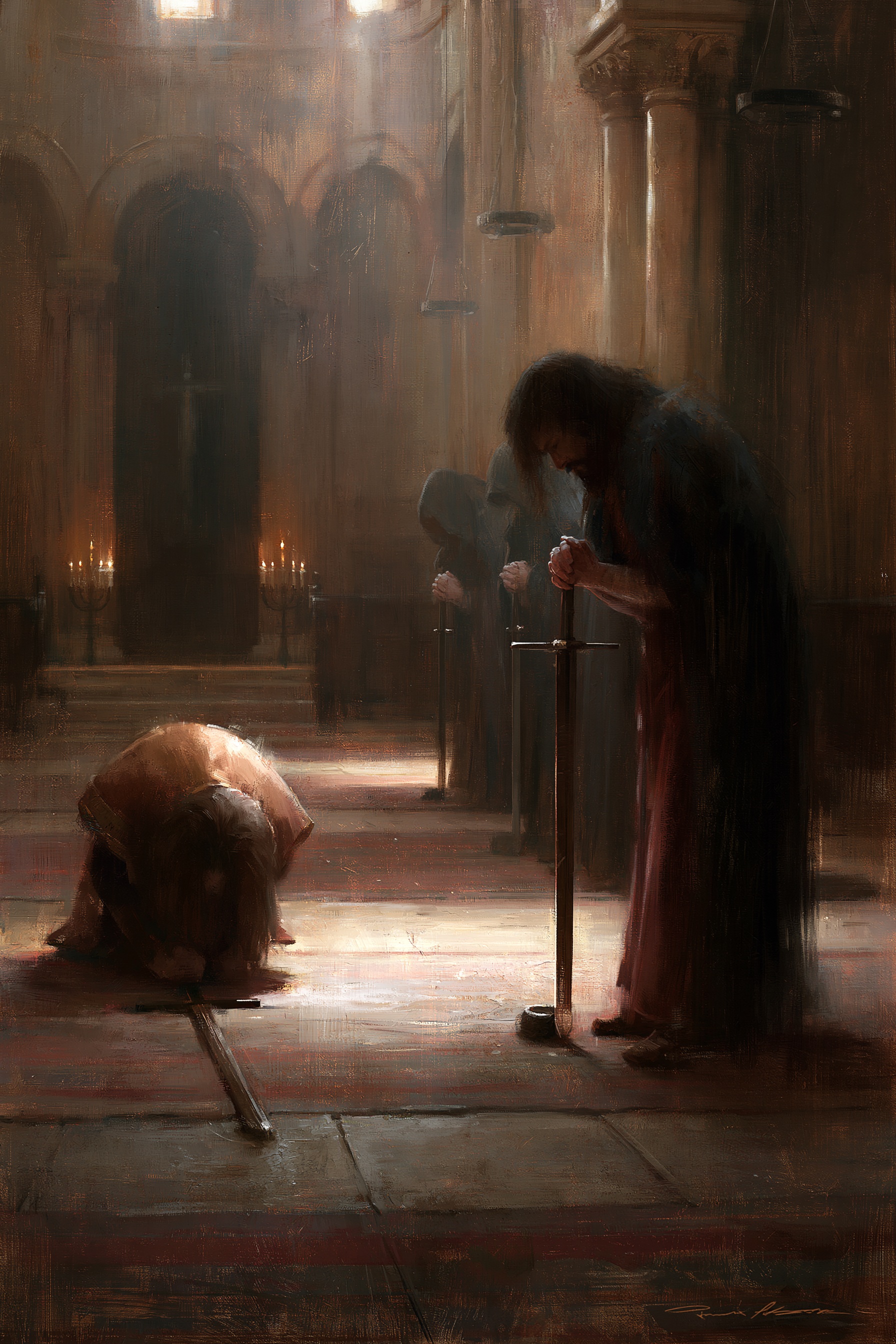
“A sword remembers every hand that carried it into darkness."
Related Discipline
Level



Comments