



Clean Burn
Fire's Nice And Warm
“And the flame was set before them, and it did not falter, nor did it hunger for oil or wood. It burned as it was meant to burn, not as the world would have it, and in that steady light, they knew they had not been abandoned.”
Clean Burn is the sort of spell that quietly earns its place in everyday life without ever drawing much attention to itself. It does not reshape the world or command power in any dramatic sense. It takes something simple, something as old as fire itself, and removes the small inconveniences that have always come with it.
Fire, for all its usefulness, is rarely perfect. It flickers, gutters, chokes on poor fuel, throws smoke into the eyes, and leaves its mark on everything it touches. Soot stains surfaces, ash collects, and the simple act of maintaining a steady flame becomes a constant, low level effort. Clean Burn strips all of that away and replaces it with consistency.
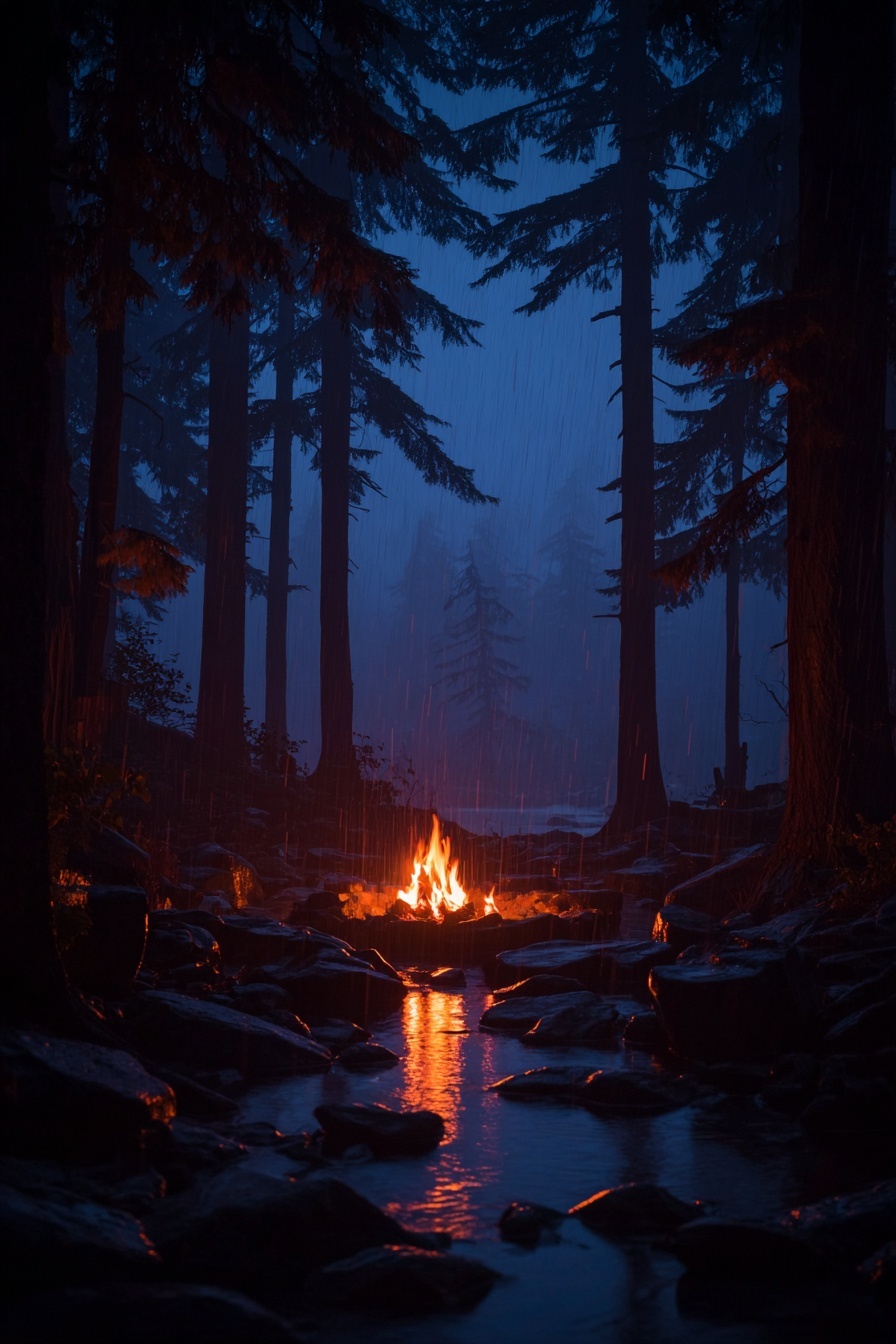
Once the spell is laid, the flame settles into a steady, reliable state. It no longer strains against the conditions around it. Wind does not disturb it. Water does not quench it. Even the absence of fuel becomes irrelevant for the duration. The fire simply continues, as though it has been removed from the usual demands placed upon it.
This reliability is what makes the spell so widely appreciated across very different walks of life.
Travelers and campers value it for the obvious reasons. A fire that will not die in bad weather, that requires no tending, and that leaves no trace behind is an ideal companion in uncertain conditions. It provides warmth and light without the constant need to feed or protect it, and when the time comes to move on, it leaves nothing behind to mark the place it once occupied.
In more settled environments, the benefits are quieter but no less significant.
Lanterns burn cleanly without blackening their glass. Hearths remain bright without filling a room with smoke. Workshops and enclosed spaces where ventilation might otherwise be a concern can maintain a steady source of light and heat without the usual drawbacks. Over time, this absence of residue changes how spaces are maintained, reducing the slow accumulation of grime that fire inevitably produces.
There is also a subtle aesthetic to it that has not gone unnoticed.
A clean flame has a different presence. It burns with a clarity that feels almost deliberate, free from the chaotic flicker that often defines natural fire. In certain settings, particularly those concerned with presentation and atmosphere, this quality is as valuable as the practical benefits. A steady, smokeless flame suggests control, refinement, and intention.
Despite its many advantages, the spell remains grounded in clear limitations.
It does not make fire stronger, larger, or more dangerous than it already is. It does not spread beyond what it could normally ignite, nor does it serve as a source of destruction beyond its natural capacity. The heat it produces remains the same. The light it casts is unchanged. What is altered is not the nature of the flame, but the conditions under which it exists.
This restraint is part of what makes the spell so dependable.
It does not attempt to do more than it should, and as a result, it rarely behaves in unexpected ways. Those who use it know exactly what they will get, and that predictability is often more valuable than any increase in raw capability.
There is, however, one boundary it does not cross.
Magic can still end it. While the flame resists all mundane attempts to extinguish it, it remains vulnerable to forces that operate on the same level as the spell itself. This ensures that, for all its stability, it is never truly permanent. It exists for a time, reliable and consistent, and then it is gone.
What remains is a spell that refines rather than transforms, one that takes a fundamental element and makes it behave just a little better than it otherwise would. It does not demand attention, but those who use it tend to notice its absence more than its presence once they have grown accustomed to it.
“Let the light endure without stain, without smoke, without end, for such is the sign of what is unbroken. Where it burns clean, there is no shadow that can claim it, and no darkness that may call it its own.”
Related Discipline
Level



Comments