
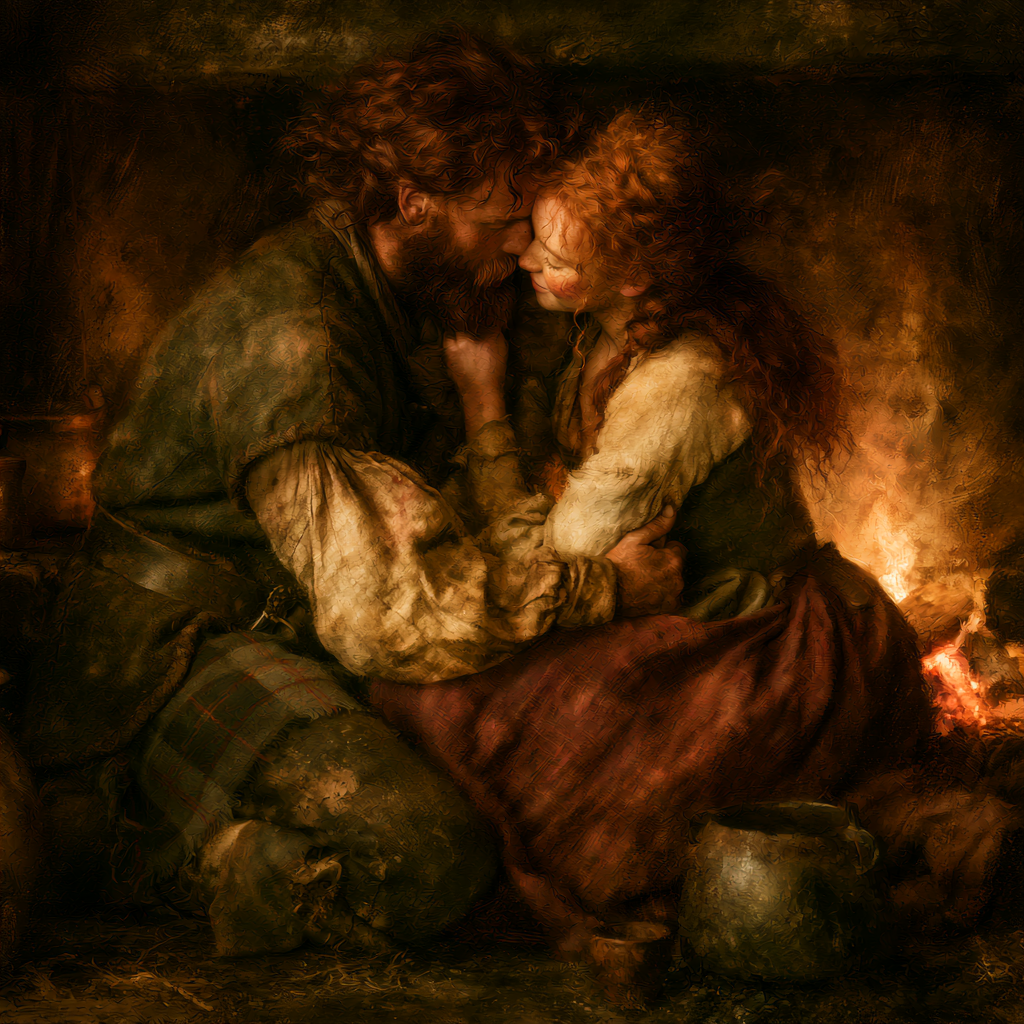
Hearthbinding
No stone stands alone, and neither should a single heart - Tesburgian ProverbBonds have always been the greatest strength and treasure that the Tesburgians have in their history of hardship and struggle in their homeland. But there is a time when a clan comes together and shows it more than ever before when they seek to honor the greatest bond of all: love. It is for that reason that the Hearthbinding takes place before the arrival of winter to warm their hearts with all they cherish in a celebration of life and kinship.
Execution
The Hearthbinding is one of the oldest and most revered traditions among the Tesburgian clans. Celebrated each autumn after the final harvest, it honors not only romantic love but also the enduring bonds of family, friendship, and clan. The Tesburgains believe that love is proven through steadfast loyalty and shared hardship rather than spoken affection alone. Preparations begin days before the festival as every household rekindles its hearth with fresh peat gathered from the surrounding moors. Clan halls are decorated with woven tartans, evergreen boughs, mountain heather, and sprays of rowan, symbols of protection, endurance, and lasting affection, as musicians fill the glens with the sounds of horns, fiddles, and drums, while villagers gather for feasting, dancing, athletic contests, and the recitation of ancestral tales.
As the sun sets, painting the hills in amber and crimson, a great bonfire is lit on the highest hill overlooking the settlement. Families carry torches or iron braziers from their homes and kindle them from the sacred flame, believing that every hearth in the clan shares a common fire. To allow one's fire to extinguish before the festival ends is considered an ill omen, symbolizing neglect of one's relationships. Young couples often declare their intentions during the Walk of Joining, climbing together to a hilltop cairn where they place a single stone upon the ancient monument. All stone represents a promise to stand together through every season of life. If they later marry, they return each year to add another stone, creating cairns that sometimes endure for centuries.
Married couples renew their vows during the Sharing of the Warmth. Standing before their families, the eldest member of their household wraps around both their shoulders a length of their clan cloaks, symbolizing that two lives now bear one another's burdens. The cloaks remained around them while blessings were spoken, reminding all that love is woven from duty, sacrifice, laughter, and shared memory. As darkness settles over the glens, every clan gathers for the Circle of Memory. Instead of exchanging grand speeches, people sing old ballads celebrating faithful lovers, steadfast companions, and heroes whose greatest strength was devotion to those they cherished. Between songs, elders recount tales of ancestors whose love preserved the clan through famine, war, and bitter winters, ensuring that each generation remembers that courage without compassion is an empty virtue.
Before dawn springs forth, families ascend the surrounding hills to greet the rising sun together. There they offer a quiet prayer that their homes remain places of warmth and welcome throughout the coming year. The first embrace shared beneath the morning light is believed to carry the blessing of the old spirits of mountain and glen, promising strength enough to weather whatever trials the seasons may bring. Among the Tesburgains clans, it is said that mountains endure because they stand together, shoulder to shoulder. So too must people, for love is not measured by the sweetness of words, but by the steadfastness of those who remain when the storms arrive.


Comments