
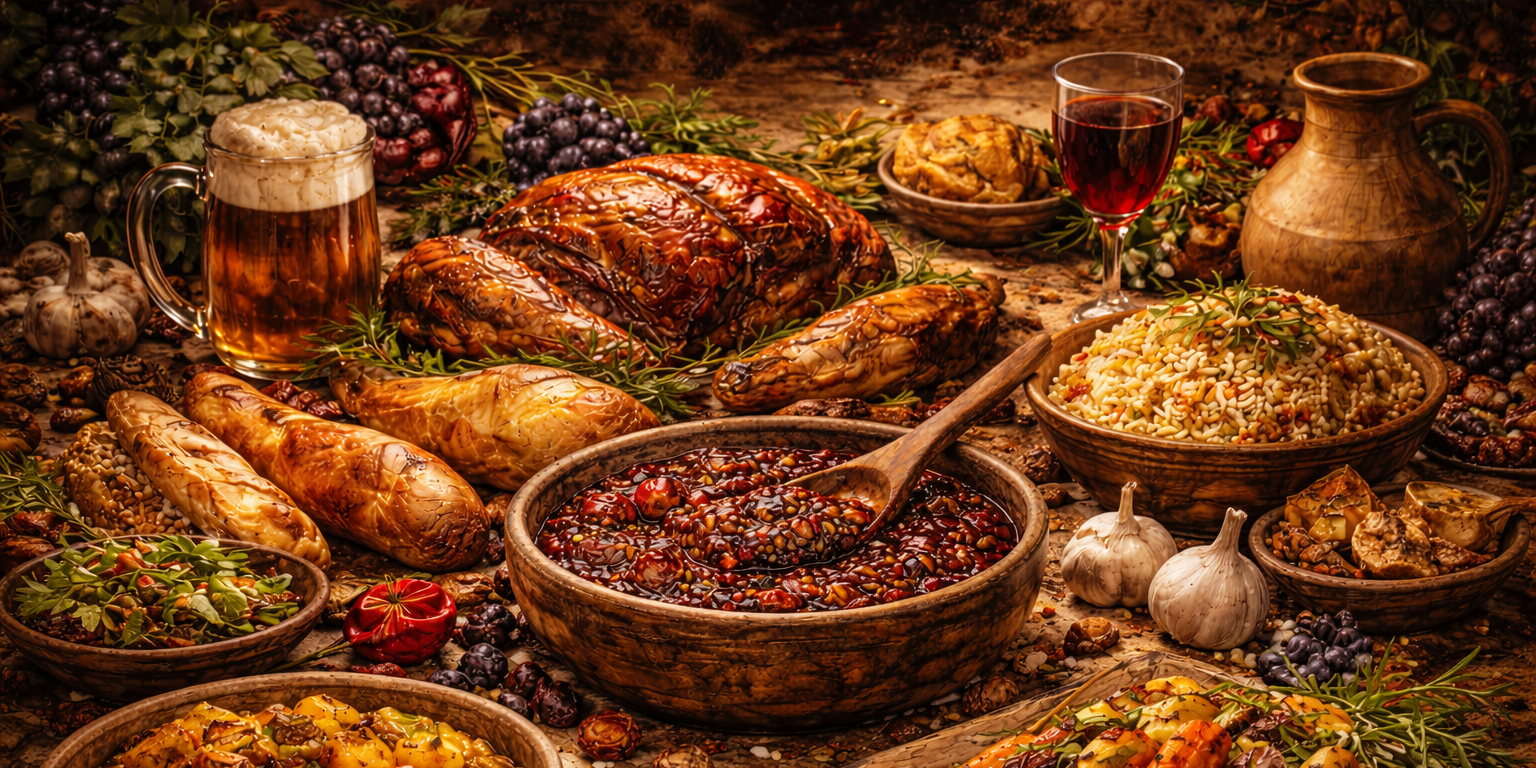
Emberfruit Chutney
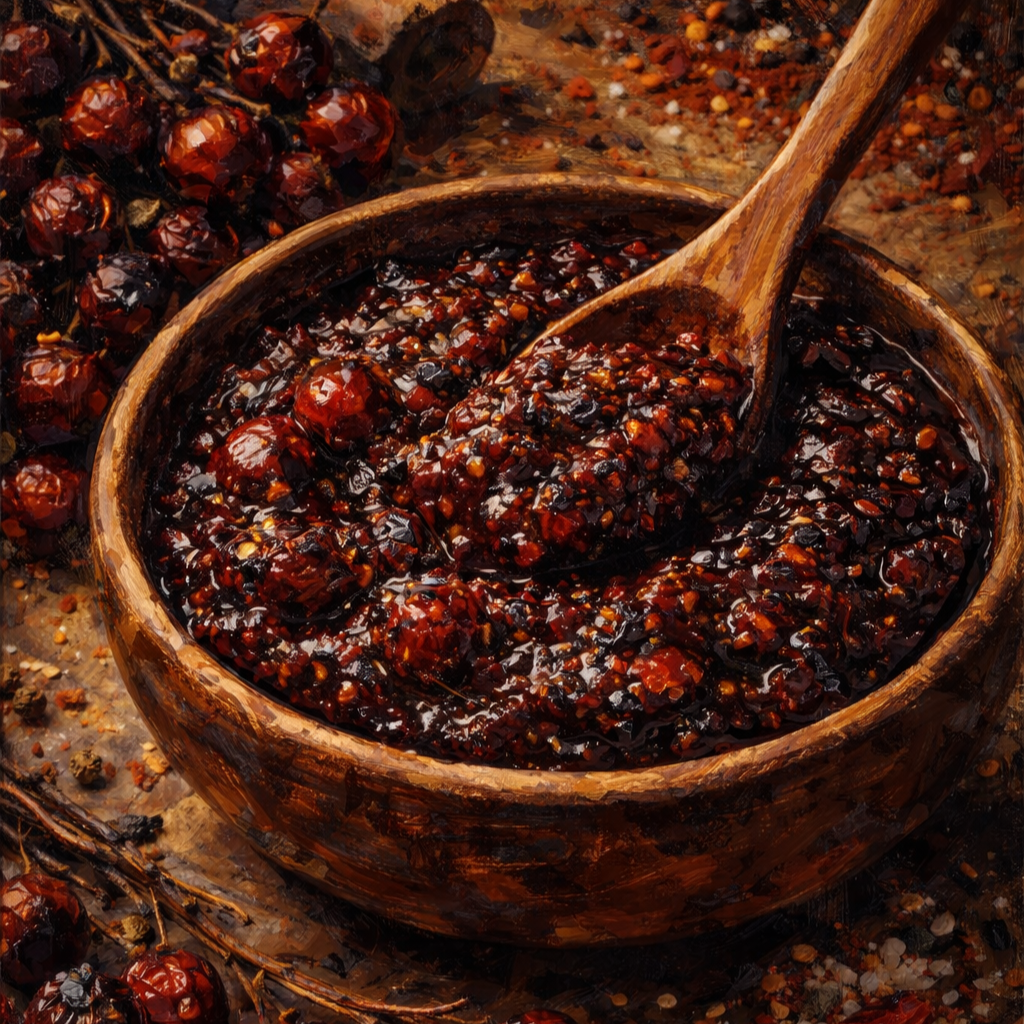
Emberfruit Chutney is thick, glossy, and dark red to near-black when fully reduced. Emberfruits themselves are small, tough-skinned berries that grow in rocky soil warmed by geothermal vents and old lava flows. Raw, they are unpleasantly sharp and bitter with a delayed burn. Slow cooking is what tames them. Over hours, the heat breaks down the skins and coaxes out a deep sweetness layered with smoke and spice. The result clings to the spoon, sticky and dense, with a heat that builds rather than strikes.
The flavor hits in stages. First sweetness, almost molasses-like. Then warmth across the tongue. Then a lingering ember that settles in the throat and chest. A single spoonful is enough to transform plain grain, roasted roots, or dried meat into something rich and satisfying. Too much, and it will make even seasoned firelanders sweat.
In mountain and fire-aspected regions, this chutney is everywhere. It is served alongside stonebread, stirred into stews at the end of cooking, smeared onto skewered meat, or thinned with broth as a glaze. Travelers carry it in small sealed crocks because it keeps well and masks the taste of preserved food. In poorer households it may be the only luxury on the table, treated carefully and used sparingly.
Culturally, Emberfruit Chutney is associated with endurance and controlled strength. There is a common saying in volcanic regions that someone “knows how to cook emberfruit,” meaning they understand patience, restraint, and timing. Rushing it ruins the batch. Letting it burn spoils the flavor. It rewards those who know when to wait and when to act.
History
Emberfruit Chutney did not originate as a culinary indulgence. It began as a necessity food in early mountain and volcanic settlements where soil was thin, winters were long, and crops failed often. Emberfruit itself was one of the few reliable plants to grow in ash-rich ground near old lava flows and geothermal vents. Unfortunately, the fruit was nearly inedible when fresh. Bitter, fibrous, and aggressively hot, it caused stomach sickness when eaten raw and spoiled quickly once harvested.
Early attempts to preserve emberfruit failed repeatedly. Drying intensified its bitterness. Fermentation produced unpredictable results. It was only through slow reduction over low heat, often accidentally during long communal cooking, that settlers discovered the fruit’s sugars could be coaxed out and its heat controlled. What remained was thick, shelf-stable, and intensely flavorful. This method likely developed independently in several fire-aspected regions before spreading through trade.
As volcanic settlements stabilized, Emberfruit Chutney became a core survival food. It allowed bland grains and preserved meats to remain palatable over long periods, especially during travel or winter shortages. Its warming after-effect was prized in high-altitude climates, and its ability to mask spoilage made it invaluable to caravans and soldiers. By the time formal trade routes emerged, the chutney was already standardized enough that people knew when it was done correctly and when it was rushed.
Over time, the chutney gained cultural weight. The patience required to cook it properly became symbolic. In several regions, the phrase “you cannot rush emberfruit” entered common speech, used to caution against impulsive decisions. Families guarded their preferred spice blends closely, though no single recipe was ever considered authoritative. What mattered was restraint and timing, not ingredients.
As Tanaria’s kingdoms expanded, Emberfruit Chutney spread outward from volcanic cores into surrounding regions via mercenary companies, traders, and pilgrims. In non-fire regions it shifted from staple to imported luxury, often misunderstood or misused. Attempts to replicate it with local berries failed, reinforcing its association with volcanic lands and the people who endured them.
In the modern era, Emberfruit Chutney is no longer a survival food for most, but its identity remains rooted in endurance and practicality. It is respected, not romanticized. Those who grew up with it tend to use it sparingly and correctly. Those encountering it for the first time often underestimate it, once.
Item type
Consumable, Food / Drink
Rarity
Uncommon (regional)
Rarity is less about production and more about geography. Emberfruit is tough to harvest and useless if mishandled, so regions without volcanic soil simply cannot replicate it. Attempts to substitute similar berries are widely mocked and immediately recognized by locals.
Rarity is less about production and more about geography. Emberfruit is tough to harvest and useless if mishandled, so regions without volcanic soil simply cannot replicate it. Attempts to substitute similar berries are widely mocked and immediately recognized by locals.
Base Price
5 silver per small crock (roughly 4–6 servings)


Comments