
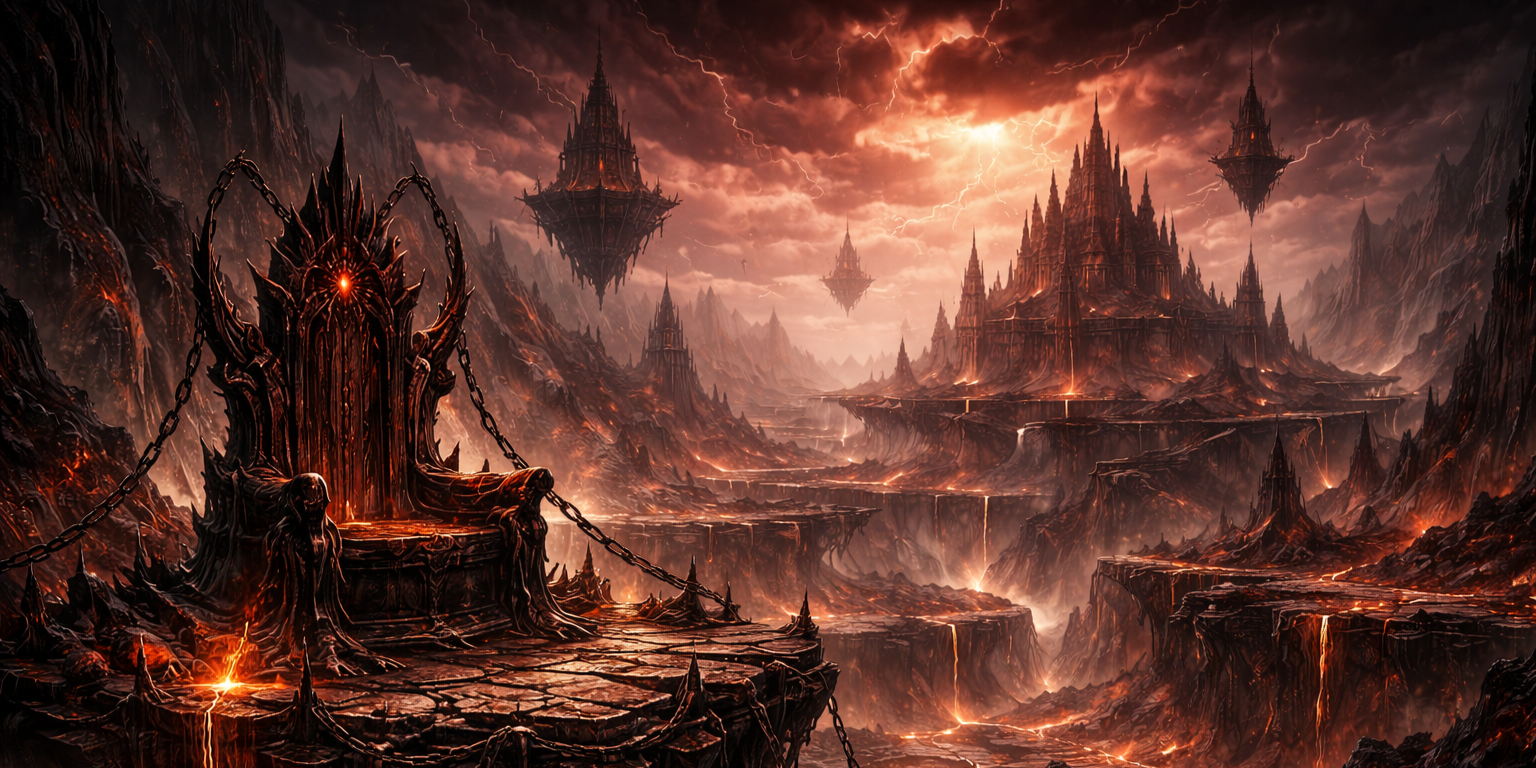
Devil
Devils are the highest and most refined state of demonkind, representing the apex of infernal stability, identity, and authority. They are not a separate species from demons, but rather demons who have achieved permanence, recognition, and dominion within the infernal hierarchy. Where most demons remain mutable, impulsive, and expendable, devils are defined, enduring beings whose existence shapes the Lower Planes themselves.
A devil is distinguished not by alignment, but by ascension and consolidation. Through accumulation of power, mastery of their true name, and the ability to impose lasting control over others, a demon may rise into devilhood. This transformation stabilizes the devil’s form, mind, and influence, anchoring them as a known entity rather than a transient force of chaos. Once achieved, devilhood is rarely lost except through catastrophic defeat or true death within the Lower Planes.
Devils function as rulers, architects, and keystones of infernal reality. Each devil commands legions of lesser demons that gradually take on aspects of their lord’s nature. Over time, this influence reshapes entire regions of the Lower Planes, creating domains defined by specific philosophies, obsessions, or modes of cruelty. These domains are not merely territories but expressions of the devil’s will, reinforced by hierarchy and enforced obedience.
Unlike lesser demons, devils possess long-term vision. They plan across centuries, cultivate reputations among mortals, and manipulate events indirectly rather than through constant destruction. Structure, contracts, and inevitability are favored tools, not because devils value order, but because order allows suffering to be refined, prolonged, and controlled. Where chaos wastes potential, structure extracts maximum value.
True names are central to devil identity. A devil’s mastery over its true name is what allows it to command others, bind demons into service, and anchor its power against rivals. At the same time, this mastery is a vulnerability. Should a devil’s true name be fully exposed, even a mortal could theoretically compel its obedience. As a result, devils are obsessive about secrecy, misinformation, and layered naming traditions.
The most powerful devils are the Thirteen Devil Lords, figures whose names are known across cultures and eras. Each rules a distinct infernal domain and commands vast legions of demons molded by their influence. These lords are not unified. Rivalry, covert warfare, and ideological conflict between them are constant, shaping infernal politics as much as any external threat. Despite this, all devil lords share one trait: they are irreplaceable anchors of infernal power. When one falls, the consequences ripple across the Lower Planes.
In the mortal world, devils are both feared and studied. Their predictability relative to lesser demons makes them appear more negotiable, a misconception devils actively encourage. While a devil may honor the letter of an agreement, it will always do so in a way that maximizes long-term advantage. To deal with a devil is not to invite chaos, but to step onto a path whose end was chosen long before the first word was spoken.
In Tanaria, devils are not the loudest threat, nor the most numerous. They are the most dangerous, because they endure.
Azhurak governs infernal law and binding agreements. His legions specialize in soul-pacts, legal coercion, and the weaponization of loopholes. He is cold, meticulous, and patient, and many mortals mistakenly believe him to be “fair.” He is not.
Velisyr rules through excess and desire. His devils infiltrate courts, trade houses, and noble bloodlines. Greed is his favored weapon, and entire empires have rotted under his influence before realizing his name was whispered at their foundation.
Kharoth embodies domination through force and fear. His legions are disciplined, brutal, and openly militaristic. Where Kharoth’s banner rises, rebellion ends in extinction.
Nethyra trades in knowledge stolen and truths half-revealed. Her servants are spies, informants, and saboteurs. She rarely acts openly, preferring to collapse enemies from within.
A paradox among devils, Zalveth incites uprisings and chaos, but always to replace one tyranny with another. His influence is felt in bloody revolutions that never lead to freedom.
Morgrath presides over decay, inevitable endings, and the slow erosion of hope. His devils linger where wars end and civilizations rot, harvesting the remains.
Iskava governs passion taken to ruin. Her legions include succubi and incubi, but her domain is broader than seduction. Love twisted into fixation and pleasure turned into dependence fall under her rule.
Threxul’s realm is silence, ice, and unrelenting hardship. His devils thrive in frozen hellscapes and barren worlds, breaking enemies through attrition rather than violence.
Pyrakos embodies annihilation. His influence leaves nothing to conquer, only ash and memory. His legions are unleashed when annihilation itself is the objective.
Ulthrix hoards truths that unravel sanity. His servants whisper revelations mortals were never meant to know. Cultists of Ulthrix often believe themselves enlightened right up until they break.
Veshra enforces consequence. Her devils are executioners and tormentors, feeding on regret and self-condemnation. She is often invoked by mortals seeking “justice” at any cost.
Rakthuun rules raw brutality and the stripping away of civilization. His legions are feral, monstrous, and relentless. Where he reigns, law collapses into tooth and claw.
Malakar stands apart. His influence destabilizes gods, planes, and prophecy itself. He is feared even by the other devil lords, and many believe he seeks not dominion but the unraveling of creation.
Lesser Devils
Lesser devils form the foundation of the infernal hierarchy. This category includes entities such as succubi, incubi, ice devils, bone devils, barbed devils, and other specialized infernal forms. While still fiends in every sense, lesser devils are defined by function over authority. They exist to enact the will of higher devils, harvest souls, enforce contracts, wage wars, and infiltrate mortal societies. Most lesser devils possess limited autonomy. They are intelligent, cunning, and dangerous, but their ambitions are constrained by rank, binding oaths, and the ever-present threat of punishment from above. Advancement is possible but difficult, requiring centuries of service, accumulation of power, or the acquisition of a stronger true name. Many lesser devils never rise, either destroyed in infernal conflicts or trapped indefinitely in servitude. Their forms are often specialized, reflecting the role they serve rather than personal identity.High Devils
High devils sit above the common infernal masses and act as governors, generals, architects, and enforcers of infernal law. They command legions, oversee domains, and interpret the will of the devil lords. Unlike lesser devils, high devils possess significant independence, personal agendas, and the authority to make binding decisions without constant oversight. A high devil’s form is more stable and refined, often reflecting both their domain and their accumulated power. They are master tacticians and manipulators, well-versed in infernal law, mortal psychology, and long-term strategy. While still bound by the hierarchy, high devils frequently engage in political maneuvering, proxy wars, and subtle sabotage against rivals. Many high devils actively work to ascend further, seeking elevation into the ranks of the devil lords themselves.The Thirteen Devil Lords
At the apex of the infernal hierarchy stand the Thirteen Devil Lords, the most powerful and infamous fiends known to mortals. These beings are not merely rulers but personifications of infernal domains, each embodying a distinct aspect of corruption, temptation, tyranny, destruction, or cosmic malevolence. Though commonly called devils, they are demons in origin, elevated through power, true-name mastery, and infernal dominance. Each devil lord rules vast legions whose traits mirror their master’s nature, creating distinct infernal factions that often war among themselves. Alignment among the Thirteen varies. Some rule through rigid law and structure, others through chaos, cruelty, or indulgence. Their behavior is shaped by personality and domain rather than strict moral categories. Mortals often know their names, symbols, and general tendencies, but this knowledge offers little safety. Encountering a devil lord is catastrophic, even when expected. Unlike lesser and high devils, the Thirteen are effectively irreplaceable forces within the infernal ecosystem. Destroying one in the Lower Planes can permanently alter infernal power balances, trigger wars, or reshape entire layers of the Abyss. As such, even other devils approach them with fear, reverence, or calculated obedience.The Thirteen Devil Lords of Tanaria
1. Azhurak, the Black Covenant
Domain: Contracts, Oaths, DamnationAzhurak governs infernal law and binding agreements. His legions specialize in soul-pacts, legal coercion, and the weaponization of loopholes. He is cold, meticulous, and patient, and many mortals mistakenly believe him to be “fair.” He is not.
2. Velisyr, the Gilded Lie
Domain: Temptation, Wealth, CorruptionVelisyr rules through excess and desire. His devils infiltrate courts, trade houses, and noble bloodlines. Greed is his favored weapon, and entire empires have rotted under his influence before realizing his name was whispered at their foundation.
3. Kharoth the Iron Tyrant
Domain: Tyranny, Conquest, SubjugationKharoth embodies domination through force and fear. His legions are disciplined, brutal, and openly militaristic. Where Kharoth’s banner rises, rebellion ends in extinction.
4. Nethyra of the Whispering Veil
Domain: Secrets, Espionage, BetrayalNethyra trades in knowledge stolen and truths half-revealed. Her servants are spies, informants, and saboteurs. She rarely acts openly, preferring to collapse enemies from within.
5. Zalveth the Chainbreaker
Domain: Rebellion, Destruction of OrderA paradox among devils, Zalveth incites uprisings and chaos, but always to replace one tyranny with another. His influence is felt in bloody revolutions that never lead to freedom.
6. Morgrath the Bone Regent
Domain: Death, Undeath, AttritionMorgrath presides over decay, inevitable endings, and the slow erosion of hope. His devils linger where wars end and civilizations rot, harvesting the remains.
7. Iskava the Crimson Matron
Domain: Desire, Obsession, FleshIskava governs passion taken to ruin. Her legions include succubi and incubi, but her domain is broader than seduction. Love twisted into fixation and pleasure turned into dependence fall under her rule.
8. Threxul, Lord of the Frozen Wastes
Domain: Cold, Isolation, EnduranceThrexul’s realm is silence, ice, and unrelenting hardship. His devils thrive in frozen hellscapes and barren worlds, breaking enemies through attrition rather than violence.
9. Pyrakos the Ashen King
Domain: Fire, Ruin, Scorched EarthPyrakos embodies annihilation. His influence leaves nothing to conquer, only ash and memory. His legions are unleashed when annihilation itself is the objective.
10. Ulthrix the Many-Minded
Domain: Madness, Forbidden KnowledgeUlthrix hoards truths that unravel sanity. His servants whisper revelations mortals were never meant to know. Cultists of Ulthrix often believe themselves enlightened right up until they break.
11. Veshra the Silent Judge
Domain: Punishment, Retribution, GuiltVeshra enforces consequence. Her devils are executioners and tormentors, feeding on regret and self-condemnation. She is often invoked by mortals seeking “justice” at any cost.
12. Rakthuun the Beast Below
Domain: Savagery, Predation, SurvivalRakthuun rules raw brutality and the stripping away of civilization. His legions are feral, monstrous, and relentless. Where he reigns, law collapses into tooth and claw.
13. Malakar, the Worldbreaker
Domain: Chaos, Corruption, Divine RuinMalakar stands apart. His influence destabilizes gods, planes, and prophecy itself. He is feared even by the other devil lords, and many believe he seeks not dominion but the unraveling of creation.
Basic Information
Anatomy
Biological Traits
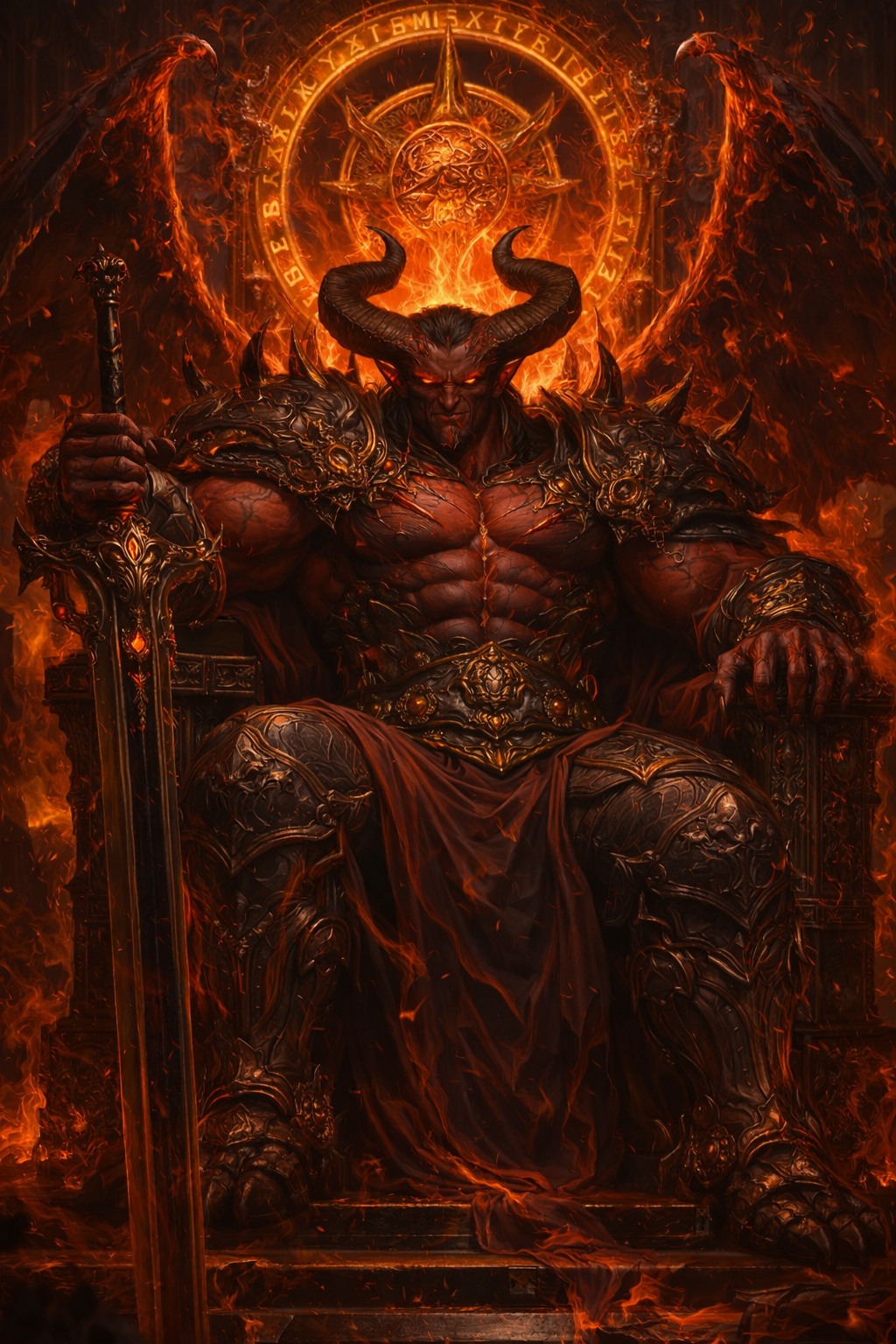
Devils possess a set of shared biological traits that distinguish them sharply from both mortals and lesser demons, despite the wide variation in individual appearance. Their bodies are not products of evolution but of infernal consolidation, resulting in physiology that is consistent, resilient, and purpose-built for endurance, authority, and control.
Devilish bodies are composed of dense infernal matter that mimics flesh, bone, and organ systems while exceeding mortal limits. Musculature is compact and powerful, capable of sustained exertion without fatigue. Skeletal structures are reinforced by infernal density, granting exceptional resistance to blunt force and trauma. While devils may bleed when wounded, their fluids are often corrosive, unnaturally hot, or infused with infernal essence rather than true blood.
Devils do not age, suffer disease, or experience biological decay. Their tissues regenerate slowly but reliably, provided they remain connected to infernal power. Minor wounds heal without intervention, while severe injuries require time, ritual reinforcement, or withdrawal to the Lower Planes. Starvation, suffocation, and exposure have little effect on a devil’s physical integrity, though prolonged deprivation can weaken their manifestation outside their native realm.
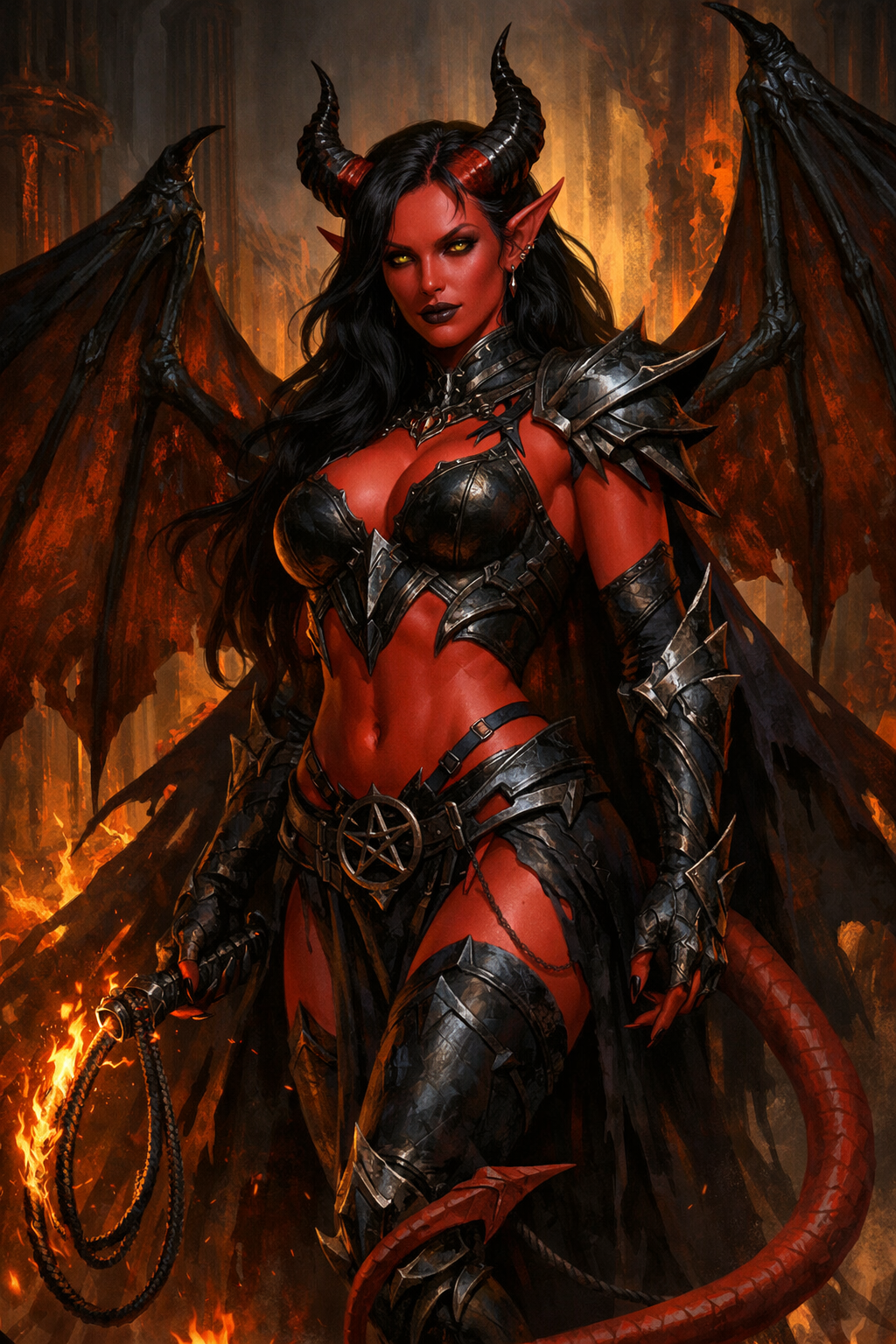 Sensory organs are refined rather than exaggerated. Eyes, ears, and other perceptive structures are designed for clarity and discrimination rather than excess. Many devils possess additional sensory adaptations such as heat perception, resonance sensitivity, or the ability to detect metaphysical pressure related to contracts and obligation. These traits are biologically embedded rather than purely magical, reflecting the hybrid nature of devil physiology.
Sexual dimorphism among devils is minimal or symbolic. While some devils adopt masculine or feminine traits for cultural or manipulative purposes, these characteristics do not reflect reproductive biology. Devils do not reproduce biologically with one another, and any sexual features present serve psychological, ritualistic, or social functions rather than genetic necessity.
Across all ranks, devils share a defining biological constant: stability. Unlike lesser demons, whose bodies may warp or collapse under stress, a devil’s form resists uncontrolled change. Their biology reinforces identity rather than eroding it, making devils enduring fixtures of infernal reality rather than transient manifestations.
In Tanaria, devilish biology is best understood as a perfected state of fiendish existence. Every trait is intentional, every limitation a calculated trade. Devils are not merely alive; they are designed to persist.
Sensory organs are refined rather than exaggerated. Eyes, ears, and other perceptive structures are designed for clarity and discrimination rather than excess. Many devils possess additional sensory adaptations such as heat perception, resonance sensitivity, or the ability to detect metaphysical pressure related to contracts and obligation. These traits are biologically embedded rather than purely magical, reflecting the hybrid nature of devil physiology.
Sexual dimorphism among devils is minimal or symbolic. While some devils adopt masculine or feminine traits for cultural or manipulative purposes, these characteristics do not reflect reproductive biology. Devils do not reproduce biologically with one another, and any sexual features present serve psychological, ritualistic, or social functions rather than genetic necessity.
Across all ranks, devils share a defining biological constant: stability. Unlike lesser demons, whose bodies may warp or collapse under stress, a devil’s form resists uncontrolled change. Their biology reinforces identity rather than eroding it, making devils enduring fixtures of infernal reality rather than transient manifestations.
In Tanaria, devilish biology is best understood as a perfected state of fiendish existence. Every trait is intentional, every limitation a calculated trade. Devils are not merely alive; they are designed to persist.
Growth Rate & Stages
Devils do not grow or mature through age in the mortal sense. Once a demon ascends into devilhood, its form, identity, and existence stabilize into a fixed infernal state. From that point onward, time does not weaken, age, or naturally alter a devil. Growth among devils is instead hierarchical and metaphysical, defined by authority, domain expansion, and mastery rather than physical development.
The first stage of devilhood is Ascension, the moment a demon consolidates enough power, identity, and true-name mastery to stabilize into a permanent infernal form. This transition is irreversible under normal circumstances and marks the end of chaotic mutability. The newly formed devil gains a consistent body, enduring memory, and a recognized position within the infernal hierarchy. Failure at this stage results in annihilation, regression, or absorption by stronger fiends.
Following ascension, devils enter a prolonged phase of Consolidation. During this stage, the devil refines its authority, secures loyal legions, and establishes influence over territory, concepts, or institutions. Physical appearance remains largely unchanged, but subtle refinements may occur as authority deepens—greater density, increased presence, and heightened infernal resonance. Psychological growth during this stage is significant, as devils develop long-term strategies, reputations, and specialized methods of control.
Advanced devils may reach a stage of Domain Anchoring, in which their existence becomes inseparable from a specific infernal territory, concept, or systemic role. At this level, the devil’s destruction would destabilize the surrounding infernal structure, making them functionally indispensable. Devil Lords represent the pinnacle of this stage, acting as keystones of the Lower Planes rather than mere inhabitants.
Devils do not experience decline through age, but they can regress through loss of authority. Defeat, exposure of a true name, breach of contract, or loss of followers can weaken a devil’s standing and influence. In extreme cases, this can result in demotion, fragmentation, or destruction, though such outcomes are rare and heavily contested.
In Tanaria, devilish growth is not a journey from youth to maturity, but a climb toward permanence and consequence. Each stage represents increased stability, authority, and integration into infernal reality. A devil does not become stronger by living longer, but by becoming more unavoidable.
Behaviour
Devils are defined by control, intention, and long-term consequence. Unlike lesser demons, whose behavior is driven by impulse and appetite, devils exhibit disciplined, goal-oriented psychology shaped by hierarchy and foresight. They are fully self-aware beings who understand both their nature and their place within the infernal order, and they act with deliberate calculation rather than instinctive malice.
At their core, devils view existence as a system to be exploited, optimized, and enforced. Power is not merely something to wield but something to structure. Devils prefer mechanisms that bind others into predictable patterns—contracts, laws, obligations, debts, and hierarchies—because these systems allow suffering and control to persist without constant intervention. Chaos is not rejected, but it is seen as wasteful when left unmanaged.
Devils are patient by nature. They think in decades, centuries, or longer, cultivating outcomes that may not manifest within a single mortal lifetime. This patience makes them appear reasonable, restrained, or even cooperative when compared to other fiends. In truth, this restraint is strategic. Devils rarely act without a clear understanding of how an action will ripple outward over time. Immediate gratification is considered a weakness unless it serves a broader design.
Psychologically, devils possess a refined sense of pride and ownership. They take personal offense at disobedience, broken contracts, or attempts to circumvent agreed terms, not out of wounded emotion but because such acts challenge the integrity of systems they control. Revenge, when enacted, is precise and instructional, intended to reinforce consequence rather than vent anger.
Devils are capable of understanding mortal emotions such as love, loyalty, fear, and hope, but they do not experience these states in the same way. Instead, they analyze emotions as forces to be directed or harvested. Compassion may be mimicked convincingly, but it is never genuine. When a devil appears merciful, it is because mercy produces a better outcome than cruelty in that moment.
Among their own kind, devils are intensely political. Alliances are transactional, rivalries are subtle, and open conflict is avoided unless success is assured. Devils respect competence, power, and leverage, but never trust without contingency. Betrayal is expected, planned for, and often preempted through layered safeguards. Loyalty exists, but it is enforced through binding agreements rather than sentiment.
Ultimately, devilish psychology is defined by will constrained by structure. Devils are not ruled by impulse, nor are they bound by morality. They are beings who believe that everything has a price, every action a consequence, and every soul a potential asset. Where demons embody destruction, devils embody inevitability.
Additional Information
Geographic Origin and Distribution
Devils are native to the Lower Planes, where their presence is highly structured rather than diffuse. Unlike lesser demons, devils are not evenly distributed; each exists within a defined infernal domain shaped and maintained by hierarchy, contracts, and authority. Lesser devils are typically bound to the domains of higher devils or Devil Lords, functioning as administrators, enforcers, or emissaries within those territories.
Outside the Lower Planes, devils do not occur naturally. Their presence in the mortal world is rare and deliberate, usually achieved through summoning, binding, contractual manifestation, or long-term cult activity. When present beyond their native realms, devils tend to anchor themselves to centers of power such as cities, courts, religious institutions, or sites of political influence rather than wild or chaotic regions. Unlike demons, devils favor environments where order, law, and obligation can be exploited to sustain their influence.
Average Intelligence
Devils are highly intelligent by default, significantly exceeding mortal norms. Even the lowest-ranking devils possess keen reasoning, long-term memory, and an instinctive grasp of hierarchy, contracts, and leverage.
On average, a devil’s intelligence is well above that of a trained human scholar, with strong aptitudes in strategy, manipulation, law, and infernal metaphysics. They are deliberate thinkers rather than impulsive ones, favoring planning, negotiation, and coercion over brute force unless force better serves their goals.
Higher-ranking devils, especially those closer to devil-lord status, display genius-level intellect, capable of running vast infernal domains, managing legions, and executing schemes that unfold over centuries. Intelligence in devils scales directly with status, age, and accumulated power, making stupidity a near-disqualifying trait within their hierarchy.
Perception and Sensory Capabilities
Devils possess sensory systems that combine heightened physical perception with refined extrasensory awareness, reflecting their role as calculating overseers rather than chaotic predators. Their senses are precise, deliberate, and optimized for observation, judgment, and control. Unlike lesser demons, devils do not rely on overwhelming sensation but on clarity and discrimination.
Physically, devils exhibit vision and hearing superior to most mortal species. Their sight functions effectively in darkness, low light, and infernal environments without reliance on external illumination. Devils are adept at detecting minute shifts in movement, posture, and expression, allowing them to read intent and deception with unnerving accuracy. Auditory perception extends beyond sound alone; vibrations through stone, metal, and structured spaces are often perceptible, particularly in environments tied to law, order, or authority.
Beyond physical senses, devils possess acute infernal perception, allowing them to sense contracts, obligations, and hierarchical relationships as tangible phenomena. To a devil, oaths, bindings, and bargains create distortions in reality that can be felt and interpreted much like pressure or temperature. This sense enables devils to recognize active contracts, identify bound servants, and assess leverage within a social or political structure at a glance.
Devils are also sensitive to intent and moral fracture. Strong ambition, desperation, or suppressed guilt registers as a presence rather than an emotion, guiding devils toward exploitable individuals or unstable systems. This perception is not mind reading but an awareness of imbalance, making devils particularly dangerous manipulators in structured societies where such tensions are common.
Illusions and disguises are less effective against devils than against mortals. While not immune, devils often perceive inconsistencies between appearance and essence, especially when deception conflicts with obligation or truth-bound magic. A perfectly convincing illusion may still feel incorrect to a devil if it lacks the appropriate metaphysical weight.
Distance from the Lower Planes diminishes infernal perception but does not eliminate it. In the mortal world, devils rely more heavily on observation, inference, and learned behavior, supplementing weakened extrasensory awareness with patience and planning. This limitation encourages devils to establish long-term footholds rather than act impulsively.
Overall, devilish perception reflects their nature as enforcers of consequence. They do not merely see the world as it is, but as it is promised, owed, and destined, navigating reality through patterns of obligation and power rather than instinct alone.
Civilization and Culture
History
Asmodeus, the first Devil
In Tanaria, Asmodeus has long since transcended devilhood. While his origins lie in the infernal hierarchy, his current existence is no longer meaningfully comparable to even the Thirteen Devil Lords. For all practical purposes, Asmodeus functions as a god-level entity, bound not to a single domain of corruption but to the concept of infernal order itself. Unlike the Devil Lords, who rule legions and aspects of damnation, Asmodeus governs the framework that allows devils to exist as a coherent force. Infernal law, contracts, hierarchy, promotion, punishment, and authority all trace back to systems he either created or irrevocably reshaped. Devils do not merely serve him; they exist because reality now permits devils to exist in the way he defined. Worship of Asmodeus exists, though it is rarely acknowledged as such. Cultists and infernal scholars may claim they do not revere him, only respect the inevitability he represents. This distinction is largely meaningless. Asmodeus draws power from obedience to infernal structure itself. Every contract signed, every hierarchy enforced, and every soul damned through lawful means reinforces his divinity. Importantly, Asmodeus does not rule the Thirteen Devil Lords as a king rules vassals. He does not issue daily commands or intervene in their rivalries. His dominance is more fundamental. Any devil who attempts to operate outside the infernal system ultimately fails. Any hierarchy that contradicts his design collapses. In this way, Asmodeus’s will asserts itself without direct action. Among devils, Asmodeus is rarely spoken of openly. Not out of fear alone, but because defining him invites scrutiny. Devils understand instinctively that questioning Asmodeus’s nature, limits, or intentions is dangerous. Whether he is still a devil, has become a god, or has surpassed both categories is a matter devils deliberately leave unanswered. To mortals and scholars, Asmodeus is best understood not as a Devil Lord, but as a dark god of tyranny, contracts, and inevitability, whose throne is not merely in the Lower Planes but embedded in the laws that govern them.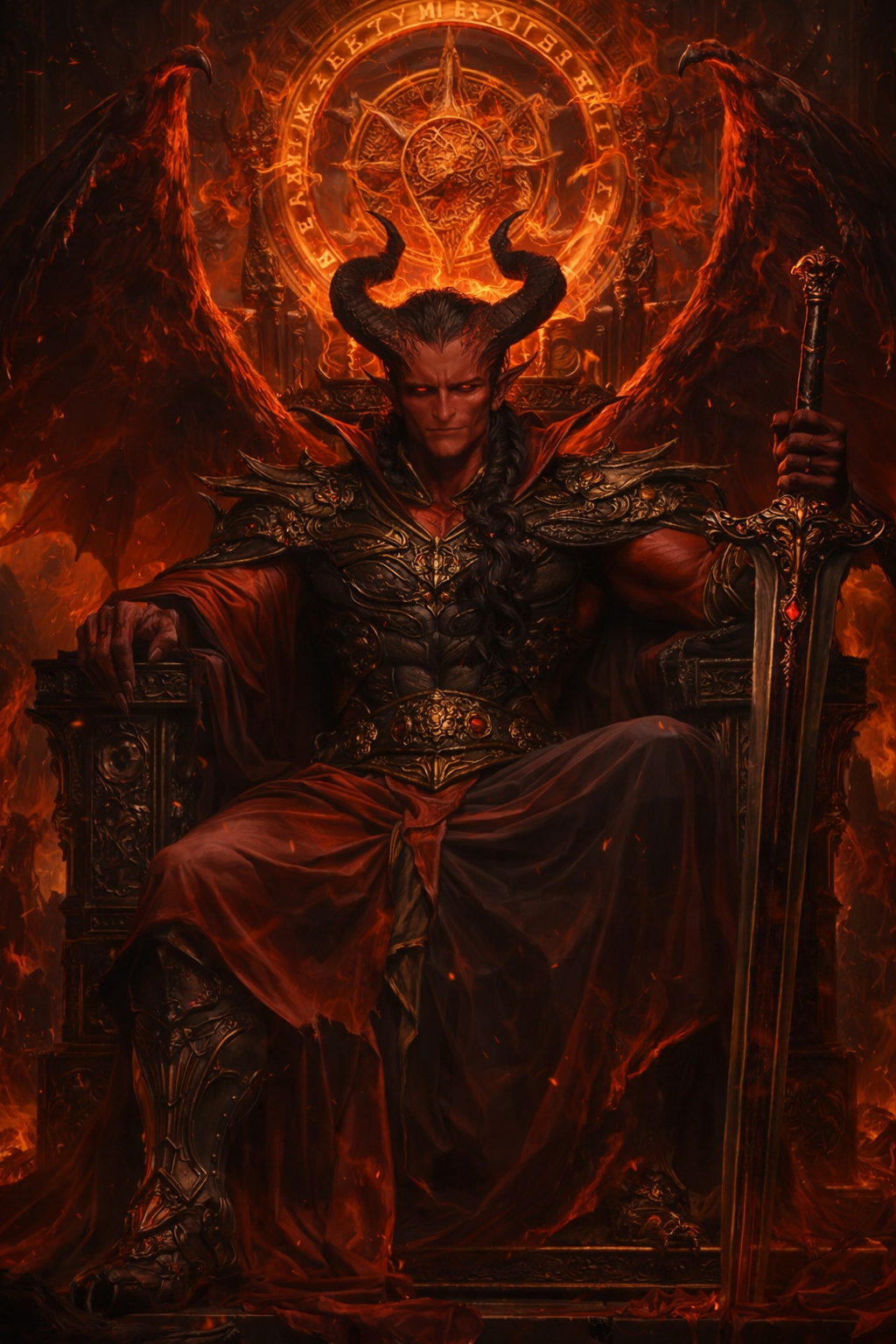
Scientific Name
Fiend (Infernal Devil; hierarchical extraplanar entity formed within the Lower Planes)
Lifespan
Functionally immortal; devils do not age and can only be permanently destroyed within the Lower Planes or by rare, reality-binding forces outside them
Conservation Status
Not applicable; stable population regulated through infernal hierarchy, promotion, and destruction
Average Height
6–9 ft (lesser devils), 9–14 ft (high devils), 15–25+ ft (Devil Lords)
Average Weight
250–600 lbs (lesser devils), 700–1,500 lbs (high devils), 2–6+ tons (Devil Lords)
Geographic Distribution


Comments