
Auralith (AWR-uh-lith)
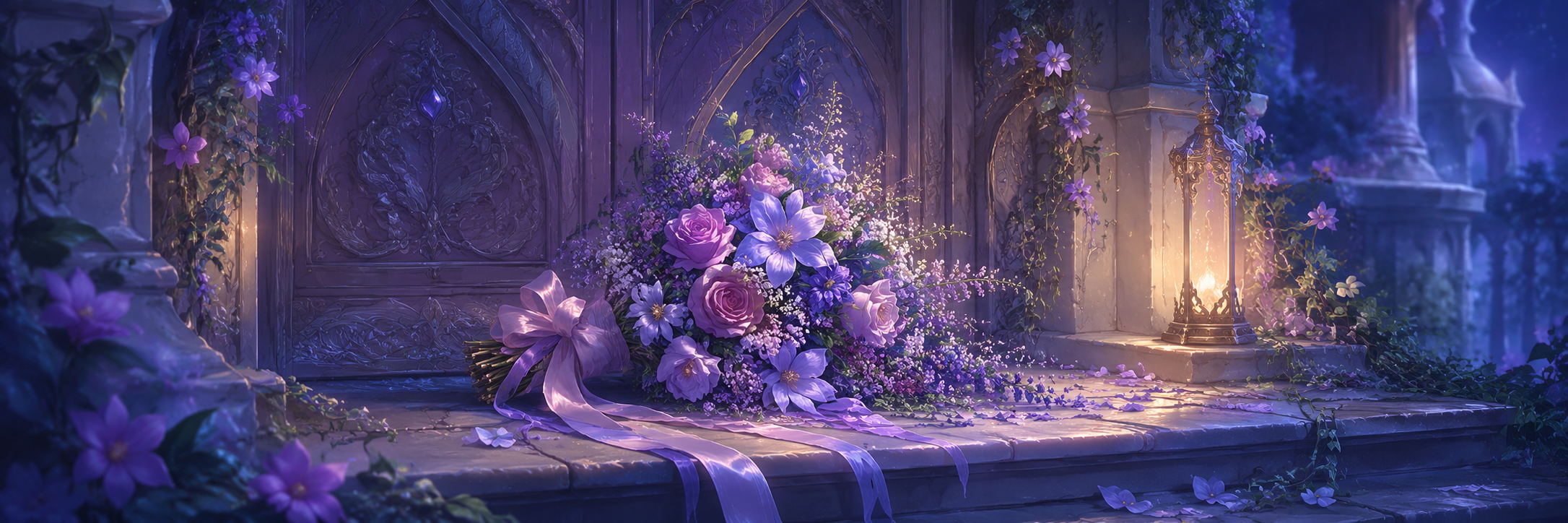
Auralith is a symbolic floral language that uses flowers, herbs, greenery, ribbons, scent, placement, and arrangement to convey meaning without spoken words. Though commonly associated with courtship and romantic secrecy, Auralith is not solely a language of love. It is also used to express grief, warning, apology, loyalty, welcome, rejection, remembrance, political intent, and delicate truths that may be unsafe or improper to speak aloud.
The language originated in the Faerie courts, where living flora carried layered meanings through color, scent, bloom, movement, and magical response. Elven diplomats and artists later adapted Auralith into a more stable system that could be taught and preserved using mortal flowers and formal arrangement rules. From there, it spread into nearby mortal cultures, especially those with close ties to elvish kingdoms.
Unlike spoken languages, Auralith is read through arrangement. The type of flower, its color, the direction of its bloom, the number of stems, the ribbon used to bind it, and even the scent placed upon the petals all contribute to meaning. A single white camellia tied with blue silk may express respectful admiration, while the same flower bound in black thread may indicate grief for a love that cannot be pursued. A rose placed upright is an invitation. A rose laid sideways is a warning. A rose with its thorns removed suggests trust, while one left deliberately thorned suggests desire complicated by danger.
Auralith is most often used in places where direct speech is considered improper, politically dangerous, or socially inconvenient. In noble houses, where marriages may be arranged for alliances rather than affection, the language allows individuals to speak beneath the notice of chaperones and rivals. In cities, merchants and performers have adapted portions of the code for public flirtation, while temple attendants and matchmakers preserve more formal versions used in betrothal rites.
The language is famously difficult for outsiders because its meaning depends as much on context as symbol. A red ribbon can suggest passion, courage, warning, or scandal depending on the flower it binds. A sprig of lavender may mean patience in one arrangement and suspicion in another. Because of this, skilled speakers of Auralith are not simply florists. They are interpreters of mood, rank, season, reputation, and risk.
During Cythrea, the use of Auralith becomes especially common. Markets sell coded bouquets openly, though reputable vendors refuse to prepare messages that could endanger a household or expose a secret affair without consent. In Tyrian courts, entire conversations may unfold across a feast table through exchanged blossoms. In Miranore, sailors and coastal families often press Auralith flowers into letters before long voyages, trusting the dried petals to carry what ink cannot safely say.
Today, Auralith is most common in Kamulos, Miranore, Opos Tyr, and parts of Eouma, where proximity to elvish courts, trade routes, and old diplomatic customs helped the language take root. In these regions, a carefully arranged bouquet may serve as a love letter, condolence, invitation, warning, insult, or promise. To the untrained eye, such arrangements appear decorative. To those fluent in Auralith, every stem has a voice.
The language originated in the Faerie courts, where living flora carried layered meanings through color, scent, bloom, movement, and magical response. Elven diplomats and artists later adapted Auralith into a more stable system that could be taught and preserved using mortal flowers and formal arrangement rules. From there, it spread into nearby mortal cultures, especially those with close ties to elvish kingdoms.
Unlike spoken languages, Auralith is read through arrangement. The type of flower, its color, the direction of its bloom, the number of stems, the ribbon used to bind it, and even the scent placed upon the petals all contribute to meaning. A single white camellia tied with blue silk may express respectful admiration, while the same flower bound in black thread may indicate grief for a love that cannot be pursued. A rose placed upright is an invitation. A rose laid sideways is a warning. A rose with its thorns removed suggests trust, while one left deliberately thorned suggests desire complicated by danger.
Auralith is most often used in places where direct speech is considered improper, politically dangerous, or socially inconvenient. In noble houses, where marriages may be arranged for alliances rather than affection, the language allows individuals to speak beneath the notice of chaperones and rivals. In cities, merchants and performers have adapted portions of the code for public flirtation, while temple attendants and matchmakers preserve more formal versions used in betrothal rites.
The language is famously difficult for outsiders because its meaning depends as much on context as symbol. A red ribbon can suggest passion, courage, warning, or scandal depending on the flower it binds. A sprig of lavender may mean patience in one arrangement and suspicion in another. Because of this, skilled speakers of Auralith are not simply florists. They are interpreters of mood, rank, season, reputation, and risk.
During Cythrea, the use of Auralith becomes especially common. Markets sell coded bouquets openly, though reputable vendors refuse to prepare messages that could endanger a household or expose a secret affair without consent. In Tyrian courts, entire conversations may unfold across a feast table through exchanged blossoms. In Miranore, sailors and coastal families often press Auralith flowers into letters before long voyages, trusting the dried petals to carry what ink cannot safely say.
Today, Auralith is most common in Kamulos, Miranore, Opos Tyr, and parts of Eouma, where proximity to elvish courts, trade routes, and old diplomatic customs helped the language take root. In these regions, a carefully arranged bouquet may serve as a love letter, condolence, invitation, warning, insult, or promise. To the untrained eye, such arrangements appear decorative. To those fluent in Auralith, every stem has a voice.
Writing System
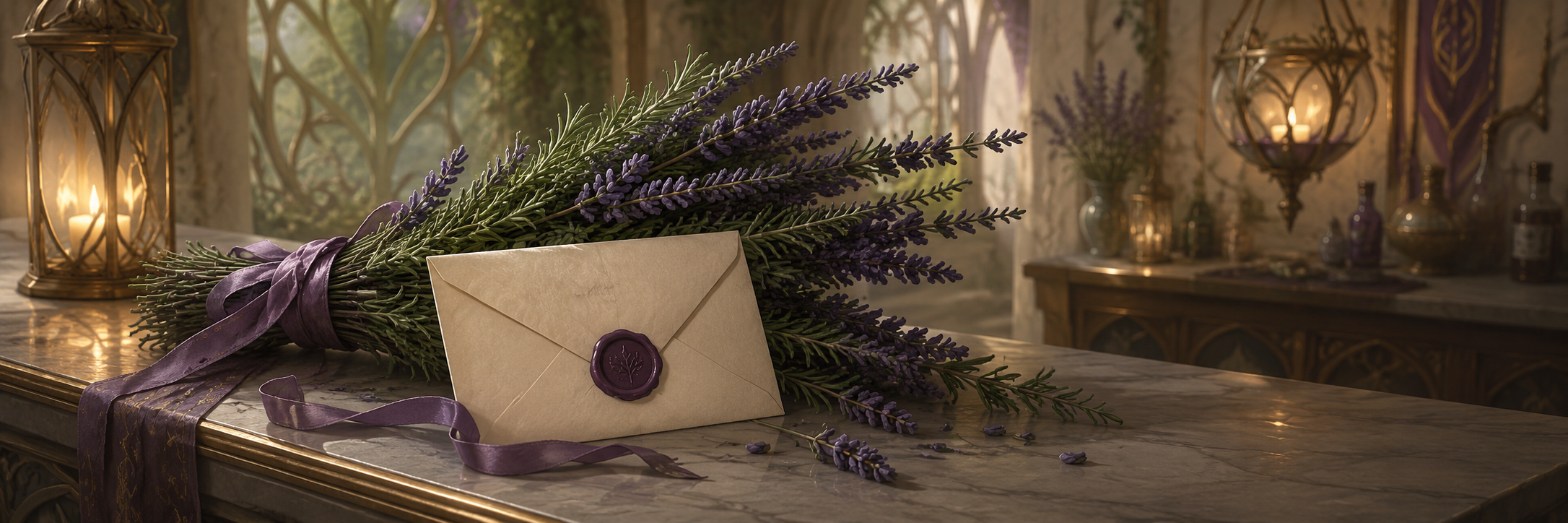
Auralith has no alphabet in the traditional sense. Its writing system is symbolic and compositional, built from flowers, herbs, leaves, ribbons, scent, wax, placement, and the condition of the plants used. Meaning is created through arrangement rather than letters, with each element contributing to the final message.
Older fae forms of Auralith relied on living magical flora that changed color, opened, closed, or released scent in response to emotion, moonlight, or spoken intent. Elven scholars later codified these meanings into a more stable mortal system, allowing Auralith to be taught through illustrated herbals, floral ledgers, court manuals, and arrangement diagrams.
Written guides to Auralith usually record flowers as painted symbols or pressed specimens, accompanied by notes on acceptable pairings, regional meanings, and dangerous misreadings. These guides are treated less like dictionaries and more like etiquette manuals, since the same arrangement may change meaning depending on season, location, social rank, and the relationship between sender and recipient.
In practice, an Auralith “text” is most often a bouquet, wreath, garland, table arrangement, doorstep offering, funeral spray, sealed letter with pressed flowers, or ribbon-bound herbal bundle. The message is read from the focal flower outward, then by the direction of the stems, the placement of ribbons, and the condition of the plants.
Vocabulary
| Arrangement | Meaning |
|---|---|
| One red rose, bound in gold ribbon | “I desire you.” |
| One red rose, bound in black thread | “Desire would endanger us.” |
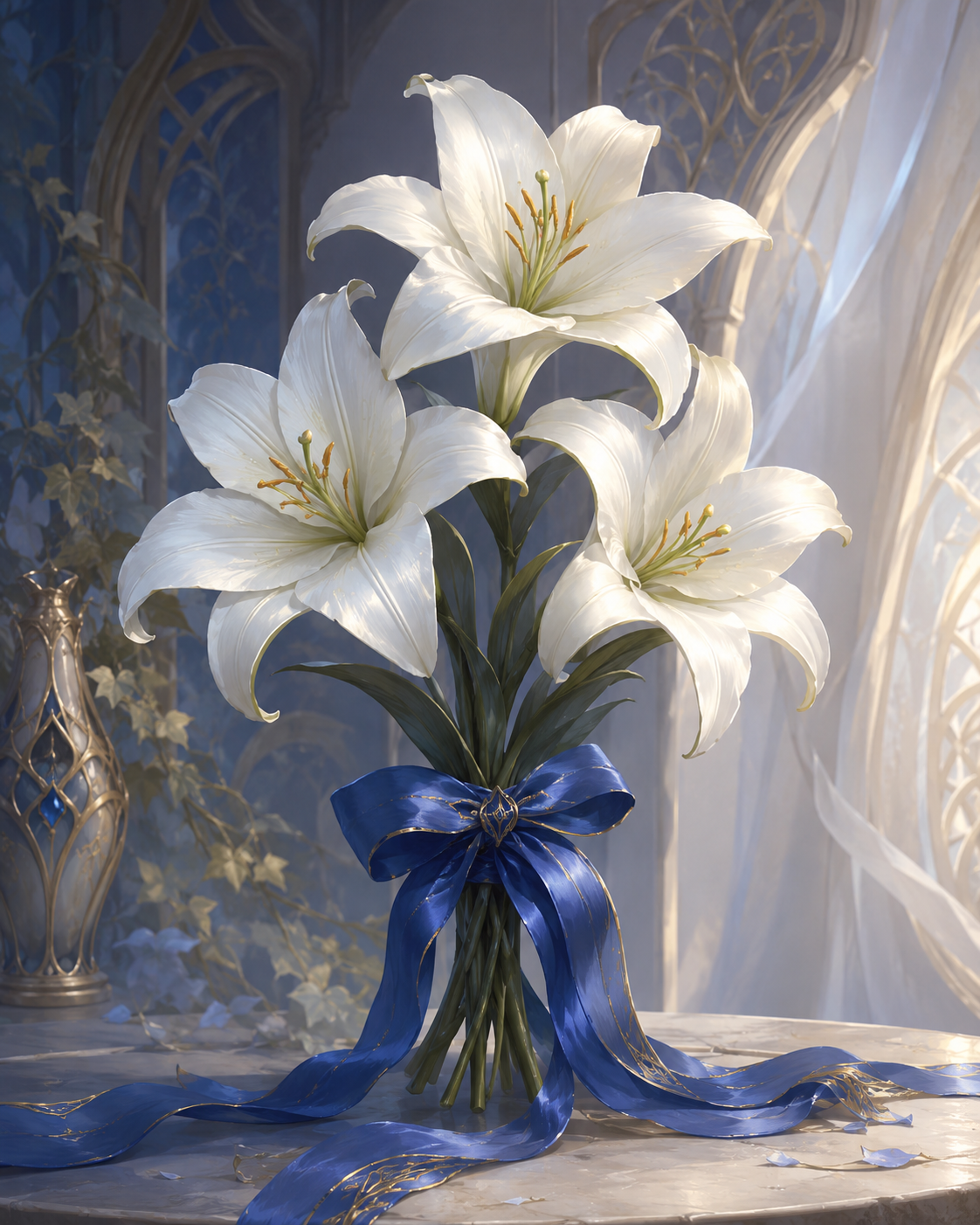
| Three white lilies with blue silk | “My intentions are honorable.” |
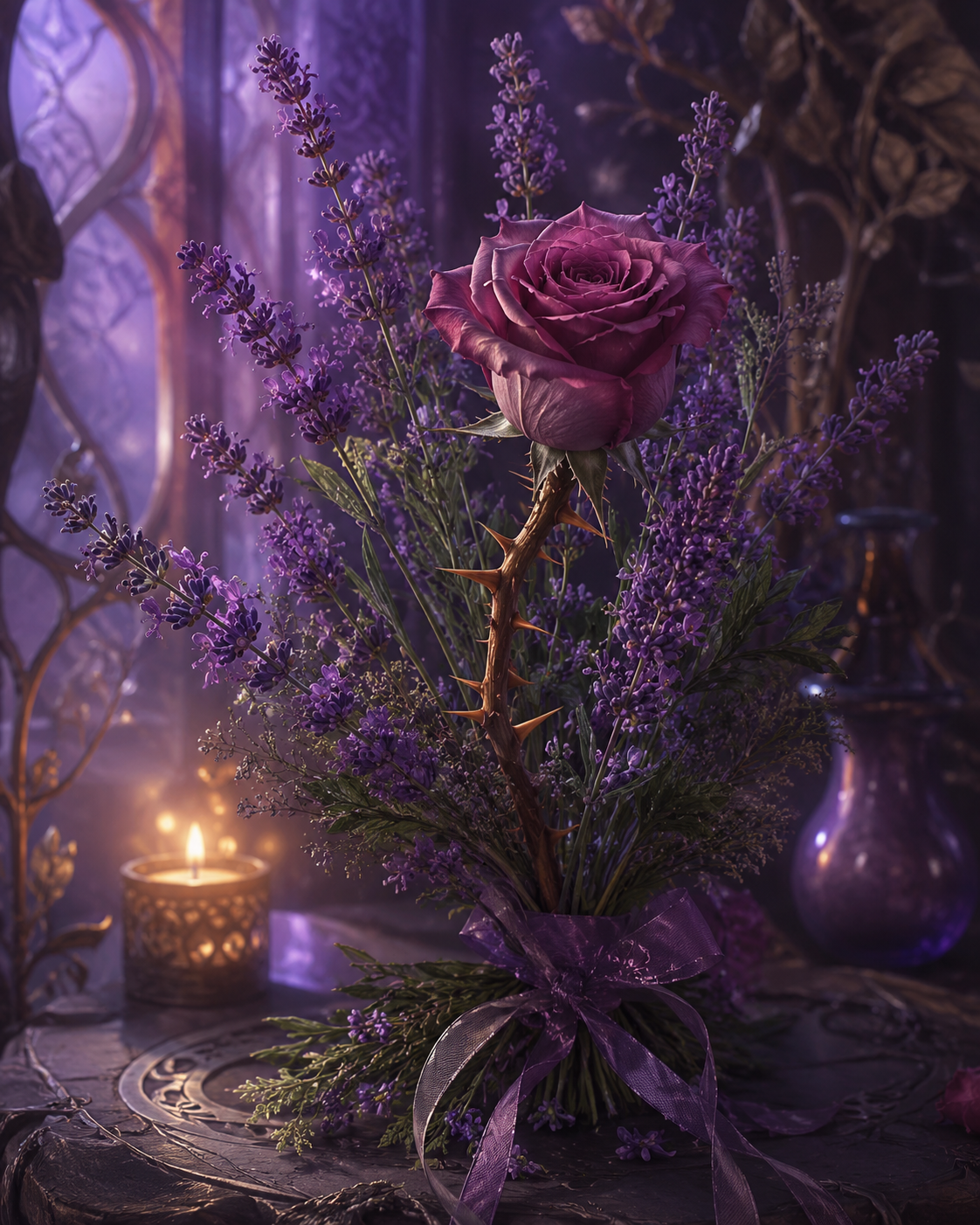
| Lavender and thorned rose together | “I will wait, but I am not blind to the risk.” |
| A yellow tulip with no ribbon | “Your attention is welcome, but not serious.” |
| A wilted rose deliberately preserved in wax | “What we had is ended, but not forgotten.” |
| Two moonflowers facing one another | “Meet me after moonrise.” |
| A closed bud tied with green thread | “Not yet.” |
| A white camellia with the stem cut short | “I admire you, but cannot accept.” |
| Rosemary, lavender, and a blank sealed note | “My heart remains honest, even where my words cannot be.” |
Spoken by: Nobility, Bards, Matchmakers, florists, temple attendants, poets, couriers
Script: None, though written guides exist
Medium: Flowers, ribbons, scent, wax seals, placement, number, direction
Common Use:Courtship, betrothal, romantic refusal, secret meetings, mourning lost love, political marriages
Related Month: Cythrea
Formality: High courtly, with common and regional variations
Script: None, though written guides exist
Medium: Flowers, ribbons, scent, wax seals, placement, number, direction
Common Use:Courtship, betrothal, romantic refusal, secret meetings, mourning lost love, political marriages
Related Month: Cythrea
Formality: High courtly, with common and regional variations


I love how the same flower can have a bunch of different meanings depending on context. That's a nice touch to a flower language. I enjoy the use of ribbons and other accessories to enhance the message too.
Explore Etrea | Summer Camp 2026
Thanks, I really wanted a way to make it different from modern floriography somehow
"Every story is a thread, and together we weave worlds."
The Origin of Tanaria