In a world as vast and diverse as Tanaria, the bond between rider and mount is more than convenience, it's survival, status, and often a symbol of identity. From the frostbitten peaks of Kalros to the jungles of Necai and the scorched sands of Dhuma, sentient races have long tamed or allied with beasts suited to their homelands. Mounts in Tanaria come in all forms, hooved, scaled, feathered, or clawed, and their role in society ranges from humble work companions to prestigious war beasts and rare, arcane-bonded creatures.
While the classic horse remains common across trade routes and cities, regions steeped in magic or hardship often breed unique alternatives. Nomads might ride scaled runners across the salt flats, sea-bound nations train wave-skimmers or amphibious drakes, and elite warriors may form lifelong pacts with winged beasts, fey-born creatures, or elemental constructs.
Mounts aren’t just vehicles, they’re often trained partners, battlefield allies, and culturally significant beings. In some cultures, mounts are ritually chosen or passed down through generations. Others demand riders prove their worth by taming their own in the wild. The type of mount available to a person depends heavily on geography, social class, magical aptitude, and religious or guild affiliations.
Whether mundane or magical, a well-bonded mount can mean the difference between reaching your destination, or being left to rot in the dust.
A good mount doesn’t just carry your weight, it carries your fear, your fury, and your future. Treat it like a tool, and you’ll die like a fool.— Thera Ironhoof, Stablemaster of Grayrun Hold
Choosing a Mount in Tanaria
While many songs and battlefield murals favor the image of knights astride winged horses or warriors bonded to direwolves, most travelers in Tanaria rely on far humbler companions. A mount is chosen first by need, then by region, and only lastly by preference. A beautiful creature that cannot survive the local climate is a burden, not a blessing.
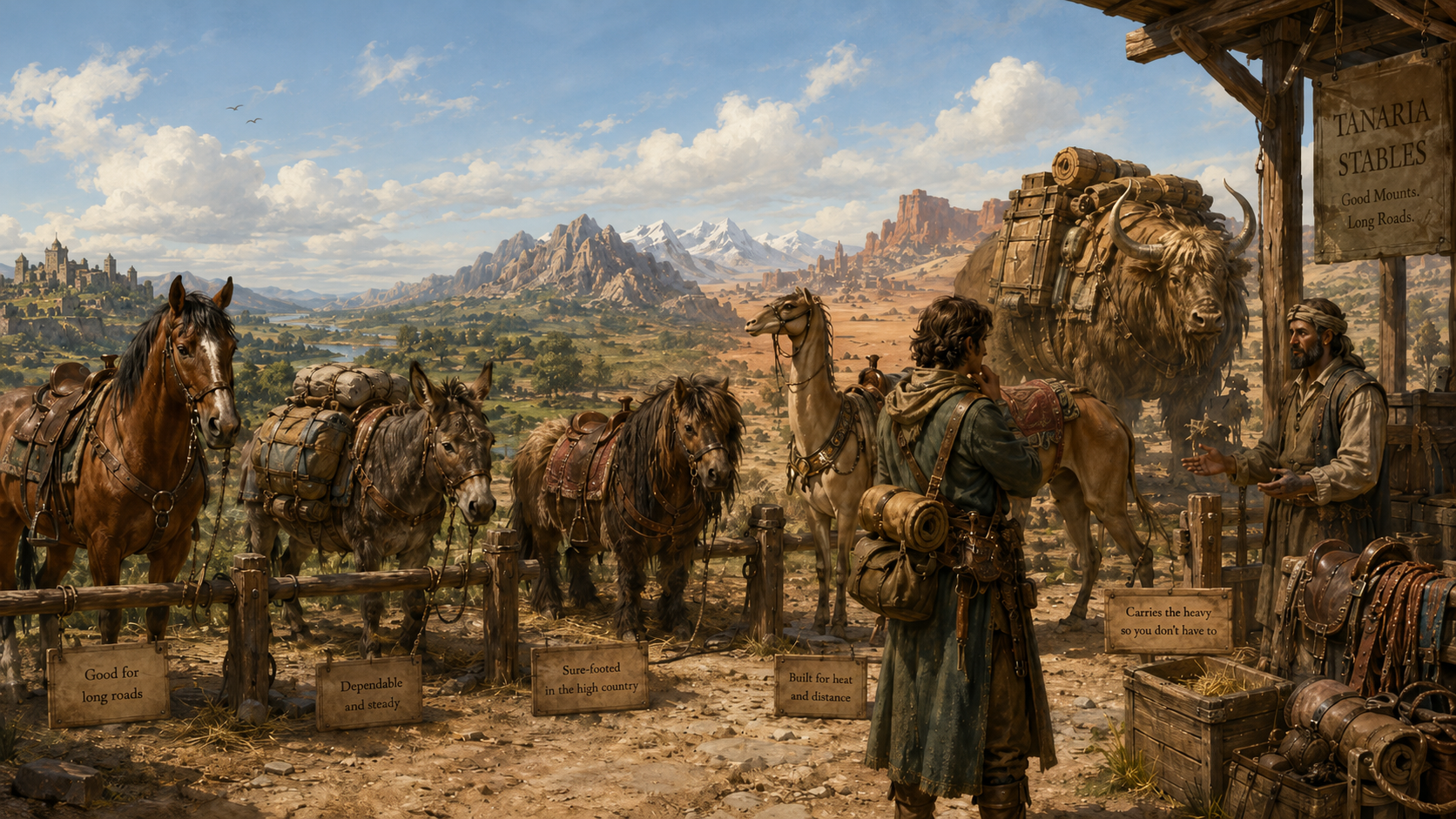
In settled lands, horses, mules, ponies, oxen, and hardy packbeasts remain the most common choices. They are affordable, familiar to stablehands, and easy to feed along established roads. In harsher regions, local mounts often replace them entirely. A desert trader in Dhuma is more likely to trust a sandrunner than a horse, while a Kalrosi scout may favor a frosthound or mountain pony over anything bred for speed on open fields.
The wealthy, military orders, religious societies, and noble houses have access to more specialized mounts. Drakes, winged horses, Frostclaw Rocs, and similar beasts are rarely sold to strangers without recommendation, reputation, or an oath-bound contract. Some cannot truly be bought at all. They must be raised, bonded, gifted, or earned.
A wise traveler chooses the beast that will bring them home, not the one that will impress people when they leave.
Types of Mounts Across Tanaria
From the common to the legendary, Tanaria offers an incredible range of creatures suited for riding, hauling, or battle. Some are domesticated and bred in stables across the realms. Others must be captured, bonded with, or earned through trials, oaths, or coin. The following entries cover the major types of mounts you may encounter or attain. Whether you're a merchant looking for a sturdy packbeast or a war mage hunting for an aerial predator, there's something in Tanaria that can carry your weight... if you’re worthy.
Common Road Mounts
Riding Horses
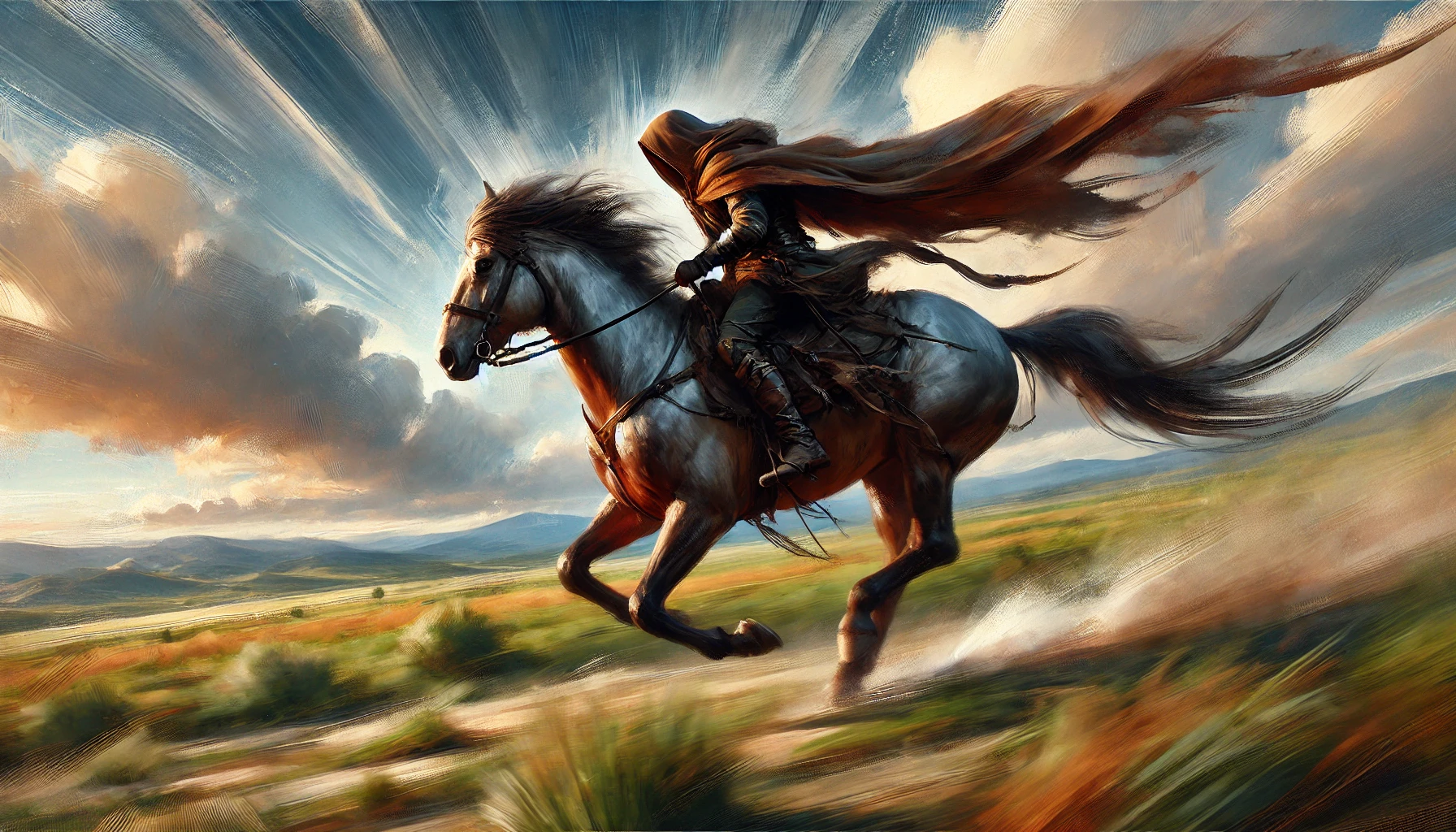
The standard mount across much of Tanaria, especially in temperate regions, trade cities, farming provinces, and military patrol routes. Horses are valued because nearly every stable, roadside inn, and merchant caravan knows how to care for them. They are not the most exotic choice, but they remain one of the most dependable.
Ponies
Ponies are favored by smaller folk, young riders, mountain communities, and travelers who need a sure-footed animal more than speed. In Kalros and parts of Skölna, sturdy pony breeds are often preferred over taller horses when crossing narrow trails, rocky passes, or snow-heavy roads.
Mules
The mule is the unsung hero of Tanarian travel. Less glorious than a horse and less imposing than a Borvhan, mules are stubborn, cautious, and difficult to kill through poor weather or bad roads. Miners, peddlers, pilgrims, and practical adventurers often choose mules when survival matters more than appearances.
Donkeys
Common among farmers, village healers, tinkers, and short-distance traders, donkeys are inexpensive, patient, and well-suited to carrying modest loads. They are rarely considered prestigious, but only a fool mocks an animal that can find its footing in the dark and remember the way home.
Pack Oxen
Used primarily for hauling rather than riding, oxen are common in rural regions and along slow-moving trade routes. They are steady, powerful, and inexpensive compared to specialized beasts. A merchant with heavy goods may choose oxen over faster animals because arriving late is better than arriving without cargo.
Borvhan
Borvhan are powerful bovine mounts and pack animals, especially valued across open plains and frontier settlements. They are slower than horses but far stronger, making them useful for caravans, heavy riders, and long journeys through rough country.
Mounts for Smaller Folk
Not every creature is built to carry a fully armored orc or a broad-shouldered knight. Across Tanaria, there are specialized breeds and nimble beasts better suited for halflings, gnomes, goblins, and other small-statured travelers. These mounts may be smaller in size, but they’re no less fierce, loyal, or fast. In fact, many are prized for their agility, stealth, or unique abilities that make them ideal for scouts, messengers, and light cavalry.
Mounts for Smaller Folk
Riding Dogs
Riding dogs are among the most common mounts for small folk in rural towns and frontier villages. Loyal, trainable, and brave when properly bonded, they are especially popular with scouts, messengers, hunters, and children of wealthy households learning to ride. A good riding dog is not treated like livestock. In many communities, it is considered a working companion and family guardian.
Giant Goats
Favored in mountain settlements, especially in Kalros and Skölna, giant goats are sure-footed, stubborn, and surprisingly fearless. They can cross narrow ledges and broken stone paths that would make a pony balk. They are not graceful animals, and they are notorious for testing inexperienced riders, but they are excellent companions in high country.
Tunnel Lizards
Small riding lizards are popular among kobolds, goblins, deep-road traders, and communities living near caverns, ruins, or dense rocky terrain. They are lower to the ground than horses, comfortable in darkness, and able to cling to rough surfaces with impressive confidence. They are poor choices for cold climates unless specifically bred for them.
Marsh Striders
Light, long-legged amphibious mounts used by small folk living near wetlands, river deltas, and flooded lowlands. Marsh striders are not built for battle, but they can cross soft mud, reed beds, and shallow water where hooved animals would sink. Smugglers, fishers, and messengers often prize them.
Sandrunners
Among the smaller desert peoples of Dhuma, young sandrunners are sometimes trained as swift mounts for scouts and couriers. They are quick over hardpan, salt flats, and dry scrub, though they tire faster under heavy loads. Their value lies in speed, heat tolerance, and the ability to vanish into terrain that would expose a horse.



This is a great hub article. :) I like the separate section for smaller mounts.
Explore Etrea | Summer Camp 2026
Thanks!
"Every story is a thread, and together we weave worlds."
The Origin of Tanaria