Workers’ Solidarity Party WSP
A Voice Worth Having.”
Elias Morcant
Former dockworker turned firebrand speaker
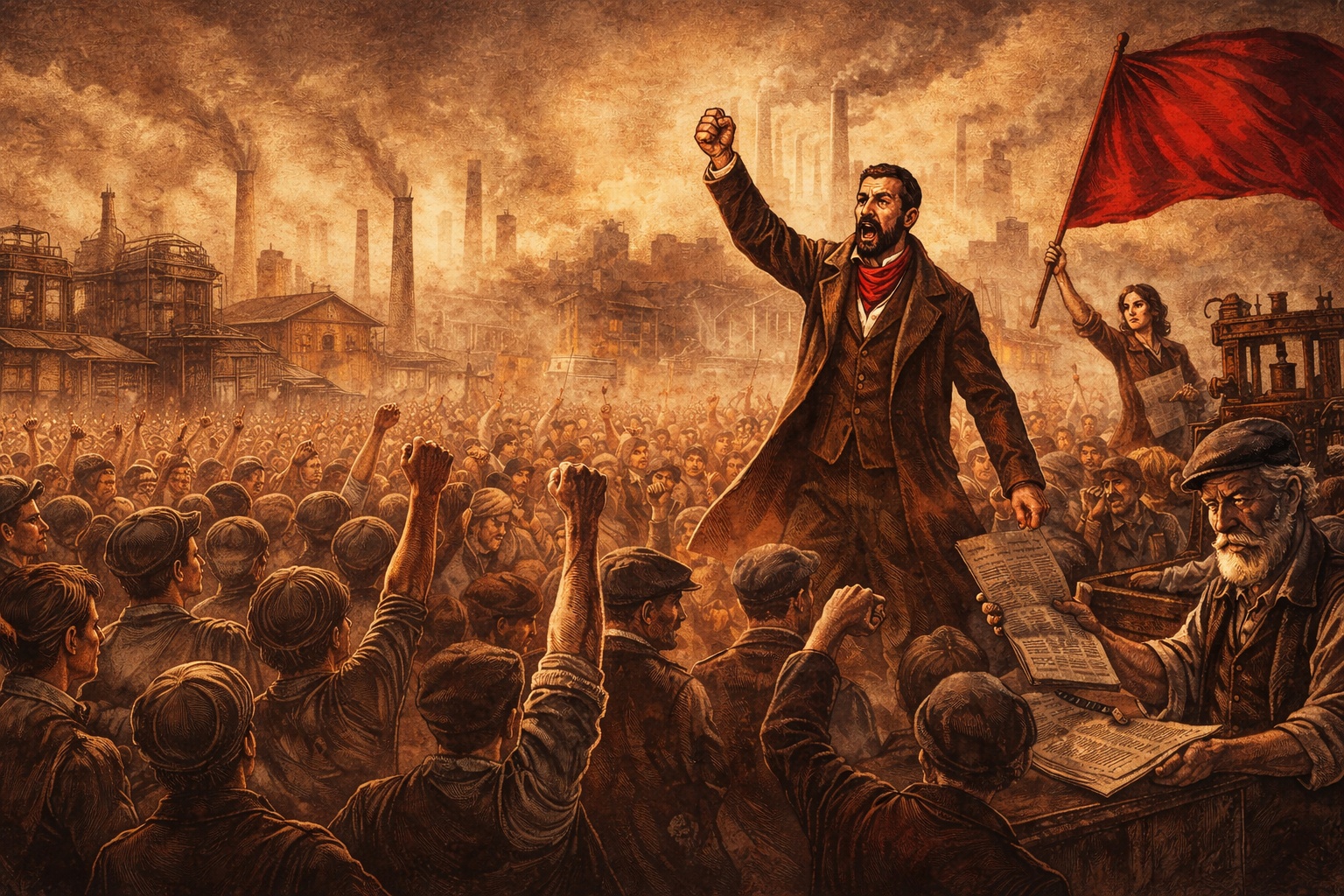
Elias Morcant is not a man born to privilege. His hands bear the scars of rope burns and splintered crates; his voice, honed by shouting above crashing tides and creaking hulls, carries easily over restless crowds. Morcant first rose to prominence during a dockside wage dispute, when he stepped forward to negotiate on behalf of injured labourers abandoned by their overseers. What began as a plea became a speech. What began as a speech became a movement.
Morcant’s rhetoric blends lived experience with disciplined political philosophy. He does not call for revolution in the streets—at least not openly—but for reform through the supremacy of Parliament over imperial interference. His speeches are marked by a refrain: “We built the Empire’s wealth. We demand its laws reflect our lives.”
Though authorities monitor his movements closely, Morcant has thus far avoided arrest—whether due to lack of evidence, fear of martyrdom, or quiet sympathisers within the civil apparatus remains unclear.
The WSP is not sustained by one voice alone. Around Morcant gathers a cadre of organisers, pamphleteers, and labour leaders who transform rhetoric into action.
Tamsin Vale
Tamsin Vale has become something of a legend in factory wards. Precise, relentless, and fiercely intelligent, she coordinates strikes with near-military efficiency. Her strategy is simple: targeted disruption. Rather than chaotic protests, Vale organises synchronised work stoppages in critical industries—transport, textiles, ironworks—forcing employers to negotiate rather than retaliate blindly.
Authorities have issued warrants in three districts for her role in orchestrating unlawful assembly and economic sabotage. Among workers, however, she is seen not as a criminal but as a tactician—someone who understands the machinery of industry and how to halt it without bloodshed.
Old Ben Crowe
Ben Crowe, known universally as “Old Ben,” is older than most of the Party’s core activists but no less dangerous for it. A former typesetter turned polemicist, Crowe authors the broadsheets that circulate under doors and through crowded markets at dawn. His writing is sharp, biting, and unapologetically accusatory.
Crowe frames the WSP’s demands not as rebellion but as moral correction. He names industrial magnates, exposes factory accidents concealed by bribes, and quotes parliamentary statutes with disarming fluency. Though authorities routinely confiscate his pamphlets, new editions appear almost as quickly as they are seized.
Ideology
Democratic Labour Reform • Social Justice • Parliamentary Supremacy
The WSP positions itself firmly within the framework of democratic reform rather than outright insurrection. Its leaders maintain that the problem lies not in the concept of governance, but in the imbalance of power between imperial authority, industrial wealth, and elected representation.
Democratic Labour Reform
The Party believes labour must have a formal, protected voice within the legal structure of the state. They advocate not for the overthrow of markets, but for safeguards that ensure workers are not crushed beneath them.
Social Justice
For the WSP, justice extends beyond wages. It encompasses dignity, education, safety, and the right to participate meaningfully in civic life. They argue that prosperity without fairness is instability disguised as order.
Parliamentary Supremacy
Perhaps most controversial is their insistence that Parliament—not imperial decree—must hold ultimate legislative authority. They argue that veto powers wielded by imperial offices undermine democratic representation and entrench industrial interests over public welfare.
Core Agenda
The WSP’s platform is structured, pragmatic, and deliberately legislative in tone:
- Legal recognition of trade unions and collective bargaining At present, many unions operate in legal grey zones or outright illegality. The WSP seeks formal recognition, allowing workers to negotiate wages and conditions collectively without fear of prosecution.
- Regulation of working hours and factory safety standards Industrial accidents are frequent and often concealed. The Party demands enforceable safety standards, inspections, and limits on excessive working hours that endanger health and productivity alike.
- Progressive taxation on industrial profits Rather than burdening subsistence earners, the WSP proposes tiered taxation on large-scale industrial profits to fund public initiatives and infrastructure.
- Reduction of imperial veto powers over Parliament The Party seeks to curtail or eliminate mechanisms that allow imperial offices to override parliamentary decisions, arguing that such powers erode democratic legitimacy.
- Public education and basic welfare protections Education is viewed as both a moral good and a stabilising force. Basic welfare protections—particularly for injured workers and widowed families—form part of the Party’s long-term vision for a healthier society.
Public Image
Passionate, dangerous, hopeful—depending on who you ask.
The WSP has ignited enthusiasm in working districts and unease in boardrooms.
In labour wards, Party gatherings are crowded, energetic affairs filled with applause and spirited debate. Dockworkers, machinists, and seamstresses bring their families to hear Morcant speak. For many, the WSP represents the first political movement that speaks with them rather than about them.
In industrial and aristocratic circles, however, the Party is viewed with suspicion. Critics claim its policies would destabilise markets, weaken imperial authority, and embolden radicals. Some accuse it of being a gateway to outright socialism or even revolution, though its official platform remains framed within parliamentary reform.
Newspapers aligned with commercial interests label WSP rallies as “disorderly assemblies.” Meanwhile, smaller independent presses describe them as “the sound of a nation finding its voice.”
Alignment
Populist • Anti-Imperial Veto • Pro-Labour
The WSP’s alignment is clear: it draws its strength from popular support, challenges imperial oversight of legislative processes, and centres labour as a legitimate political constituency rather than a passive economic resource.
Whether it will transition from semi-clandestine agitation to recognised parliamentary force remains uncertain. What is clear is this: the Workers’ Solidarity Party has already altered the political conversation. The question now is not whether labour will have a voice—but how loudly it will be allowed to speak.


UP THE PROLETERIAT!!!! DOWN WITH THE CROWN!!!!