Nyrian Engineering
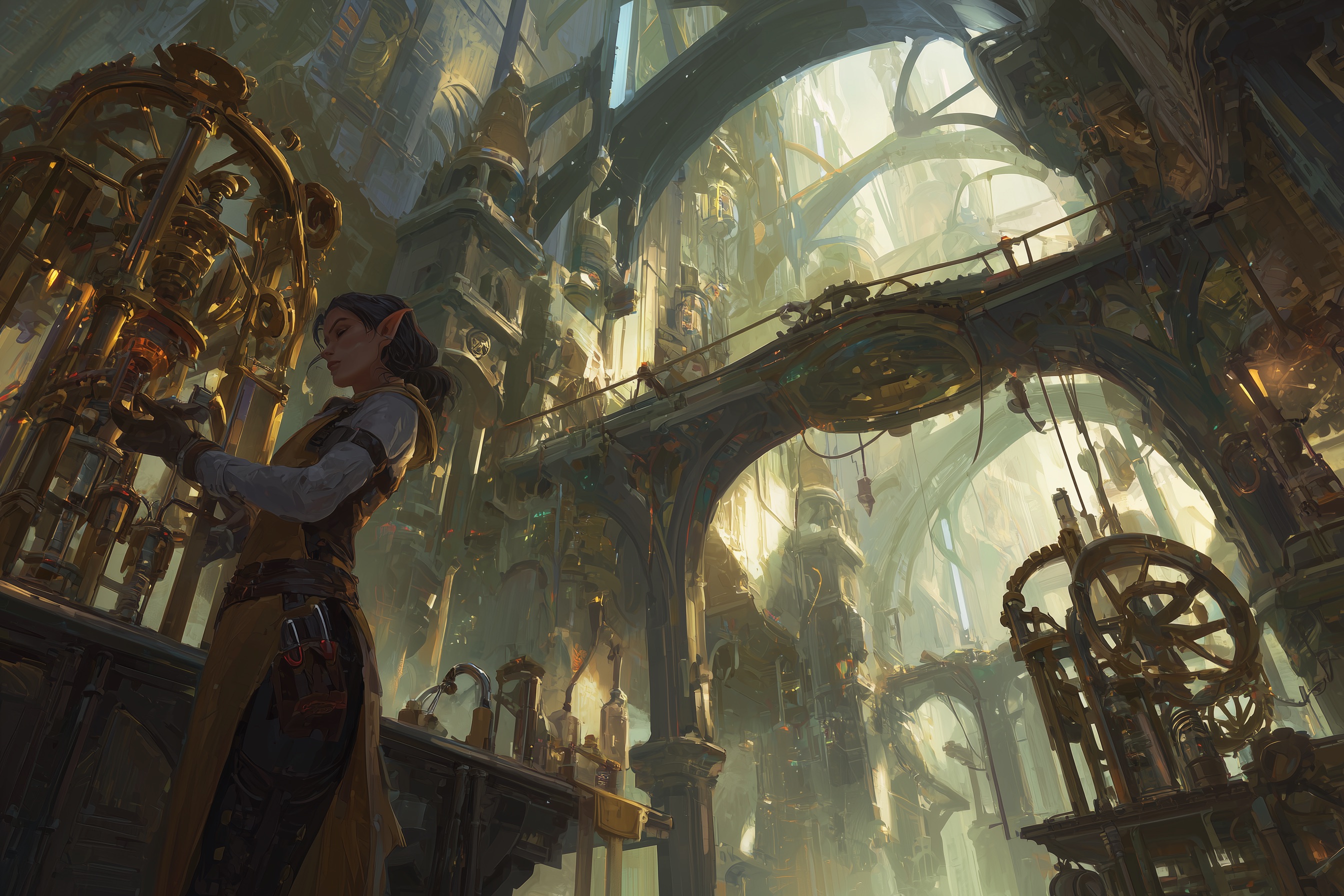
Engineering in Nyria encompasses the scientific and technical disciplines concerned with shaping matter, force, and systems to sustain and advance Nyrian civilization. Rooted in ancient craft traditions and transformed by industrial and alchemical breakthroughs, Nyrian engineering reflects the continent’s complex geography, political fragmentation, and accelerating technological ambition.
While methods and standards vary between states, guilds, and corporate powers, modern Nyrian engineering is unified by an increasing reliance on formal sciences—most notably Galvanic Physics and Alchemy—which have reshaped nearly every field of applied design.
Structural Engineering
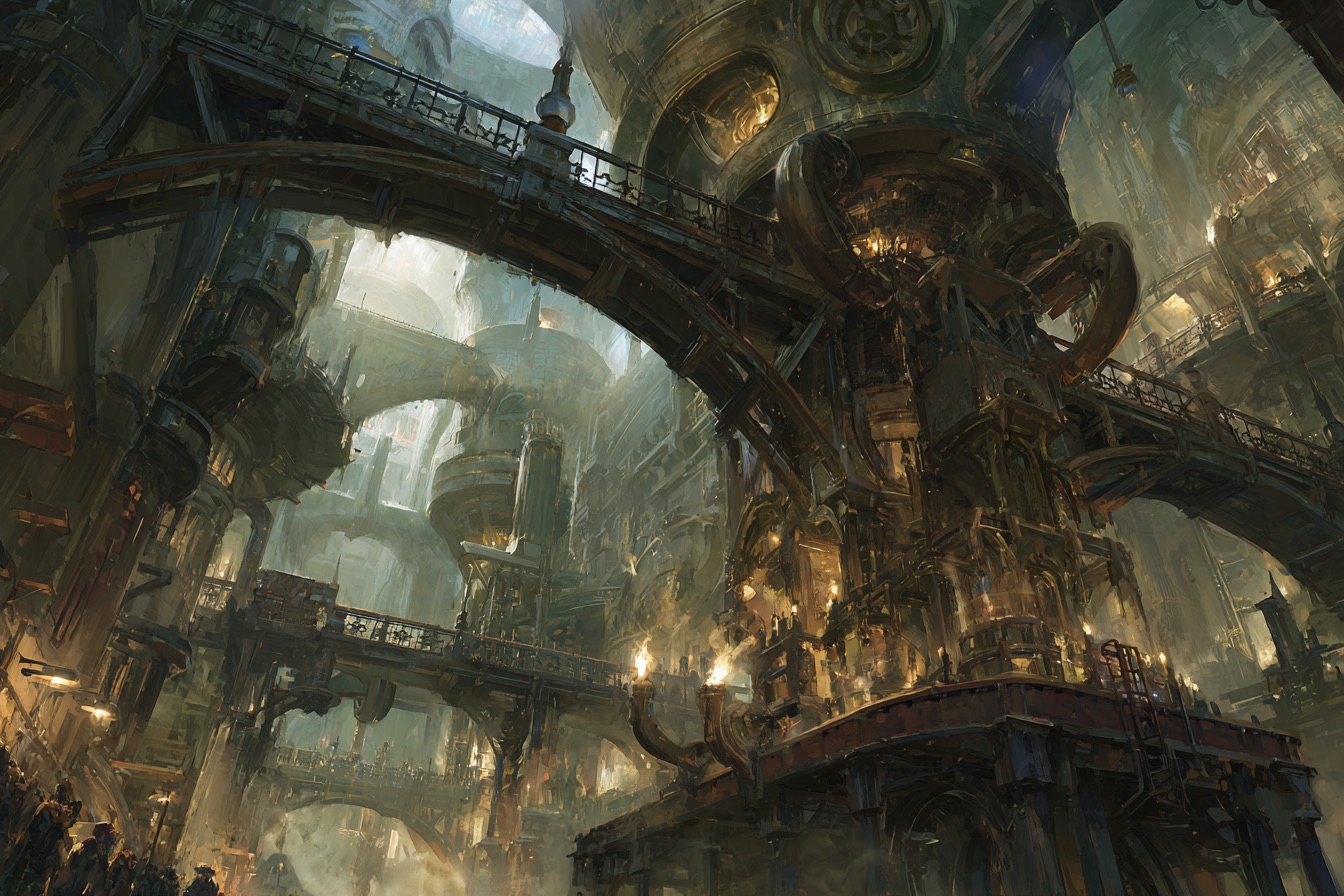
Structural engineering governs the construction of buildings, bridges, towers, ports, and fortifications. Nyrian structures are designed to withstand seismic instability, corrosive sea air, and extreme vertical loads common to cliffside and elevated cities.
The influence of Alchemy has led to the widespread use of treated alloys and reinforced composites, allowing lighter frameworks, greater spans, and self-stabilizing supports. Many modern structures incorporate alchemically enhanced materials whose properties can be tuned during fabrication to improve resilience and longevity.
Mechanical Engineering
Mechanical engineering concerns the design of machines and moving systems, including engines, lifts, presses, and industrial apparatus. It forms the backbone of manufacturing, mining, and heavy industry. Nyrian mechanical design emphasizes robustness, modularity, and ease of maintenance.
Alchemy has expanded the limits of mechanical engineering by enabling components that resist heat, friction, and fatigue beyond natural material tolerances. Alchemically treated bearings, pistons, and joints allow machines to operate longer, faster, and under harsher conditions.
Galvanic Engineering
Galvanic engineering focuses on systems driven and regulated by galvanic power. It enables illumination, automation, signaling, and precise control mechanisms integrated into machinery and infrastructure. Galvanic networks now form a critical layer of urban and industrial development.
Alchemy plays a crucial supporting role by refining conductive alloys, stabilizing galvanic components, and mitigating degradation caused by sustained flow and environmental exposure. Many advances in galvanic efficiency are the direct result of alchemical material science.

Naval and Aeronautical Engineering
Naval engineering governs the construction of ships, docks, and maritime infrastructure essential to Nyria’s archipelagic trade networks. Aeronautical engineering, a newer discipline, applies similar principles to airborne vessels and elevated transit systems.
Alchemy has proven transformative in these fields, enabling lighter hull materials, improved lift structures, and controlled interaction between alloys and environmental forces. Electrum-infused frameworks and alchemically stabilized components have made extended flight and deep-sea endurance viable.
Materials and Chemical Engineering
Materials and chemical engineering focuses on the refinement, synthesis, and treatment of metals, alloys, fuels, and industrial compounds. This discipline underpins all others, determining what can be built and how reliably it will function.
Alchemy is deeply embedded in this field, blurring the line between material science and applied transmutation. Controlled reactions allow engineers to alter structural, conductive, and reactive properties with precision, producing substances otherwise unattainable through conventional means.
Civic and Systems Engineering
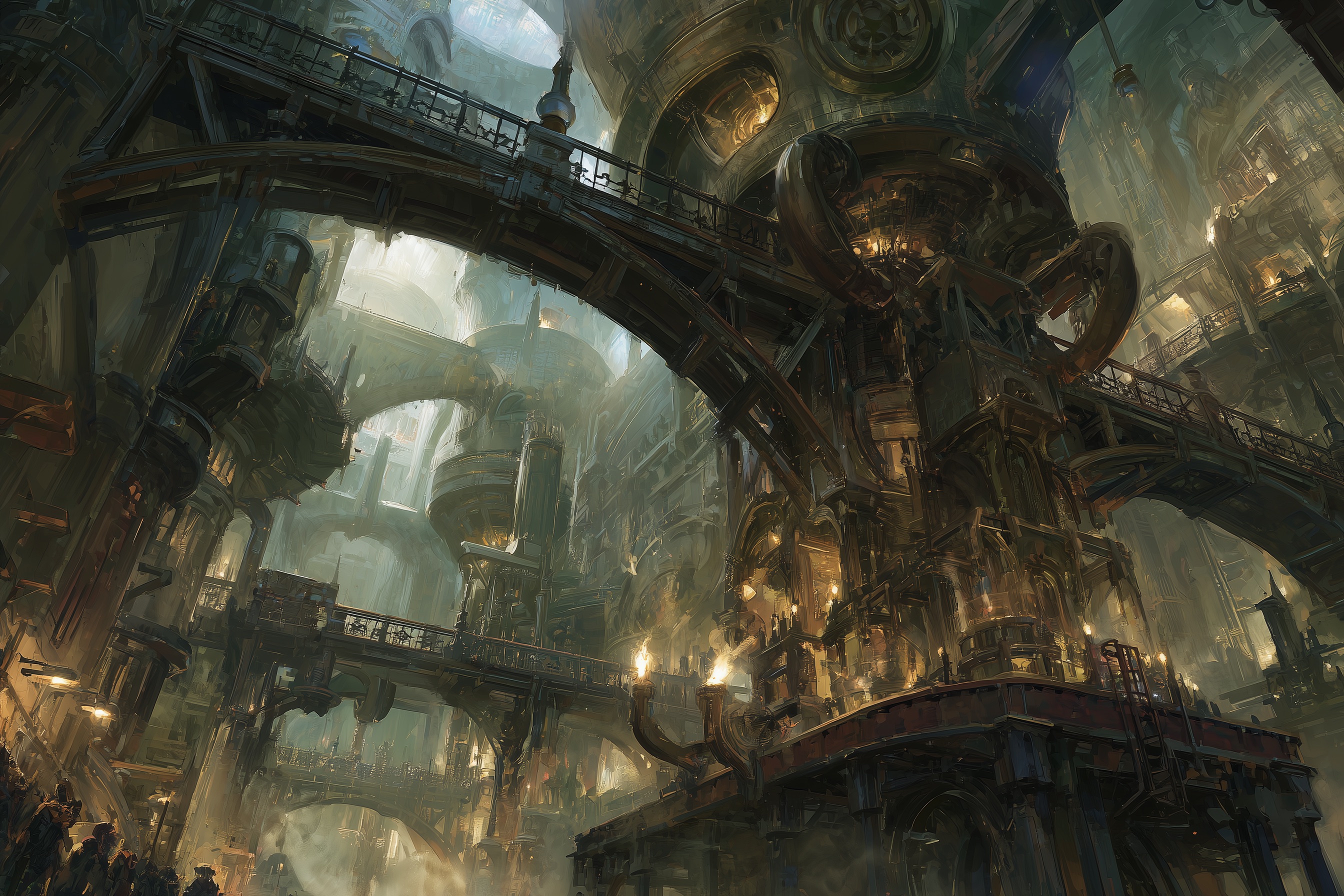
Civic and systems engineering governs water management, sanitation, transportation networks, and urban infrastructure. These systems rely heavily on galvanic regulation and alchemical material treatment to function safely at scale.
Alchemical filtration, corrosion resistance, and adaptive materials have become standard in major population centers, making this discipline essential to public health and political stability.
Contemporary Practice
Modern Nyrian engineering is fundamentally interdisciplinary. Large-scale projects require coordinated expertise across structural, mechanical, galvanic, and alchemical fields. Alchemy, in particular, has shifted engineering from a purely constructive practice into one of controlled transformation, allowing Nyrian societies to build higher, move faster, and endure longer than ever before.

Alchemy
Alchemy is the branch of science concerned with the effects that electrum-based alloys and emitted sonic, light or electric frequencies can have to said alloys and substances of which matter is composed, the investigation of their properties and reactions, and the use of such reactions to form new substances and effects.
Alchemy is both a scientific discipline and a technological foundation in Nyria. It studies how electrum-based alloys interact with directed frequencies to alter material behavior, enabling transformation, stabilization, and enhancement of matter. Unlike speculative or mystical traditions, Nyrian Alchemy is formalized, repeatable, and tightly regulated.
Its influence extends across all branches of engineering, providing advanced materials, controlled reactions, and specialized effects that redefine what engineering solutions are possible.
Automata Engineering
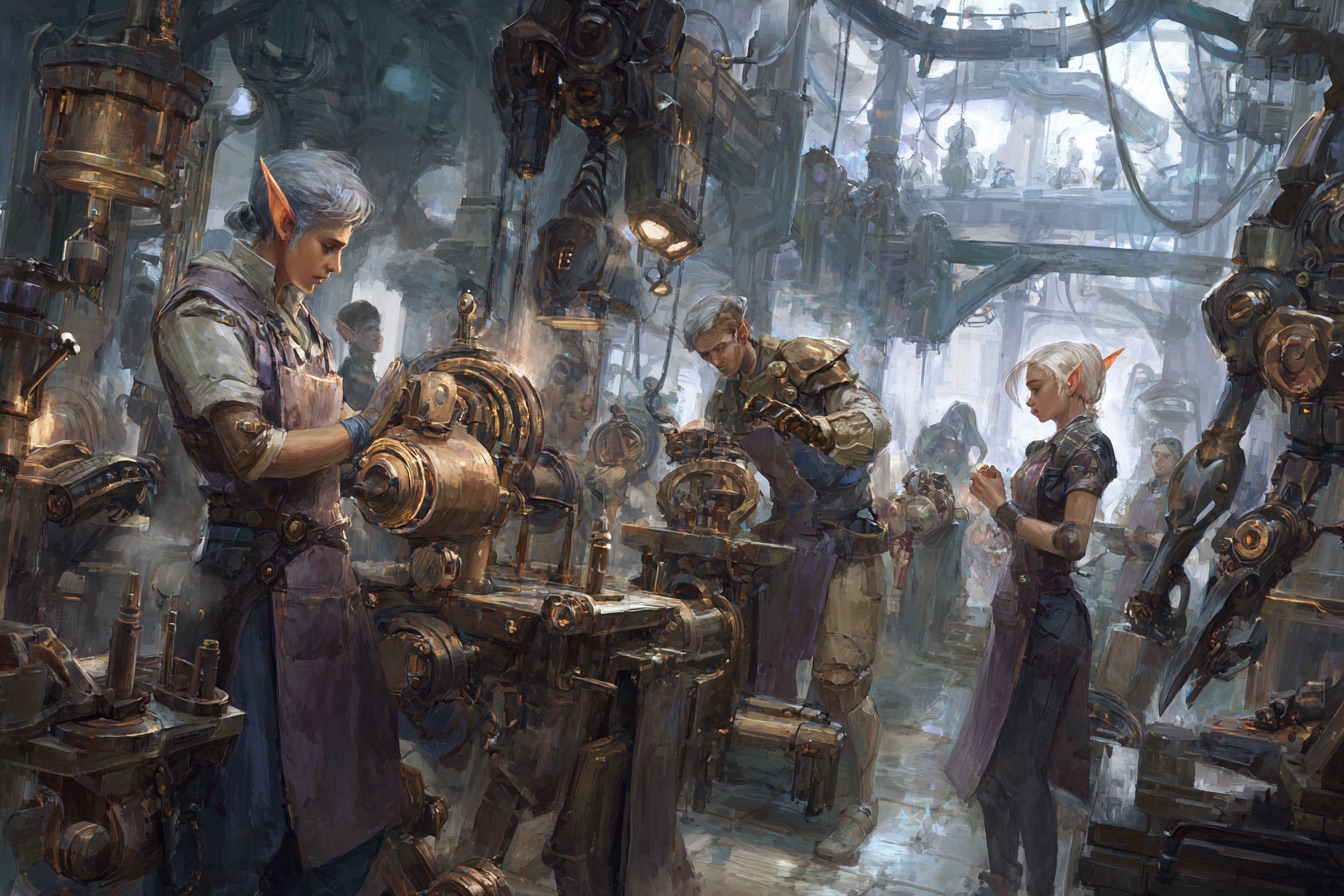
Automata engineering is the discipline concerned with the design and construction of self-operating machines capable of performing complex, repeatable tasks without continuous direct control. These automata range from simple labor constructs to highly specialized systems capable of perception, decision-making, and adaptive response.
At its foundation, automata engineering relies on mechanical frameworks, galvanic regulation, and increasingly sophisticated control assemblies. The introduction of alchemical sciences has allowed automata to move beyond rigid instruction sets. Alchemically tuned materials and frequency-responsive components enable machines to process input, store behavioral patterns, and respond dynamically to their environment.
Automata are widely employed in hazardous industry, precision manufacturing, logistics, and long-duration operations where organic endurance is limited. As complexity increases, automata engineering approaches the boundary between machine responsiveness and cognition, a threshold closely shared with biomechanical research.
Biomechanical Engineering
Biomechanical engineering is the science and technology of integrating living matter—particularly, but not limited to, neural and muscle tissue—with mechanical systems. This field became viable only through advances in alchemy, which allow organic materials to be preserved, stabilized, and interfaced with non-living structures without immediate degradation.
Practitioners study how neurons, muscle fibers, and sensory organs can be combined with engineered frameworks to create systems capable of instinctive reaction, learning, and fine motor control. Unlike automata, which rely on constructed logic, biomechanical systems draw upon the inherent adaptability of living matter.
Applications include advanced prosthetics, neural control interfaces, hybrid labor constructs, and experimental vehicles where organic cognition provides advantages over purely mechanical processing. Ethical oversight of biomechanical engineering varies widely across Nyria, reflecting deep cultural divisions regarding the use of living components.
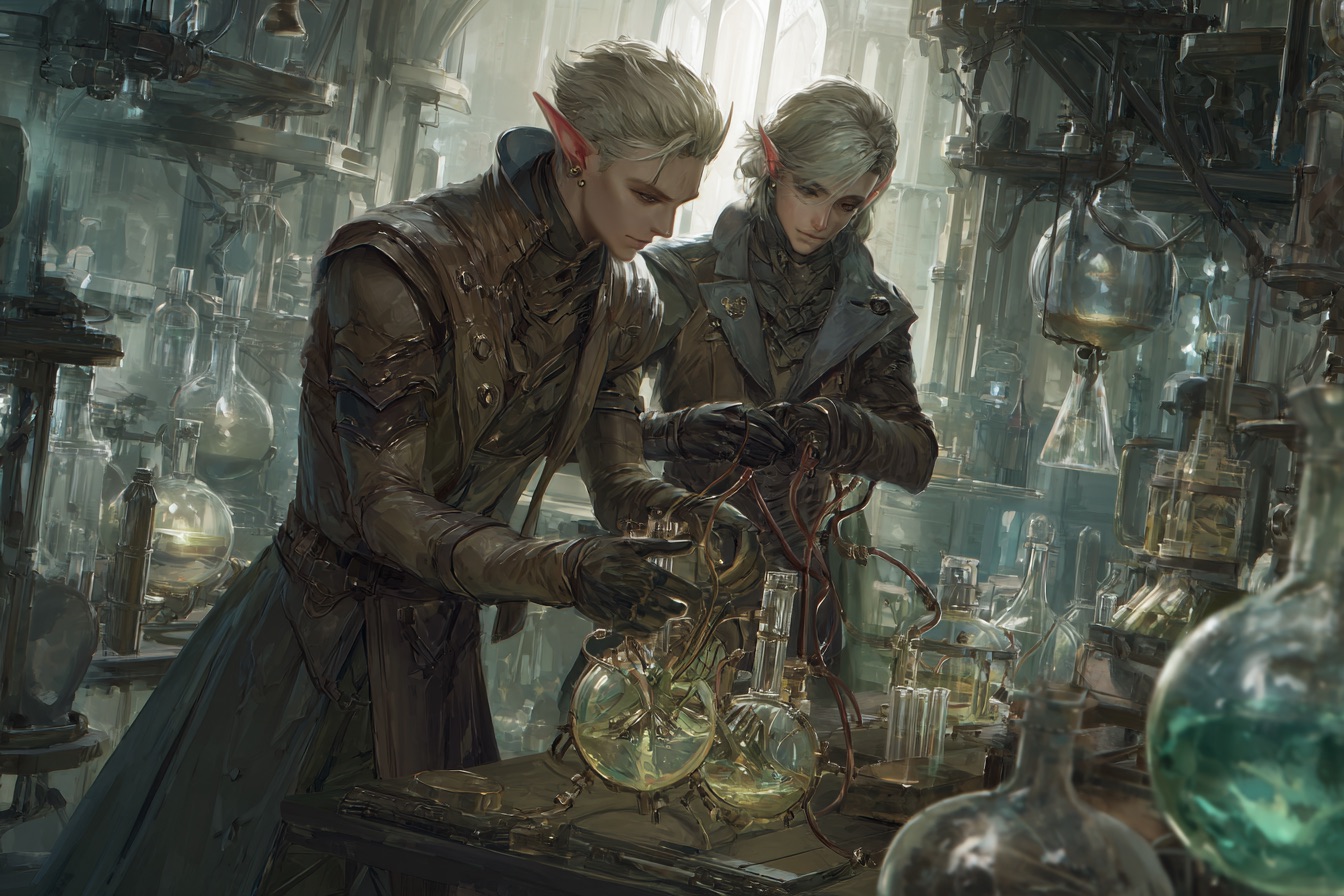
Interdependence and Mutual Influence
Automata engineering and biomechanical engineering exert significant influence on one another. Advances in automata control systems often emerge from attempts to replicate organic decision-making, while biomechanical designs frequently adopt mechanical frameworks refined through automata research.
Alchemy acts as the critical bridge between the two disciplines. Frequency modulation, electrum-based alloys, and material transmutation enable interfaces where living neurons can communicate reliably with mechanical control systems. Hybrid constructs—part automaton, part living system—are increasingly common in cutting-edge research, though their classification remains a subject of debate.
Together, these fields represent the frontier of Nyrian engineering, challenging traditional definitions of machine, tool, and life itself.
“Alsian ingenuity is the courage to imagine what has never flown, the patience to shape it piece by piece, and the wisdom to ensure that when it rises, it carries the future with it.”


Comments