

Apriorian Weave
Apriorian Weave is a language developed by the Apriorian people, communicated through the weaving of intricate patterns, designs, and stitches into cloth and clothing.
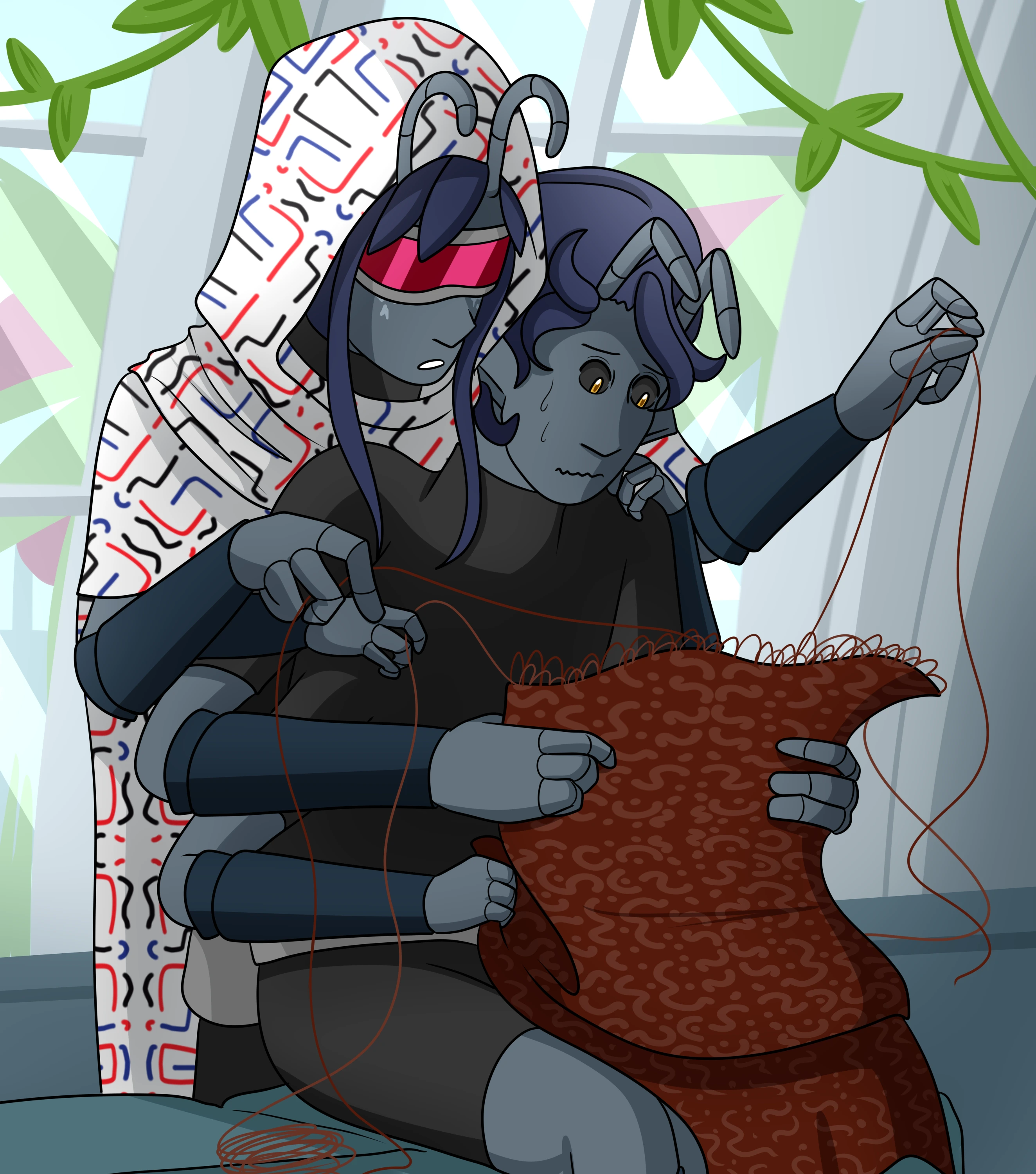 The roots of Apriorian Weave stretch back thousands of years, beginning with weavers who incorporated simple messages into textiles.
As the craft developed, so did awareness of its expressive potential, the ability to layer complex information within a visually striking piece of cloth proved too useful to remain limited to simple communication. Over time the practice formalised into the language it is today. Traditionally, it was male Apriorians who were taught the skill.
Reading only one layer gives an incomplete picture; skilled weavers can intertwine multiple stitches, colours, and shapes within a single textile, producing complex multi-layered communication that may appear entirely unremarkable to anyone unfamiliar with the language.
Colours are interpreted according to the cultural associations of the time, where older textiles may use the same colour to convey something different from a more contemporary piece.
Decoding the stitch requires a trained eye and deeper knowledge of the language and it is the layer most often used for private or sensitive communication, as it goes unread by the majority.
History
Raz teaching Ira to weave
As the craft developed, so did awareness of its expressive potential, the ability to layer complex information within a visually striking piece of cloth proved too useful to remain limited to simple communication. Over time the practice formalised into the language it is today. Traditionally, it was male Apriorians who were taught the skill.
Symbolism & Structure
Apriorian Weave operates on two distinct layers that work in tandem: the overall design (encompassing shape and colour), and the specific stitches used within it.Reading only one layer gives an incomplete picture; skilled weavers can intertwine multiple stitches, colours, and shapes within a single textile, producing complex multi-layered communication that may appear entirely unremarkable to anyone unfamiliar with the language.
Design
The design layer follows a codified system of shapes and colours, accessible enough to be read by most Apriorians with a basic education in the language.Colours are interpreted according to the cultural associations of the time, where older textiles may use the same colour to convey something different from a more contemporary piece.
Stitch
The stitch layer is considerably more specialised. There are ten recognised stitch types in common use, each carrying its own distinct meaning, and they can be combined freely.Decoding the stitch requires a trained eye and deeper knowledge of the language and it is the layer most often used for private or sensitive communication, as it goes unread by the majority.
Usage
Apriorian Weave has been woven into almost every area of Apriorian life, serving a wide range of purposes across its long history.- Clothing & Gifts - Everyday garments and gifted textiles frequently carry embedded meaning, from personal expression to heartfelt messages.
- Courtship - Everyday garments and gifted textiles frequently carry embedded meaning, from personal expression to heartfelt messages.
- Espionage - The language's visual innocuousness made it well suited to covert communication and counterintelligence work.
- Architecture & Electronics - The language has extended beyond textiles, with its patterns incorporated into structural design and technology.

That image melts my heart! Great article. This is the kind of nonverbal language that I'd love to pick up a history book on.