

Sleestack
The Sleestack, known in their ancient tongue as the Sekmins, are one of the oldest surviving intelligent races in Nor. Though now believed by most scholars to be little more than scattered monsters haunting forgotten ruins, the sleestak were once masters of a vast empire that existed long before the rise of modern civilizations. Their people ruled through psionic domination, rigid hierarchy, and ancient knowledge that even today remains poorly understood.
Modern Sleestak exist in two forms. The first are the Lost Ones, degenerated descendants of the ancient empire who possess diminished intellect but tremendous physical prowess. The second are the Altrusian, exceedingly rare Sleestack who retained the intelligence, psionic power, and ambition of their ancestors. Though few in number, the Altrusian continue to labor toward the restoration of reptilian supremacy and the rebirth of their fallen civilization.
Modern Sleestak exist in two forms. The first are the Lost Ones, degenerated descendants of the ancient empire who possess diminished intellect but tremendous physical prowess. The second are the Altrusian, exceedingly rare Sleestack who retained the intelligence, psionic power, and ambition of their ancestors. Though few in number, the Altrusian continue to labor toward the restoration of reptilian supremacy and the rebirth of their fallen civilization.
Basic Information
Biological Traits
All sleestak possess:
Keen senses Lightweight but durable skeletal structures Powerful jaws and claws Strong natural resistance to magic and psionics
Lost Ones possess:
Greater physical strength Thicker scales Increased physical endurance Sensitivity to bright light
Altrusian possess:
Innate psionic talents Telepathic communication Psionic domination abilities Exceptional mental discipline Advanced resistance to magic and psychic intrusion
Ancient texts also reference a mysterious higher Sleestak caste possessing terrifying psionic powers capable of corrupting entire regions of land, though modern scholars debate whether such beings ever truly existed.
Keen senses Lightweight but durable skeletal structures Powerful jaws and claws Strong natural resistance to magic and psionics
Lost Ones possess:
Greater physical strength Thicker scales Increased physical endurance Sensitivity to bright light
Altrusian possess:
Innate psionic talents Telepathic communication Psionic domination abilities Exceptional mental discipline Advanced resistance to magic and psychic intrusion
Ancient texts also reference a mysterious higher Sleestak caste possessing terrifying psionic powers capable of corrupting entire regions of land, though modern scholars debate whether such beings ever truly existed.
Growth Rate & Stages
Female Sleestak carry their broods for approximately one year before giving birth to as many as a dozen offspring at once. Whether a hatchling becomes an Altrusian or a Lost One appears entirely random regardless of the status or lineage of the parents.
Lost Ones mature quickly and rarely live beyond 80 years.
Altrusian mature slowly, reaching adulthood near age 50, and may live for up to 500 years. They reproduce rarely, with most producing offspring only once or twice throughout their lives.
Sleestack colonies traditionally assign specific individuals the task of identifying signs of intelligence and psionic aptitude among hatchlings at an early age.
Lost Ones mature quickly and rarely live beyond 80 years.
Altrusian mature slowly, reaching adulthood near age 50, and may live for up to 500 years. They reproduce rarely, with most producing offspring only once or twice throughout their lives.
Sleestack colonies traditionally assign specific individuals the task of identifying signs of intelligence and psionic aptitude among hatchlings at an early age.
Ecology and Habitats
Sleestak thrive in warm, humid environments and are most commonly associated with deep jungles, subterranean ruins, flooded caverns, and hidden underground cities. Their ancient architecture was built to accommodate controlled environmental conditions, often incorporating immense chimneys, spiraling towers, enclosed tunnels, and maze-like feeding chambers.
Many sleestak ruins remain partially intact beneath the Macaw Expanse, though countless others collapsed long ago or were reclaimed by the jungle.
Many sleestak ruins remain partially intact beneath the Macaw Expanse, though countless others collapsed long ago or were reclaimed by the jungle.
Dietary Needs and Habits
sleestak are primarily carnivorous, though they supplement their diet with fruits and jungle vegetation. They are capable of consuming enormous quantities of food in a single feeding before entering lengthy digestive periods.
An adult sleestak commonly consumes 80 to 100 pounds of food at once and may go weeks without feeding again.
An adult sleestak commonly consumes 80 to 100 pounds of food at once and may go weeks without feeding again.
Behaviour
Altrusian sleestak possess cold, calculating minds shaped by ancient philosophies of superiority and domination. They consider telepathy the mark of perfection and generally view non-telepathic beings as inferior creatures suited only for servitude, experimentation, or consumption.
Emotional attachment among Altrusians is rare. Mating is treated as biological necessity rather than companionship, and familial bonds are weak by the standards of most races.
Lost Ones possess only fragmented remnants of these ancient instincts. Many behave as territorial predators or tribal hunters, though they retain an instinctive fear and reverence toward Altrusians. In many colonies, Lost Ones view the rare Altrusian leader as something close to a divine figure.
Altrusian society itself is unstable and deeply paranoid. Even among their own kind, alliances are temporary and betrayal is common.
Emotional attachment among Altrusians is rare. Mating is treated as biological necessity rather than companionship, and familial bonds are weak by the standards of most races.
Lost Ones possess only fragmented remnants of these ancient instincts. Many behave as territorial predators or tribal hunters, though they retain an instinctive fear and reverence toward Altrusians. In many colonies, Lost Ones view the rare Altrusian leader as something close to a divine figure.
Altrusian society itself is unstable and deeply paranoid. Even among their own kind, alliances are temporary and betrayal is common.
Additional Information
Social Structure
Ancient sleestak civilization operated through rigid psionic hierarchies supported by vast populations of enslaved creatures. Dangerous labor, warfare, and resource gathering were largely performed by thralls in order to preserve sleestak lives.
Modern Lost One communities are primitive and tribal.
Most surviving sleestak colonies revolve around a single Altrusian leader who dominates and directs the surrounding Lost Ones. Colonies containing multiple Altrusians are rare and often collapse into infighting, manipulation, and betrayal.
Modern Lost One communities are primitive and tribal.
Most surviving sleestak colonies revolve around a single Altrusian leader who dominates and directs the surrounding Lost Ones. Colonies containing multiple Altrusians are rare and often collapse into infighting, manipulation, and betrayal.
Geographic Origin and Distribution
Most surviving sleestak dwell within the humid jungles and subterranean ruins beneath the Macaw Expanse. Hidden enclaves and buried cities still exist beneath the dense jungle canopy, protected by ancient traps, psionic wards, and hostile Lost Ones.
Smaller colonies occasionally exist in deep underground ruins elsewhere in Nor, though sleestak strongly favor warm and humid climates. They avoid arid regions whenever possible.
Altrusian sleestak are extraordinarily rare. Most sleestak settlements contain only a single Altrusian individual who rules over surrounding Lost Ones through instinctive authority, fear, and psionic domination.
Smaller colonies occasionally exist in deep underground ruins elsewhere in Nor, though sleestak strongly favor warm and humid climates. They avoid arid regions whenever possible.
Altrusian sleestak are extraordinarily rare. Most sleestak settlements contain only a single Altrusian individual who rules over surrounding Lost Ones through instinctive authority, fear, and psionic domination.
Average Intelligence
Altrusian sleestak possess extraordinary intelligence and often display genius-level reasoning and strategic ability.
Lost Ones vary greatly, though most possess only primitive or animalistic intellect.
Lost Ones vary greatly, though most possess only primitive or animalistic intellect.
Civilization and Culture
Gender Ideals
Sleestak culture places little value on gender distinctions. Status is determined almost entirely through intellect, psionic strength, and personal capability rather than sex.
Courtship Ideals
Courtship among sleestak is brief and pragmatic. Altrusians generally meet only long enough to reproduce before separating once more. Emotional attachment is often viewed as weakness or distraction.
Major Language Groups and Dialects
Aklo
Common Dress Code
Altrusian sleestak favor layered robes, ceremonial wrappings, jewelry of polished stone or bone, and garments designed to accentuate their scales and sleestak forms. Ancient nobles frequently wore gold collars and segmented armor.
Lost Ones typically wear little beyond scavenged hides, trophies, or primitive ornamentation.
Lost Ones typically wear little beyond scavenged hides, trophies, or primitive ornamentation.
Culture and Cultural Heritage
Religion
Most sleestak worship Silistak, the ancient reptillian creator god of their race. According to sleestak belief, Silistak entered a divine torpor after losing a catastrophic battle in the distant past. Many sleestak believe their race’s decline mirrors the slumber of their god, and that both shall awaken together one day.Religious practices vary greatly between colonies and are often fragmented by competing interpretations, cults, and heresies. Some Altrusians see themselves as chosen stewards preserving sleestak civilization until the eventual return of Silistak.
Common Customs, Traditions and Rituals
Meals among Altrusians are traditionally solitary acts except during major ceremonies or sacred observances.
Psionic meditation rituals, ancestral memory recitations, and torpor ceremonies remain central aspects of many Altrusian traditions. Some hidden enclaves maintain ancient dream chambers where sleestak elders enter psychic trances to commune with the memories of the past.
Psionic meditation rituals, ancestral memory recitations, and torpor ceremonies remain central aspects of many Altrusian traditions. Some hidden enclaves maintain ancient dream chambers where sleestak elders enter psychic trances to commune with the memories of the past.
Common Taboos
Trespassing into another sleestak’s dwelling is traditionally punishable by death among Altrusian society.
Loss of mental discipline, emotional weakness, and surrender to uncontrolled instinct are all viewed with deep shame.
Loss of mental discipline, emotional weakness, and surrender to uncontrolled instinct are all viewed with deep shame.
History
The sleestak are not native to Nor. They originated upon another Material Plane and arrived in Nor in an age so ancient that most records of their coming have been lost to time. Some legends claim they crossed the planes intentionally through colossal psionic gateways, while others suggest they fled some forgotten catastrophe in their original world.
Upon arriving in Nor, the sleestak rapidly established themselves as one of the dominant powers of the early world. Their empire of Sekamina spread across entire continents, enslaving lesser races and exterminating civilizations that resisted them.
Their downfall came during a devastating conflict with the Thal’Kor, who viewed the sleestak as an existential threat to the future of Nor. Using stolen Rune Magic acquired from the dwarves, the Thal’Kor shattered the sleestak empire and pushed the race to the brink of extinction.
To preserve their people, the sleestak enacted a desperate plan. Entire populations entered psionic torpor beneath the earth, sealing themselves away in hidden chambers and dreaming vaults in hopes of awakening in a safer age. Unfortunately, the long hibernation damaged most of the race beyond repair. When the sleestak eventually awakened, the vast majority had devolved into primitive creatures now known as the Lost Ones.
Upon arriving in Nor, the sleestak rapidly established themselves as one of the dominant powers of the early world. Their empire of Sekamina spread across entire continents, enslaving lesser races and exterminating civilizations that resisted them.
Their downfall came during a devastating conflict with the Thal’Kor, who viewed the sleestak as an existential threat to the future of Nor. Using stolen Rune Magic acquired from the dwarves, the Thal’Kor shattered the sleestak empire and pushed the race to the brink of extinction.
To preserve their people, the sleestak enacted a desperate plan. Entire populations entered psionic torpor beneath the earth, sealing themselves away in hidden chambers and dreaming vaults in hopes of awakening in a safer age. Unfortunately, the long hibernation damaged most of the race beyond repair. When the sleestak eventually awakened, the vast majority had devolved into primitive creatures now known as the Lost Ones.
Lifespan
Altrusians can live up to 500 years. Lost Ones have a life span of around 80
Average Height
Altrusians range from 5 to 7 feet tall, Lost Ones are shorter, 4-6 feet and more compact
Average Weight
Altrusians weight anywhere from 100 to 140 lbs, Lost Ones, more packed with Muscle weight anywhere from 180-220lbs
Average Physique
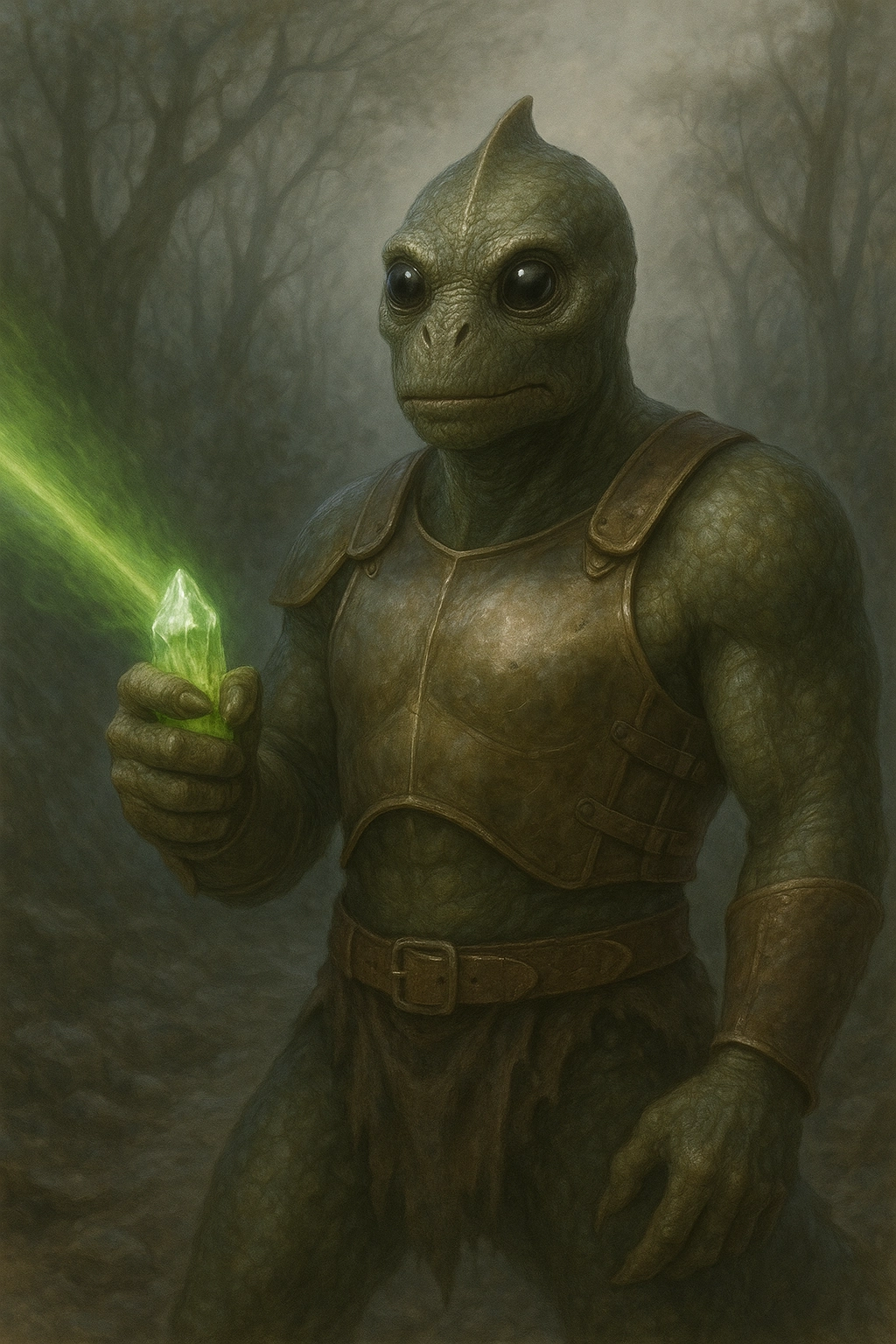
Sleestak are reptilian humanoids with long muscular tails, scaled bodies, elongated jaws, and sharp claws. Their movements are unnervingly fluid and graceful, often seeming almost silent.
Lost Ones are heavily muscled and hunched in posture, while Altrusians possess leaner, more refined physiques.
Lost Ones are heavily muscled and hunched in posture, while Altrusians possess leaner, more refined physiques.
Body Tint, Colouring and Marking
Lost Ones typically possess green scales that begin bright in youth and gradually dull with age.
Altrusians display a broad range of colors and patterns. Certain scale markings are believed to denote bloodlines, psionic potential, or ancient caste affiliations. Some sleestak ritualistically enhance these markings through oils, pigments, or scarification.
Altrusians display a broad range of colors and patterns. Certain scale markings are believed to denote bloodlines, psionic potential, or ancient caste affiliations. Some sleestak ritualistically enhance these markings through oils, pigments, or scarification.
The World of Nor

Comments