BUILD YOUR OWN WORLD Like what you see? Become the Master of your own Universe!

Campsites and Rest Zones

Rest zones—such as Sites of Lost Grace, Taverns, and Inn's— are areas within the game of Gambit that provide a sanctuary from the action, offering one a breather before diving back into danger whilst immersing the player in a mix of relief and peace and often acting as safe-zones that provide the player character with all the amenities one needs to survive the harsh lands scattered throughout the Demon Realm as well as the hustle and bustle of Earth. Compared to all Rest Zone locations found within the underworld, the main difference between all tends to be function.  

Camps

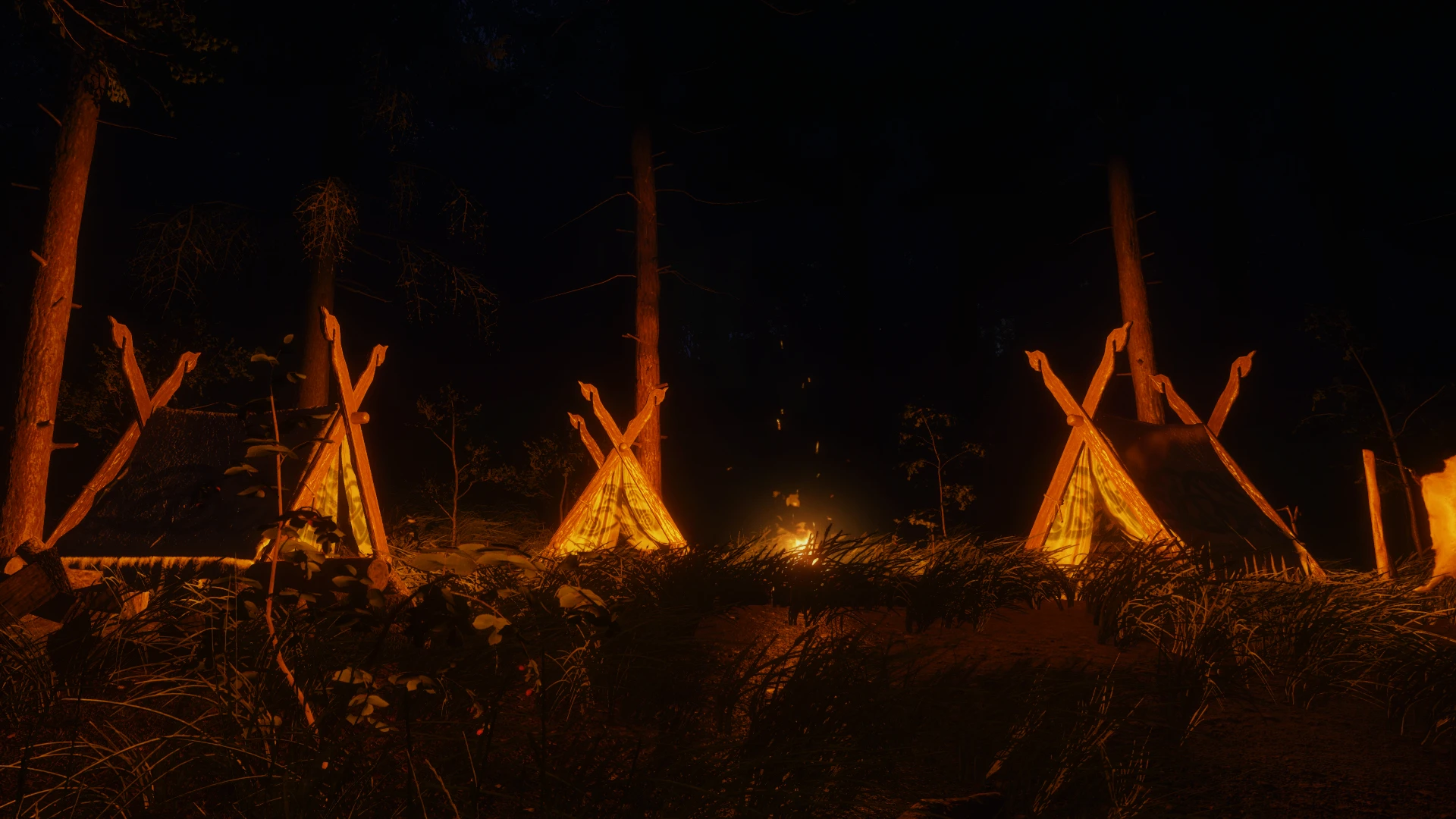
  In Gambit, two main types of camps often exist - those established by the player, (Sites of Lost Grace), and those often fixed or dynamic that are often populated with NPCs. NPC Camps behave in manners similar to Player Owned Camps, but with some major differences.   NPC camps often fall into distinct categories depending on the type of faction that controls them. The most common camps are Bandit, Merchant, and Traveler NPC Camps  
  • Traveler Camps:
  • Small, unmarked wilderness areas where peaceful NPCs and merchants camp out.    
  • Bandit Camps:
  • Small, hostile outpost styled Camps used for radiant quests, looting and EX Farming.    
  • Merchant Camps
  • Mobile Merchants who travel along the roads to buy and sell a wide variety of goods, ranging from general crafting materials to illicit substances. While not technically a camp much like the others, Merchant Caravans will often set up tent encampments just outside the main gates of certain Towns or during certain parts of the day. Because they travel, they set up camps outside the main gates for a few days before rotating, so if you need to find a specific caravan while they are traveling, you can follow their exact routes, or simply check the areas right outside the local city.   NPC Camps often have the same amenities as a player camp. These often feature bedrolls, cooking pots, and basic supplies. However unlike Player Camps, NPC Camps don't offer other necessities, such as leveling and they do not often have crafting tables or places where such things of the sort can be done, with some simply having NPC who will just sell you whatever it is you have to make within reason anyways.  

    Player Camps

    In gambit, Sites of Lost Grace serve as player owned, static campsites.   Scattered throughout the world, Site's of Grace campsites are often visually distinct between regions and particular locations thus the campsite appearance and layout has numerous variants all of which change depending on the location the camp is found in.   When encountering a Site for the first time, the player can activate it and cause its flames to light up, leading them to save their progress in the area as a saved game. However, while a majority of Sites can be activated upon discovery, certain ones must be unlocked, usually soon after the defeats of local issues, most often regarding apostles. Other such ways of unlocking a Site, often include Fetch Quests. Each request is unique and requires various amounts of materials, some of which may be easier to obtain than others. Once unlocked, the Site as well as the area around it, will automatically start to glow, requiring the player to simply sit at the camp's campfire instead of activating it.   Once discovered, the campsite provides a location which serves several purposes. The player can use these Sites to fast travel through locations via previously unlocked Sites or other fast travel locations. They can manage their inventory, upgrade physical attributes such as Stamina and Health, gain skills via skill points, and also upgrade the various tools that the player may have equipped throughout their journey. Among those purposes, it also includes swapping or speaking to party members. Certain story events can also render previously discovered camps inaccessible depending on choices made.  

    Inn's

      Gambit Inns are the heart of civilization.   In every populated town throughout the Underworld, there is an Inn or a Tavern where denizens of the Underworld wander too when night begins. As a Traveler, this is where you are welcome to come in, have a chat with the residents, buy a drink or two, and simply enjoy the nightlife, before finally settling down and renting out one of the available rooms for the night. Camps often serve as free resting hubs used for survival, whereas Inns (rented rooms) are paid, stationary facilities in towns that allow you to quickly advance time and safely save your game without dealing with the wilderness. In general, the difference between the two often comes down to cost, safety, service, and gameplay mechanics.   Found inside towns, and major settlement's, Taverns give you access to a private bed to sleep and pass time, and a place to change your outfits and are mostly used for immersion or for quickly skipping to a specific time of day safely without the risk of being ambushed. Innkeepers are your best source for local gossip. They provide rumors that unlock unmarked quests and even update your map with locations of hidden treasures. Taverns also often feature merchants and innkeepers who will gladly buy your excess items, armor, and potions when you are away from major trade hubs.  

    Earth Rest-Zones

      Earth Rest Zones vary in a multitude of different ways compared to ones in the Underworld.    
  • Merchants on Earth can be found in Pawn Shops, but do not buy Underworld related items. Instead, all Underworld adjacent items must be sold in the Underworld, or sold to Merchant Demon's. They are rare to find on Earth.
  •  
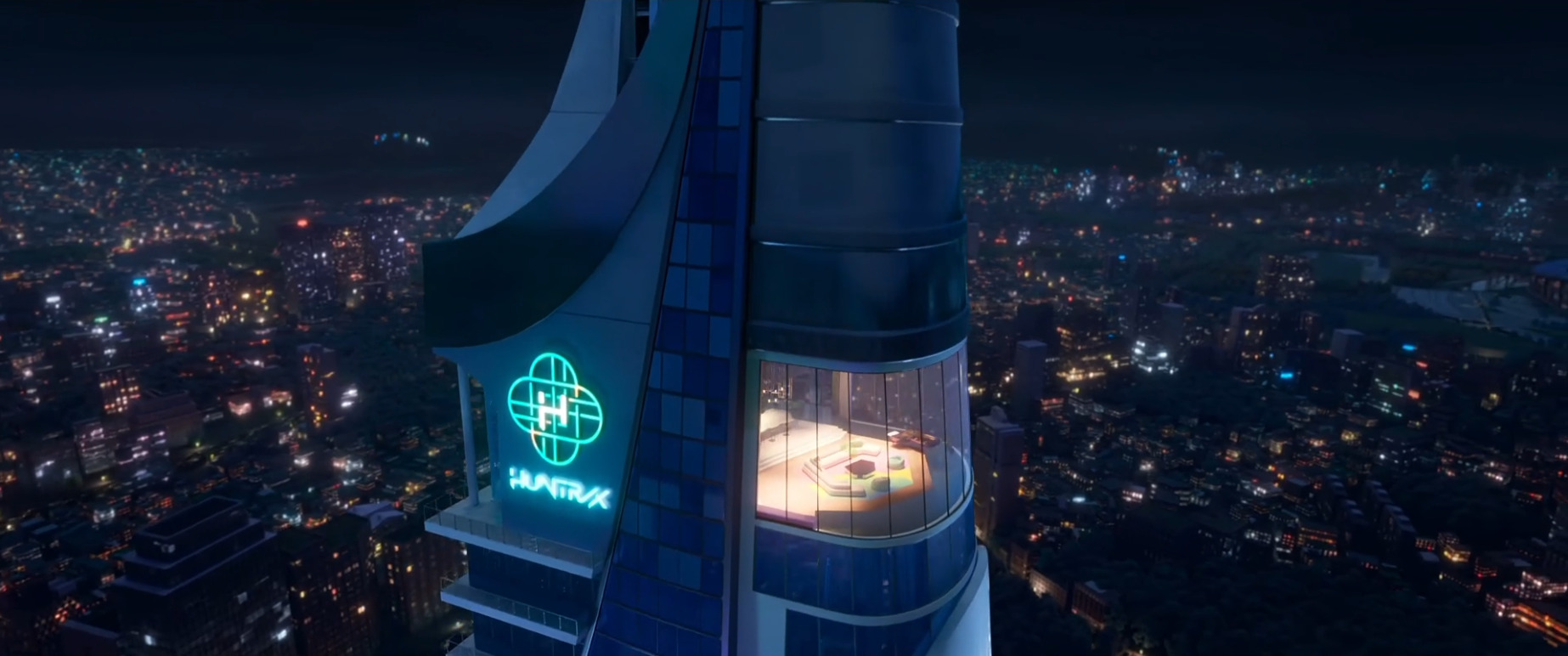
  • Huntrix Tower serves as the main rest point, behaving like a Site of Grace. Here, each character has their own room and can be seen going about their day, and may also be seen doing chores, which the player character can also do if they wish. From here, you can also save your game, change your outfits, browse the internet, and watch TV. Specific characters may also have unique interactions, such as drinking, talking amongst themselves, playing arcade games, or using gym equipment to temporarily boost your character's stats. Certain personality traits may also shine through, judging by how/what a character does throughout the day.
  •  
  • Unlike Underworld Taverns, Hotels, Earth's equivalent, can not randomly be entered. Instead various Hotels have to be unlocked during Idol Mode Mini Games. Once unlocked, they behave like Taverns with some minor changes, such as you can't hire help from them and while you don't have to pay, you also can't customize the room. They are simply temporary rest-spots. If the location is part of a Story-Mode quest driven, you may also unlock it that way.
  •  
  • Actual Site of Grace can be found throughout Seoul, but they are even somewhat less common on Earth than they are in the Underworld. Unlike in the Underworld, Sites of Grace on Earth instead of being freely scattered throughout the world, are mostly instead found along the defensive wall that runs around the city of Seoul, Hanyang Doseong. Certain places that Sites can be found include The Four Gates.
  •   The Four main gates and four auxiliary gates were built around Seoul in the late 14th century. The four main gates were Dongdaemun (East Gate), Seodaemun (West Gate), Namdaemun (South Gate) and Sukjeongmun (North Gate). The four auxiliary gates were placed in areas between the four main gates, with Souimun (in the southwest), Changuimun (in the northwest), Hyehwamun (in the northeast) and Gwanghuimun (in the southeast).  
    Simplified Map of the Four Gates of Seoul

    The Eight Gates of Seoul are a series of historic gates located in Seoul, South Korea. The gates were constructed between 1396 and 1398, and allowed access to the city, which was surrounded by the Seoul City Wall during the Joseon period.

    The Eight Gates were based roughly in the four cardinal and four intermediate directions of the compass. Of the eight gates, the North, South, East, and West were known as the “Four Great Gates” (사대문), while the Northwest, Northeast, Southeast, and Southwest gates were known as the “Four Small Gates” (사소문). Of the eight gates, two (West and Southwest) no longer exist. Memorials are instead currently placed roughly where the West and Southwest gates once stood (July 2012).

    There has been discussion and announcements about rebuilding the West Gate, but no construction has yet been undertaken (as of July 2012) for this gate.

    All Gates are semi/Fully Connected to what is known as the Hanyangdoseong, Seoul City Wall, a defensive wall first built by the King Taejo of Joseon dynasty to defend the downtown area of Joseon's capital city Hanseong (한성; 漢城). The wall, which follows the ridges of Baegak (Bugaksan), Naksan (Naktasan), Namsan (Mongmyeoksan) and Inwangsan, the four main mountains surrounding the center of Seoul, has been constantly managed since its initial construction in 1396.

    The wall measures between
    5 and 8m high and is 18.6km long and it bears witness to the role played by a city wall in the life of a capital city, still sustained in modern day Seoul. It was designated as a Historic Site of South Korea in 1963, and is currently a tourist attraction around Downtown Seoul.

    Hanyangdoseong, completed in 30 years, was torn down in many parts due to city planning initiatives and the introduction of trams lines. However, significant sections of the wall remain. The best-preserved and well-known course is the Wall of Mt. Bukaksan, the 2.3-km trail which cuts through Sukjeongmun to Changuimun. Previously off-limits to the public after having been designated as a Military Reserve area due to its close proximity to Cheongwadae, it opened to the public in 2006. With very few alterations or artificial structures surrounding the area over the years, the natural environment remains relatively intact.


      Other places that include Sites of Grace include Historical Sites like, Gyeongbokgung Palace.  
    Seoul City Wall: Advanced Map

    Initially built in 1396 in just 98 days by more than 197,000 people, Hanyangdoseong passes through or near eight historic gates, most of which are free to enter. The Seoul Fortress Wall itself runs 18.6 kilometers around the center of the city, sitting high on the mountains of Bugaksan, Naksan, Namsan, and Inwangsan, and dropping low through neighborhoods like Dongdaemun. Along the wall originally stood four main gates and four auxiliary gates, opened and closed each day to regulate movement in and out of the city. Each morning, the Bosingak Belfry bell was rung 33 times to announce the gates opening; each evening, 28 rings announced their closing.

    However, during the Japanese colonial period, Japanese overseers had deliberately dismantled several gates — Donuimun and Souimun were destroyed, while Gwanghuimun and Hyehwamun were damaged. Restoration was purposefully neglected until after Korean independence was restored. By 2014, approximately 70% of the wall12.8 kilometers — had been restored or reconstructed, and Sukjeongmun, Gwanghuimun, and Hyehwamun had been rebuilt.


    Trivia

       
  • Each location that hosts a Site of Grace check-point, has a special cut-scene attached to it if you decide to just fall-asleep normally and not time-skip. A random chance encounter, these cut scenes are supposed to add a bit more flavor to each location, and unlike NPC camp cutscenes which mostly just involve the player sitting around a campfire listening to their hosts chat-about, each location hosts its own unique cutscene. For example, in the Windswept Plateau Campsite: a location characterized by a raised, relatively flat geographic landmass elevated significantly above the surrounding terrain that is continually battered by strong, consistent gusts of wind, there is a random chance that while the Player sleeps, a cutscene will play where the camp is visited by a lone demon, whose most defining feature is the multitude of various Windchimes, attached to its person.
  •   During the cutscene, the Demon will play a soft-harmonious song with the chimes and bells, up until the point the cutscene ends. If encountered, this cutscene will unlock the Breezy Night OST, one of many unlockable instrumental soundtracks that can be played on any Sound-System and can also be used to change the BGM to any location that permits it. New tracks will be added as you meet other certain conditions, so pick your favorite songs to boost your hunting morale!  
  • All Sites of Grace Campsites in the Underworld and the Huntrix Tower on Earth are customizable to varying degrees! For example, picture frames in Huntrix Tower can be filled with any pictures you've taken yourself. Since they all take from the same Gallery, each location can have its own photo-sets. In addition, in Huntrix tower, you can also decorate the players room. You can change the wall decorations, decorations, and pictures in your room. At some point you may even be allowed to add furniture, provided that you do the required tasks to open such a feature.

  • Comments

    Please Login in order to comment!