The Alignment Tests
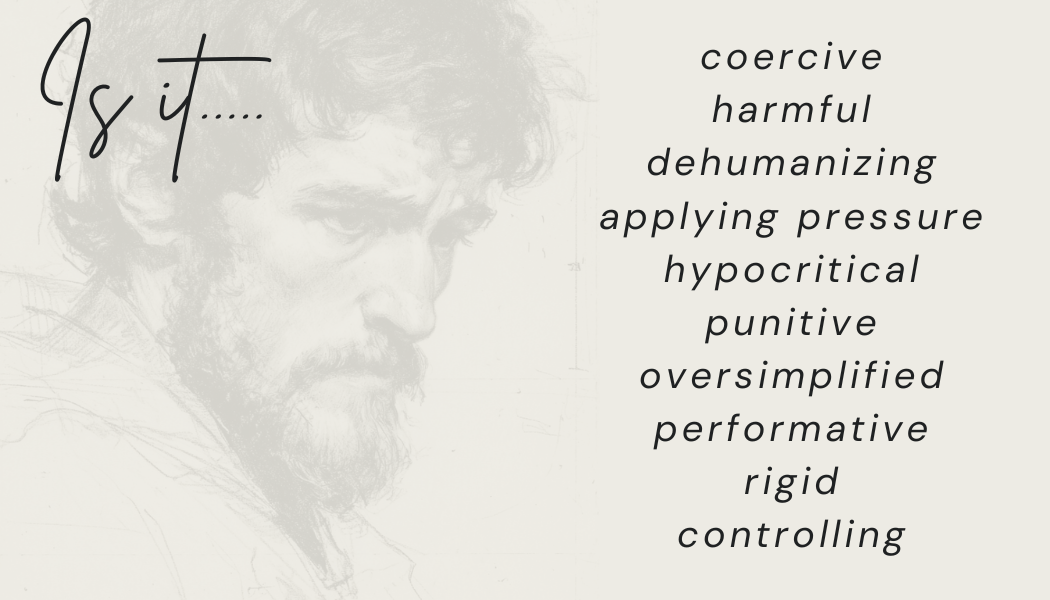
Aurelianism does not offer commandments or beliefs to accept. It offers a way to examine thought, speech, action, and structure before they harden into harm. The Alignment Tests are not rules, nor are they tools for judging others. They are questions intended to be asked inwardly, first and often, to slow certainty and make space for care.
These tests are applied to ideas, actions, customs, and systems alike. When something fails a test, it is not condemned. It is marked for reflection, adjustment, repair, or restraint. Misalignment is expected; the work is not purity, but correction.
The tests may be used privately or communally, but never as instruments of coercion or belonging.
The Harm Test
Does this cause avoidable harm—directly, indirectly, or systemically? Harm includes physical, psychological, social, and dignitary injury. Some harm is inherent in reality; cruelty, neglect, and indifference are not. If harm is minimized, justified, or ignored for the sake of ideology or outcome, alignment is broken.
The Dehumanization Test
Does this reduce any person or group to an object, category, threat, or tool? Dehumanization can occur even in the name of safety, purity, or righteousness. Language or action that strips complexity, dignity, or interiority from others fails this test.
The Fear / Reward Test
Is this motivated primarily by fear, punishment, reward, or promised exemption? Alignment depends on internal responsibility, not external leverage. If behavior is driven by threat, promise, or special status—whether spiritual, moral, or social—the posture is compromised.
The Power Test
Does this concentrate moral authority, interpretation, or unchallengeable influence in a few hands? Power itself is not forbidden, but unexamined moral power destabilizes care. Any structure that exempts itself from scrutiny, or claims exclusive access to truth, fails alignment.
The Coercion Test
Does this rely on pressure, shame, exclusion, or force to produce compliance? Coercion may be subtle or overt, emotional or social. If participation, belief, or behavior is extracted rather than chosen, alignment gives way to control.
The Integrity Test
Can this be practiced without hypocrisy or exception-making? Alignment cannot survive rules that only apply to others, or ideals that collapse under inconvenience. If a practice requires constant rationalization or selective enforcement, it is misaligned.
The Repair Test
When harm occurs, does this emphasize acknowledgment, repair, and prevention rather than punishment? Alignment seeks restoration of balance, not moral theater. Retribution without repair deepens fracture and fails this test.
The Complexity Test
Does this allow reality to remain complex without collapsing into false binaries? Alignment resists “us versus them” thinking while still allowing moral clarity. Simplification that erases context, history, or humanity breaks alignment.
The Silence Test
Can this be lived without announcement, defense, or enforcement? Practices that require constant declaration, signaling, or justification are fragile. Alignment should endure even when unseen and unnamed.
The Longevity Test
Could this be practiced across generations without becoming rigid, exclusionary, or cruel? Many ideas function briefly before hardening into harm. Alignment favors what remains humane over time, even as circumstances change.
Core Orientation
Aurelianism is defined by orientation rather than doctrine.
Acceptance Without Passivity: Reality unfolds beyond individual control. Clarity replaces denial; action replaces panic.
Responsibility Without Incentive: Ethical action arises from internal responsibility, not fear of punishment or hope of reward.
Kinship Without Condition: Others are approached as already related, not as candidates for inclusion or exclusion.
Difference Without Threat: Variance in belief, identity, or custom is treated as a fact of life, not a moral problem.
Repair Over Judgment: Harm is addressed through acknowledgment, restoration, and prevention—not retribution.
Aurelianism does not assert that all paths are the same. It holds that no path justifies dehumanization.
Breaches of Kinship
Rather than moral failure, Aurelianism recognizes misalignment—breakdowns in posture that damage relational balance.
The most serious misalignments are:
Withholding Recognition: Denying the humanity or dignity of another.
Instrumental Care: Using compassion, hospitality, or protection as a means of control, obligation, or advantage.
Other conflicts are treated as imbalances, addressed through mediation and repair rather than condemnation.
Role in Civic Life
Aurelian practitioners historically appear wherever people must live together without shared metaphysics: trade corridors, mixed cities, border regions, and early civic councils.
They did not serve as priests or rulers. Their role was practical:
mediators,
hosts,
stabilizers of tension.
Their gatherings emphasized shared meals, reflection, listening, and coordination rather than ritual observance. Because Aurelianism does not require sacred architecture or formal membership, it leaves little archaeological trace. Its presence is inferred through patterns of conduct, not monuments.
Symbolism
The symbol later associated with Aurelianism—a heart at the center of a multi-spoked wheel—represents shared orientation without uniform direction. Each spoke follows its own path; the center represents the commitment to remain aligned with care rather than domination.
The symbol is descriptive, not prescriptive, and varies culturally.
Tone of Practice
Aurelianism does not ask for assent. It asks for attention.
It is practiced quietly, often without name, and without expectation of recognition. Its success is not measured by growth, influence, or purity, but by durability—the ability to persist without becoming rigid, exclusionary, or fearful.
Those who live in alignment with it may appear unremarkable. That is intentional.













Comments