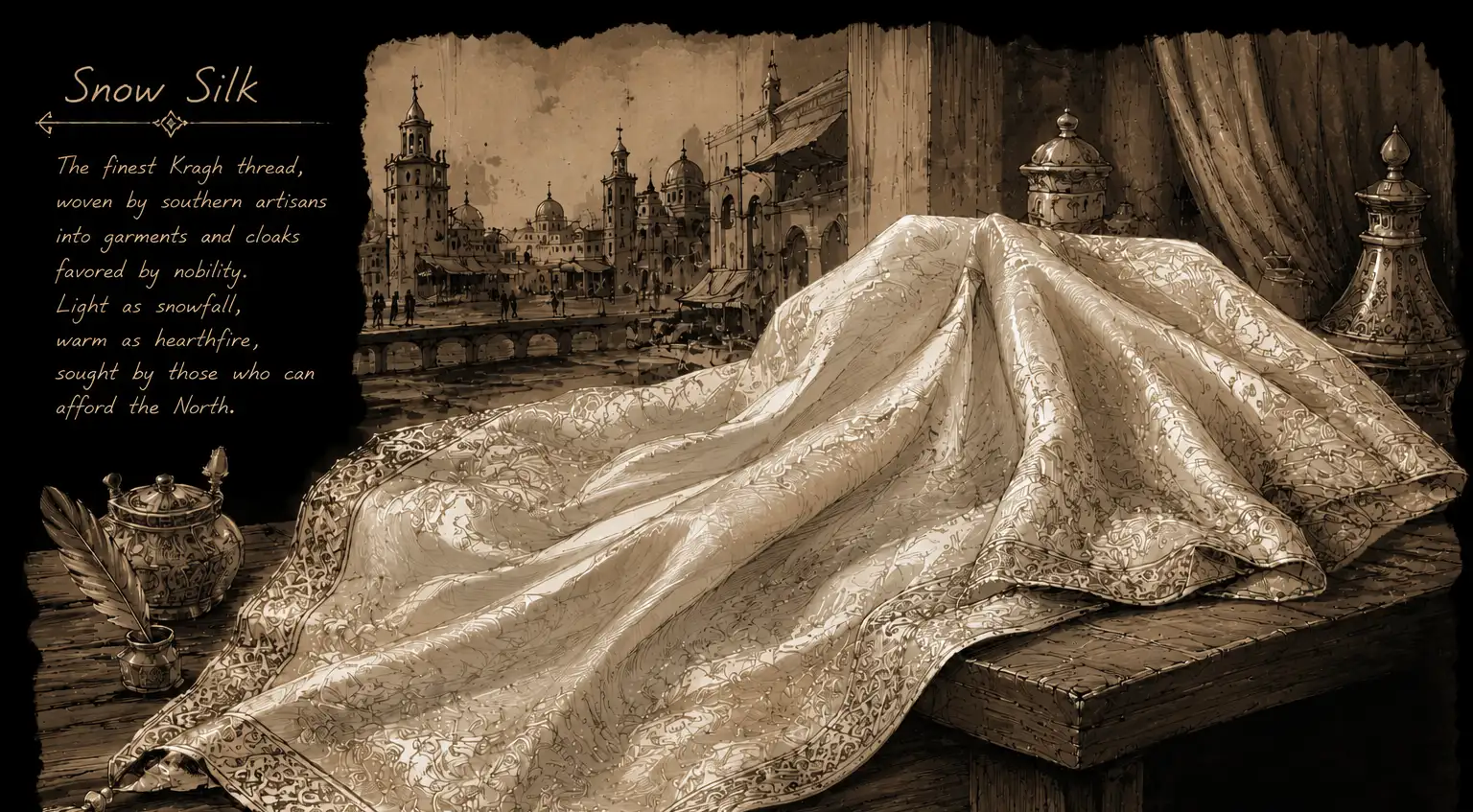
Snow Silk
Introduction
"Only an ignorant soul would call Kragh silk."
Across the southern kingdoms, few textiles command greater admiration than Snow Silk. Coveted by nobles and sought after by master weavers, its pale fibres have become synonymous with wealth and refinement. Yet beyond the markets and courts, where the glaciers of Ekiran bury the earth beneath eternal frost, no Glaciarc has ever spoken that name.
Among the tribes of the frozen north, it is known only as Kragh, a name that roughly translates as "ice root" in their native tongue. To outsiders, it is the source of a priceless fabric. To the Glaciarcs, it is something far greater: a gift of Haestrom, a cornerstone of survival, and a proof that even beneath lifeless ice, wonder endures.
At a Glance
Classification
Ancient subglacial tree
Native Region
Ekiran
Glaciarc Name
Kragh ("Ice Root")
Common Name
Snow Silk Tree
Primary Harvest
Inner fibres beneath the bark
Harvested By
Riftwalkers
Known Age
Commonly 300–600 years; exceptional specimens are believed to exceed a millennium
Cultivation
Never successfully cultivated outside Ekiran
Sacred to
The Ice Root
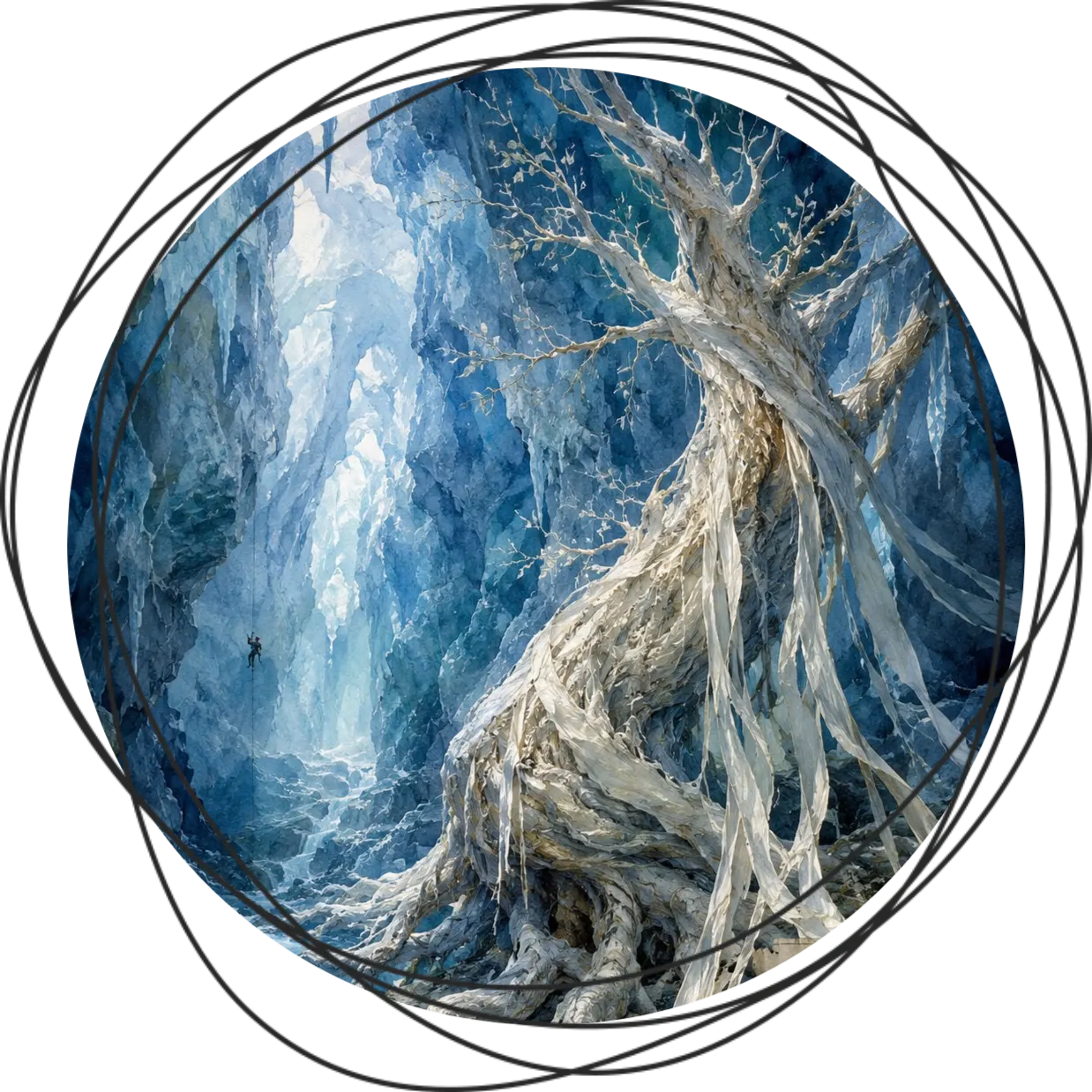
No tree should survive beneath a glacier. Deprived of sunlight and imprisoned beneath ice older than kingdoms, every law of nature insists Kragh ought not exist. Yet hidden within the glacial rifts of Ekiran, where meltwater carves silent caverns through stone and ice, ancient groves have survived since before the first Glaciarc clans carved their names into history.
Kragh is a slow-growing subglacial tree found nowhere else in Kena'an. Anchored to mineral-rich bedrock by an immense network of roots, it draws its nourishment from the frigid streams that wind unseen beneath the glaciers. Bereft of sunlight, its bark has never known color, growing instead in pale ivory layers that shimmer faintly beneath frost. Although its twisted trunk and sprawling roots appear almost lifeless, the tree is remarkably resilient, with many specimens believed to live for centuries.
It is neither the wood nor the roots that have earned Kragh its legendary reputation. It is the inner bark concealed beneath its frozen exterior. Fine, long fibres run the length of the trunk, stronger than flax and softer than wool, yet so delicate that a careless blade can ruin years of growth in a single stroke. Harvesting them demands exceptional precision. Thin vertical cuts must be made along the bark, allowing narrow strips to be peeled away without wounding the living heartwood beneath.
For centuries, southern botanists and wealthy patrons have sought to cultivate Kragh beyond Ekiran, tempted by the promise of its priceless fibres. Every attempt has ended the same way. Removed from the glacial rifts, the trees slowly wither, their pale bark darkening before the saplings perish within a matter of weeks.
The Harvest
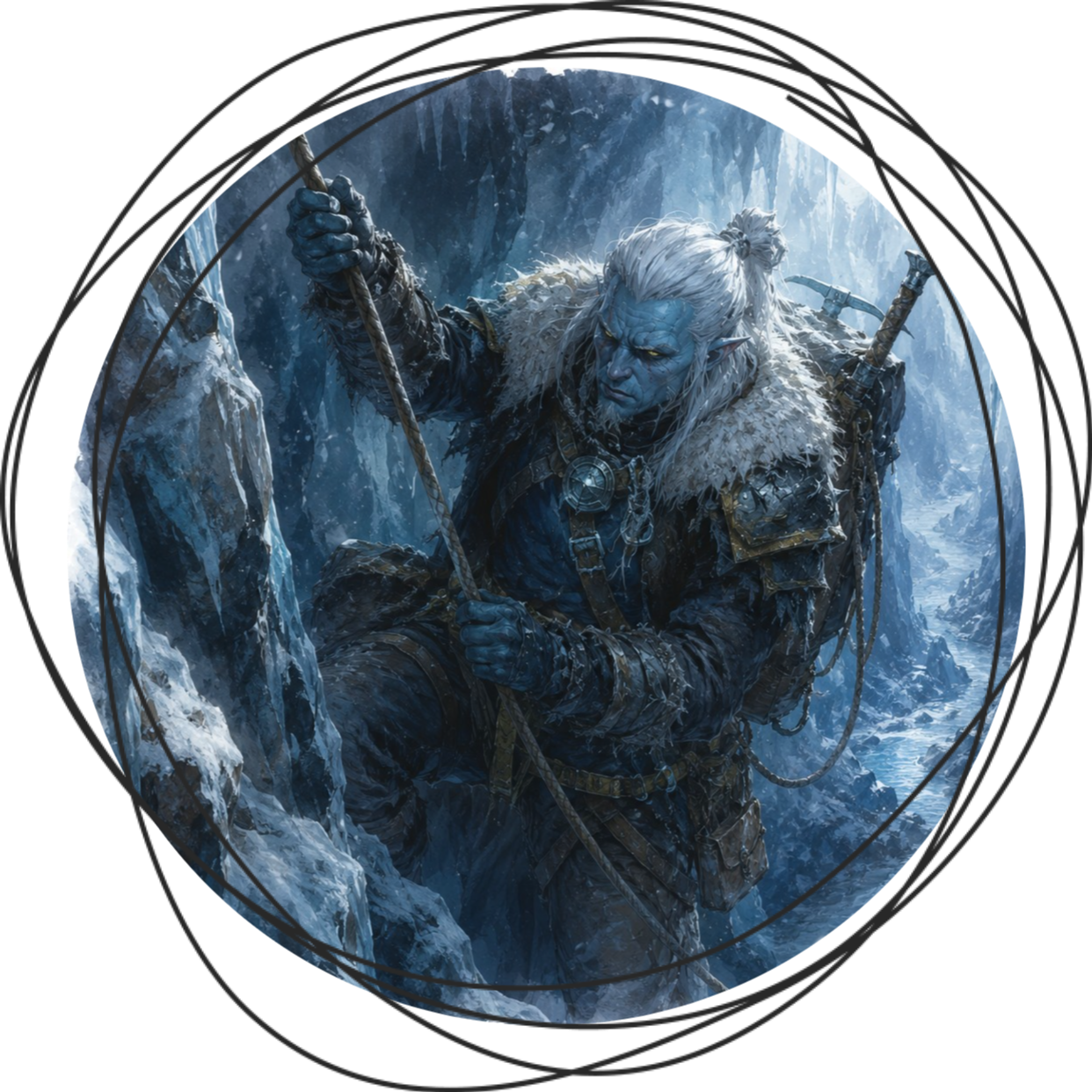
Few Glaciarcs will ever stand beneath the boughs of a living Kragh.
Fewer still will earn the right to harvest one.
That responsibility falls to the Riftwalkers, an ancient order found among every Glaciarc tribe. Chosen from an early age for their patience, and unwavering discipline, Riftwalkers devote years to mastering the frozen labyrinths beneath Ekiran's glaciers. They learn to read the language of the ice: the groan of shifting walls, the whisper of hidden meltwater, the fractures that promise either safe passage or certain death.
Haste has no place before a Kragh. When a grove is discovered, each tree is carefully inspected before a single blade is drawn. Only mature specimens are harvested, and even then, only narrow strips of the inner bark are taken. The work demands steady hands and intimate knowledge of the tree's growth, for a careless incision can condemn a specimen.
Every harvested tree bears the pale scars of generations of Riftwalkers, each mark a reminder that the Glaciarcs do not measure mastery by how much they take, but by how much they leave behind. To fell a Kragh for its fibres is considered both wasteful and sacrilegious, a rejection of the order imposed by Haestrom upon the world.
Only once the bark reaches the surface does its second life begin.
The Weave
Freshly harvested Kragh bears little resemblance to the luxurious fabric coveted beyond Ekiran. The bark leaves the glacial rifts as stiff, frost-hardened strips, with the pale fibres still bound within layers of wood. Only through weeks of patient preparation does the tree surrender its greatest treasure.
The harvested bark is first soaked mineral-rich waters drawn from thermal pools, softening the fibres without diminishing their remarkable strength. Skilled weavers then separate each strand by hand before combing, twisting, and spinning them into an exceptionally fine thread. No loom or tool has ever replaced the experienced hands of the Glaciarcs.
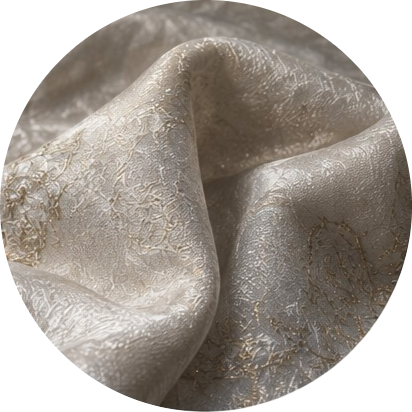
Once woven, the cloth possesses an almost impossible balance of qualities. It drapes with the elegance of the finest silk, rivals the warmth of heavy wool, and remains astonishingly light. Despite its delicate appearance, the finished cloth readily withstands years of hard use without losing its strength. Its pale ivory sheen catches even the faintest light, giving the impression that fresh snow has been woven into cloth.
Every bunch of finished thread is carefully wound around a carved spindle and sealed. Burned into the wood is the rune of the tribe that harvested the Kragh, while colored leather bindings record the season of the harvest and the grove from which it came. These markings are a record of stewardship, allowing every length of thread to be traced back to the Riftwalkers who first descended into the ice. To alter or remove them is considered a grave insult by the Glaciarcs, punishable by exile into the frozen wastes.
Among the tribes, Kragh is woven into every aspect of life. It binds spear shafts and sled runners, reinforces hunting nets, secures climbing lines for the Riftwalkers, and forms the ceremonial cords worn by the priests of Haestrom. Only the longest, most flawless fibres are reserved for banners, death shrouds and the mantles of chieftains.
Only a small portion of this thread ever leaves Ekiran. Entrusted to the White Tusk Clan, whose caravans brave the frozen passes to trade with the southern kingdoms, it is exchanged for iron, timber, medicines, and other necessities the glaciers cannot provide.
There, stripped of its history and sold beneath the far more elegant name Snow Silk, it becomes a luxury reserved only for the wealthiest among the nobility. Among southern guilds, a single mistake while cutting Snow Silk is said to cost more than a craftsman's yearly wages. Master tailors often spend days planning each pattern before allowing a blade to touch the cloth, and apprentices are rarely entrusted with the task. Few who admire its softness realise that every thread began as the bark of a tree that has never known the sun.
At a Glance
Material Type
Natural bast fibre
Trade Name
Snow Silk
Color
Pale ivory to silver-white
Texture
Softer than wool, finer than linen
Properties
Lightweight, exceptionally warm, remarkably durable
Common Uses (South)
Noble garments, ceremonial robes, winter cloaks
Common Uses (Glaciarcs)
Rope, bindings, hunting lines, ceremonial garments, burial shrouds
Trade Rights
Exclusively exported by the White Tusk Clan
Availability
Extremely rare
Typical Price
250gp per meter
More than Silk
To the southern kingdoms, Snow Silk is the pinnacle of luxury. It drapes the shoulders of kings, adorns the halls of noble houses, and changes hands for sums few common folk will ever possess. Merchants measure its worth in gold, tailors in craftsmanship, and collectors in rarity.
To the Glaciarcs, every thread is a testament to the Riftwalkers who descended into the frozen depths, and the weavers who preserved decades of patient growth. It is not a symbol of wealth, but of discipline, stewardship, and the unbroken order that has allowed their people to endure where few others could.
Perhaps that is why one calls it Snow Silk, while the other has never needed a name more fitting than Kragh.


Beautiful. I love how it is handcrafted and so much care is taken with every step of the process. I also really like that it has no meaning beyond wealth in the places that do not use its real name.
Explore Etrea | Summer Camp 2026
Thank you so much ^^
Summer Camp is here and so is My pledge! <3
Visit my world of Kena'an for tales of fantasy and magic! Or, if you fancy something darker, Crux Umbra awaits.