Nemethra
Introduction
“Good news: you made it to the Great City of Records! Bad news: they only built exits for people who belong here. Don’t worry though. We’ll improvise!"
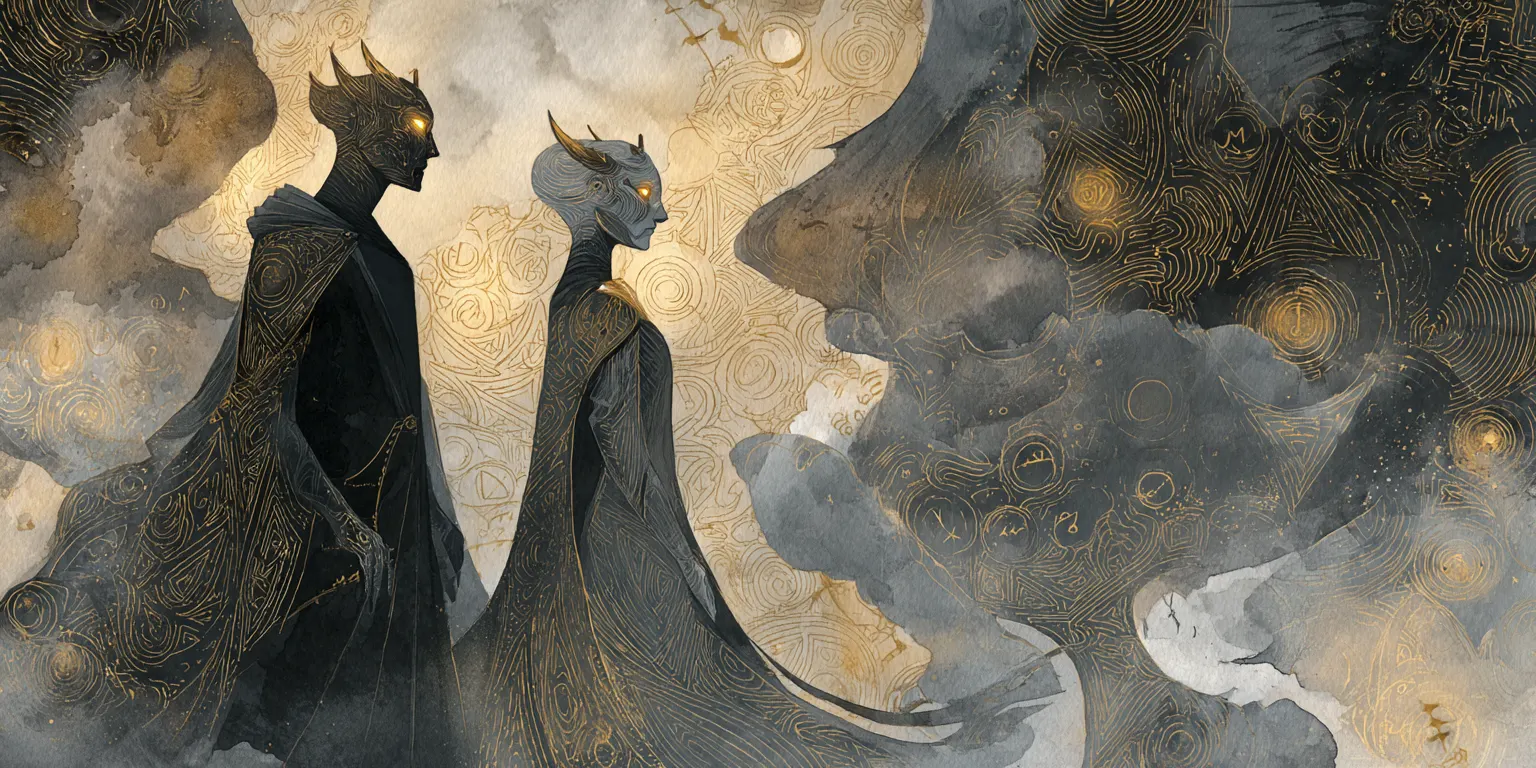
Némethra is not a city in any mortal sense; calling it architecture is like calling a god a candle flame. It is the place where death first learned what it was. The corridors were originally arteries for the cycle, branching from the heart of the Underworld and pulsing with the movement of souls; purpose as blood, memory as breath. After the Schism, when Astralyn and Noxaria split like a wound that refused to close, Némethra sealed itself. Not to shut the world out, but to keep the break from spreading.
To the living, it survives as a legend - stitched into creation myths and half-believed stories. To spirits, it appears dormant, an afterlife-engine frozen mid-process. Yet, the Mnémar insist it has never stopped fuctioning. The truth is cruelly simple: Némethra's purpose is paused, in the way a mechanism pauses when the next instruction hasn’t been written yet. It holds until the universe provides a new rule.
Crossing the Threshold
There is no gate, only the suggestion of one; a corridor of pale lanterns that appears out of nowhere before you, as if Némethra has decided to observe you. The floor resembles polished obsidian but instead of your body, it reflects your memories, flickering a heartbeat behind as though reconsidering their association with you. The air tastes metallic, like ink.
Even sealed, the city remains alive. The corridor is the gate; the moment of observation is the lock. Lanterns burn without heat. The halls hum with memory like a cluster of bees trapped in an empty cathedral. The stone remembers weight; walking feels like stepping into someone else’s footprints. Shadows gather in doorways with the patience of archivists. If you speak your name aloud, the echo travels farther than it should, as if looking for a place to file itself.
Should Némethra accept you, the corridor lengthens and the lanterns brighten with a sound like pages turning. If not, the lanterns extinguish one by one, returning you to where you began. This is not judgment. Rejection does not expel you; it simply means the city has not chosen a use for you yet. You are neither welcomed nor denied. You are being interpreted.
The Mnémar insist there is no other way in. Every entrance calculated, every approach authorized. According to them, the city is airtight, hermetically sealed from contamination and mortal improvisation. That is the official truth.
A traveler who stands in this corridor is not inside Némethra. They have simply been acknowledged.
What comes next depends on whether the city decides you are a question worth answering.
Founding Date
Era of Men
Alternative Name(s)
The Primordial Machine, CIty of Records
Type
Large city
Inhabitant Demonym
MnémariLocation under
Founded by
Ruled by
The Primal Curators
Faith/Religion
None/Banned
Read Next
Inside the Pause
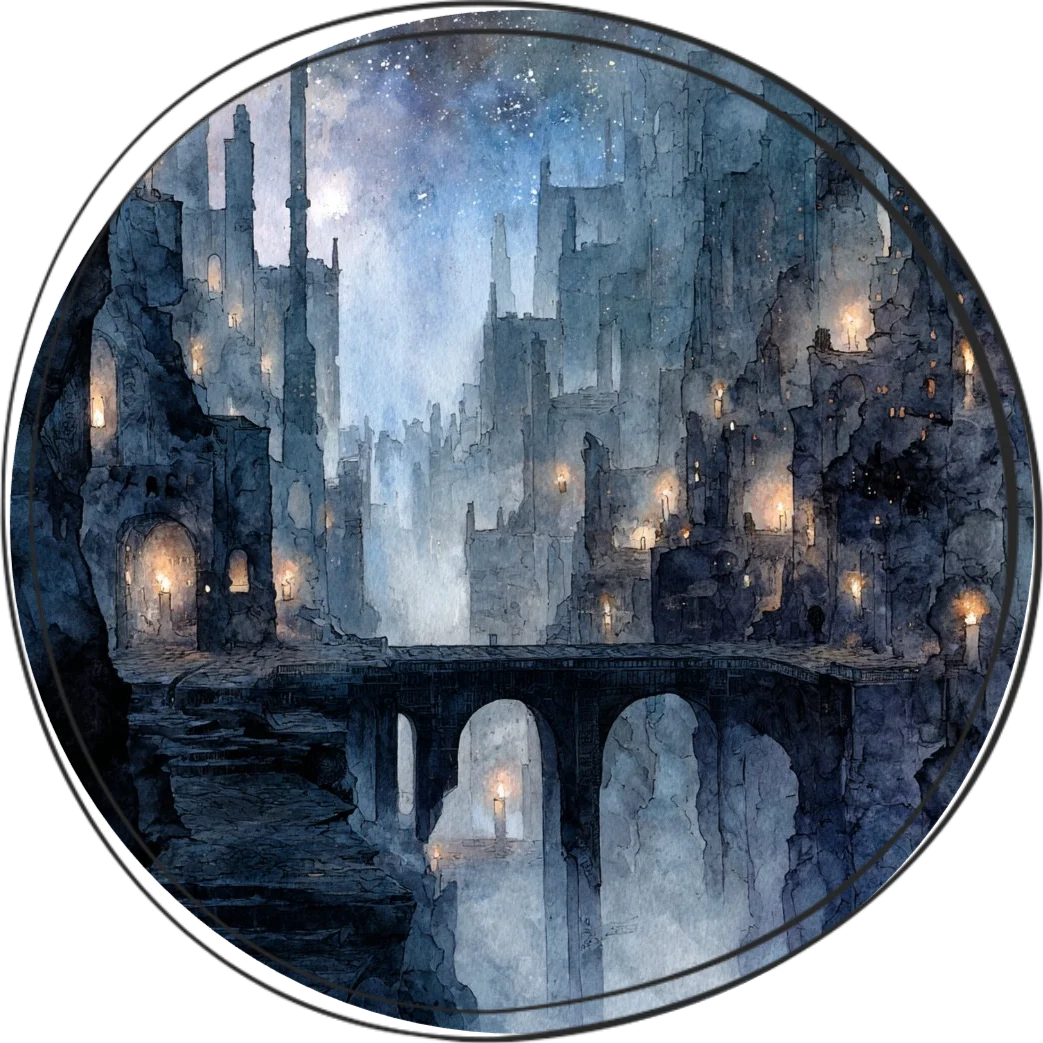
Beyond the threshold, Némethra hovers. The air thickens the way breath catches before a verdict. Stone underfoot begins to flatten into the suggestion of streets. Lanterns drift into orderly lines like they are mimicking streetlamps and how they are supposed to behave. Buildings do not stand so much as hold their shape, façades pulled out of memory or instruction rather than craft. Whatever this place was before the Schism, it is not that mechanism now; it remembers what it was built to do, but not the shape it once used to do it. It is a city-shaped hesitation.
The corridors widen into pathways that resemble avenues. Benches form along the walls; too narrow to sit on, as if the city only half-remembers the purpose of rest. Doorways imply addresses, though no numbers mark them. A plaza waits ahead, neither silent nor active, but in a state like a sentence missing its final punctuation.
“Ignorants will tell you this isn’t a city. They’re wrong. It’s a city the way a chrysalis is a butterfly: half-formed, unsettling, one accident away from screaming. Don’t get too comfortable; it might finish becoming something else while you’re still inside.”
The lanterns no longer flicker like inquiry; they shine like assessment. Their glow pools across the stones and outlines your silhouette, measuring the way your weight settles. The walls lean inward - not physically, but by attention. You feel the city tracing the edges of you: heartbeat, memory, intention.
A breeze moves through the street like someone turning a page. It smells like candlewax, dust, and the echo of closed rooms. Somewhere nearby, metal rings against stone, a sound like a filing cabinet closing itself. There are moments when you swear you hear footsteps, but the city isn’t that clumsy; the sound belongs to something that isn’t using feet.
Some kind of architecture to your left settles into focus: arched windows, tall and solemn, like an abandoned hall of records. To your right, an alcove deepens into a stairwell leading down; no labels, no markers, just the architectural equivalent of a question asked too quietly. Ahead, the plaza waits, suspended between purpose and memory.
The Mnémar call this region the Interregnum: the in-between. Not a district, not a neighborhood. Just the part of the purpose that failed to die.
A lantern overhead dims, then flares again; like a pulse restarting.
The plaza ahead stirs, as if aware that someone new is coming.
A City Without Gods
"I have two bickering goddesses yanking me back and forth like a wishbone for centuries. Here, their voices can’t reach. Honestly, it’s the closest I’ve come to breathing since I stopped needing lungs.”
The first thing a visitor notices once inside is the silence; not absence, but suppression. Sound exists, but anything divine is stripped of direction before it can land. Words shaped like prayers land nowhere. Invocations hang unfinished, not denied but unreceived. Even a god’s name feels hollow beyond the threshold, like language waiting for a listener that no longer exists here.
Some travelers learn this the hard way. They call on their patron out of habit and feel the answer die in their mouth. No echo. No presence. Not even rejection. Just quiet, like a candlewick held to flame that will not catch.
Even the stones of this city seems to agree. The walls do not hum with worship, or defiance, or rebellion. They simply do not acknowledge divinity at all, like the concept never quite made it into the architecture. Némethra is not faithless, but faith-impervious. A place where belief cannot alter reality, and reality will not bend for belief.
The Mnémar do not speak of it. When asked, they deflect with practiced neutrality; like clerks declining to answer a question that was never filed correctly. They claim gods cannot find purchase here. As though the city is coated in something that makes divinity slide off like oil on glass.
Further in, the quiet deepens. It presses at the base of the skull. It feels old, not like an afterthought, but like a boundary set when the world was still being scaffolded. Some travelers claim they can feel the line where the gods’ reach breaks, like stepping out of sunlight into a shadow with thoughts of its own. This is where things begin to settle around you. The place outsiders call a neutral port, a crossroads, a safe harbor. It is not sanctuary, but a spiritual blind spot carved into the map of existence. Gods cannot see here. Gods cannot shape here. Gods cannot touch here.
And inside that blind spot, something else is watching.
The Two Faces of Nemethra
The Port
Past the Interregnum, the suspended streets resolve and a grand plaza takes on shape and purpose. Lanterns warm. Doorways remember entrances. Suddenly, the world feels navigable, a place with routine instead of ritual. They call it simply the Port, a neutral crossroads where planes brush like planets in an eclipse. Travelers do not come here by choice alone; the city has to notice them.
There is food and drink available for travelers caught between worlds. Markets where goods are bartered for stories and memories - rarely for coin. A quiet hall where resurrection requests are negotiated like trade deals, with power borrowed by continuity, because the universe hates missing entries in a ledger. An inn with no sign, where the building decides who stays and who leaves.
The Experiment
Beneath the Port’s polite routine, something subtler moves. Streets that seem ordinary are arranged with intention; corners fall quiet in just the right places. Conversations echo a little too long, as if the walls are holding them in reserve. Choices made here feel heavier, as though the city itself is paying attention.
Mortality behaves differently in Némethra. Words carry weight without prayer to buoy them. Decisions fall harder; here a choice is not tallied for punishment or reward, it is recorded to see what a soul becomes without supervision. People grow hopeful or cruel or wiser in ways that surprise even themselves.
Truth is, somewhere past the plaza, a presence observes: patient, older than death, tasting every outcome like ink on the tongue.
The Archivist
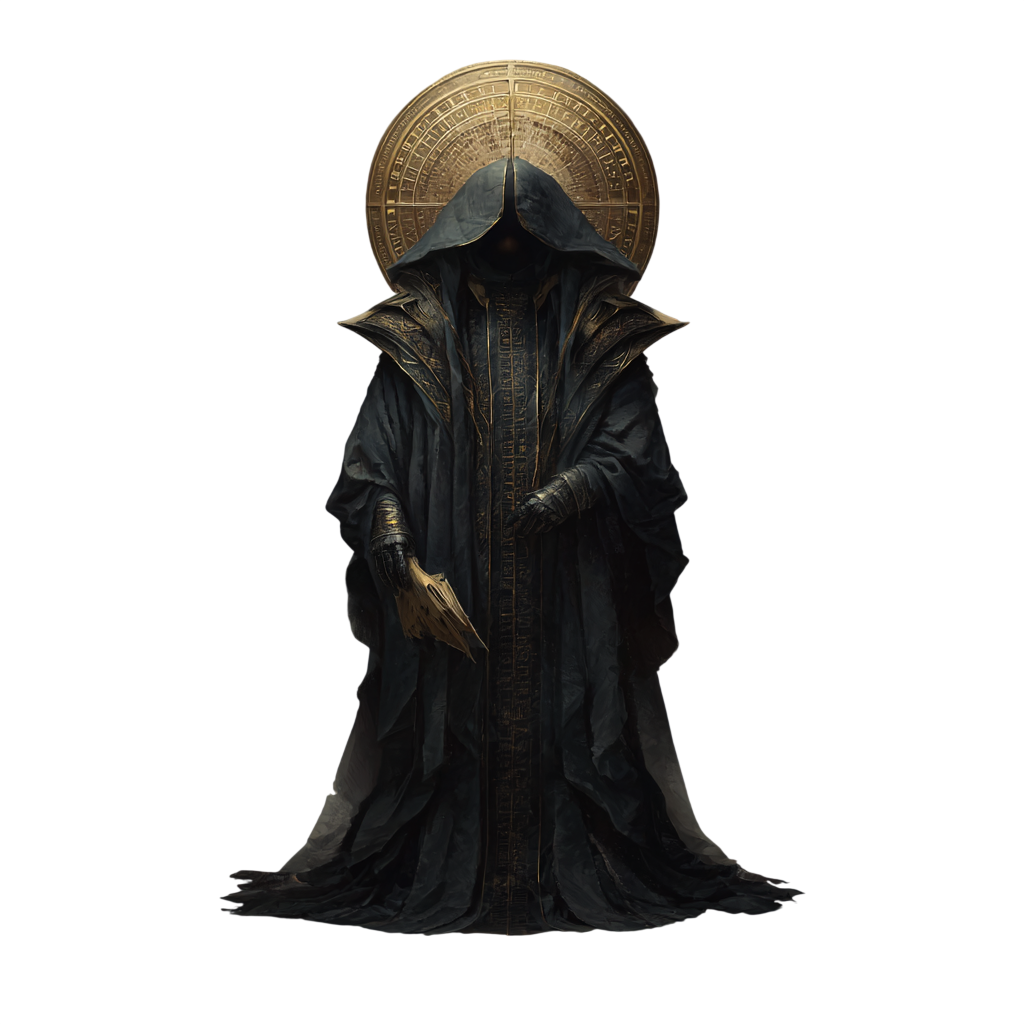
They say that the mind behind the city is the Archivist, and that they are watching.
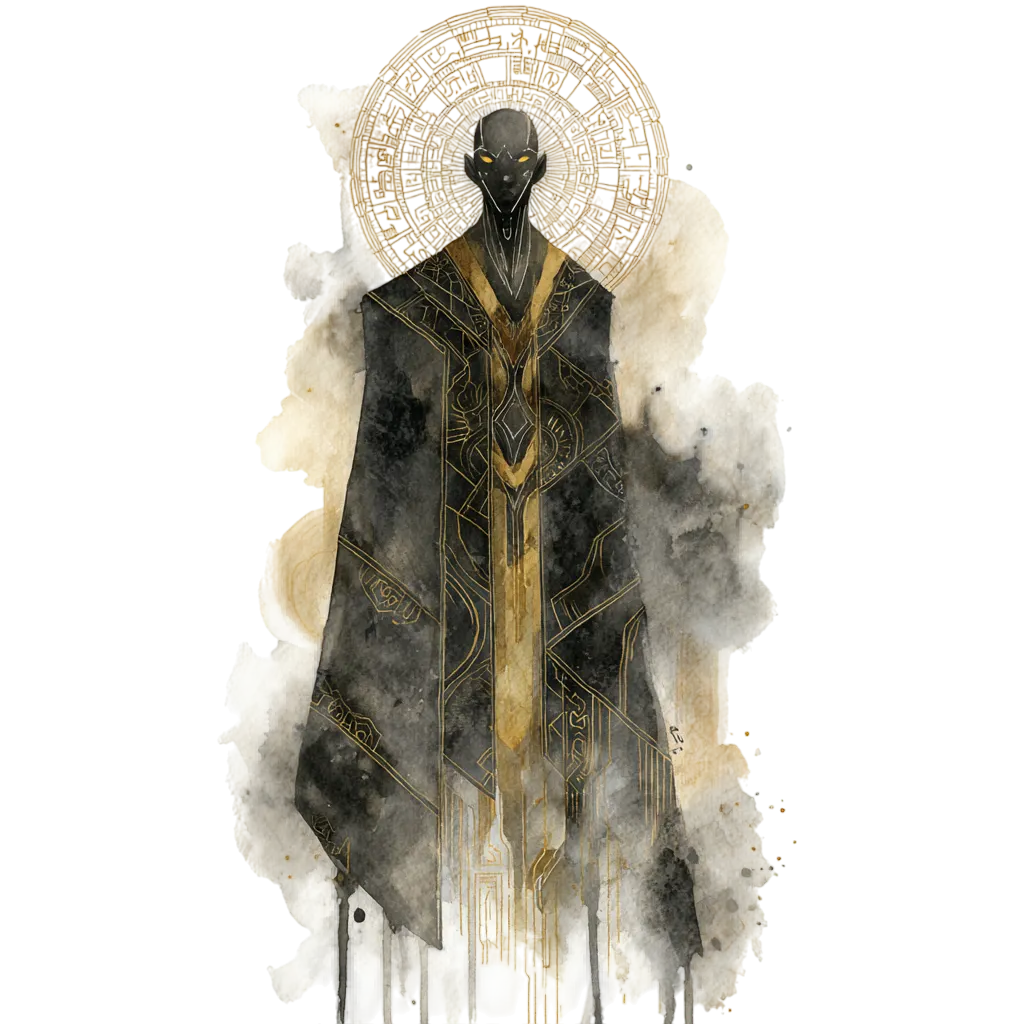
The Archivist does not rule this place. They maintain it: an adjustment rather than a command, a correction rather than a law. The Mnémar speak of them the way scribes speak of the blank page: with reverence, with caution, with the knowledge that everything begins there and everything can be rewritten.
No one agrees on their appearance. A silhouette made of dusk. A seam in reality where text breathes. A figure whose edges blur like half-erased ink. What all accounts share is the sensation: the sense of being understood before you speak.
The reason for the watching is simple, and brutal in its clarity. The Schism changed death and, as a result, the meaning of being a mortal soul changed with it. Yet the laws of the afterlife did not change to match. The Archivist is trying to understand that gap; to see what shape a soul takes when no god is guiding it, when no divine hand steadies the path, when the consequences of choice stand without appeal. They do not touch souls. They touch the rules around them. The experiment is not on people. It is on causality. This is why the Port is allowed to exist; not as sanctuary, but as evidence. A controlled silence where mortality reveals its true self, flaw by flaw, brilliance by brilliance.
Points of Interest
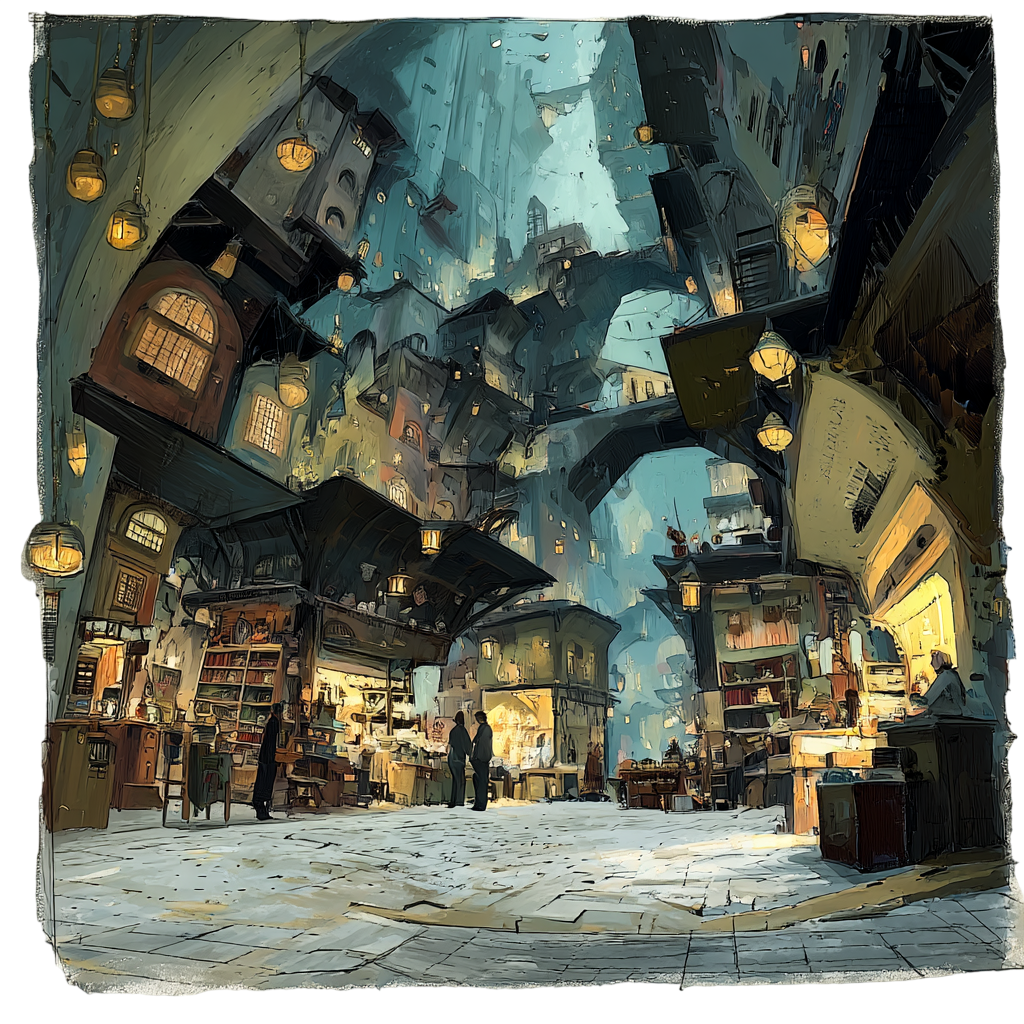
The main plaza of Némethra is a gathering point for the living, the dead, and the inconveniently undying. Everyone who crosses the Threshold is allowed here, not because entry is open, but because the city opened for them. No gate checks. No divine claims. No one asking who you belong to. The city lets you in because it wants to see what you do next.
The Market of Borrowed Things
The Market is where Némethra feels most alive. A crossroads of stalls arranged in no fixed pattern, shifting their angles like they’re trying on different versions of space. Mortals trade gear and rations. Spirits trade recollection. Planar travelers barter for direction the way others barter for bread.
There is no currency here that isn’t personal. A cloak is exchanged for the memory of the first time someone felt safe. A dagger is paid for with the confession of who it was meant for. A compass costs the regret you haven’t admitted out loud yet. What’s traded here doesn’t vanish. It enters the record, becoming part of whatever the Archivist is trying to understand.
Mortals walk away with tools. Spirits walk away with identity.
Neither leaves unchanged.
The Inn With No Sign
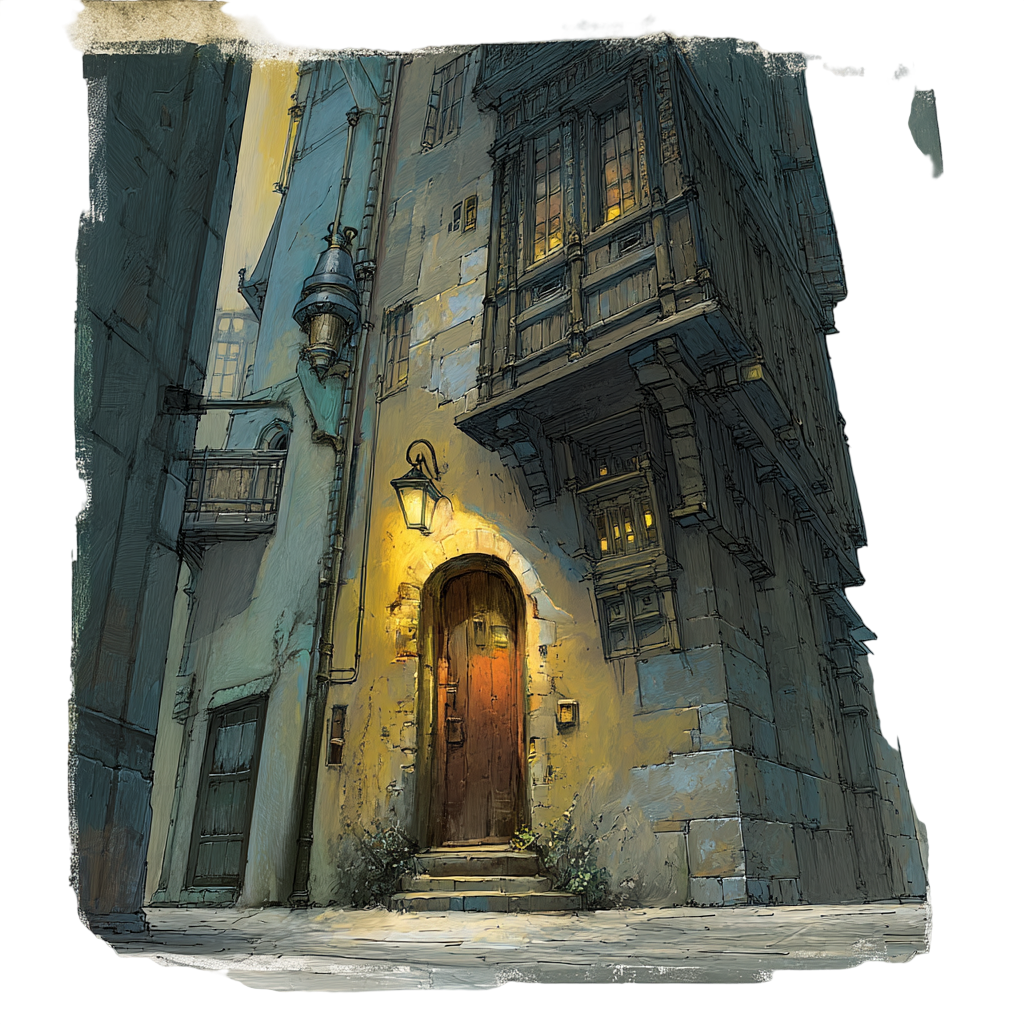
At the far edge of the plaza stands a doorway that may or may not exist, depending on whether the building has decided you are someone worth housing. When it appears, it looks ordinary: a wooden door, brass latch, light under the frame. But the moment you step inside, Némethra takes an interest. There is no innkeeper. There is only a ledger on a stand near the entrance and a quill that never dries.
Rooms arrange themselves according to need: warmth for the living, cold for the dead, silence for the grieving, gravity for the restless. Windows show places you have never been, and sometimes places you should never go back to.
Leaving is not guaranteed. Some doors open back to the plaza, while others open into another night entirely. A few refuse to open at all, like a page waiting for a sentence that hasn’t been written yet.
People sleep here because they must. Never because they trust it.
The Last Lantern Tavern
The tavern is older than the Port and stranger than the Market. It sits hunched beside the plaza like a memory that refuses to fade, run by souls who never moved on but never rotted into ghosts. They are what happens when death is processed incompletely: not horrifying, just unfinished.
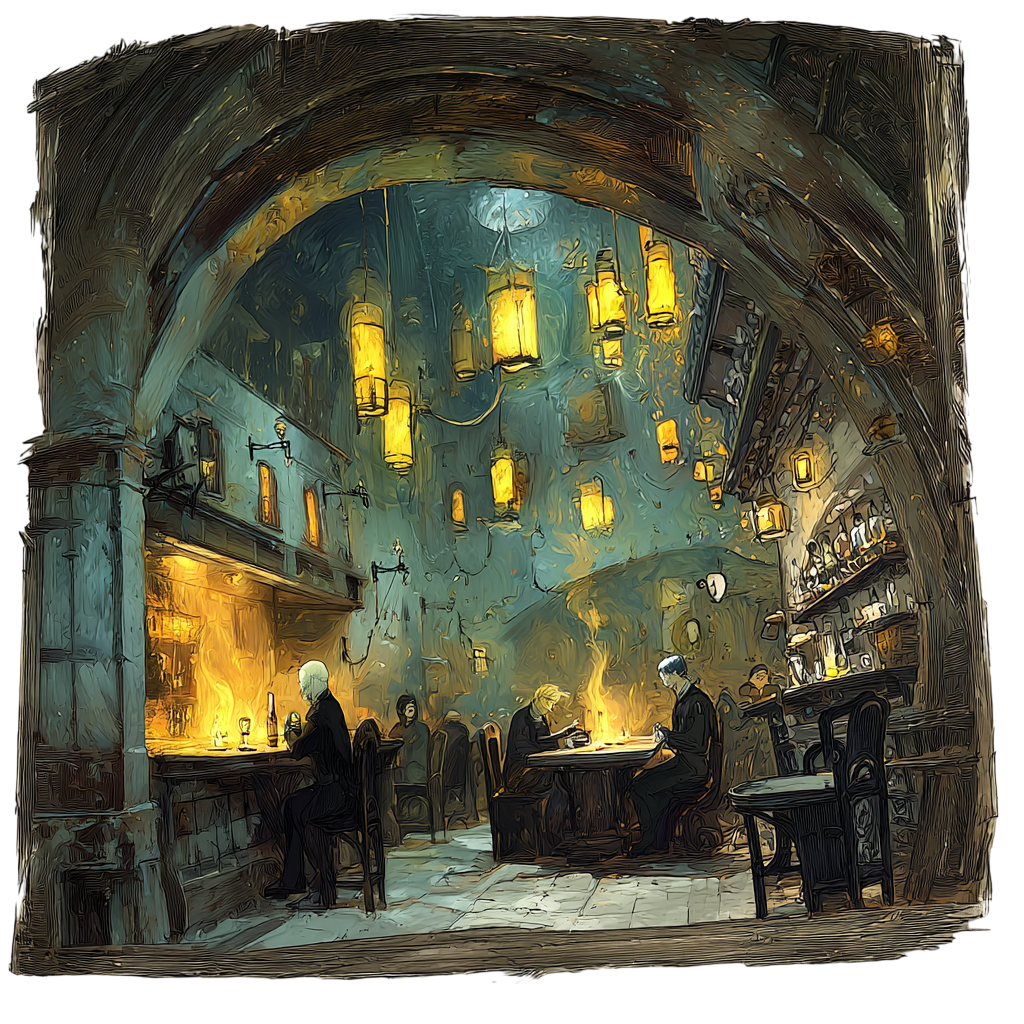
They pour drinks that mortals can taste and spirits can remember. They speak with voices that sound like breath exhaled through paper and they laugh like someone turning fragile pages.
Patrons include planar travelers, confused undead, mortals avoiding questions, and the occasional Mnémar observing the room like a ledger with legs. The tavern has no rules but one: music is allowed, prayer is not. Instruments thrive here; worship dies in the throat.
Some nights, the tavern is joyous.
Some nights, it feels like an autopsy on hope.
All nights, brutally honest.
Purpose of the Sealed City
Némethra remains sealed. Not as a barricade, but as a boundary. A line drawn around a problem the gods can no longer solve. The Schism shattered the afterlife into halves that do not speak, two systems of judgment that no longer agree on what a soul is supposed to become. Outside these walls, death continues out of habit. Inside them, it pauses long enough to think.
The Primal Curators stayed when everything else broke. They were made to catalogue, not to question, but the fracture forced them to evolve. Now they watch the living and the dead side by side, studying how choices form without divine instruction. They observe cruelty without punishment, kindness without reward, identity without destiny. They are measuring what mortality does when no one is steering it.
Not to repair the old afterlife.
But to rebuilt it.
"Némethra isn’t a shrine and it isn’t a prison; it’s a workshop locked from the inside. You can come and go as the city permits - unless you’re a deity, of course. What you leave behind is another story entirely, don't say I haven't warned you.
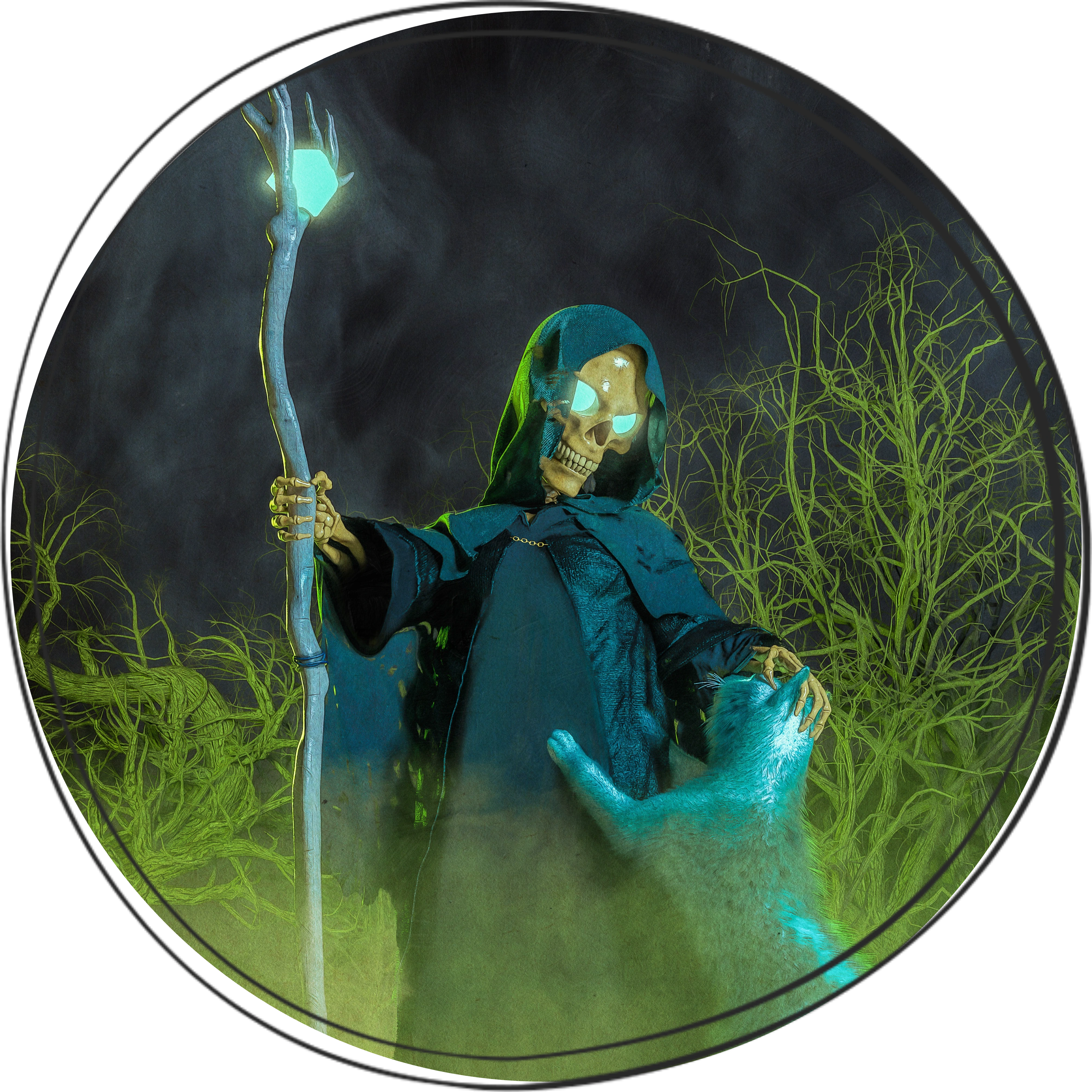
As for me? I’m only here because I’m the one who dragged you in when you wouldn’t stop poking thresholds you didn’t understand, and before you ask: no, I don’t pick my assignments; no, I don’t get hazard pay; and yes, I would much rather be left alone and be with my cat. But you wanted the City of Records, and I’m the guide, so here we are… stupid mortals, stupid seal, stupid job."




Fascinating read from start to finish!
Thank you so much ^^
Summer Camp is here and so is My pledge! <3
Visit my world of Kena'an for tales of fantasy and magic! Or, if you fancy something darker, Crux Umbra awaits.