
Zanzeeri
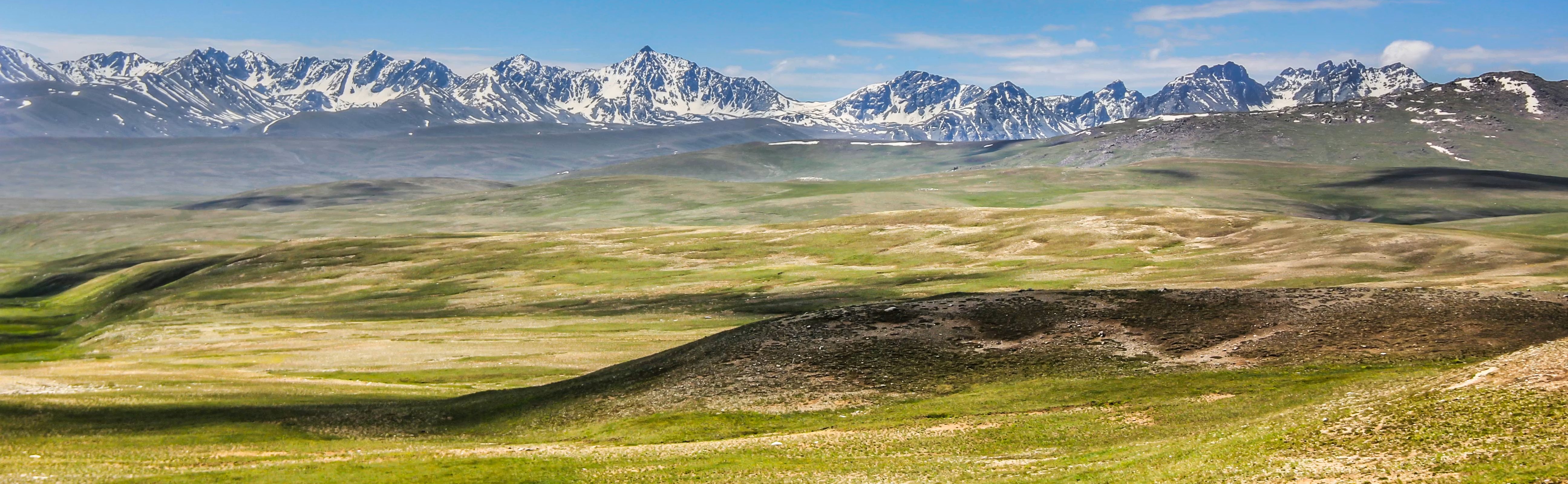
The Zanzeeri (Imperial Wythian: lit. "Person" or "People") are a loose affiliation of nomadic Elven clans which inhabit the bountiful Gimirrayan Steppe of northeastern Lagona. Predominantly pastoralists and herders, the Zanzeeri organize their lives around seasonal migration routes dictated by pasture availability, water access, and the movements of their herds. Though widely dispersed for most of the year, all Zanzeeri recognize a shared elven ancestry, language, and ritual tradition centered on the highland basin of Mosir-imi (Wythian: Mother Country), their sole permanent settlement.
Hair is worn long by all sexes and commonly braided or bound, both for practicality and symbolic display. Eye coloration is highly variable and frequently interpreted as indicative of temperament or aptitude. Permanent body modification is rare, though ritual burn-marks or scars may be borne by individuals who have sworn binding oaths related to herd stewardship or inter-clan mediation.
The Zanzeeri possess a rich tradition of textile art and embroidery, one of the oldest and most intricate in Lagona. Using dyes made from native Gimirrayan plants and herbs (common dyestuffs include indigo, madder, woad, saffron, and turmeric), Zanzeeri artisans embroider blankets, clothes, horse trappings, sheathes, pouches, and covers with vibrant and highly detailed motifs. Oftentimes, these motifs serve as visual records of lineage, migration routes, and herd associations, serving as a substitute for written language. Embroidery is taught to Zanzeeri children by elder members of their family or clan from a very young age, and demonstrating competence in the art is one of the main rites associated with the ascension to adulthood.
Metal is scarce and highly valued, reserved primarily for blades, fasteners, and ceremonial objects; most tools are constructed from wood, bone, horn, and stone.
The Pirajni occupies a central place in Zanzeeri pastoral life. Its strength and endurance make it indispensable for transporting shelters, stores, and infirm individuals during migration. Pirajni milk and fat are highly valued, and mature individuals are rarely slaughtered except in major communal rites. Calves are raised with intensive elven contact, producing animals noted for docility and strong social cohesion.
Large horned bovines provide bulk milk production, meat, and hides, while wool-bearing caprines supply fibers and act as early-warning animals due to their sensitivity to weather and predators. Steppe horses, kin to the horses of Wythe but long-haired and stocky, are used for riding, scouting, and rapid communication between dispersed households. Herd movements are tightly synchronized with seasonal plant growth and water availability. Overgrazing is mitigated through rotational use of pastures and enforced fallow periods encoded into ritual calendars.
Dietary staples include milk, fermented dairy products, rendered fat, dried meat, and blood drawn in controlled, non-lethal rituals. The Zanzeeri are also known to feed upon hand-picked berries and tubers they come across, though this is reportedly less common. Fermentation techniques vary by clan and season, producing a wide range of foods with differing textures and flavors. The consumption of fresh meat is infrequent and often ceremonial, while daily sustenance emphasizes renewable animal products. As with many aspects of Zanzeeri life, slaughter practices are formalized: animals selected for death are ritually acknowledged, and all usable materials are processed communally. Waste is considered both impractical and ritually disruptive.
The Zanzeeri maintain a strong oral tradition, with no known writing system. Specialized reciters known as Itayin (Wythian: Speakers or Listeners) preserve genealogies, mythologies, and migration histories through formalized ritual speech. For more information on Itayin, see 'Religion'.
The Itayin, the closest analogue among the Zanzeeri to a priest or shaman, serve as repositories of knowledge (see 'Language') as well as conflict mediators and interpreters of signs or messages from the land. Zanzeeri youth deemed suitable for the life of an Itayin are intensely trained by elder members of that order, often for decades on end. They are taught to identify subtle and easily-missed signs within their clan's migration routes: herd behavior, gradual shifts in prevailing winds, unusual animal migrations, or patterns in dreams or memory. When imbalance has arisen, it is the task of the Itayin to identify said imbalance and recommend corrective action.
Mosir-imi holds particular religious importance to the Zanzeeri. As the chief source of the river Narum (Wythian: lit. "White Water") and the meeting point of numerous migration circuits, it functions as the primary site for large-scale rites. While the details and frequency of such gatherings are unknown (the Zanzeeri do not follow the calendar of the Emperor or Maharaja, instead favoring their own secret reckoning), Khwarrakhi outriders claim that during an eclipse or on the eve of the solstice, it is possible to observe great throngs of elves, many thousands strong, processing along the banks of the Narum towards Mosir-imi with herds in tow.
Death occupies a modest place within Zanzeeri religious thought. It is the belief of the Zanzeeri that the soul returns to the land immediately after it leaves the body, leaving behind an empty vessel. When a member of the family or clan dies, the body is simply undressed and left uncovered in the grass. Exposure to wind, sun, carrion birds, and other scavengers is understood as the proper means by which the body is broken down and returned to the wider landscape. Through this process the physical form of the deceased is believed to pass back into soil, water, and living creatures, restoring what was once drawn from the land. Because dissolution (rather than preservation) is the intended outcome, funerary sites are seldom enclosed nor marked. The dead are remembered through genealogical recitation and the continued passage of herds and households along the paths they once traveled.
Communication between Zanzeeri and Giants appears to be strictly functional. The two peoples maintain a repertoire of recognized signals used to announce the approach of migrating herds or to indicate the intended direction of travel. These practices reduce the likelihood of sudden encounters between large animal groups, which could result in panic or trampling.
An account of one such meeting comes from the journal of famed Nahrsinensi river trader Durras al-Atalani, who described the encounter thusly:
Conflict between the two groups has occurred, particularly in times of drought when both Zanzeeri and Giant herds expand beyond their customary pastures. However, large-scale warfare is uncommon. The presumed logistical difficulty of maintaining prolonged hostilities while managing migrating herds tends to favor short confrontations followed by negotiated withdrawal.
When encounters do occur, they are usually confined to the opportunistic exchange of goods. The Qal provide grains, marsh-grown tubers, and tightly woven plant textiles resistant to moisture, while the Zanzeeri offer hides, fiber, and preserved animal products. Items are typically left, inspected, and reciprocated in turn, with little direct bargaining.
Characteristics & Culture
Appearance
The Zanzeeri retain the otherworldly and oft unsettling appearance and longevity characteristic of all elvenkind, though their physiques reflect adaptation to open terrain rather than the forested environments of their Eastwythian kin. Their tall, lightly built frames and elongated limbs lend them an appearance that many find subtly disquieting: movements are precise and economical, expressions often restrained, and their gaze unusually steady. Their skin is tawny and often weathered from decades (or centuries) spent under the hot Lagonan sun. Their facial features are angular, commonly marked by high cheekbones and deep-set eyes that mitigate glare.Hair is worn long by all sexes and commonly braided or bound, both for practicality and symbolic display. Eye coloration is highly variable and frequently interpreted as indicative of temperament or aptitude. Permanent body modification is rare, though ritual burn-marks or scars may be borne by individuals who have sworn binding oaths related to herd stewardship or inter-clan mediation.
Clothing & Material Culture
Zanzeeri material culture emphasizes portability, durability, and ease of repair. Most garments are produced from felted fibers, cured hides, and woven hair taken from herd animals, and are worn layered so as to allow for rapid adjustments to changing weather conditions. Traditional Zanzeeri tents or Haru (Wythian: lit. "Circle-Home") are large circular structures, designed to be collapsible and suitable for frequent relocation. Haru are built from lightweight wooden frames and layered coverings of hide or woven grass mats, and will typically serve as the primary dwelling for up to a dozen family members.The Zanzeeri possess a rich tradition of textile art and embroidery, one of the oldest and most intricate in Lagona. Using dyes made from native Gimirrayan plants and herbs (common dyestuffs include indigo, madder, woad, saffron, and turmeric), Zanzeeri artisans embroider blankets, clothes, horse trappings, sheathes, pouches, and covers with vibrant and highly detailed motifs. Oftentimes, these motifs serve as visual records of lineage, migration routes, and herd associations, serving as a substitute for written language. Embroidery is taught to Zanzeeri children by elder members of their family or clan from a very young age, and demonstrating competence in the art is one of the main rites associated with the ascension to adulthood.
Metal is scarce and highly valued, reserved primarily for blades, fasteners, and ceremonial objects; most tools are constructed from wood, bone, horn, and stone.
Diet & Pastoralism
Zanzeeri pastoralism is centered around the management of massive, diverse herds of thousands of individuals, deliberately structured to distribute grazing pressure. Each animal occupies a distinct functional and symbolic role within Zanzeeri society.The Pirajni occupies a central place in Zanzeeri pastoral life. Its strength and endurance make it indispensable for transporting shelters, stores, and infirm individuals during migration. Pirajni milk and fat are highly valued, and mature individuals are rarely slaughtered except in major communal rites. Calves are raised with intensive elven contact, producing animals noted for docility and strong social cohesion.
Large horned bovines provide bulk milk production, meat, and hides, while wool-bearing caprines supply fibers and act as early-warning animals due to their sensitivity to weather and predators. Steppe horses, kin to the horses of Wythe but long-haired and stocky, are used for riding, scouting, and rapid communication between dispersed households. Herd movements are tightly synchronized with seasonal plant growth and water availability. Overgrazing is mitigated through rotational use of pastures and enforced fallow periods encoded into ritual calendars.
Dietary staples include milk, fermented dairy products, rendered fat, dried meat, and blood drawn in controlled, non-lethal rituals. The Zanzeeri are also known to feed upon hand-picked berries and tubers they come across, though this is reportedly less common. Fermentation techniques vary by clan and season, producing a wide range of foods with differing textures and flavors. The consumption of fresh meat is infrequent and often ceremonial, while daily sustenance emphasizes renewable animal products. As with many aspects of Zanzeeri life, slaughter practices are formalized: animals selected for death are ritually acknowledged, and all usable materials are processed communally. Waste is considered both impractical and ritually disruptive.
Language
The Zanzeeri language is unique amongst the tongues of Lagona, bearing no similarities to the surrounding mannish tongues or even the language of the Giants. Some Imperial scholars believe the Zanzeeri tongue to be derived from the Sylvan language of the elves of Eastwythe, although this connection has been seldom-studied and is thus tenuous at best. The Zanzeeri language is notable for its dense morphology and semantic precision. Individual words are known to frequently encode direction, motion, and degrees of agency, sharply distinguishing between voluntary action, compelled movement, and events imposed by landscape or weather.The Zanzeeri maintain a strong oral tradition, with no known writing system. Specialized reciters known as Itayin (Wythian: Speakers or Listeners) preserve genealogies, mythologies, and migration histories through formalized ritual speech. For more information on Itayin, see 'Religion'.
Religion
The Zanzeeri religion is diffuse and inseparable from the daily subsistence of its people. Lacking a formal priesthood, fixed dogma, or centralized pantheon, faith is expressed through innumerable ritualized practices governing movement, management of the herd, and the proper use of land and water. The central assumption underlying Zanzeeri belief is that all living things, as well as the land itself, possess a spirit and some degree of agency or free will. Rivers, pastures, winds, and migratory corridors are understood to retain memory of repeated use. When approached with restraint and proper observance, these systems remain productive and stable; when misused or treated carelessly, they become unreliable or hostile. Religious conduct thus focuses on maintaining equilibrium between people, herds, and terrain. In support of this goal, ritual speech accompanies most major activities. Seasonal departures, calving periods, the drawing of blood from herd animals, and ritual slaughter are all marked by short formulaic recitations acknowledging the exchange taking place. These utterances are neither prayers nor supplications, but declarations of intent and responsibility. Their correct phrasing is considered important, though variation between clans is tolerated.The Itayin, the closest analogue among the Zanzeeri to a priest or shaman, serve as repositories of knowledge (see 'Language') as well as conflict mediators and interpreters of signs or messages from the land. Zanzeeri youth deemed suitable for the life of an Itayin are intensely trained by elder members of that order, often for decades on end. They are taught to identify subtle and easily-missed signs within their clan's migration routes: herd behavior, gradual shifts in prevailing winds, unusual animal migrations, or patterns in dreams or memory. When imbalance has arisen, it is the task of the Itayin to identify said imbalance and recommend corrective action.
Mosir-imi holds particular religious importance to the Zanzeeri. As the chief source of the river Narum (Wythian: lit. "White Water") and the meeting point of numerous migration circuits, it functions as the primary site for large-scale rites. While the details and frequency of such gatherings are unknown (the Zanzeeri do not follow the calendar of the Emperor or Maharaja, instead favoring their own secret reckoning), Khwarrakhi outriders claim that during an eclipse or on the eve of the solstice, it is possible to observe great throngs of elves, many thousands strong, processing along the banks of the Narum towards Mosir-imi with herds in tow.
Death occupies a modest place within Zanzeeri religious thought. It is the belief of the Zanzeeri that the soul returns to the land immediately after it leaves the body, leaving behind an empty vessel. When a member of the family or clan dies, the body is simply undressed and left uncovered in the grass. Exposure to wind, sun, carrion birds, and other scavengers is understood as the proper means by which the body is broken down and returned to the wider landscape. Through this process the physical form of the deceased is believed to pass back into soil, water, and living creatures, restoring what was once drawn from the land. Because dissolution (rather than preservation) is the intended outcome, funerary sites are seldom enclosed nor marked. The dead are remembered through genealogical recitation and the continued passage of herds and households along the paths they once traveled.
Relations
The Giants
The Zanzeeri share the northern margins of the Gimirrayan Steppe with the Giants, specifically the southern 'race' of Giants which inhabit the eastern margins of Wythe. Both societies organize themselves around seasonal herd movement and (presumably, as little is known of Giant customs) rotational use of pasturelands. As a result, the relationship between the two peoples has historically been defined by the careful coordination of movement across shared boundaries. Direct overlap is rare, as Giants typically range along the colder upland belts and northern grasslands beyond the principal Zanzeeri circuits. However, during certain seasonal transitions, particularly during late grazing periods when herds disperse widely in search of forage, the outermost routes of both peoples may converge. These moments of proximity have necessitated the development of long-standing customs governing passage and water access.Communication between Zanzeeri and Giants appears to be strictly functional. The two peoples maintain a repertoire of recognized signals used to announce the approach of migrating herds or to indicate the intended direction of travel. These practices reduce the likelihood of sudden encounters between large animal groups, which could result in panic or trampling.
An account of one such meeting comes from the journal of famed Nahrsinensi river trader Durras al-Atalani, who described the encounter thusly:
"We had departed from Nahrsin some three weeks prior when we first spotted the telltale dust cloud of a Giant horde, steadily approaching from the northeast. Being a seasoned merchant, I knew the Giants to be a friendly (if not dim-witted) race, and paid their approach no further mind. By nightfall they had arrived at the river bank, some twenty strong and shepherding a large herd of shaggy-haired bison. Some of the more superstitious crewmen rowed ashore with barrels of sweet Bergic wine, which they left at the outskirts of the Giant's camp as a gesture of goodwill. I chose to make our presence known with the lighting of a signal fire, as I wished to avoid being crushed should the great folk choose to ford the river in the night. We were awoken with a start the following morning by the arrival of a great number of Zanzeeri, driving a sizeable herd of their own cattle north. Fearing for our lives should a stampede break out, we doused our lights and cowered on the deck, covering ourselves with palm fronds to avoid being spotted. Much to my surprise, however, the air was quiet save for the braying of the livestock. Through a gap in the fronds I had draped over me, I witnessed an elf wordlessly raise a banner of sorts made from the hide of some great beast, pulled taut and affixed to a long branch. The elf waved it this way and that for a few moments before lowering it to the ground. In response, the largest of the giants (their Chief, perhaps) stepped forward and crossed his mighty forearms above his head, letting out a short bellowing cry before returning to his kin. Without another word, the elvenfolk began to make their way further east along the southern bank, allowing the Giants to ford the river where they had camped the night before. Never in all my years have I witnessed such a spectacle.
Conflict between the two groups has occurred, particularly in times of drought when both Zanzeeri and Giant herds expand beyond their customary pastures. However, large-scale warfare is uncommon. The presumed logistical difficulty of maintaining prolonged hostilities while managing migrating herds tends to favor short confrontations followed by negotiated withdrawal.
Lagonan Empire
Dauru
Ghatipithaki
Khwarrakh
The Qal
The eastern edge of the Gimirrayan Steppe transitions into the marshlands of the Shutallpa, homeland of the Qal. Contact between the two peoples is limited and occurs primarily along firm ground at the margins of the wetlands. The Zanzeeri do not take their herds into the deep marshes, as saturated ground and dense vegetation restrict movement, especially for larger animals like Pirajni. Seasonal routes therefore run parallel to the Shutallpa’s edge, producing only occasional points of intersection with Qalic territory.When encounters do occur, they are usually confined to the opportunistic exchange of goods. The Qal provide grains, marsh-grown tubers, and tightly woven plant textiles resistant to moisture, while the Zanzeeri offer hides, fiber, and preserved animal products. Items are typically left, inspected, and reciprocated in turn, with little direct bargaining.
Encompassed species
Related Organizations
Languages spoken
Related Locations