
Aravash
The Grain Mother
Plant with intention. Tend with patience. Harvest with gratitude. For the land remembers every hand that touches it, and repays in kind.
Aravash is the goddess of agriculture: fertile earth, the turning seasons, and the patient labor that transforms seed into sustenance. She is not a deity of wild nature - that's a domain that belongs to others - but of the cultivated land. The plowed field, the irrigated terrace, the orchard pruned with care, the granary filled against winter, all fall under her domain. She is the most widely worshipped deity among the common people of Largusian Empire, invoked at planting and harvest, at the baking of bread, at the first meal of the day, and at every table where food is shared.
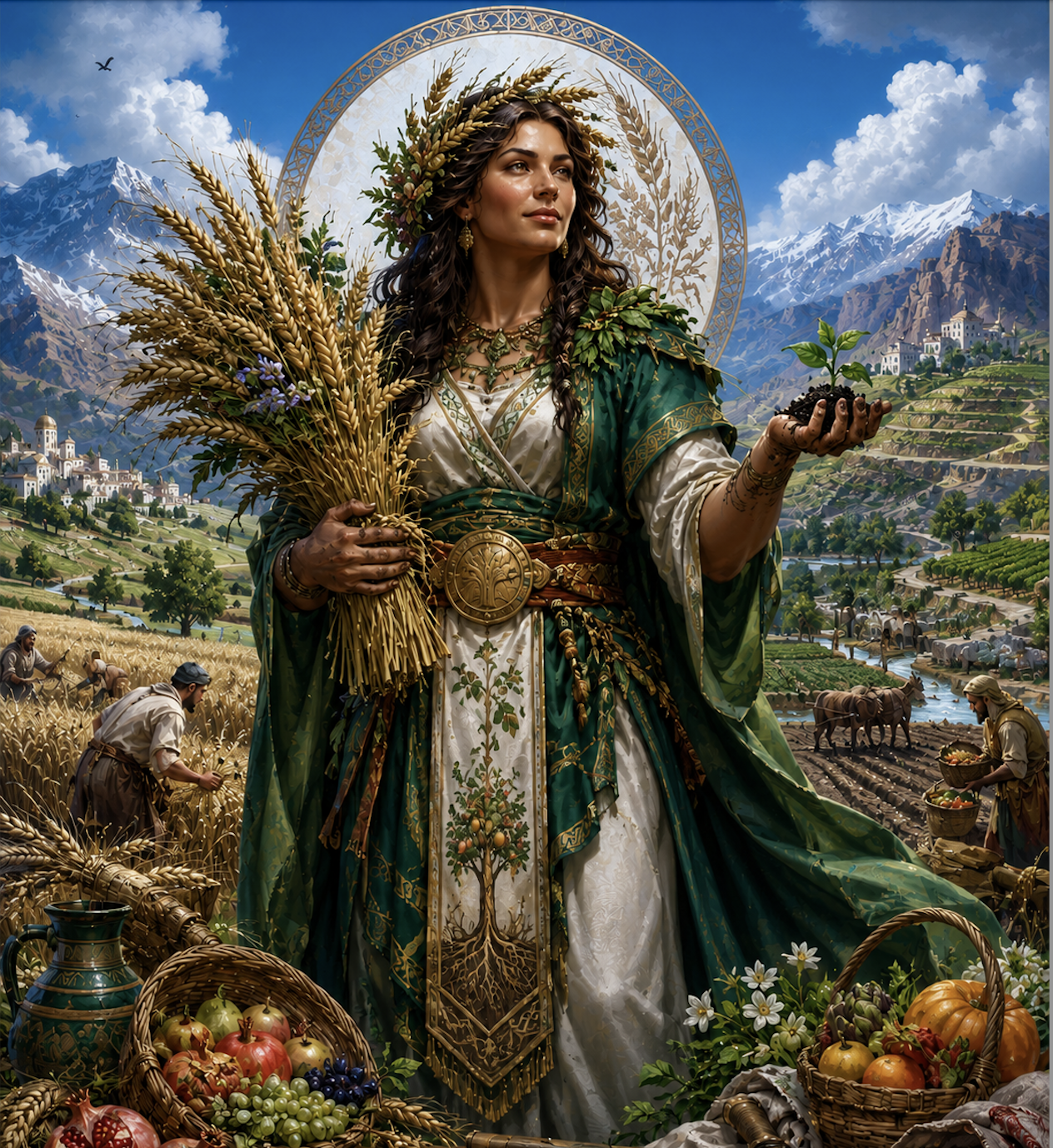
Aravash is depicted as a broad-shouldered woman of indeterminate age; sometimes young, sometimes old, but always strong, and with soil-darkened hands and wheat woven into her hair. In Oskesh she is shown with golden scales, reflecting the dragonborn population. In Ugria she wears a crown of pomegranates. In Gashmeridan her hair is braided with barley. Every province that grows food has its own version of her, and she accepts them all. She does not demand uniformity, only that the land be respected.
Her temperament is patient, generous, and slow to anger, but her wrath when roused is devastating. Famine, blight, and barren soil are understood as signs of her displeasure, and communities that abuse their land or waste their harvests are said to have turned her face away. Her priests teach that the relationship between farmer and field is a covenant, not a transaction, and that those who take without giving back will find the earth has a long memory.
Divine Domains
Nature, Life
Artifacts
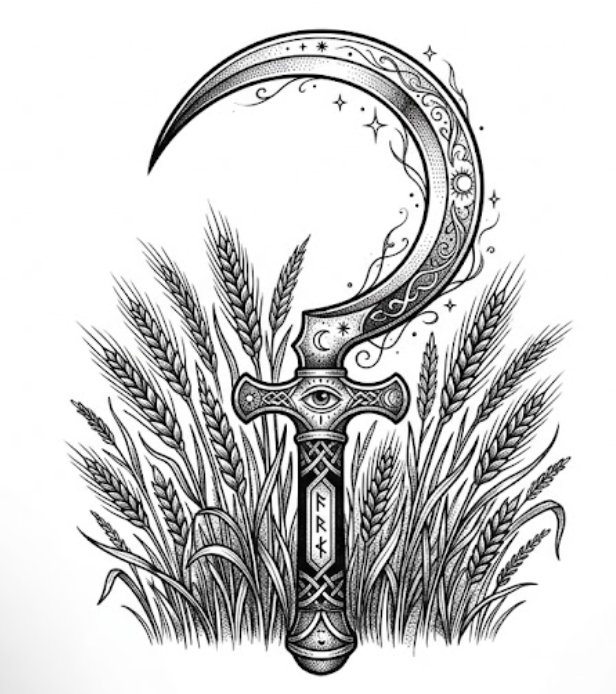
The Sickle of First Harvest, The Everflowing Seedpouch
Holy Books & Codes
The Tillers' Covenant
A practical and spiritual text combining agricultural wisdom with moral instruction. Its chapters correspond to the seasons, each containing guidance for the work of that period alongside meditations on the virtues that the season represents: patience in spring, diligence in summer, gratitude in autumn, and reflection in winter. The Covenant is meant to be lived more than read. Its passages are recited in the fields, not in temples, and its most devoted followers are farmers who may never have set foot in a formal place of worship.Tenets of Faith
Holidays
High Day: The Reaping Festival. 15th of Harvestide. The first day of the major harvest. Communities gather for communal reaping, followed by feasting, dancing, and offerings of the first sheaves to Aravash's shrines. No grain is sold until the Reaping Festival offerings are made.
Feast Week: The Covenant Days. 22nd through 28th of Frost Thaw. The week before spring planting begins. Fields are blessed, tools are consecrated, and communities share the last of the winter stores in a series of communal meals meant to ensure that no family enters planting season hungry.
Feast Week: The Covenant Days. 22nd through 28th of Frost Thaw. The week before spring planting begins. Fields are blessed, tools are consecrated, and communities share the last of the winter stores in a series of communal meals meant to ensure that no family enters planting season hungry.
Divine Classification
Greater Deity
Alignment
Neutral Good
Children

Comments