

Vampire
Overview
Vampires vary in both rarity and strength, with many varieties of vampire throughout the lands. While it's not incredibly uncommon to encounter a pack of Thralls, one rarely encounters a Vampire Lord and lives to tell about it.
Aside from Thralls, vampires are unlike mindless undead such as zombies or skeletons. These such vampires retain intelligence, personality, and ambition. While all exhibit supernatural physical capabilities, many also possess supernatural beauty, charm, or cunning in equal measure.
Stories of vampires exist across nearly every culture, though accounts often contradict on another. Some tales describe seductive nobles who prey upon isolated villages. Others tell of ancient tyrants ruling hidden kingdoms from the shadows. Still more speak of pale wanderers who survive centuries without aging. Because true vampires are extraordinarily rare, much of what is believed about them is difficult to verify. If you ask most, however, these are nothing but tales. It's unlikely many believe vampires truly exist today, if they ever did in the past.
Appearance
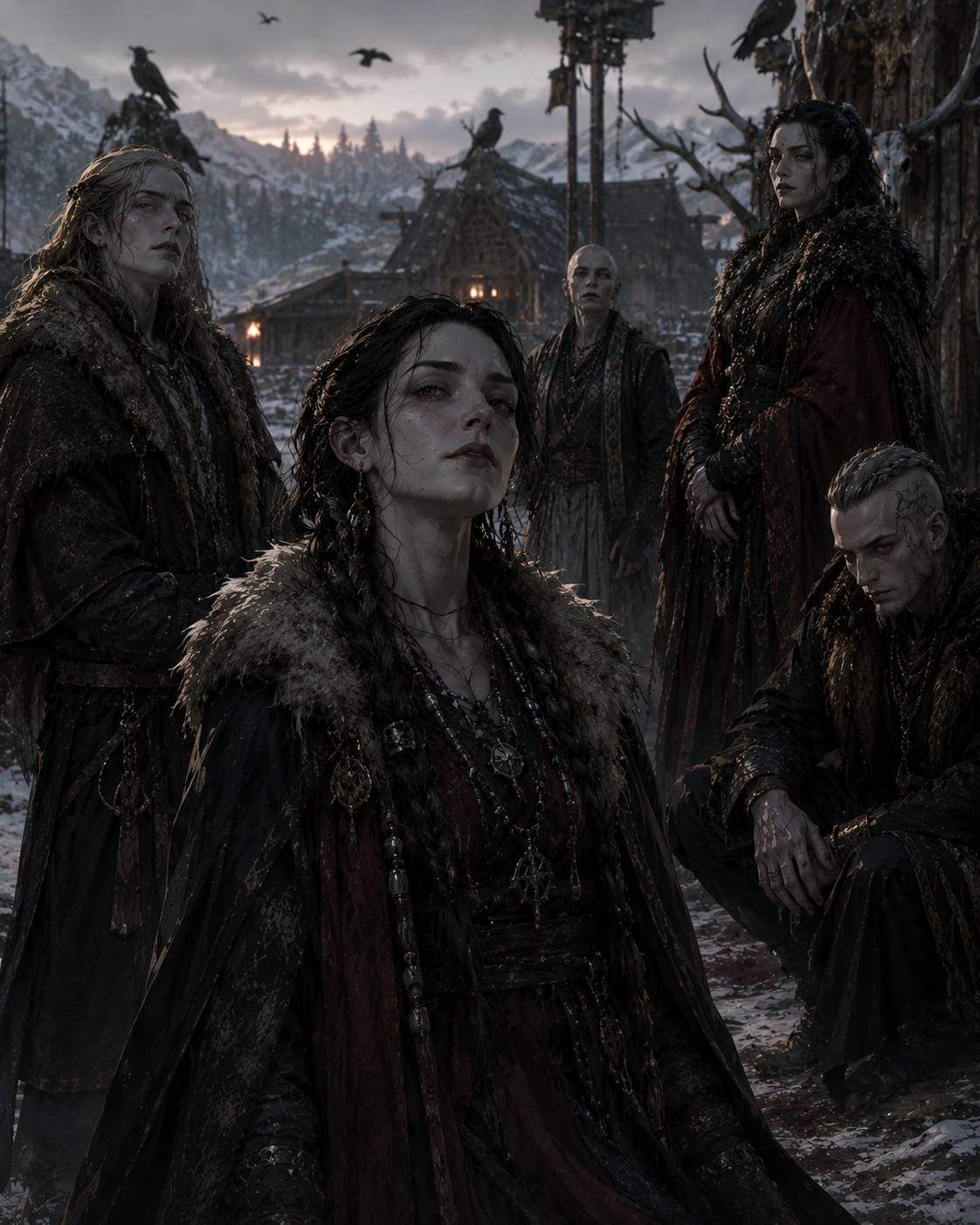
Most vampires outwardly resemble the mortals they once were, with slight variations. Many appear unnaturally beautiful or striking, though this is not a universal trait. Most often, their flesh appears paler than is common, with intense eyes and an unsettling presence, even when they are perfectly plesant and friendly. Older vampires frequently develop subtle traits reflecting their nature, feeding habits, or supernatural power.
Hunger
All vampires possess an unnatural and insatiable hunger. Blood is most commonly associated with this hunger, though scholars disagree on whether blood itself is the true source of the vampire's sustenance. Many legends claim vampires feed not merely upon flesh and blood, but upon life itself.
Society
Vampires are believed to exist upon a bloodline hierarchy, with older members of the bloodline being stronger in power, passing on their curse and creating new members of the bloodline. Some operate alone. Others gather servants and followers, both mortal and lesser undead alike beneath them. Ancient tales describe powerful Vampire Lords whose influence stretched across entire regions, though the truth of such stories remains uncertain.
Weaknesses
Many weaknesses have been attributed to vampires throughout history. Common claims include:
- Fear of sunlight
- Aversion to running water
- Inability to enter a home uninvited
- Vulnerability to fire
- Killed only be decapitation
- Fear of holy symbols
The reliability of these claims remains debated and many vampire hunters have died relying upon common folklore.
Destruction
One fact appears consistently throughout nearly every account: vampires are extraordinarily difficult to destroy permanently. Numerous tales describe vampires returning again and again, even after their apparent death. As a result, experienced hunters rarely assume a vampire is truly slain without overwhelming evidence. Some claim a vampire is not truly dead until decapitated. Others claim the body must be burned. Still more claim throwing the unmoving body into a river will do the trick, or stabbing it through the heart with a simple wooden stake. Others claim the stake must be made from the creature's coffin or that a holy symbol must be embedded into the creature's flesh.
Classification
Though terminology varies by region, most scholars recognize several broad categories of vampire:
- Thralls
- Fledglings
- Vampires
- Elder Vampires
- Vampire Lords
The distinctions between these groups are often poorly understood by outsiders, though typically the older and stronger the vampire is, the higher you'd see it on this scale. Many of the most powerful vampires are believed to have survived for centuries or even millennia.

Comments