

Sidh
The Leaf Elves, the Sun Elves
When an empire crumbles, it usually happens from the inside... and slowly
"I mean... i heard the stories. How they... kinda are the lords of the jungle somehow. I just imagined them... you know... different. These... wildlings greeted us clad in nothing but loincloth, even the females. I could see their... you know"
Sulacio made a gesture as if he was holding two heavy bags in front of his chest, bouncing them up and down.
"I mean... don't get me wrong, their ironwood blades are likely sharper than my metal one, but i thought I see some wise ancients in elaborate garment. Some signs of former greatness. These... they are better barbarians...."
"Patience. If you look closely i am a barbarian too, remember that, albeit one who deals with outsiders and dresses the part. These Sidh have likely never seen a human in their life. Also... this close to the treetops you should prefer light garment too, or risk a heat stroke. And i assure you, once we see their Aori-Okuna or Qaytan a few levels down, you will see more than enough elaborate garb on one person alone. Just don't expect it to be made of silk or something. And they are not MY Lords."
"they are not?"
"I am a Norn, but not one of what they call Norn. There are few Norn tribes left in the Eternal forests, and we mostly live in the outer regions, close to where your kin exists. But we exist. They are NOT my lords. "

Naming Traditions
Feminine names
Sidh female names always contain a Q consonant and the vocal a.
Sometimes, to enhance the name, the parents also extend it by one, or maximally up to two, additional adjectives or comparisons (-ra,-re,-ri,-ma,-me,-mi). In case the name root does not contain Q or a, the missing letter is added in the extension, where the female forms are: -ra, -raq , -rae, -rea, -ria, -reqa, -riqa). Sidh female names almost never contain a vocal U.
The full female name is the given name, followed by urqa ( daughter of ) and then the name of the father or mother (see: Family names).
Example Names:
Ae(-raq, -riqa), Ama(-raq, -riqa) , Aqqa(-ma, -ra,-re), Aqu(-ra, ri, -ma, -me), Anqa(-ma,-me,-ra,-re) , Anqe(-ra,-re,-ma), Asqa(-ra,-re), Asqe (-ra,-re), Esqa(-ra,-re), Qara(-ma,-me,-mi) , Qata(-ma,-me,-ra,-re,-ri), Qama(-ra, re, -ri), Qamma(-re, -ri), Qo(-ra,-rae,-riqa), Qorra (-ma,-me), O(-raq, -riqa),Tasqa(-ra, -ma), Isqa(-ra,-ri), Raqa(-ra, -re, -ri).Full female name examples:
Qorima, daughter of Tonraq (father), of the Otuquaheli people (tribe): Quorima urqa Tonraq Otuquaheli-uru or tonguetwisters like: Raqari, daughter of Qatari (mother), of the Qarutaq people (tribe): Raqari urqa Qatari Qarutaq-uruMasculine names
Just like Sidh female names, Sidh male names have to contain a q somewhere, yet usually it is found at the end, giving norn male names a somewhat harder sound. The mandatory vocal A in female names may be replaced by the vocal O or E. Norn male names only (if ever) have one extension at most.
Common male name Extensions are: -raq, -taq, -riq, -tiq, -req, -teq, -roq, -toq, -roaq, (speak: row-ak), -toaq (speak: tow-ak) -roqa, -toqa, -ruq, -tuq, - ruaq (speak: roo-ak), -tuaq (speak: too-ak), -ruqa and -tuqa.
The full male name is the given name, followed by urqu ( son of ) and then the name of the father or mother (see: Family names).
Example Names:
Aqqo, Annaq, An (-raq, -req, -roq, -raaq, -roaq, -ruaq), Cua(-raq, -roq), Hanaq, Hardaq, Haro (-taq), Ka(-roq, -ruq, -taq, -toq, -roaq), Ma(-roq, -ruq, -taq, -toq, -roaq) , Ronqa, Razaq, Roa(-taq, -toq, -raq, -roq), Ro(q)qa (speak Rokqa), Taq,Tarq,Tareq, Tonraq, Torraq, Tarroq, RotaqFull male name examples:
Konraq, son of Anriqa (mother), of the Anduaq people (tribe): Konraq urqu Anriqa Anduaq-uru Ronqa son of Ruatoq (father), of the Karutaq people (tribe): Ronqa urqu Ruatoq Karutaq-uruFamily names
Sidh names just like Norn Names are threefold. There is no concept of family names as in many human civilizations, where human citizens are named according to the day jobs they perform, the day jobs their ancestors once performed, or other features.
Sidh are named according to a trait wished upon them by their parents, then followed by urqu ( son of ) or urqa ( daughter of ) and then the first name of the respective father or mother. There is no preference about which parent is chosen, so Sidh actually have two full names, by which they can be addressed, leaving it up to the one addressing them to chose.
When formally addressed, the construct is always followed by the name of the tribe and then -uru, which in the language of the Sidh means tribe, or people.
Culture
Culture and cultural heritage
Sidh (speak: Shee) are the most elusive of all Elves. and also the
which displays the least diversity in culture compared to the other two.
Where the Eadun come from a plethora of different lifestyles and cultures, not less diversified than the Humans with whom they have arranged, and where there are visible differences between a Norn of the West and one of the Empire Empire, being a Sidh basically means you either live in one of the two huge worldtree jungles (the Eternal Forests or the Evergreen Peninsula, or you are part of a solitary Sidh clan hidden in the wilderness, which are not less elusive than the Uppergelf.
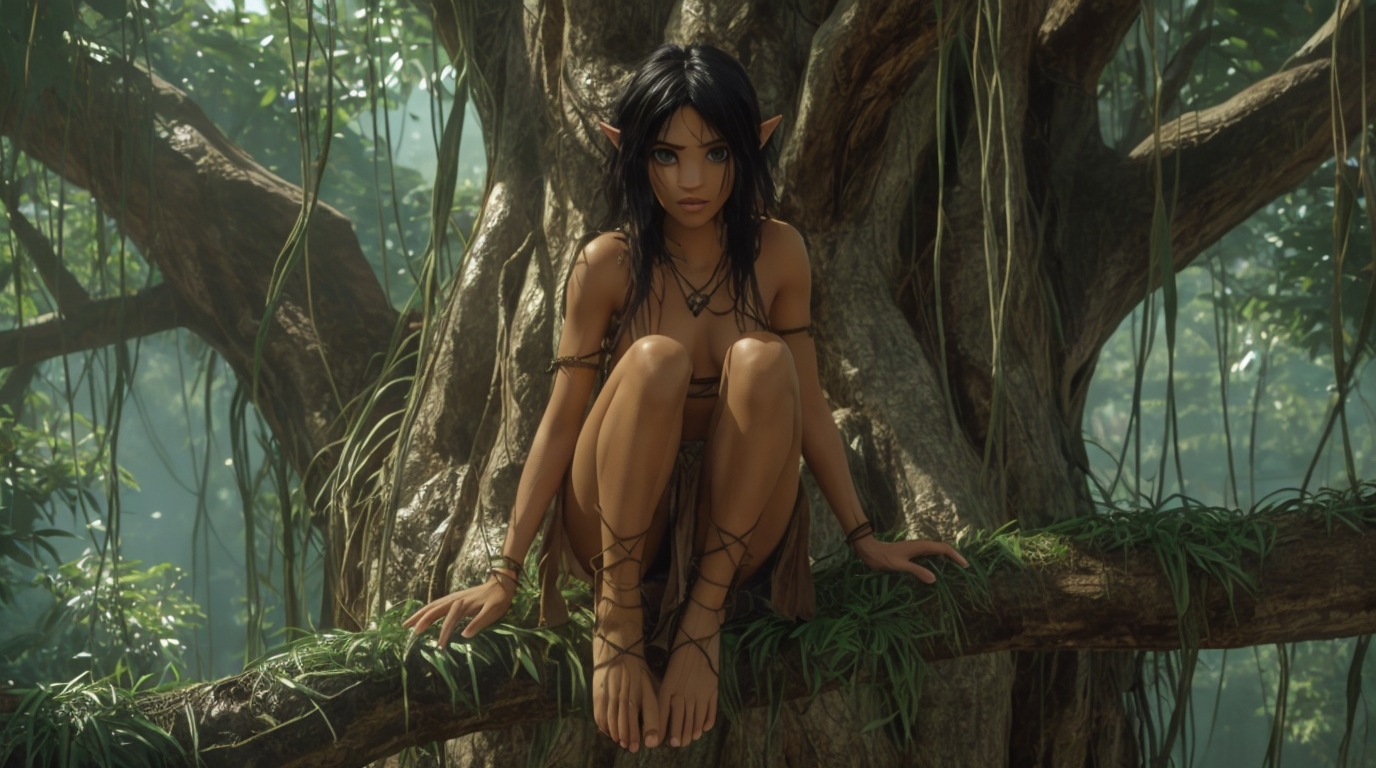
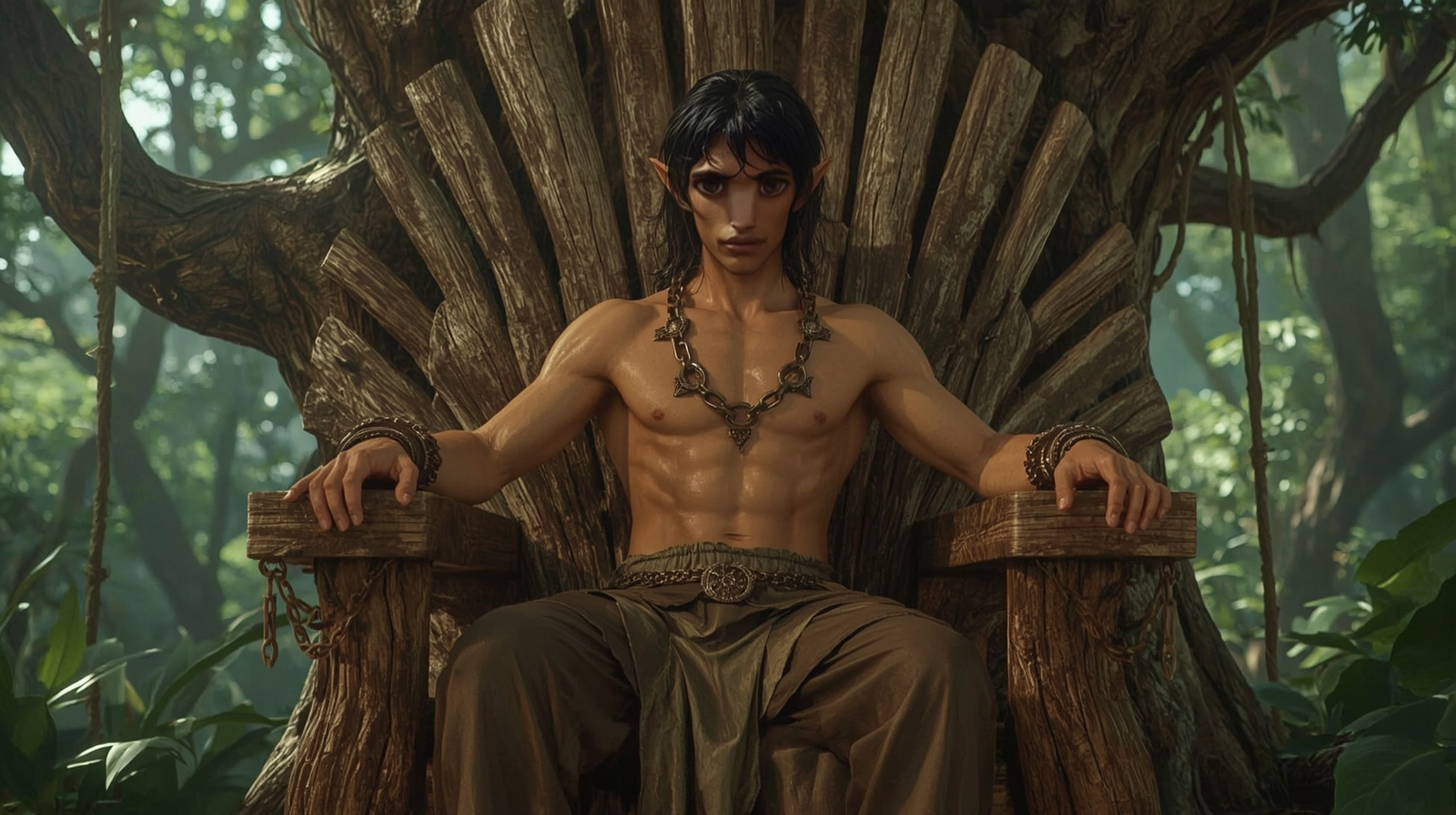 The Qaytan ((speak: QUAY-TAN), which is the Onari (Elvish) word for Chosen or Leader, is the elected leader of a Sidh tribe much like a chieftain. Some human historians have hinted at the similarity in the words even and tried to come up with an explanation, however most consider it a concidence. The Qaytan is elected for life, and every Sidh Elf of a tribe who has passed his coming of age challenge has the right to vote.
The Qaytan must speak justice and create law. He (or she) sometimes does so in a council with four representatives, each sent by one of the four upper castes: the Provider, the Master Artisan, the Shaman and the Lorekeeper. It is up to the Qaytan to make decisions which affect the whole tribe, but each of the four castes will usually be heard, while the Qaytan takes the role of the moderator , balancing the interests of the different castes.
For this reason, if he had been a representative of one of the four castes before being elected to become Qaytan, he must abdicate that role and a new representative must be chosen.
The affiliation of a Sidh with a caste is not hereditary. No Sidh is born into a caste. Instead, much like the Norn do it, aspirants for a Caste are taken in after completing their coming of age challenge. To this end, upcoming to their coming of age challenge, a Sidh attempts to affiliate with a desired caste, and must succeed in a feat, which proves his aptitude in the castes desired traits. Only once one of the four castes has accepted the Sidh as a worthy aspirant, will he or she be allowed to partake in the coming of age ritual. If he or she completes it, the Sidh will be taken in as a full member of the caste, with all rights and duties that come with it.
There is no difference in social standing among the four "upper" castes, however, for convenience, Sidh have begun to display their membership in a certain caste through sets of different tattoos, whose meaning and design can change from tribe to tribe. Members of the Norn caste are also marked with semi-permanent, usually red, Ironwood-ink tattoos, which can only be removed with the help of an experienced shaman or other healer of the Aori Caste.
Once these Norn have proven useful, apt and, most importantly, trustworthy enough to be taken in by any of the upper castes again, these markings will be removed in a ceremonious ritual, where they are removed with woodforming magic, and the former Norn will be welcomed back as a "full member" of the tribe and the respective caste again.
This gives all Norn the chance to redeem themselves, even though it rarely happens that they actually succeed. Especially the trust part becomes an issue in this regard. The social gap between a Norn-caste Sidh and a not Norn-Caste Sidh is great and the Norn are looked down upon by most of the other Sidh kind of in a similar Way as criminals are looked down upon by humans. Which, in the end, was the reason, the Norn once rebelled in the first place.
The Quora: The Providers
The Quora are a caste of hunters, Farmers and herders. Unlike with Norn Tribes, this is NOT a cast of warriors, since warriors are the purview of the Norn Caste, whose traditional role it was to defend the Sidh who live in the upper layers of the Worldtrees against the dangers of the lower layers and monsters of the lower layers (including the Humans). The Quora are however much more akin to Human farmers, who herd Cattle like Onatermites and Ona-Woodlouses if they live on a worldtree still, or other FAeborn cattle like for example the Armorhead. Gatherers belong to them, even though some of the rare sidh tribes who have survived outside the The Eternal Forests and the The Evergreen Peninsula have adapted crop cycles and grain cultivation. Unlike with the Croh of Norn tribes, Quora Hunters are much more adapt in trapping their prey rather than actively hunting it. Most of the truly large predators live in the lower layers of a Worldtree anyhow,and are thus purview of the Norn-Caste.
The Quora in the Worldtree -jungles also herd the less common Green Draks, so the type of draks which have kept their ability to glide even while they are carrying an elf rider. This allows the Quora who ride them to quickly reach neighboring World tree tops and to follow possible prey through the jungle over longer distances.
Most other foodstock which Worldtree-Quora tend to, they like to keep on "their" worldtree however.
Quora choose a new representative to hold coucil with the Quaytan eyery 25 Years at the bloom of the Worldtrees. Quora-Sidh who do not live near a worldtree have kept this interval. Quora-sidh call this "the time of Kaaeyas renewal".
The task for Sidh who apply to become Quora before their Coming of Age rite is usually harvesting a rare plant or some hunters task.
The Yora: Artisans, Craftsmen and Architects
The Yora are the Caste of artisans and architects, builders of homes for the Sidh. Mpst Yora are skilled woodformers who know how to form living wood with druidic woodforming rites into all kinds of tools, weapons and artworks. They are also the ones who shape the wood of a worldtree into Caverns for the Sidh to live in, or who "build" homes from other trees, if their tribe is one of the few Sidh tribes outside of the The Eternal Forests or the The Evergreen Peninsula who do not have access to a hometree to live on.
Yora Architecture and Craftsmanship of Sidh Tribes resembles that of Norn tribes in its intricacy, is however often even more elaborate. Where Norn tribes always put function first, according to their belief in an indifferent Worldmother, Sidh love to add small embellishemts without ever forgetting to make the Work Products seem as if they could be naturally grown.
Sidh Architecture is at the same time more open than Norn architecture, in the sense that Sidh love to add Dais and natural seeming Pavillions to their villages, where Norn tribes only ever do so, wherever it makes sense and also can be defended. This perchance for artfulness and beauty, which yet seems to be naturally grown, is mostly motivated by the Sidh belief that Kaaeya is a benevolent being which is worthy of worship, something many Yora-Sidh attempt to achieve through their work. The few Sidh Villlages on the ground also always come with houses on stilts and even elevated pathways which connect them, as Sidh of all elfkin have the strongest instinctive aversion against the "dangers of the ground."
The Yora are engineers and artists by heart, and do not like to pay politics a lot of attention, therefore it is considered a great sacrifice and at the same time a great honor to be the Chosen Maker, the one Yora-Sidh who holds council with the Quaytan in all questions regarding the tribe. A Chosen Maker usually abdicates after a few years of service, which is when the Yora hold another election , up to whose end the old "Chosen Maker" stays in office however.
Yora task aspirant Sidh, who wish to join their caste, with the creation of an especially difficult artpiece or wooden jewelry to sacrifice to Kaaeya, upon whose completion and acceptance by the "Chosen Maker" as a worthy offering, and their own completion of their Coming of Age Rites, they are then accepted as a Yora with all rights and duties that come with it.
Aori: Healers, Priests and Morticians
Many members of the Aori Caste have a strongt connection to the Fae, or, as the SIdh call it, Kaaeya. This is the reason why the Aori have by far the most druids of all castes, who form a kind of Kaaeya priesthood, which is led by the Speaker of the Aoro Caste, the Shaman who is usually (but not always) also a member of said priesthood and therefore a strong magicwielder. This does not mean that Elves, who wish to join the Aori Caste, all have to be druids, The caste also takes magical adepts and entirely "mundane" elves into their ranks, provided they show interests in the tasks of the Aori. These Elves often form a less powerful subgroup within the Aori however, since the Shaman, by consensus of most Sidh, should be able to contact Kaaeya via the Fae, which is what a druid can do.
Within a Sidh tribe the Aori are supposed to serve as spiritual guides, healers and morticians, and while mundane, non-magical Aori can take over the first two tasks, the important tasks of the morticians falls solely onto the Kaaeya priesthood, due to the inherently magical nature of the Sidh funerary rites.
Aori accept a rare healing herb, which is difficult to come by, the witnessed healing of a tribemember in mind or body, or feats of necromantic magic (magic which moves or manipulates the Fae directly ) as token to declare a Sidh a valid aspirant to their caste. Once this aspirant then fulfills the coming of age rites, they are accepted as full members of the Aori.
Hara: The Storyteller and Teacher Caste
Even though Onari, the language of most Sidh, has a scriture, Sidh tribes rather have a strong oratory tradition of recording their history. The caste which performs most of theses tasks is the Hara, the caste of Storytellers and Teachers. Storytellers of this caste are often trained in a specific technique called "rythms" or "qona" as they are called in Onari, which allows a single Hara to remember thousands upon thousands of stories, which go from which herb does what to the founding legends of the World through Kaaeya. To do so the Hara remember only storybeats instead of texts, which is why a story, even told by the same Hara, can have a different feel and tone every time it is told.
Not every Hara knows all stories however, and instead, much like teachers, they concentrate on specific subjects and fields within which they are knowledgeable. At the same time no single Hara ever also is the only one knowing about specific stories, to prevent knowledge getting lost if one of them dies.
The Hara value wisdom and the ability to memorize and explain in a concise manner, which over time has also rubbed off on Onari grammar. Onari, albeit informal still, has taken on some characteristics of the rhythm technique and has become one of the languages of the world with the highest information density, so much so that outsiders often wonder how Sidh can relay much information in so few words. The reason is that, to a Sidh, it often suffices to refer to a known legend or meme in order to convey the best path of action. This is also the reason why many humans can learn the Onari words, and yet won't ever understand the discussions among Sidh.
Since Sidh are very traditional, the Hara and their chosen leader, The Wisdomkeeper often have a greater influence on the decisions of the Quaytan than the representatives of the other castes, which, to a certain degree is even accepted as necessary.
Hara accept aspirants if they find new, or interesting, and thus memorable ways of conveying the truths of old, be it in music, spoken word or art. New wisdom however is considered with suspicion and often has to be proven by the aspirant as superior, which leads to most Hara aspirants rather choose to find new, ort at least memorable, ways of expressing old stories.
Norn: The Warrior caste, Caste of the Outcasts of Sidh society

which displays the least diversity in culture compared to the other two.
Where the Eadun come from a plethora of different lifestyles and cultures, not less diversified than the Humans with whom they have arranged, and where there are visible differences between a Norn of the West and one of the Empire Empire, being a Sidh basically means you either live in one of the two huge worldtree jungles (the Eternal Forests or the Evergreen Peninsula, or you are part of a solitary Sidh clan hidden in the wilderness, which are not less elusive than the Uppergelf.
Sidh Lifestyle
Living in the eternal Forests
Tribal Structure of the Sidh
Sidh tribes, regardless if they are living in a worldtree jungle still or not, are organized into a caste system quite similar to the system of the Norn. Their Castes even having similar structure and similar sounding names. A notable exception here is the so called Norn Caste, which holds the undesirables, the traitors, criminals and slaves, much like the Tarn Caste does for the Norn.The Qaytan (the Chosen)
The Qaytan must speak justice and create law. He (or she) sometimes does so in a council with four representatives, each sent by one of the four upper castes: the Provider, the Master Artisan, the Shaman and the Lorekeeper. It is up to the Qaytan to make decisions which affect the whole tribe, but each of the four castes will usually be heard, while the Qaytan takes the role of the moderator , balancing the interests of the different castes.
For this reason, if he had been a representative of one of the four castes before being elected to become Qaytan, he must abdicate that role and a new representative must be chosen.
The Caste System)
"Look... five castes. Four upper ones and one lower. It seems, they are not so different from what you told me about your kin after all..."Just like Norn Tribes, Sidh tribes are separated into five castes:
"Yes... i am... aware. Please don't speak so loudly... better...don't mention it at all... you know what? When we talk to them tomorrow let me do the talking Darling. And also... for the sake of peace between the two of us... don't mention it to me either, will you?"
- Quora, the Provider Caste
- Yora, the Artisan caste
- Aori, the Priests Caste
- Hara, the Storyteller Caste
- Norn, the Lower, or Outcast Caste: Warriors, Criminals, Traitors, but also Prisoners and Slaves
The affiliation of a Sidh with a caste is not hereditary. No Sidh is born into a caste. Instead, much like the Norn do it, aspirants for a Caste are taken in after completing their coming of age challenge. To this end, upcoming to their coming of age challenge, a Sidh attempts to affiliate with a desired caste, and must succeed in a feat, which proves his aptitude in the castes desired traits. Only once one of the four castes has accepted the Sidh as a worthy aspirant, will he or she be allowed to partake in the coming of age ritual. If he or she completes it, the Sidh will be taken in as a full member of the caste, with all rights and duties that come with it.
There is no difference in social standing among the four "upper" castes, however, for convenience, Sidh have begun to display their membership in a certain caste through sets of different tattoos, whose meaning and design can change from tribe to tribe. Members of the Norn caste are also marked with semi-permanent, usually red, Ironwood-ink tattoos, which can only be removed with the help of an experienced shaman or other healer of the Aori Caste.
Once these Norn have proven useful, apt and, most importantly, trustworthy enough to be taken in by any of the upper castes again, these markings will be removed in a ceremonious ritual, where they are removed with woodforming magic, and the former Norn will be welcomed back as a "full member" of the tribe and the respective caste again.
This gives all Norn the chance to redeem themselves, even though it rarely happens that they actually succeed. Especially the trust part becomes an issue in this regard. The social gap between a Norn-caste Sidh and a not Norn-Caste Sidh is great and the Norn are looked down upon by most of the other Sidh kind of in a similar Way as criminals are looked down upon by humans. Which, in the end, was the reason, the Norn once rebelled in the first place.
The Quora: The Providers
The Quora are a caste of hunters, Farmers and herders. Unlike with Norn Tribes, this is NOT a cast of warriors, since warriors are the purview of the Norn Caste, whose traditional role it was to defend the Sidh who live in the upper layers of the Worldtrees against the dangers of the lower layers and monsters of the lower layers (including the Humans). The Quora are however much more akin to Human farmers, who herd Cattle like Onatermites and Ona-Woodlouses if they live on a worldtree still, or other FAeborn cattle like for example the Armorhead. Gatherers belong to them, even though some of the rare sidh tribes who have survived outside the The Eternal Forests and the The Evergreen Peninsula have adapted crop cycles and grain cultivation. Unlike with the Croh of Norn tribes, Quora Hunters are much more adapt in trapping their prey rather than actively hunting it. Most of the truly large predators live in the lower layers of a Worldtree anyhow,and are thus purview of the Norn-Caste.
The Quora in the Worldtree -jungles also herd the less common Green Draks, so the type of draks which have kept their ability to glide even while they are carrying an elf rider. This allows the Quora who ride them to quickly reach neighboring World tree tops and to follow possible prey through the jungle over longer distances.
Most other foodstock which Worldtree-Quora tend to, they like to keep on "their" worldtree however.
Quora choose a new representative to hold coucil with the Quaytan eyery 25 Years at the bloom of the Worldtrees. Quora-Sidh who do not live near a worldtree have kept this interval. Quora-sidh call this "the time of Kaaeyas renewal".
The task for Sidh who apply to become Quora before their Coming of Age rite is usually harvesting a rare plant or some hunters task.
The Yora: Artisans, Craftsmen and Architects
The Yora are the Caste of artisans and architects, builders of homes for the Sidh. Mpst Yora are skilled woodformers who know how to form living wood with druidic woodforming rites into all kinds of tools, weapons and artworks. They are also the ones who shape the wood of a worldtree into Caverns for the Sidh to live in, or who "build" homes from other trees, if their tribe is one of the few Sidh tribes outside of the The Eternal Forests or the The Evergreen Peninsula who do not have access to a hometree to live on.
Yora Architecture and Craftsmanship of Sidh Tribes resembles that of Norn tribes in its intricacy, is however often even more elaborate. Where Norn tribes always put function first, according to their belief in an indifferent Worldmother, Sidh love to add small embellishemts without ever forgetting to make the Work Products seem as if they could be naturally grown.
Sidh Architecture is at the same time more open than Norn architecture, in the sense that Sidh love to add Dais and natural seeming Pavillions to their villages, where Norn tribes only ever do so, wherever it makes sense and also can be defended. This perchance for artfulness and beauty, which yet seems to be naturally grown, is mostly motivated by the Sidh belief that Kaaeya is a benevolent being which is worthy of worship, something many Yora-Sidh attempt to achieve through their work. The few Sidh Villlages on the ground also always come with houses on stilts and even elevated pathways which connect them, as Sidh of all elfkin have the strongest instinctive aversion against the "dangers of the ground."
The Yora are engineers and artists by heart, and do not like to pay politics a lot of attention, therefore it is considered a great sacrifice and at the same time a great honor to be the Chosen Maker, the one Yora-Sidh who holds council with the Quaytan in all questions regarding the tribe. A Chosen Maker usually abdicates after a few years of service, which is when the Yora hold another election , up to whose end the old "Chosen Maker" stays in office however.
Yora task aspirant Sidh, who wish to join their caste, with the creation of an especially difficult artpiece or wooden jewelry to sacrifice to Kaaeya, upon whose completion and acceptance by the "Chosen Maker" as a worthy offering, and their own completion of their Coming of Age Rites, they are then accepted as a Yora with all rights and duties that come with it.
Aori: Healers, Priests and Morticians
Many members of the Aori Caste have a strongt connection to the Fae, or, as the SIdh call it, Kaaeya. This is the reason why the Aori have by far the most druids of all castes, who form a kind of Kaaeya priesthood, which is led by the Speaker of the Aoro Caste, the Shaman who is usually (but not always) also a member of said priesthood and therefore a strong magicwielder. This does not mean that Elves, who wish to join the Aori Caste, all have to be druids, The caste also takes magical adepts and entirely "mundane" elves into their ranks, provided they show interests in the tasks of the Aori. These Elves often form a less powerful subgroup within the Aori however, since the Shaman, by consensus of most Sidh, should be able to contact Kaaeya via the Fae, which is what a druid can do.
Within a Sidh tribe the Aori are supposed to serve as spiritual guides, healers and morticians, and while mundane, non-magical Aori can take over the first two tasks, the important tasks of the morticians falls solely onto the Kaaeya priesthood, due to the inherently magical nature of the Sidh funerary rites.
Aori accept a rare healing herb, which is difficult to come by, the witnessed healing of a tribemember in mind or body, or feats of necromantic magic (magic which moves or manipulates the Fae directly ) as token to declare a Sidh a valid aspirant to their caste. Once this aspirant then fulfills the coming of age rites, they are accepted as full members of the Aori.
Hara: The Storyteller and Teacher Caste
Even though Onari, the language of most Sidh, has a scriture, Sidh tribes rather have a strong oratory tradition of recording their history. The caste which performs most of theses tasks is the Hara, the caste of Storytellers and Teachers. Storytellers of this caste are often trained in a specific technique called "rythms" or "qona" as they are called in Onari, which allows a single Hara to remember thousands upon thousands of stories, which go from which herb does what to the founding legends of the World through Kaaeya. To do so the Hara remember only storybeats instead of texts, which is why a story, even told by the same Hara, can have a different feel and tone every time it is told.
Not every Hara knows all stories however, and instead, much like teachers, they concentrate on specific subjects and fields within which they are knowledgeable. At the same time no single Hara ever also is the only one knowing about specific stories, to prevent knowledge getting lost if one of them dies.
The Hara value wisdom and the ability to memorize and explain in a concise manner, which over time has also rubbed off on Onari grammar. Onari, albeit informal still, has taken on some characteristics of the rhythm technique and has become one of the languages of the world with the highest information density, so much so that outsiders often wonder how Sidh can relay much information in so few words. The reason is that, to a Sidh, it often suffices to refer to a known legend or meme in order to convey the best path of action. This is also the reason why many humans can learn the Onari words, and yet won't ever understand the discussions among Sidh.
Since Sidh are very traditional, the Hara and their chosen leader, The Wisdomkeeper often have a greater influence on the decisions of the Quaytan than the representatives of the other castes, which, to a certain degree is even accepted as necessary.
Hara accept aspirants if they find new, or interesting, and thus memorable ways of conveying the truths of old, be it in music, spoken word or art. New wisdom however is considered with suspicion and often has to be proven by the aspirant as superior, which leads to most Hara aspirants rather choose to find new, ort at least memorable, ways of expressing old stories.
Norn: The Warrior caste, Caste of the Outcasts of Sidh society
Religion
Kaaeya, the benevolent Worldmother
Kaaeya by cyrgan
Afterlife
Encompassed species
Related Organizations
Fantasy Age Stats
Sidh Elf Benefits
- Pick one of the following Ability focuses: Intelligence (Natural Lore) or Perception (Seeing)
- You have Darksight which allows you to see 20 m in Darkness without a light source
- Your basis speed is equal to 12 + Dexterity
- You have the Focus Strength (Climbing)
- Rooted in the Material World: You resist Mind Magic as if you had the Focus Willpower (Self Discipline)
- You can speak and read Common (Ring) and Onari + INT Number of languages of choice
| Benefit | Effect |
|---|---|
| Ability Bonus: | Strength +1 |
| Focus | Perception (Tracking) |
| Focus: | Perception (Hearing) |
| Weapon Group: | Spear |
| Ability Bonus: | Accuracy +1 |
| Focus: | Dexterity (Stealth) |
| Ancestry Stunt: | Favored Exploration Stunt -1SP |
| Ability Bonus: | Dexterity +1 |
| Ability Bonus: | Perception +1 |
D&D 5e Stats
SdhElf
Ability Score Increase +2 Dex, +1 Wis
Size Medium
Speed 30ft
Elf Traits:
- Darkvision: Accustomed to twilit forests and the night sky, you have superior vision in dark and dim conditions. You can see in dim light within 60 feet of you as if it were bright light, and in darkness as if it were dim light. You can't discern color in darkness, only shades of gray.
- Natural Climber: You have an advantage in athletics skills used for climbing. Your base climbing speed equals half your movement + 5 (rounded down)
- Keen Senses: You have proficiency in the Perception skill.
- Rooted in the material world: You have advantage on saving throws against being charmed, and magic can't put you to sleep.
- Trance: Elves do not sleep. Instead they meditate deeply, remaining semi-conscious, for 4 hours a day. The Common word for this meditation is "trance". While meditating, you dream after a fashion; such dreams are actually mental exercises that have become reflexive after years of practice. After resting in this way, you gain the same benefit a human would from 8 hours of sleep.
Sidh Traits:
- Sure Footed: Used to live in an environment in which each step can mean certain doom, and safe routes are hard to find, you get proficiency in Acrobatics
- Speech of Beast and Leaf: You have the ability to communicate in a limited manner with beasts and plants. They can understand the meaning of your words, though you have no special ability to understand them in return. You have advantage on all Charisma checks you make to influence them.
Languages. Sidh, Onari (Elvish), Common
Pathfinder 2e Stats
See also the Feats at the Bottom of the page

Comments