
Silverwillow Tree


GM-Info!
Work in progress!
Slightly NSFW!
FEATURED
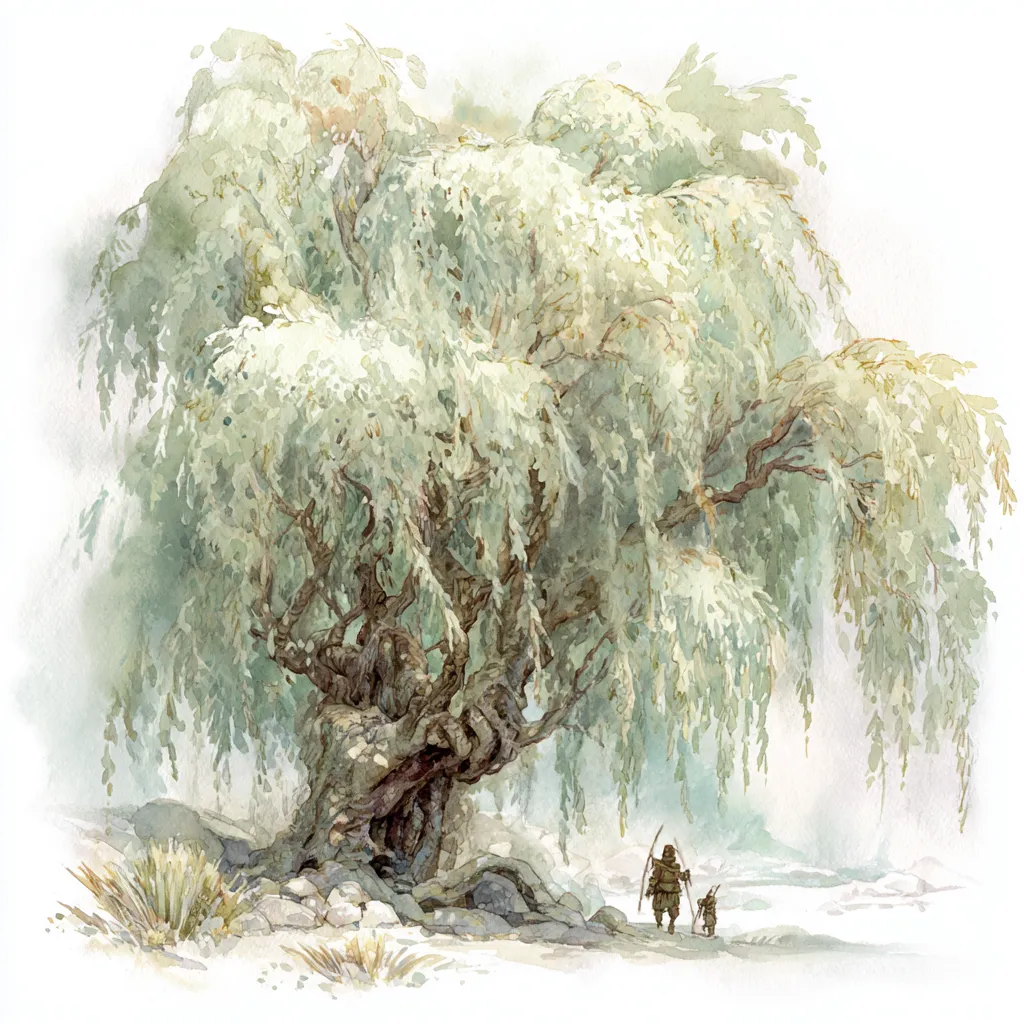
The Silverwillow is a graceful riverside tree with long, slender branches that trail toward the water. Its leaves are narrow and pale, coated in a fine silvery sheen that reflects light even on overcast days. When stirred by wind or passing boats, entire groves shimmer as if dusted with frost. The bark is smooth and light grey when young, darkening with age into soft bands that peel away in thin, papery strips. Freshly cut bark releases a clean, bitter scent.
Silverwillows grow along slow-moving rivers, lake shores, and floodplains where the soil remains moist but never waterlogged. They do not tolerate stagnant swamps or fast mountain streams. Healthy trees are often found where seasonal flooding deposits fresh silt. Foresters identify mature specimens by the flexibility of their branches and the brightness of their leaves. Trees growing too close together lose their sheen and produce inferior bark, which makes careful spacing important in cultivated groves.
Wildlife interacts with the Silverwillow in subtle ways. Birds favour the drooping branches for nesting, as the reflective leaves make it harder for predators to spot movement. Deer and other grazers strip the bark in winter, though never deeply enough to kill the tree. Insects gather around fallen leaves, which decompose slowly and enrich the soil. Healers claim that areas dense with Silverwillows suffer fewer outbreaks of sickness, though no firm cause has been established.
Beyond its primary medicinal use, the Silverwillow has many secondary applications. The inner bark is dried and brewed into teas to reduce fever and pain. Thin bark strips are woven into bandages that resist rot and infection. The wood itself is light, flexible, and resistant to splintering, making it popular for shields, tool handles, and rivercraft ribs. Carpenters also prize Silverwillow for musical instruments, as it carries sound clearly without distortion.
Harvesting must be done carefully. Removing too much bark weakens the tree and dulls the leaves permanently. Skilled harvesters take narrow vertical strips and return years later, allowing the tree to recover fully. In many regions, cutting down a living Silverwillow without cause is forbidden, and groves near towns are often protected by local law or custom.

Primary Use: Bark brewed into tea grants +10 to Endurance Tests against Disease for one week.
Secondary Use: Bandages made from Silverwillow bark grant +10 to Heal Tests to treat infection or fever.
Harvest: Average (+20) Trade (Herbalist) or Outdoor Survival. Failure damages the tree and yields inferior bark.
Price: Dried bark bundle: 1–2 gc, Prepared medicinal bandages: 3–4 gc

Primary Use: Tea made from Silverwillow bark restores 1 point to a Might or Speed Pool and eases the next recovery roll.
Secondary Use: Bandages provide an asset on one healing-related task.
Harvest Difficulty: 3
Price: Bark bundle: 25–40 shins, Prepared medical supplies: 70–100 shins
Silverwillows grow along slow-moving rivers, lake shores, and floodplains where the soil remains moist but never waterlogged. They do not tolerate stagnant swamps or fast mountain streams. Healthy trees are often found where seasonal flooding deposits fresh silt. Foresters identify mature specimens by the flexibility of their branches and the brightness of their leaves. Trees growing too close together lose their sheen and produce inferior bark, which makes careful spacing important in cultivated groves.
Wildlife interacts with the Silverwillow in subtle ways. Birds favour the drooping branches for nesting, as the reflective leaves make it harder for predators to spot movement. Deer and other grazers strip the bark in winter, though never deeply enough to kill the tree. Insects gather around fallen leaves, which decompose slowly and enrich the soil. Healers claim that areas dense with Silverwillows suffer fewer outbreaks of sickness, though no firm cause has been established.
Beyond its primary medicinal use, the Silverwillow has many secondary applications. The inner bark is dried and brewed into teas to reduce fever and pain. Thin bark strips are woven into bandages that resist rot and infection. The wood itself is light, flexible, and resistant to splintering, making it popular for shields, tool handles, and rivercraft ribs. Carpenters also prize Silverwillow for musical instruments, as it carries sound clearly without distortion.
Harvesting must be done carefully. Removing too much bark weakens the tree and dulls the leaves permanently. Skilled harvesters take narrow vertical strips and return years later, allowing the tree to recover fully. In many regions, cutting down a living Silverwillow without cause is forbidden, and groves near towns are often protected by local law or custom.
Silverwillow Tree
Type: Special Tree / Herb (Uncommon)Primary Use: Bark brewed into tea grants +10 to Endurance Tests against Disease for one week.
Secondary Use: Bandages made from Silverwillow bark grant +10 to Heal Tests to treat infection or fever.
Harvest: Average (+20) Trade (Herbalist) or Outdoor Survival. Failure damages the tree and yields inferior bark.
Price: Dried bark bundle: 1–2 gc, Prepared medicinal bandages: 3–4 gc
Silverwillow Tree
Type: Crafting material or consumablePrimary Use: Tea made from Silverwillow bark restores 1 point to a Might or Speed Pool and eases the next recovery roll.
Secondary Use: Bandages provide an asset on one healing-related task.
Harvest Difficulty: 3
Price: Bark bundle: 25–40 shins, Prepared medical supplies: 70–100 shins

Comments