
Burning Bloodpine


GM-Info!
Work in progress!
Slightly NSFW!
FEATURED
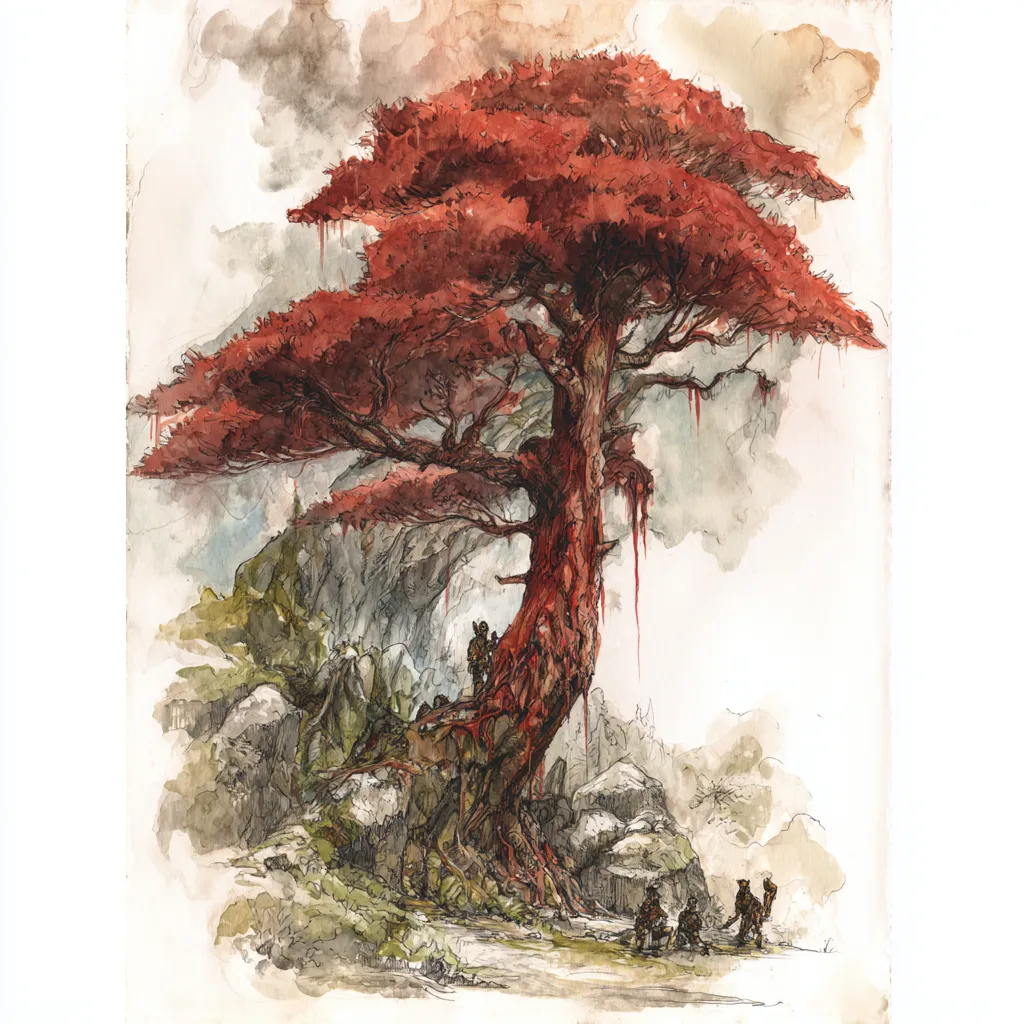
Burning Bloodpine refers to heartwood taken from mature Bloodpine trees after the resin within has fully thickened and darkened. The trees themselves are tall conifers with deep red bark split by long vertical seams where resin seeps slowly and hardens in glossy streaks. When cut, the inner wood shows dark crimson rings, dense and heavy, with a faint metallic sheen. Fresh-cut Bloodpine smells sharp and resinous, and the scent clings to tools and clothing for days.
Bloodpine grows only in cold, upland forests where winters are long and soil is thin. It favours rocky slopes and cliff-adjacent valleys where meltwater drains quickly. Foresters identify suitable trees by the colour of the bark seams. Pale red indicates immature resin. Deep, almost black red marks a tree ready for harvest. Cutting a tree too early spoils the wood, producing brittle planks that crack when burned. Properly aged Bloodpine burns slowly and evenly, giving off intense heat without open flame for long periods.
Several animals interact with Bloodpine forests in unusual ways. Glacier Wolves avoid groves where many mature trees stand, while Stoneback Rams rub their horns against the bark, leaving polished grooves. Smaller animals nest nearby but do not chew the wood. Hunters believe the resin repels parasites and sickness, which may explain why animals linger near it without feeding on it.
Beyond its main use as fuel and construction material, Burning Bloodpine serves many secondary purposes. When burned in small quantities indoors, the smoke suppresses illness and rot, making it popular in infirmaries and food stores. Resin scraped from the bark is mixed into sealants for ships and cold-weather gear. Thin Bloodpine slats are used in ritual braziers, as the slow burn allows for precise timing during ceremonies. Some northern cultures carve protective charms from the heartwood, believing its heat-storing properties deter hostile spirits.
Improper use carries risks. Burning too much Bloodpine in enclosed spaces causes dizziness and nosebleeds. Resin fumes ignite easily if overheated. Whole logs should never be burned in open hearths without proper airflow. Forest law in several regions restricts how many trees may be felled each year, and illegal cutting is punished harshly.

Primary Use: Burning Bloodpine logs provide strong, steady heat. When used indoors with proper ventilation, grant +10 to Endurance Tests against Disease for all occupants for one week.
Secondary Use: Bloodpine resin used in crafting grants +10 to one Trade Test involving sealing, ship repair, or cold-weather gear.
Harvest: Average (+20) Outdoor Survival or Trade (Forester). Failure yields inferior wood with no special properties.
Price: Heartwood log: 3–5 gc, Refined resin flask: 1–2 gc, Prices can double in plague-stricken regions or during winter shortages.

Primary Use: Burning Bloodpine indoors grants an asset on all recovery rolls made within the space for one day.
Secondary Use: Resin used in crafting eases one task involving insulation, preservation, or sealing.
Harvest Difficulty: 4
Price: Log or equivalent: 80–120 shins, Resin vial: 30–50 shins
Burning Bloodpine
Type: Special Wood / Resin (Uncommon to Rare, region dependent)Primary Use: Burning Bloodpine logs provide strong, steady heat. When used indoors with proper ventilation, grant +10 to Endurance Tests against Disease for all occupants for one week.
Secondary Use: Bloodpine resin used in crafting grants +10 to one Trade Test involving sealing, ship repair, or cold-weather gear.
Harvest: Average (+20) Outdoor Survival or Trade (Forester). Failure yields inferior wood with no special properties.
Price: Heartwood log: 3–5 gc, Refined resin flask: 1–2 gc, Prices can double in plague-stricken regions or during winter shortages.
Burning Bloodpine
Type: Crafting material or environmental assetPrimary Use: Burning Bloodpine indoors grants an asset on all recovery rolls made within the space for one day.
Secondary Use: Resin used in crafting eases one task involving insulation, preservation, or sealing.
Harvest Difficulty: 4
Price: Log or equivalent: 80–120 shins, Resin vial: 30–50 shins

Comments