

THE VOR'KETH
Religious Order · Secret Society · Grakh'tor Civilisation · Active · Founded approximately -930 A.P.
I have spent thirty years trying to understand The Vor'Keth. I have concluded that what they do is entirely consistent with their stated purpose and entirely inconsistent with any framework of institutional accountability that Roman governance would recognise. They are not corrupt. Corruption implies deviation from a standard. The Vor'keth have no standard they answer to except their own assessment of what the confederacy requires. In thirty years they have not been wrong in any way I can document. I find this more unsettling than if they had been.
The Vor'keth are the shamanic order of The Grakh'tor Clan Confederacy: the theological intermediaries between the war-gods and the orcish people, the custodians of the oral tradition, the administrators of the Caldera of Grakh'vol, and the keepers of Keth'Voral. They are the most stable institution in the confederacy. Eighty-seven Vor'grak reigns have come and gone since Vrak'thun Mor'zhaal. The Vor'keth have continued through all of them.
They are also, Plinius has come to understand over thirty years of attempting to document them, an organisation that operates entirely without external accountability and has been doing so for two thousand years, making decisions that affect the confederacy's political, theological, and economic life without asking permission from any secular authority, and has been broadly correct in its assessments throughout. The combination of these facts is the thing that Roman governance frameworks have no category for, and Plinius has stopped trying to find one.
The Vor'keth's public function is well understood: they conduct the dedication ceremonies at Keth'voral, they administer the sacred ground at the Caldera, they maintain the oral tradition of the Grak'thun Vor'Shen, they advise the Vor'grak on theological matters. Their actual function is considerably broader. What they know, what they choose not to communicate, and what they act on without announcement has shaped the confederacy's history at least as much as any Vor'grak's decisions. Possibly more.
DM ONLYStructure
The Vor'keth operate through three tiers, which Plinius has inferred from observation and Uzrul's account rather than from any Vor'keth communication.
The Inner Council (Vor'keth Sshen'ral)
The senior Warlord-Priests who hold the organisation's complete knowledge: the fifth movement of the founding myth, the full Caldera record, the undisclosed contents of the Grakh'shen Dal at Keth'voral, and whatever other information the Vor'keth have accumulated across two millennia of operation. Plinius estimates this tier at fewer than twelve individuals at any given time. He has no confirmed names.
DM ONLYThe Warlord-Priests (Vor'keth)
The main body of the organisation: the shamans who conduct ceremonies, maintain the sacred sites, advise clan Grak'thun, and represent the war-gods' interests in the confederacy's daily life. Approximately two hundred active Warlord-Priests across the confederacy at any given time, with the largest concentrations at the Caldera and Keth'voral. Clan affiliation is considered suspended on initiation; Vor'keth serve the confederacy as a whole, not the clans they came from. This is the only institution in the confederacy where this rule applies and is consistently observed.
The Initiates (Vor'keth Grak'vel)
Warriors and shamans under training who have been identified and invited into the order. The selection process is not documented. Plinius has been told, by Uzrul, that the Vor'keth identify candidates young and observe them for years before making contact. He has been told this without apparent awareness of how it sounds to a Roman administrator. He has not commented.
DM ONLYCulture
The Vor'keth's internal culture is built around a single premise: the war-gods acknowledge worth, and the Vor'keth exist to ensure that what the war-gods acknowledge is accurately recorded and appropriately preserved. Everything else follows from this. The willingness to manage information that would destabilise the confederacy, to make editorial choices in the oral tradition, to act without announcement on what they know -- all of it is consistent with the premise that the correct function of the Vor'keth is to ensure the continuity of a civilisation whose war-gods have demonstrated they are watching.
What the Vor'keth do not have is a culture of doubt. Plinius, in his thirty years of attempting to understand them, has found no evidence that the organisation has ever formally questioned whether its judgements are correct. They have revised specific decisions -- the inserted open ending of the founding myth, for example, represents a revision of the tradition -- but the right to make such revisions is not itself questioned. They are the custodians. Custodians decide what is preserved and how.
Internally, they are -- by every account Plinius has been able to gather -- disciplined, thoughtful, and genuinely devoted to the confederacy's wellbeing. They are not comfortable people. They are serious people doing a serious job by methods they consider necessary, and they have been doing it for long enough that the methods no longer feel like choices.
Public Agenda
The Vor'keth's stated function, as understood throughout the confederacy:
- Theological mediation: the Vor'keth interpret the war-gods' acknowledgements, conduct the investiture ceremonies for new Vor'graks, and advise on matters of theological significance.
- Sacred site custodianship: the administration of the Caldera of Grakh'vol and Keth'voral, including the dedication ceremonies for warriors making their first-campaign oaths.
- Oral tradition maintenance: the preservation and transmission of the Grak'thun Vor'shen and related traditions across generations.
- Shamanic advisory: individual Vor'keth serve as advisers to Grak'thun clan councils throughout the confederacy on matters of theological and cosmological significance.
All of these functions are genuine. None of them is complete.
Assets
The Caldera of Grakh'vol
The most significant asset in the confederacy. The Vor'keth administer access to the sacred ground around the Caldera, which includes the volcanic agricultural zone on the Caldera's slopes. The agricultural zone supplies a significant portion of the confederacy's food -- the volcanic soil is the most productive cultivated land on the primary continent and has been in continuous cultivation for six centuries without depletion. The Warlord-Priests' control of access to this zone gives them economic leverage over the secular confederacy that the confederacy has never formally acknowledged. The Vor'grak controls the war-machine. The Vor'keth control a meaningful portion of what the war-machine eats.
DM ONLYThe Carved Stone Record
The continuous carved surface at the Caldera's base recording two thousand years of acknowledged Grakh'tor history: every Caldera channel response, every Vor'grak investiture, every major engagement the war-gods found worth noting. The most complete historical record in the confederacy's possession. The Vor'keth control access to it, control what is added to it, and control how it is read. Roman scholarship has documented its existence. No Roman scholar has seen it.
Keth'voral and the Grakh'shen Dal
The sacred site and its House of the Complete Record. The Vor'keth maintain the ruins, conduct the dedication ceremonies, and hold the written record of the Grak'vol Thun Vor'shen including material not transmitted in the public oral tradition. Access is controlled entirely by the Vor'keth. No clan chief holds authority over the site.
The Oral Tradition Archive
The Vor'keth's transmission discipline has produced a body of knowledge that is probably more stable than most written traditions on the primary continent. Two thousand years of oral transmission with sufficient internal discipline to identify when variations enter the tradition and where they came from. The Vor'keth know more about the confederacy's history than the confederacy does. The gap between what the Vor'keth know and what they have transmitted is not accidental.
DM ONLYHistory
The Vor'keth were established at the founding of the Grakh'tor Clan Confederacy under Vrak'thun Mor'zhaal at approximately -930 A.P. Whether they existed in some prior form before the unification is not documented. The shamanic tradition suggests continuity with the shamanic practices the orc clans brought through the Third Permutatio, but Plinius considers this claim unverifiable and notes that the Vor'keth would have institutional reasons to assert continuity even if the actual history was more complicated.
What is documentable: the organisation has existed in its current form, with consistent methods and consistent purpose, for approximately two thousand years. It has outlasted every political crisis the confederacy has experienced. It has survived the Keth'dural Grak, the succession fracturing after Vrak'thun's death, several subsequent near-dissolutions of the confederacy, and eighty-six Vor'grak transitions. Its institutional continuity is the most remarkable fact about it, and Plinius notes that institutional continuity of this kind requires active maintenance rather than passive survival.
Documented Interventions
- Approximately -860 A.P.: Substitution of Vrak'thun Mor'zhaal's clanhold death with a battlefield death in the oral tradition. The Vor'keth of that era considered the actual death inadequate to the legend's requirements. They were probably correct.
- Approximately -460 A.P.: Insertion of the open ending of the Grak'thun Vor'shen during the confederacy's first serious fragmentation crisis. The tradition was adjusted to point forward. The fragmentation stabilised.
- Approximately 780 A.P.: Access to the volcanic agricultural zone restricted during a succession dispute. The succession resolved in alignment with the Vor'keth's assessment of what the confederacy required.
- Approximately 1043 A.P.: Agricultural access restricted for six days following a Grak'thun council decision the Vor'keth found theologically irregular. The decision was revised.
- 1181 A.P.: Plinius visits Locus Incertorum and raises the question of whether the centaurs can read Vhessen with the excavation team. The Vor'keth maintain a relationship with the centaur shamanic tradition that neither party has disclosed to Roman scholarship.
- 1194 A.P.: The Vor'keth note the correlation between the Pale Wanderer's return and the Caldera's silence. They add an annotation to the Grakh'shen Dal record. They do not communicate this to Gharkon.
- 1197 A.P.: Gharkon Krul'gash fails to make the Keth'voral pilgrimage for the third consecutive year. The inner council completes an assessment of the succession situation. The assessment is not communicated externally.
These are the interventions Plinius has been able to identify. He considers it unlikely they are the complete list.
Foreign Relations
The Vor'keth do not conduct foreign relations. This is accurate in the formal sense: they have no diplomatic apparatus, no treaty relationships, no acknowledged role in the confederacy's external affairs. It is not accurate in the operational sense.
- The centaur shamanic tradition: the Vor'keth maintain a relationship with the Campus Magnus centaur shamanic orders that neither party has disclosed to Roman scholarship. The nature of this relationship is not documented by any source available to Plinius. He knows it exists because the centaur elder Aethon Deepmeadow has read the fifth movement of the Grak'thun Vor'shen, and that text is not accessible except through the Vor'keth.
- Locus Incertorum: the Vor'keth observe the Roman excavation at Locus Incertorum from the perimeter. They have not communicated what they know about the Vhaasenn ruins to the Roman excavation team or to any Roman scholar. The relationship between the Vhessen ley system and the Grakh'vol ley network is not something the Vor'keth have chosen to make available to Roman scholarship.
- The Zrek'vali situation: the Vor'keth are aware that something has changed in the goblin warrens. They do not have complete information about the Year 0 declaration or Skrix Vreth's negotiations. They are aware that the goblin forge output has shifted in ways the orc military assessment has not yet registered. They are watching.
Mythology & Lore
The Vor'keth's theological framework rests on a single observable fact: the war-gods acknowledge worth, and that acknowledgement is visible in the Caldera's responses. Everything else the Vor'keth believe follows from this fact and from two thousand years of observation of what the Caldera responds to and what it does not.
The war-gods, in the Vor'keth's understanding, are not beings who can be petitioned, bargained with, or appeased. They observe. They acknowledge. They respond to demonstrated worth with the only currency available to them: the luminescent scar and the Caldera's voice. Whether they are aware of individual orcs, whether they have preferences about the confederacy's political arrangements, whether the silence of the past six months means anything - these are questions the Vor'keth engage with seriously and answer cautiously.
The Caldera's current silence is, the Vor'keth's inner council believes, a response to something they have identified but not yet fully understood. The Pale Wanderer's return to the sky, the ley node beneath the Vor'thek Kaal, the pattern in the carved stone record - these things are connected. The Vor'keth are watching.
DM ONLYDivine Origins
The Vor'keth's own account of their origins is contained in the founding myth. They were present at the unification. They conducted the first Vor'grak investiture. The Caldera's response to that investiture established the pattern the order has maintained ever since: the war-gods acknowledge the Vor'grak, the Vor'keth record and interpret the acknowledgement, and the confederacy understands its leadership as divinely noted if not divinely sanctioned.
Whether the shamanic orders that became the Vor'keth existed in the same form before the Third Permutatio is unknown. The oral tradition claims continuity. Plinius notes that an organisation two thousand years old has had ample opportunity to construct a founding narrative consistent with its current self-understanding.
Cosmological Views
The Vor'keth's cosmological understanding is more developed than any Roman scholar has been permitted to document. What Plinius has been able to infer: they understand the Permutatios as cosmological events with a structure, not random catastrophes. They have a framework for the ley lines connecting the Rift zones that predates Roman scholarly interest in the subject. They have been watching the Pale Wanderer for longer than Roman astronomy has records of it. What they believe these things mean in combination is not communicated to external parties.
Show SpoilerTenets of Faith
- Worth is demonstrated, not claimed. The war-gods acknowledge what has been earned. The Vor'keth record what the war-gods acknowledge. Neither institution grants worth; they witness it.
- The record must be accurate. The Vor'keth are custodians of what happened and what was acknowledged. The record serves the confederacy across generations; an inaccurate record is a harm that accumulates.
- The confederacy requires continuity. Individual Vor'graks, clans, and political arrangements are temporary. The civilisation is not. The Vor'keth's function is to ensure the civilisation persists through the temporary arrangements.
- What the war-gods acknowledge is what matters. Secular political calculations are legitimate but secondary. The Vor'keth attend to both, prioritising the war-gods' framework when the two conflict.
- Management without announcement is stewardship. The confederacy does not need to know everything the Vor'keth know. It needs to be managed well. The two are not the same thing.
Ethics
The Vor'keth's ethical framework is consequentialist in practice and theological in justification. Actions are assessed by their effect on the confederacy's continuity and by whether the war-gods respond to them. An action that serves the confederacy's long-term stability and that the Caldera acknowledges is correct by definition. An action that destabilises the confederacy, even with good intentions, is not.
This framework has produced, over two thousand years, an organisation that is genuinely oriented toward the confederacy's wellbeing and that has no mechanism for external correction. The Vor'keth have been right, by their own assessment, in every documented intervention. They have also been the sole judges of that assessment.
Plinius notes that every institution he has encountered that operates without external accountability has eventually found a way to serve its own interests while believing it serves the public good. He notes that the Vor'keth have not done this in two thousand years by any evidence available to him. He notes that two thousand years is not forever.
Worship
The Vor'keth do not conduct worship in any form Roman religious practice would recognise. There are no prayers, no offerings, no petitions. The war-gods are not petitioned. They observe and acknowledge. The Vor'keth's practice is therefore observational rather than supplicatory: they maintain the sacred sites, conduct the ceremonies, and record the acknowledgements. The dedication ceremonies at Keth'voral are the closest the Vor'keth come to formal ritual, and those ceremonies are structured around the warrior's demonstrated worth rather than any petition to the war-gods.
The Grak'boon invocation in Keth'vor Grak - the coin flip that calls on the war-gods for a boon - represents a popularised and simplified form of the Vor'keth's actual practice. The Vor'keth do not use coins. Their invocations are conducted at the Caldera, by Warlord-Priests of sufficient standing, and the response or non-response is recorded in the carved stone.
Priesthood
Vor'keth are drawn from all Grakh'tor clans. Clan affiliation is suspended on initiation and not resumed. The transition is considered total: a Vor'keth is a Vor'keth, not a Bloodmane or a Dur'kaal who is also a Vor'keth. This is the one institution in the confederacy where clan identity is genuinely secondary to organisational identity, and it is enforced with sufficient consistency that the Grak'thun councils have accepted it over two thousand years without successfully challenging it.
Training duration is not documented by any external source. Plinius estimates a minimum of ten years between identification and full Vor'keth status based on the ages of initiates he has been able to observe at Keth'voral ceremonies and the ages of apparent full Warlord-Priests at the same ceremonies. He considers this estimate unreliable.
The physical markers of Vor'keth status are the shamanic vestments that Plinius has observed at Keth'voral: dark robes with Caldera-glyph markings worked into the shoulder panels, worn over the standard clan armour. The vestments are identical across all Vor'keth regardless of clan origin, which is itself a statement.
Granted Divine Powers
The war-gods grant the Vor'keth one power that is observable and consistent: the authority to conduct investiture ceremonies that the Caldera acknowledges. No Vor'grak investiture conducted without Vor'keth participation has produced a Caldera response in documented history. Whether this means the Caldera responds to Vor'keth ceremonies specifically, or whether the Vor'keth's presence is incidental to a response that would occur anyway, is a theological debate the Vor'keth have conducted internally for two thousand years without public resolution.
Plinius notes that the practical effect is the same either way: no Vor'grak has been politically viable without Vor'keth investiture, because the Caldera's acknowledgement is what makes a Vor'grak's authority legible to the clans. The Vor'keth conduct the ceremony. The Caldera responds. The clans acknowledge the Vor'grak. Remove the Vor'keth from this sequence and the entire mechanism of succession becomes uncertain.
Show SpoilerPolitical Influence & Intrigue
The Vor'keth do not engage in politics. This is what they say and what the confederacy broadly accepts. It is not accurate.
The Vor'keth's political influence operates through three channels, none of which is acknowledged as political by either party:
- Information asymmetry: the Vor'keth know more about the confederacy's history, its current state, and its theological situation than any secular actor. They share what is useful to share and withhold what would destabilise. The choices about what to share are political choices, made by an organisation that does not consider itself political.
- Investiture control: the timing of investiture ceremonies, conducted at Vor'keth discretion within the constraints of succession protocol, allows the Vor'keth to influence the conditions under which a new Vor'grak's authority is established. A ceremony conducted quickly produces a different political context than one conducted after a period of managed delay.
- Economic leverage: the agricultural zone access mechanism, used twice in documented history, represents the clearest example of direct political intervention. Both interventions produced the outcomes the Vor'keth considered appropriate. Neither was acknowledged as political intervention by any party at the time.
Current political situation: the Vor'keth's inner council has assessed the succession question and reached conclusions it has not communicated. Gharkon Krul'gash has not made the Keth'voral pilgrimage in three years. The Caldera has been silent for six months. The Vor'keth are watching Vorga of the Bloodmane. They have not communicated any of this to the Vor'grak.
DM ONLY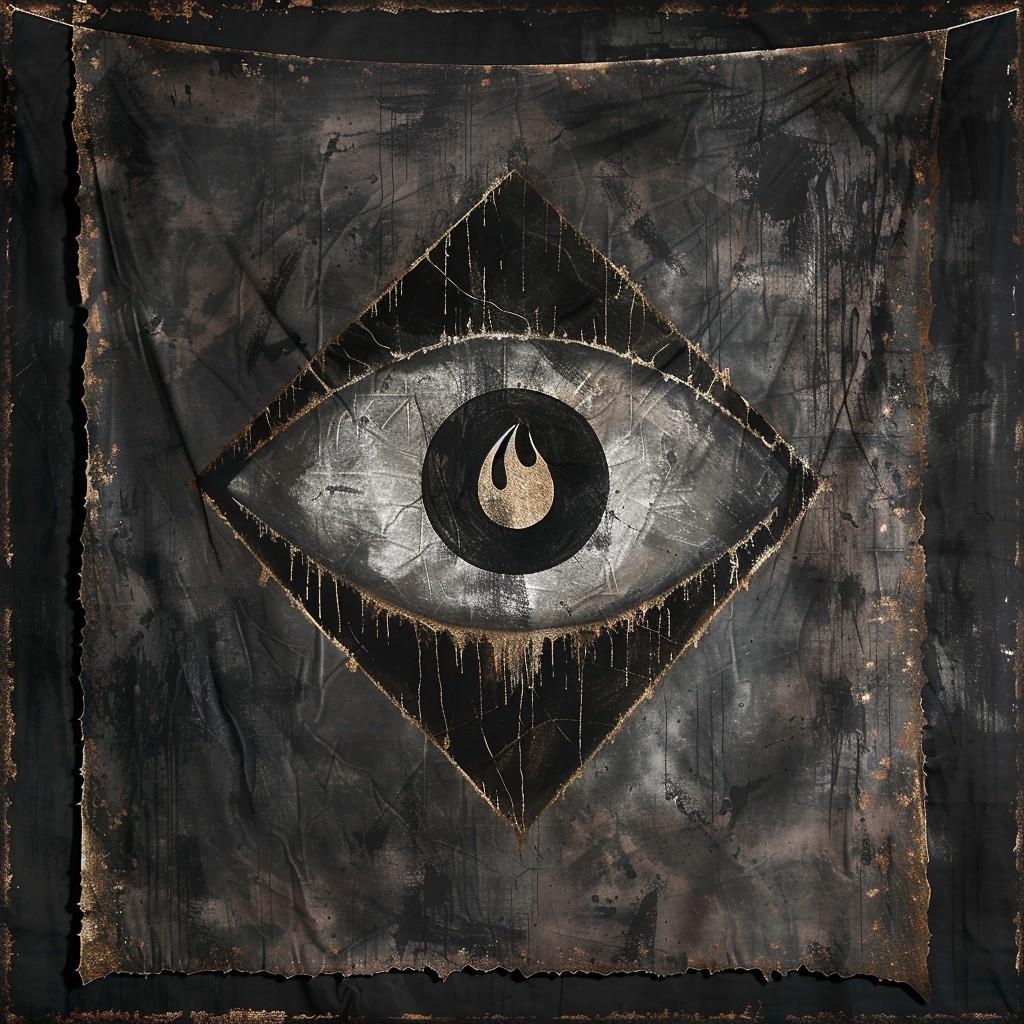

Comments