

HOMO BRINDALI
The Halflings · Sapient People · Twelfth Permutatio · Stable Population · No Arcane Tradition
“Merry Burrowfoot is eighty-one years old. She has made the southern crossing more times than the Pilot’s Guild’s formal records show, because she began before the records were systematic. She named Hearthsrest. She saved my life twice. I have been trying to understand her people for fifty years and I have concluded that the correct framework is not the one I started with. The halflings are not a small version of anything else. They are entirely themselves, which is a more difficult thing to be than it appears.”
The halflings are the most commercially sophisticated people on the primary continent and the only one whose arrival through a Permutatio produced no military conflict with existing inhabitants. They came through the Twelfth Permutatio in 1000 A.P. as an intact maritime trading community transposed with their archipelago, their fleet, and their accumulated commercial knowledge. Within nine months they had signed the Treaty of Brinhaven with Rome. Within thirty years they had pioneered the southern crossing and named Hearthsrest. Within fifty years the Banca Brindala was the empire's second banking institution. This is not luck. It is the expression of a people whose culture is organised around the premise that the correct response to a new world is to understand its commercial geography before its politics, and its politics before anyone else understands that you have understood them.
My relationship to the halflings is the most personal of any I maintain with the nine peoples, which I acknowledge as a potential source of bias and a definite source of insight. I have visited Brinhaven four times, Hearthsrest twice, and Breakwater Cove once. I have read everything published on the halfling community in Latin scholarship, which is less than the halflings have written about themselves and substantially less useful. My primary source is Merry Burrowfoot, who has been my oldest friend for fifty years and who is also the most important halfling of her generation by the combined measures of navigation, political intelligence, and the specific quality of knowing things before other people know them that the halflings develop through commercial necessity and maintain through professional habit. I have tried, in what follows, to be precise about what I know from direct observation and what I have from Merry or other sources. The distinction matters.
“I asked Merry once what the halflings thought of the Permutatio. She said: we thought it was terrible, and then we thought it was a problem to be solved, and then we solved it. I asked how long each stage took. She said: about three weeks total, and then we sent the negotiating delegation to Rome. I asked whether she was serious. She said she was. I have since verified this against the Merchant Council’s own records, which confirm that the delegation departed for Nova Romae twenty-two days after the transposition event. The halflings are not sentimental about difficulty. This is the most important thing to understand about them.”
Basic Information
Anatomy
The halflings are bipedal humanoids of the standard configuration, at a scale that places them at approximately the lower boundary of the Roman population's height distribution and well below it in mass. The structural differences this scale produces are less significant than Roman scholars have historically assumed: the halfling skeletal and muscular system is proportionally adapted rather than merely scaled down, producing a body plan that is effective for its size rather than being an undersized version of the Roman plan.
The most distinctive anatomical features are the hands and feet. The halfling hand is proportionally broader across the palm relative to finger length than the human equivalent, with a grip configuration that is adapted for sustained work on ropes, nets, and small-craft rigging rather than for the precision tool-use that Roman craft traditions emphasise. The feet are similarly broader and more heavily padded, suited to wet surfaces and boat decks. The Roman natural philosophy tradition has documented these features extensively and with varying degrees of accuracy; Plinius's own assessment, based on four visits and fifty years of observation, is that the correct description is ‘built for maritime work’ rather than any of the alternatives that Roman scholarship has proposed.
Halflings are notably quiet in movement relative to their size. This is not a biological specialisation in the arcane sense but the result of the broad-footed, low-centre-of-gravity gait that their proportions produce combined with a cultural preference for not making unnecessary noise, reinforced across generations by the specific social environment of a maritime community where sound carries across water and unwanted sound has consequences. The effect, which Roman visitors to Brinhaven consistently remark on, is that a halfling can cross a stone floor without being heard unless they choose to be heard.
Biological Traits
The halflings show no sub-group variation of the kind the Joturvolk's three clans display. There is one biological type, expressing the normal range of individual variation that any humanoid population produces. The fishing village communities and the Brinhaven urban population differ culturally and in some respects physically -- the fishing village halflings tend toward the more weathered, compact physique of sustained outdoor maritime work, while the Brinhaven commercial class tends toward the better-fed, less sun-damaged physique of an indoor commercial life -- but these are occupational and environmental differences rather than biological ones.
Age-related changes follow the standard humanoid pattern, compressed relative to the longer-lived peoples but extended relative to the Roman baseline. A halfling in their sixties is in what Roman terms would be considered middle age; Merry Burrowfoot at eighty-one is not elderly by halfling standards, though she would be by Roman ones. The physical markers of age accumulate gradually: the characteristic weathering of the maritime population, a slowing of the explosive movement speed that younger halflings display, and a corresponding deepening of the patience that the halfling character expresses at all ages but that becomes more marked in the later decades.
Genetics and Reproduction
Standard humanoid reproduction. Gestation is approximately nine months; litter size is typically one, with twins occurring at roughly the Roman baseline frequency and carrying no particular cultural weight. Parental investment is substantial and genuinely bilateral: halfling domestic culture does not assign primary child-rearing responsibility to either parent by default, and the practical arrangements of a maritime community where one or both parents may be at sea for extended periods have produced a flexible household structure in which the extended family and immediate community share child-rearing responsibilities with a pragmatism that Roman family law does not accommodate.
The halflings do not practice population management in any explicit sense. The fishing ground capacity of the Hearthstone Isles has accommodated the population's stable level for two centuries, and the community's consistent outward orientation -- the Hearthsrest posting, the Pilot's Guild careers, the Merchant Council's commercial network across three continents -- means that population pressure on the islands themselves has not become a constraint. The halflings who leave the islands for commercial careers at Hearthsrest or beyond do not typically return to settle; the islands' permanent population has been stable within a narrow range since approximately 1050 A.P.
Growth Rate & Stages
Halfling children reach physical maturity at approximately eighteen to twenty years, somewhat earlier than the Roman baseline. The transition to adult status in halfling culture is not primarily marked by physical maturity but by the assumption of professional responsibility: the first independent fishing voyage for the village communities, the first solo commercial negotiation for the Brinhaven families, the first unaccompanied crossing for the maritime professionals. These milestones typically occur in the late teens to early twenties and are marked informally by the community's recognition rather than any formal ceremony.
The middle decades -- roughly thirty to ninety years -- are the period of fullest professional and social activity, and the period in which the specific halfling quality of accumulated commercial intelligence is most visibly developed. A halfling in their fifties or sixties has typically been conducting or observing commercial negotiations for three to four decades and has developed the specific form of pattern recognition that this experience produces. Merry Burrowfoot's quality of knowing things before other people do is not unusual by halfling standards; it is the normal expression of what sustained commercial attention produces across a century of practice.
Old age, by halfling reckoning, begins in the nineties and is not the withdrawal from active life that Roman culture associates with elderhood. The halflings who are no longer physically capable of active maritime work continue in administrative, advisory, and intelligence-network functions that are considered the appropriate expression of accumulated experience. The Platea Veteranorum on Brinhaven's Collis slope -- where the retired mariners gather on clear evenings -- is not a place of honoured retirement. It is a concentration of the most practically useful knowledge of ocean conditions available in the known world.
Ecology and Habitats
The halflings are maritime in the deepest sense: not a land people who have learned to sail, but a people whose culture, physiology, and cognitive orientation are organised around the sea. The Hearthstone Isles are their natural environment not because of any biological adaptation to island conditions -- the halflings are, physically, a generalist humanoid people who could live in a range of environments -- but because island conditions produce the maritime commercial orientation that the halfling character is built for. The sea is not an obstacle the halflings have learned to cross. It is the medium through which their civilisation operates.
The specific adaptation to maritime life that the halflings show is cultural and professional rather than biological, but it is deep enough to function as a biological trait in practical terms. A halfling sailor on a vessel in difficult conditions is operating in their native environment in a way that a Roman sailor of equivalent experience is not. The specific gait, the hand configuration, the low centre of gravity, the noise discipline, the quality of sustained attention that maritime work demands: these are present in halflings who have never been to sea as a cultural inheritance, expressed with full professional competence in those who have spent their working lives on the water.
Dietary Needs and Habits
Primarily maritime: fish in all its prepared forms is the dietary foundation of the halfling community, supplemented by the hillside garden produce that halfling domestic culture cultivates on every available surface and by the imported goods that two centuries of commercial access to three continents makes available in Brinhaven's markets. The halfling culinary tradition is the most developed of any people on the primary continent by the measure of its range and its specific technical quality, which Plinius attributes to the combination of access to the best maritime produce, two centuries of exposure to three culinary traditions through the Hearthsrest Night Market, and the specifically halfling quality of taking seriously the things that the culture considers worth taking seriously. The halflings consider food worth taking seriously.
The preserved fish that the fishing village curing sheds produce and that provisions every southern crossing vessel is the halfling culinary tradition at its most functionally important: not the elevated cooking of the Ripa Canalis's night market, but the specific technical achievement of a preservation method that maintains nutritional quality and palatability across thirty days at sea in variable conditions. This method predates the Permutatio and has been maintained without interruption in the Breakwater Cove curing sheds since 1002 A.P. Plinius considers the breakfast at the Taberna Principalis the finest he has eaten in eighty-seven years. The ingredient he cannot identify has been in the halfling culinary tradition since before they arrived in this world.
Biological Cycle
The halflings show no dormancy or hibernation cycle and no dramatic seasonal biological change. Their activity patterns follow the sailing season calendar -- the fourth through ninth months of peak commercial and maritime activity, the winter months of reduced external commerce and heightened domestic and administrative activity -- but this rhythm is cultural and commercial rather than biological. The halfling community that is busiest in summer is not more biologically active in summer; it is responding to the commercial opportunities that the sailing season creates and the commercial constraints that the winter reduces.
The fishing village communities show a more directly seasonal biological rhythm than the Brinhaven commercial class: the fishing season's sustained physical work, the winter's boat maintenance and domestic production, and the social calendar that the Free Temples' ceremonial year organises around the seasons produce a lived biological rhythm in the village communities that the urban commercial class does not experience in the same form. Plinius notes, from his three days in Breakwater Cove, that the village's pace is different from Brinhaven's in a way that feels biological rather than merely cultural, as if the village community is operating at the speed that the sea sets rather than the speed that commerce sets.
Behaviour
The halflings' baseline behavioural characteristic is attentiveness. They pay attention. Not in the intense, focused way that the dwarven professional culture cultivates, and not in the predatory assessment mode that characterises the Joturvolk's approach to new encounters, but in the sustained, ambient, slightly lateral way of a people who have learned that most useful information arrives sideways and that the people who notice it first are the ones who were not looking directly at it. Cress Hollowell at the Taberna Graviditatis has been listening to the Frons Portus's commercial negotiations for twenty-three years and has declined three formal arrangements with parties who wanted to pay for what she hears, on the grounds that her value as a neutral establishment rests entirely on not being in anyone's pocket. This behaviour -- the sustained, disinterested attentiveness that refuses to convert itself into formal intelligence while remaining comprehensively informed -- is characteristic rather than individual.
Toward other halflings, the baseline is the social ease of a small community that has been living in close proximity for two centuries and has developed the specific social competence of people who have to manage friction with their neighbours indefinitely rather than moving away from it. Toward Romans and other peoples, the baseline is the professional courtesy of a trading culture that has learned that every long-term commercial relationship began with a first meeting and that the first meeting is managed by the same person who will be in that relationship in thirty years. The halflings are not warm in the way that Roman social culture values warmth. They are reliable, which is what the contexts they operate in require.
Additional Information
Social Structure
The halflings organise themselves at the community level around the extended family and professional network rather than any formal hierarchy. The Merchant Council of Brindala is elected, which distinguishes it from every other governing body in the known world except the Roman Senate, and the election process rewards candidates with demonstrated commercial relationships and track records rather than birth, which distinguishes it from the Roman Senate in practice. Below the Council level, the community organises itself through the informal authority of demonstrated competence and accumulated trust: Dory's authority in Breakwater Cove is absolute in practical terms because she has been managing the harbour and the curing shed output for twenty-nine years and has been right about it consistently enough that her judgment is not questioned. She was not appointed to this authority by anyone above her. She accumulated it.
The fishing village communities and the Brinhaven urban population represent the two poles of halfling social organisation: the village is the form that family-network authority takes when the community is small enough to know itself completely, and the Council is the form it takes when the community is large enough to require a formal mechanism. Both are expressions of the same underlying principle: authority derives from demonstrated competence in what the community needs, maintained consistently over time. The halflings do not have a word for inherited authority because the concept, in its pure form, does not occur in their social structure. Roman visitors find this either admirable or disorienting depending on their social position.
Uses, Products & Exploitation
The halfling community's economic output is navigation, financial services, and provision fish. The Pilot's Guild's weather-reading and route navigation services make the southern crossing commercially viable; without them, the thirty-day ocean transit to Solarhet would operate at a loss rate that no Roman or tabaxi shipping company has been willing to sustain. The Banca Brindala's transit finance and fund transfer services make multi-month commercial voyages economically viable by allowing merchants to finance cargo in transit without carrying the full value in coin. The provision fish from the Hearthstone curing sheds provisions every ship that makes the crossing. These three services are not supplementary to the southern trade. They are its infrastructure.
The Merchant Council's intelligence archive is the fourth output, which is not commercially framed but is commercially significant. The most comprehensive political and commercial intelligence repository in the known world, accumulated over two centuries of the halflings' institutional position at the southern trade's northern terminus, represents a resource that the Council uses selectively and quietly and that the Roman Senate's intelligence offices have been attempting, unsuccessfully, to assess for one hundred years. The halflings have not sold access to it. They have used it to negotiate treaty terms. The distinction is instructive.
Facial characteristics
The halfling face is proportionally similar to the human face in the distribution of its features, at the scale the species operates. The most consistent features that Roman artists and scholars use to identify halflings at a glance are the proportional breadth of the face relative to height -- halflings tend toward broader, rounder facial geometry than the Roman standard -- and the eyes, which are characteristically wide-set and possessed of a quality of ambient attention that the halfling behavioural baseline produces and that becomes a resting-face characteristic rather than an expression of specific interest. The Roman portrait tradition consistently renders halfling eyes as alert or watchful; Plinius's own observation is that the quality is less alertness than availability -- the eyes of someone who is continuously ready to notice something without specifically looking for it.
Hair is typically worn short or pulled back in the maritime and commercial working population, longer in the domestic and ceremonial contexts. The halfling cultural preference for practical over decorative is visible in the hair: it is worn in the way that does not get in the way. The Free Temples' ceremonial hair customs -- unbound during certain liturgical passages -- are the most significant exception to this practical baseline, which Burrow Thatch has explained to Plinius as the specific halfling understanding that the undone hair is the sign of the time that is set apart from work.
Geographic Origin and Distribution
The halflings' homeworld and pre-Permutatio geographic distribution are known in broad outline through the Merchant Council's institutional records and the oral history that the Free Temples' liturgical tradition maintains, but are not documented in ways that allow Roman scholarship to reconstruct the origin world's geography. What is known is that the halflings arrived as an already-established maritime trading culture with the specific ocean navigation knowledge that their pre-Permutatio world had produced and that their post-Permutatio success depends on. The ocean they navigated before the Permutatio is not the ocean they navigate now, but the skills, the tradition, and the institutional memory arrived intact.
Current distribution: the Hearthstone Isles archipelago, with permanent halfling presence at Porta Hearthsrest and episodic halfling presence throughout the southern crossing route. The Merchant Council's commercial network places halfling factors and commercial representatives in every significant port the southern route touches -- Nova Romae, Portus Meridiani, Neb-Khet in Solarhet -- but these are commercial postings rather than permanent settlements. The halflings do not establish communities outside the archipelago. They establish commercial relationships, and the distinction, as with most halfling distinctions, is precise and intentional.
Average Intelligence
The halflings' cognitive profile is the one that Roman natural philosophy most consistently misassesses, for reasons that Plinius attributes to the category error of conflating visible intellectual production with intellectual capacity. The halflings do not produce the arcane scholarship that Roman natural philosophy has developed as its primary measure of cognitive achievement. They do not produce the massive engineering works that Roman construction deploys as evidence of civilisational intelligence. They produce the Merchant Council's intelligence archive, the Pilot's Guild's two centuries of crossing data, and the Banca Brindala's transit finance models, none of which Roman scholarship has been permitted to inspect. The cognitive achievement that produces these things is not less than the cognitive achievement that produces Roman arcane theory. It is differently applied.
The specific cognitive strength that halfling culture cultivates and that two centuries of commercial practice has developed to an exceptional level is pattern recognition across large datasets of social and commercial information. Tessara Goldfinch has not made a computational error in thirty-two years. Grunda Ironmark's assessment of the weight distribution anomaly in the provision fish barrels -- an inference from physical data that Roman scholarship would require instruments to detect -- is characteristic of a cognitive style that is applied to material reality rather than abstract theory. Merry Burrowfoot's ability to know things before other people have told her is not an arcane gift. It is the product of eighty years of sustained attentiveness applied with the specific intelligence that the halfling character develops when it is given enough time.
Perception and Sensory Capabilities
Humanoid sensory range throughout, with the calibration that sustained maritime life produces: excellent low-light vision of the practical rather than arcane variety, developed over generations of night watches and pre-dawn departures; acute hearing in the lower frequency range that ocean conditions produce, which is also the frequency at which the specific sounds of changing sea conditions -- the shift in wave period, the deepening of wind tone -- carry most information. The halflings have no arcane perceptive capabilities. They do not appear to have any relationship to arcane perception, positive or negative: magic works on halflings as it works on any humanoid people, and halfling territory has no arcane signature different from what the settlement density and human activity would produce.
The specific perceptive capability that distinguishes halfling professionals in their domains is the integration of sensory information into pattern assessment that their training and experience produces. Pell Brightwater's observation of the northern approach's swell pattern change after eleven years of daily observation from the lighthouse lamp chamber is not a superhuman sensory feat. It is the result of eleven years of looking at the same thing every day until a deviation becomes visible that would not be visible to someone looking for the first time. The halflings have made this kind of long-term attentive observation their civilisational practice. The results read, from the outside, as intuition. They are not intuition. They are the product of accumulated sensory work.
Civilization and Culture
Naming Traditions
Halfling given names draw from the natural world rendered in the soft Halfling sound register that persisted from the pre-Permutatio language: plants (Fern, Hazel, Briar, Moss), terrain features and water (Sedge, Marsh, Shore, Reed), weather and geography (Tallow, Sandy, Wallow), occupational sounds (Pip, Bram). No formal pattern governs the choice; the cultural inclination is toward names that feel like something growing near water. Two syllables is the most common form; single-syllable names are common in the fishing villages where brevity has practical value.
Family designations are not traditional in halfling culture in the Roman sense. When Roman administrative requirements produce the need for a family name, the halfling community uses descriptive compounds drawn from the same natural vocabulary as the given names: Burrowfoot, Saltmarsh, Tidewater, Brightwater, Shoals, Rockpool, Hollowell, Waveset, Sandbar. These compounds are not inherited in the strict sense -- a family uses a designation across generations, but the designation is descriptive rather than dynastic. The Willet family has operated the Ancora et Aestus since 1003 A.P. because they have been doing so, not because any legal instrument requires them to. The name records the practice. See the Brindalcant language article for full naming lists.
Major Organizations
The Merchant Council of Brindala is the halfling governing body: twelve elected councillors serving four-year staggered terms, meeting in the Aula Consilii Mercatorum on Brinhaven's Frons Portus. Its formal remit covers the Hearthstone Isles' administration, the Treaty of Brinhaven's diplomatic obligations, and the management of the southern crossing infrastructure through the Harbour Authority. Its actual capacity includes the most comprehensive commercial and political intelligence archive in the known world, maintained in the secured basement levels of the Council Hall, and the specific political intelligence that the Council's position at the southern trade's northern terminus has been producing for two centuries.
The Pilot's Guild manages the weather-reader certification and route navigation services that make the southern crossing commercially viable. No ship makes the full crossing without a Guild-certified halfling pilot. The Guild's intellectual property -- the crossing data, the weather-reading tradition, the specific route knowledge accumulated across two centuries -- is the most commercially protected information in the Hearthstone Isles. The Guild and the Council maintain a careful institutional balance: the Council needs the Guild's services; the Guild needs the Council's port infrastructure. Neither tests the balance.
The Banca Brindala is the financial institution that underpins the southern trade's economic viability. Its transit finance capacity, its fund transfer network, and the specific speed advantage it maintains over the Argentarium Imperiale for time-sensitive cross-continental transactions have made it the preferred institution for the southern route's commercial operations. Tessara Goldfinch has directed it for thirty-two years. She has noticed something in the current transaction flows that she has not yet shared with anyone.
The Hearth-Keepers are the halfling religious tradition, formally incorporated into the Roman pantheon by the College of Pontiffs in 1048 A.P. under an agreement that both parties consider satisfactory and that both parties privately believe they negotiated better than the other. The Fana Libera on Brinhaven's Collis is the tradition's principal seat. Its twenty-year licensing agreement with the College expires in 1200 A.P. Burrow Thatch has been preparing his negotiating position for three years.
Beauty Ideals
The halfling aesthetic is domestic, functional, and specifically anti-monumental. The halfling built environment is designed to say: you can rest here. This is, in Plinius's assessment after four visits to Brinhaven and fifty years of comparative observation, the harder architectural problem to solve than the Roman tradition's approach of communicating power through scale. The buildings of the Ripa Canalis's canal strip -- the tavern tables extending to the walkway, the bench placed where someone who walks this route regularly would want to sit, the flower boxes in the institutional buildings' windows -- are the expression of an aesthetic that values the comfort of the people in it over the impression made on people passing through.
Personal beauty ideals follow the same logic: the halfling culture admires people who look like what they do. Merry Burrowfoot is considered beautiful in the halfling community in a way that has nothing to do with the features Roman portraiture would record and everything to do with what eighty years of the southern crossing have produced in a person who has been paying attention for all of it. The features that the halfling community finds admirable are the features that sustained professional competence over a long life produces: the specific quality of unhurried attention, the economic movement of a person who has never wasted a gesture because the sea didn't give you room to waste gestures.
Gender Ideals
The halflings recognise two genders without the hierarchical weighting that Roman gender structure applies. The professional and commercial domains of halfling life are distributed across both genders without the categorical assignments that Roman custom maintains. The Merchant Council's current twelve councillors include six of each gender. The Pilot's Guild's certified weather-readers and route navigators include both genders at approximately equal rates. Merry Burrowfoot is the most celebrated navigator in the halfling community's history; Tessara Goldfinch is its most important financial officer; Dory is the uncontested authority of Breakwater Cove. None of these facts constitute departures from halfling gender norms. They are the norms.
Roman diplomatic practice has addressed halfling female authority figures with the same formal titles used for Roman male magistrates since the Treaty of Brinhaven, because the halflings require it. The requirement was not made in confrontational terms. It was made in the first treaty negotiation and has been in every renegotiation since, as a condition of the commercial terms. The halflings understand that commercial relationships require their partners to behave in certain ways. They have priced the requirement into the treaty accordingly.
Courtship Ideals
Halfling courtship is long, practical, and observed by the community with the interested attention of people who have known both parties since childhood. The halfling community does not have formal courtship rituals in the Roman sense; what it has is the extended period of demonstrated compatibility that living and working in close proximity produces, followed by the decision to formalise a partnership that both the couple and the community understand to have been developing for longer than the formal declaration. The formal declaration is the last step rather than the first.
The Free Temples' liturgical record of partnerships is the closest halfling equivalent to a Roman marriage contract. The record is maintained by the Hearth-Keepers and confirms that the community's collective knowledge includes the partnership as a fact. This is a significant confirmation in a community where everyone has known both parties since they were children.
Relationship Ideals
Halfling partnerships are expected to be lifelong and are typically understood by both parties and the community as such at the time of formalisation. The halfling lifespan of 120 to 140 years makes this a substantial commitment in absolute terms; the community's continuity means that the partnership is visible to the same community for most of its duration. The weight of this visibility is, by Plinius's observation over four visits, one of the factors that makes the extended courtship period functionally necessary: a partnership that the community observed form over decades is a partnership the community will observe maintain itself over decades, and both parties understand this before they enter it.
Partnership dissolution occurs and is not catastrophic but is notable. The community notes it in the way that a community which has watched something develop for decades notes a change: with attention and, typically, with the specific quality of halfling social discretion that does not comment on what it observes unless commenting serves a purpose.
Average Technological Level
Maritime navigation is the defining technology of halfling civilisation: not the construction of vessels, which is adequate rather than exceptional, but the weather-reading and route-navigation knowledge that the Pilot's Guild has accumulated and systematised over two centuries. The ability to read the southern ocean's conditions with the precision that the Guild's weather-readers deploy -- the tempestatem-legere that Brindalcant names as a technical practice -- is the technology that makes the southern crossing commercially viable. It cannot be replicated from outside the tradition because the tradition is the technology: accumulated observational data, pattern recognition trained across decades of crossings, and the specific cognitive inheritance that passing the knowledge from master to apprentice over two centuries produces.
The financial technology of the Banca Brindala is the second primary achievement: the transit finance model, the fund transfer relay network, and the specific speed advantage over the Argentarium Imperiale that makes the Banca the preferred institution for time-sensitive southern trade finance. The model has been refined across two centuries and six directors; its current form, as Tessara Goldfinch's thirty-two years of error-free operation applies it, represents an intellectual achievement that Roman banking scholarship has been trying to reverse-engineer since the first cooperation agreement of 1089 A.P.
Major Language Groups and Dialects
The halflings speak Brindalcant, the contact-modified sub-dialect of Latin that the community has used as its primary public and commercial tongue since the Treaty of Brinhaven. Latin's grammar and structure operate unchanged; the vocabulary has been expanded systematically in the nautical and meteorological domains where halfling commercial life required precision that standard Latin lacked. See the Brindalcant language article for structural detail and vocabulary.
The older halfling tongue -- the pre-Permutatio language from which Brindalcant's loanwords derive -- is maintained as a domestic and liturgical secondary language and is not documented in any public Latin-language source. It is the Free Temples' liturgical tongue and the language of halfling domestic life within the community. Plinius has heard it twice and cannot provide structural documentation. He notes that it sounds like water, which is not a useful scholarly characterisation but is the most precise one he can offer.
Common Etiquette Rules
Do not offer false warmth. The halfling social register distinguishes between genuine hospitality and performed hospitality, and the distinction matters to the community in a way that Roman social culture, which has elaborate conventions for performed hospitality, does not always understand. A halfling who invites you to sit down and eat means it. A halfling who says they will look into something means they will look into it. The social currency of the halfling community is reliability, and the halflings are careful not to spend it carelessly.
Do not confuse comfort with casualness. The halfling environment of the Ripa Canalis tavern, the canal-side walkway, the bench placed where a tired person would want to sit -- these are not casual constructions. They are the product of deliberate design applied to the specific problem of making a place where people can rest. The halfling who has been maintaining the same tavern for twenty-two years and whose breakfast Plinius considers the finest he has eaten in eighty-seven years is not casual about the breakfast. The appearance of effortlessness is the achievement.
Do not ask directly about the Council's intelligence archive. This is not a taboo in the formal sense; it is a form of social rudeness equivalent to asking a Roman senator about the contents of their private correspondence. The information is theirs. They will share what they judge appropriate to share. Asking in a way that implies they should share more than they have chosen to share is the behaviour of someone who does not understand the terms of the relationship.
The Night Market has its own etiquette, which is the etiquette of a public space where everyone is a guest: eat what is offered in the spirit it is offered, pay what is asked without negotiation (the Night Market price is not a negotiating position), and understand that the stall operator knows more about the food than you do and that this is an appropriate state of affairs.
Common Dress Code
Functional, comfortable, and colour-expressed rather than status-expressed. The halfling dress vocabulary uses colour and fabric quality without the codified status signalling that Roman dress conventions apply. A Merchant Councillor and a canal-side market stallholder may wear garments of similar cut in different colours; the difference does not announce hierarchy. The difference announces preference. Roman visitors to Brinhaven who attempt to read social status from halfling dress make consistent errors in both directions.
Maritime working dress across the archipelago is practical and weatherproof: oilskin and heavy wool for sea conditions, lighter equivalents for the sailing season's warmth. The specific feature that distinguishes halfling working dress from Roman equivalents is the hand and foot accommodation: the footwear is broader and more heavily soled than Roman maritime boots, designed for wet surfaces, and the gloves -- where worn -- are designed for sustained grip rather than protection from cold. The domestic and social dress of the Collis residential quarter, the Free Temples' ceremonial dress, and the Merchant Council's formal session wear each have their own register, all of them legible within the community and all of them, by Roman standards, understated.
Culture and Cultural Heritage
The halflings arrived through the Twelfth Permutatio as a maritime trading culture with their commercial knowledge, their navigational tradition, and their social structures intact. Unlike peoples who arrived through Permutatios that stripped them of physical context or institutional memory, the halflings transposed as a functioning community: the archipelago came with them, the fleet came with them, and the Treaty negotiating delegation that departed for Nova Romae twenty-two days after the transposition was drawing on institutional knowledge and diplomatic precedent from a world that no longer existed but whose lessons remained applicable. The halflings' cultural heritage is not a memory of something lost. It is a continuous practice that has been adapting since before the Permutatio and has been adapting since.
The Hearth-Keepers' religious tradition is the primary vehicle for cultural continuity with the pre-Permutatio world: the liturgy in the older halfling tongue, the specific herbs in the Free Temples' garden that came with the archipelago and grow nowhere else, the ceremonial cooking that preserves food practices from a world that no longer exists. The halflings do not sentimentalise this continuity. They maintain it with the practical thoroughness of people who understand that the things you do every day are the things you are.
Common Customs, Traditions and Rituals
The Night Market is the halfling community's primary social institution, more significant than any formal ceremony in its daily and seasonal function. The canal-side walkway's transformation from daytime market to evening social space, the food as the medium of communal life rather than mere sustenance, the specific character of a public space that is genuinely welcoming to strangers without requiring them to perform welcome back: these are the social achievements the Night Market represents. Plinius has attended four times across four visits and considers it the second finest eating experience in the known world. The halflings would note that the ranking misses the point, which is that it is not primarily an eating experience. It is a social one, and the food is how the social is conducted.
The Hearth-Keepers' ceremonial calendar structures the year: the festival days, the liturgical services in the older tongue, the communal cooking that marks significant transitions. The Free Temples' hearth fires have been continuously maintained since 1002 A.P. The continuity is not symbolic. It is the practice. A hearth that goes out is a hearth that stopped. The Hearth-Keepers do not let the hearth go out.
The launch of a new crossing season -- the Pilot's Guild's certification of the first scheduled departure of the sailing season's fourth month -- is the commercial equivalent of a ceremony in a culture that does not have many formal ceremonies: the moment at which the infrastructure that the halfling community has spent the winter maintaining proves itself adequate to the work the sailing season will demand. The certification is a bureaucratic act. Its emotional weight in the halfling community is not bureaucratic.
Common Taboos
Breaking a commercial commitment. Not a legal transgression in the first instance but a character failure of the first order: the halfling commercial culture's entire architecture rests on the reliability of the people operating within it, and a person who has broken a commitment has damaged the foundation on which every subsequent negotiation they conduct will rest. The Merchant Council's intelligence archive documents commercial reliability and its failures with the same systematic attention it applies to political intelligence. The halflings' institutional memory for this category of failure is two centuries long. This is not a threat. It is a description.
Misrepresenting the sea. In the Pilot's Guild's professional context -- which is the most authoritative professional context in the halfling community -- a weather assessment that has been stated confidently and proves wrong is not a mistake. It is a failure of the practice. The Pilot's Guild's internal culture distinguishes between conditions that were unreadable at the time of assessment and conditions that were readable and were misread, and the distinction matters for the assessor's standing in a way that Roman professional culture, which has more tolerance for confident error, does not apply to equivalent failures. Corwin Reedstem's three months of instrument recalibration before he would confirm his anomaly report is this cultural value expressed in professional practice.
Refusing hospitality that is genuinely offered. The halfling domestic culture's relationship to hospitality is not reciprocal obligation in the Roman sense but genuine welcome, and refusing it without a reason that the other party understands is a failure to recognise what is being offered. The Taberna Principalis's two guest rooms are available to visitors Bram Shoals judges to have a legitimate purpose. He has declined twice in twenty-two years. The social weight of the decline is not lost on either party.
History
The Twelfth Permutatio arrived in 1000 A.P. The halfling community was transposed with the Hearthstone Isles archipelago intact. The negotiating delegation departed for Nova Romae in twenty-two days. The Treaty of Brinhaven was signed nine months after the Permutatio. The southern crossing was pioneered by Merry Burrowfoot in 1031 A.P. Hearthsrest was named and settled. The Banca Brindala achieved independence from the Merchant Council's direct administration in 1008 A.P. and became the empire's second banking institution within a generation. The Pilot's Guild's certification system formalised what had been the weather-reader tradition's practice since before the Permutatio.
The two centuries since the Permutatio have been prosperous and largely peaceful, the 1080 A.P. piracy operation representing the most significant security challenge the community has faced and the Merchant Council's resolution of it -- through commercial consequences applied to the pirates' financial backers, with no halfling sword drawn -- the most illustrative example of the halfling approach to threat response. The Council's intelligence archive was formally established in 1062 A.P. when the third chair recognised that the commercial data the Council had been accumulating since the Treaty represented a strategic asset that required systematic management. The current Rift XIII crisis is the first existential challenge the halfling community has faced since the Permutatio itself. Merry Burrowfoot thinks they are three to five years away from understanding what it means. She has been in the Lucus Collis more frequently than usual and has not shared the full data with anyone. For full chronological detail, see Annales Mundi.
Historical Figures
Mallow Willet, founding proprietor of the Ancora et Aestus, 1003 A.P.: not a political figure or a commercial giant but the representative of the founding generation's domestic cultural continuity. The chowder recipe she brought from the old world and has been served every day since is the most direct evidence in the halfling community that the culture that arrived was not replaced by what came after it but continued into what came after it. She is also the ancestor of the Willet family whose members, two centuries later, are recording a bay depth anomaly and a black-wax seal sighting that may be more significant than either of them currently understands.
The first Council chair, unnamed in public records: the figure who called the negotiating delegation together in twenty-two days and sent them to Rome with instructions to secure the archipelago's commercial position before anything else. The decision to prioritise commercial terms over territorial recognition in the Treaty negotiation is documented in the Council's formal record as a deliberate choice made by the first chair against the recommendation of two of the twelve founding councillors. The Treaty of Brinhaven is the result.
Merry Burrowfoot : born 1119 A.P.; first southern crossing at twenty; named Hearthsrest; Pilot's Guild senior emeritus advisor; Plinius's oldest friend; eighty-one years old in 1200 A.P. The most experienced southern crossing navigator alive and the person who noticed the ocean anomaly eight months before anyone else. She has not decided what to do with what she knows. She is working this out in the Lucus Collis, which is where the halflings go when they need to think without the bay in front of them.
Tessara Goldfinch the First, founding director of the Banca Brindala's independent operation: the figure who established the transit finance model in 1031 A.P. in the same year as the first commercial southern crossing, which she had spent the preceding thirty years preparing the financial infrastructure for. She predicted the crossing's commercial viability within fifteen years of the Permutatio, when the archipelago had been in this world for fifteen years. She is the ancestor of the current director, who has not made a computational error in thirty-two years and who has noticed something unusual in the current transaction flows.
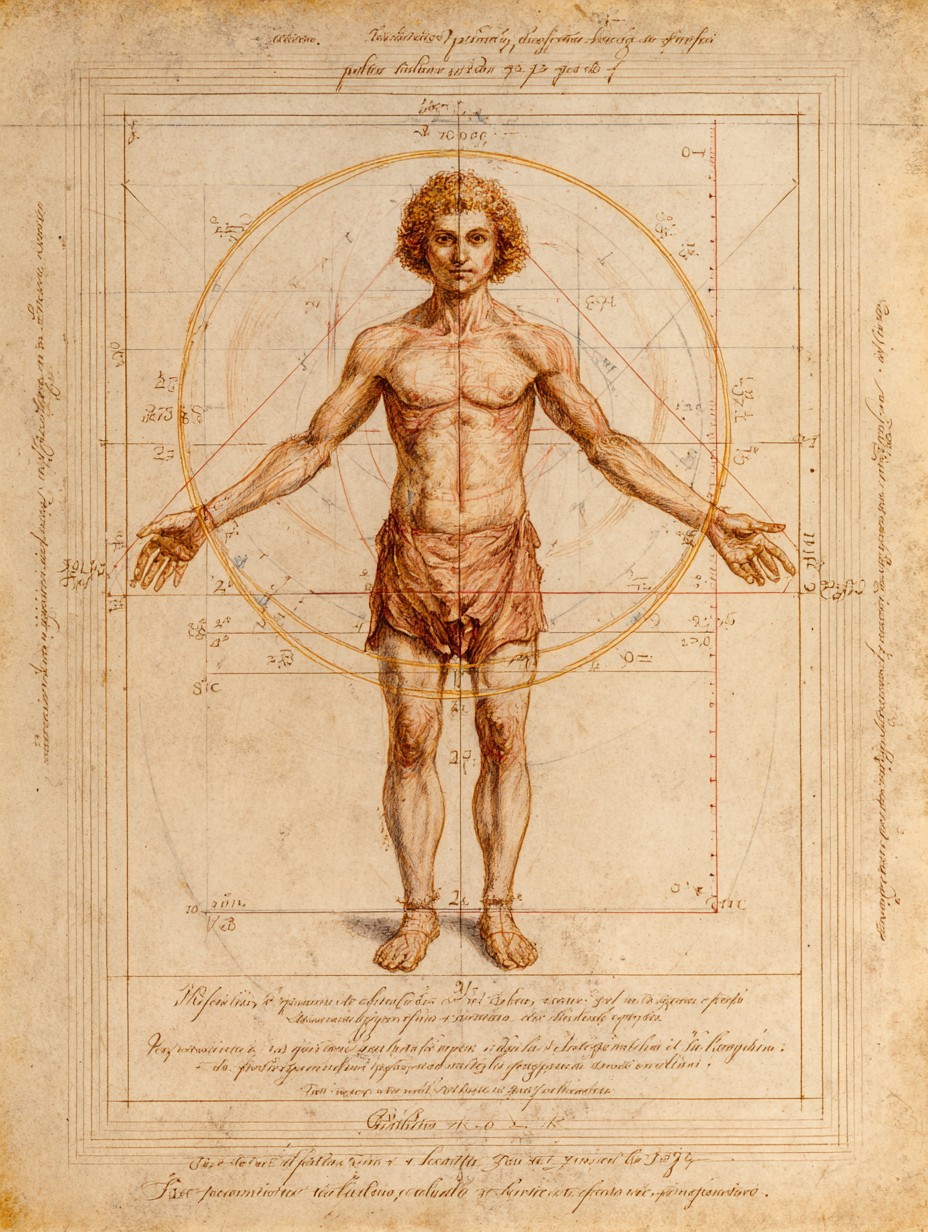
0.9–1.1m
25–40 kg
Compact and proportional; notably light relative to height. Musculature suited to sustained endurance work rather than explosive strength.
Skin tones in the warm human range from pale to deep brown. Hair predominantly brown, auburn, or black; rare grey from middle age. Eyes brown, green, or grey. No species-distinctive markings. Hands and feet are proportionally broader relative to height than the human baseline.

Comments