

ARRAK HAVAR'KETH
Keth'ar of the Havar'keth · Voice of the Eastern Clans · Senis Clannis Orientalis
“He asks good questions and listens to the answers, which I find rarer than it should be. He told me once that the difference between Roman and centaur relationships to land is that Romans own it and centaurs are borrowed by it. I have been turning that sentence over for twenty-six years.”
Arrak Havar'keth is approximately sixty-five years old, the senior elder of the eastern Hava'keth clans, and the primary centaur diplomatic interface with Rome. He is the centaur Rome thinks it understands, which means he is the centaur Rome most consistently underestimates. His patience with Roman frontier administration is professionally necessary and personally, Plinius believes, genuine — though it is running out on the specific question of the frontier markers, where four successive governors have promised consideration and delivered nothing, and where his patience has been measured in migration cycles rather than senatorial terms.
He is also, invisibly to Rome, the architect of a long-running project to steer Roman scholars toward Kethava of the western clans without Rome understanding what he is doing or why. He has been introducing Plinius to centaur contacts for thirty years, nudging the direction of scholarship with the patience of someone for whom a decade is a short planning horizon. The introduction to Kethava was the culmination of this project. Whether Plinius has asked the right question yet is something Arrak is still assessing.
He and Kethava have a private agreement, older than most Roman senators, that neither will make any commitment to Rome that constrains the other, regardless of their public positions. This is the real politics of the centaur plains. Rome has no idea it exists.
Physical Description
General Physical Condition
Dark-coated and heavy through the chest, with the bearing of someone whose lineage markings go back to the first generation born on this world after the Ninth Permutatio. He moves with the particular economy of a plains elder who has been reading terrain for sixty-five years and no longer wastes movement on anything that does not need it. His ceremonial markings have been added to at each major moot of his adult life, making his flanks a partial record of the eastern clans' collective history during his tenure.
Body Features
Large even by centaur standards, with the chest depth and shoulder breadth of the Havar'keth line. The horse portion's dark coat shows the ceremonial markings most clearly in strong light; in the diffuse light of overcast plains days they read as a darker pattern within the dark coat, visible to those who know to look. He carries himself low when thinking and upright when speaking to groups, which Plinius noticed on his second visit and which the Havar'keth elders treat as a reliable indicator of what kind of engagement is about to happen.
Identifying Characteristics
The listening. Plinius has described his quality of attention as the most complete he has encountered in a diplomatic context: he does not prepare his response while the other person is speaking, he waits for the complete statement, and then he responds to what was actually said rather than what he expected to be said. This is less common than it should be. It is the reason the diplomatic channel with Rome has functioned as well as it has, and the reason Rome consistently leaves conversations with him believing they have communicated more successfully than they have.
Mental characteristics
Personal history
Born approximately 1135 A.P. into the Havar'keth Clan's senior lineage, which had been managing the eastern diplomatic interface with Roman frontier administration since the Romans first reached the Campus Magnus's edge. He inherited the Keth'run role at forty, when the previous eastern Keth'run died in the great drought of 1175 A.P., and has held it for twenty-five years. The drought shaped his diplomatic approach: he watched Rome offer inadequate assistance and take note of the centaur response, and he concluded that the most useful thing the eastern clans could do with Rome was be precisely as cooperative as was strategically beneficial and precisely as resistant as was structurally necessary, with a clear eye on which was which at any given moment.
The frontier marker dispute began eight years ago when a Roman surveyor placed markers approximately two miles into the Havar'keth's eastern grazing range without consultation. Arrak filed a formal complaint. Then another. Four governors have promised consideration. He has been patient for eight years. The patience is not unlimited, and it is running out on a specific timeline: he wants a treaty with the Emperor's seal before Rift XIII changes the political landscape and the conversation becomes harder.
Education
The full Havar'keth lineage curriculum: the clan's migration circuit knowledge, the moot tradition's procedural history, the shamanic relationship that every Havar'keth elder maintains even without shamanic training, and the specific diplomatic curriculum that the eastern clans have developed across a thousand years of managing the Roman frontier. He has also spent thirty years learning how Roman institutions think, which he considers the most useful professional education he has received and which he considers deeply incomplete on Rome's side of the exchange.
Intellectual Characteristics
He thinks in Tava'run — migration cycles — which produces a planning horizon that Roman administrators find baffling and that produces decisions of unusual durability. When he makes a commitment, he has considered it across multiple cycles of consequence. When he declines to make one, the same applies. The frontier marker situation is now in its eighth year of formal complaint because he calculated that eight years was the appropriate amount of time to demonstrate good faith before the next step became necessary. He has not yet indicated what the next step is. He knows what it is.
Morality & Philosophy
The plains belong to no one and everyone is borrowed by them — this is not merely a diplomatic position but the centaur theological framework in its most compressed form. His resistance to Roman encroachment is not nationalism in the Roman sense but the specific conviction that the relationship between a people and their land is not a property relationship and cannot be resolved by property law. He has tried to explain this to four governors. He has concluded that Roman administrative training does not provide the conceptual equipment necessary to receive the explanation.
Personality Characteristics
Motivation
Stated agenda: formal recognition of Havar'keth grazing range boundaries in a treaty with the Emperor's seal; the removal of the frontier markers placed eight years ago; a diplomatic framework that acknowledges the centaur clans as a people with standing rather than a frontier complication.
Actual motivation: the same, plus the specific project of steering Plinius toward Kethava until Plinius asks the right question about the Sixth Permutatio site. He does not know what Kethava will say when the right question is asked. He knows that Kethava knows something, and that it should reach the wider world before Rift XIII, and that Plinius is the right vehicle. He has been working on this for thirty years.
Virtues & Personality perks
The listening, and the patience, and the specific quality of honest dealing that the eastern clans' diplomatic tradition has developed over a thousand years. He does not misrepresent. He does not make commitments he cannot keep. He does not pretend to have agreed to something he has not agreed to, which is the thing that makes Roman diplomatic counterparts feel, after conversations with him, that they have made progress, while sometimes finding later that the progress was less complete than they believed.
Vices & Personality flaws
The listening, and the patience, and the specific quality of honest dealing that the eastern clans' diplomatic tradition has developed over a thousand years. He does not misrepresent. He does not make commitments he cannot keep. He does not pretend to have agreed to something he has not agreed to, which is the thing that makes Roman diplomatic counterparts feel, after conversations with him, that they have made progress, while sometimes finding later that the progress was less complete than they believed.
Social
Contacts & Relations
Kethava Tavar'keth , Keth'run of the Western Clans: the most significant relationship in his professional life, older than his Keth'run tenure, bound by the private agreement that neither will constrain the other with Rome. He knows Kethava knows what he is doing with the scholar-steering project. He has not asked her what she plans to say when Plinius asks the right question. He trusts her judgment on this.
Plinius : two formal meetings, thirty years of indirect relationship through the scholar contacts Arrak has been providing. He considers Plinius the most useful Roman scholar working on the centaur question, which is a low bar and also a genuine assessment. He told him the land-borrowing sentence because he thought Plinius was ready to hear it. He was right.
The four frontier governors: four variants of the same conversation, each promising consideration and delivering nothing. He has filed their responses in the Havar'keth's oral archive, which is the most reliable record of broken commitments on the Campus Magnus.
Religious Views
The centaur shamanic tradition: the forces that move through the world, read by those trained to read them, advising those with the wisdom to act on what is read. He is not a shaman but maintains the relationship with the Havar'keth shamanic order that the lineage tradition requires, and takes the shamans' attunement to the Pale Wanderer's approach with the seriousness it deserves. The shamans have been listening to the northern wind differently for six months. He has been positioning the clan accordingly without explaining to Rome that this is what he is doing.
Speech
Hava'keth for everything of significance. Diplomatic Latin for frontier proceedings, spoken with a deliberateness that Roman counterparts read as caution and that is actually precision — he chooses each Latin word with the same care he brings to Hava'keth, which produces Latin that is grammatically unusual and semantically exact. He has a habit of restating what the other person said before responding, in slightly different words, which is the Hava'keth practice of confirming understanding before addressing it and which Roman diplomats consistently interpret as agreement.
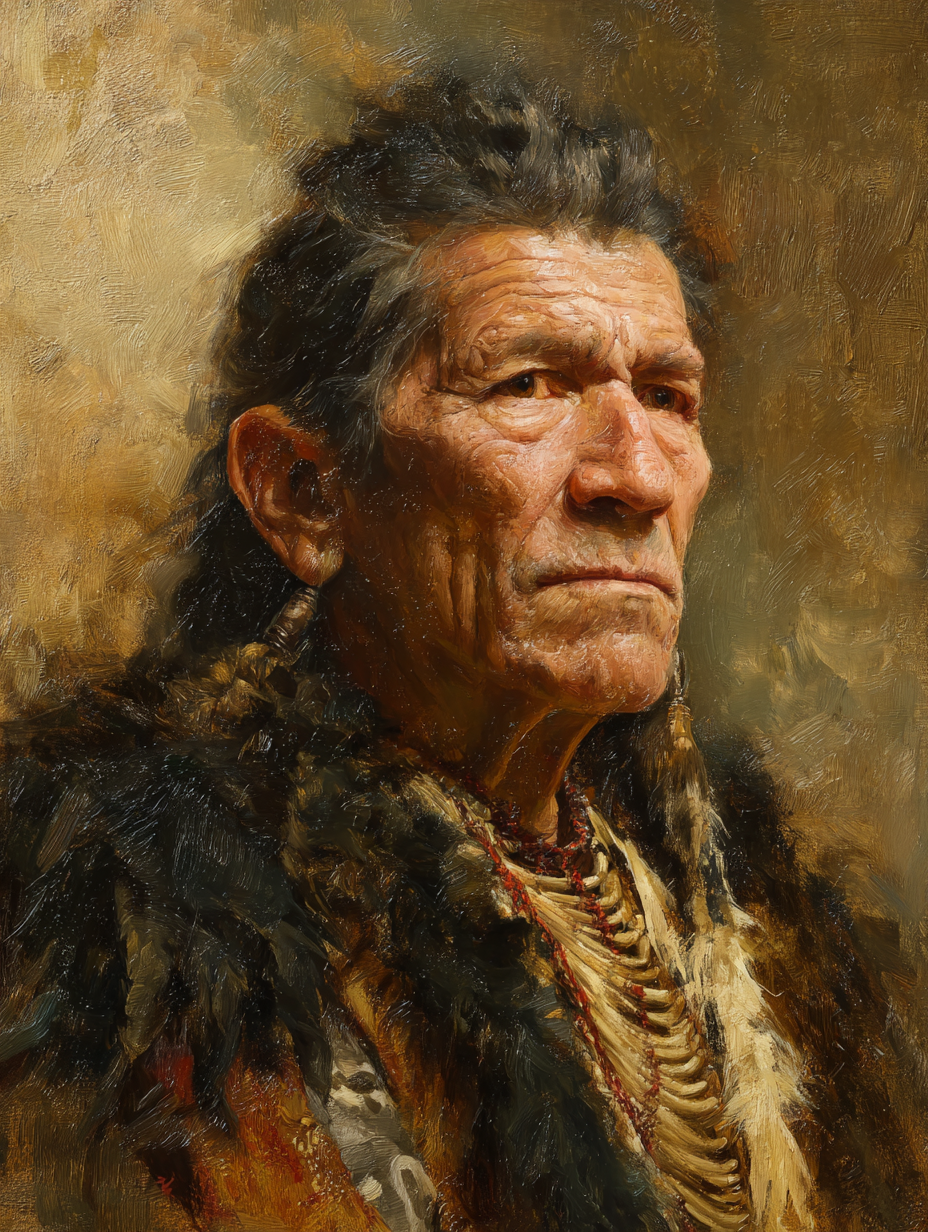
Keth'ar (Elder, in the Hava'keth language — the title of accumulated wisdom and clan authority)
Keth'run of the Havar'keth (Voice of the Eastern Clans — the diplomatic designation among elders)
Senis Clannis Orientalis (Latin diplomatic title)
“The difference between Roman and centaur relationships to land is that Romans own it and centaurs are borrowed by it.”
Hava'keth (native)
Adequate Latin for diplomatic contexts, learned over thirty years of frontier engagement

Comments